Category Archives: Salmonella in Chicken

UK – GB Poultry recalls Battered Chicken Goujons because they contain Salmonella

FSA

GB Poultry are recalling GB Poultry Battered Chicken Goujons because Salmonella has been found in the product.

Product details

GB Poultry Battered Chicken Goujons
Pack size 350g, 400g, 3kg
Batch code SFRD22PL
Use by 9 June 2022 and 10 June 2022

Risk statement

The presence of salmonella in the product listed above.

Symptoms caused by salmonella usually include fever, diarrhoea and abdominal cramps.

Action taken by the company

GB Poultry is recalling the above product. Point of sale notices will be displayed in all retail stores that are selling this product. These notices explain to customers why the product is being recalled and tell them what to do if they have bought the product. Please see the attached notice.

Our advice to consumers

If you have bought any of the above product do not eat it. Instead, return it to the store from where it was bought for a full refund.

RASFF Alerts – Salmonella – Polish Chicken Products – Bovine Carcasses – Marinated Chicken Strips – Steamed Soup Tom Ka Kha – Varkensgehak – Animal Jelly – Polish Turkey

RASFF

Salmonella Enteritidis in poultry meet from Poland in Bulgaria

RASFF

Salmonella Enteritidis in fresh poultry meat from Poland in the Czech Republic

RASFF

Salmonella in bovine carcasses from Denmark in Norway

RASFF

Detection of Salmonella in 25g in marinated chicken strips from Belgium in Luxembourg

RASFF

Salmonella in steam soup Tom Ka Khai form Netherlands in Belgium

RASFF

Salmonella in varkensgehakt from the Netherlands in Belgium

RASFF

Detection of Salmonella spp on preparation of poultry meat from France in Germany and Luxembourg

RASFF

Detection of Salmonella Enteritidis on chicken thigh from Poland in France

RASFF

Salmonella in animal jelly from Belgium in Italy

RASFF

Salmonella Enteritidis in poultry meat from Poland in Slovakia and the Czech Republic

RASFF

Presence in 2 out of 5 samples of bacteria of the genus Salmonella spp. in 25 g of the product called “Fresh chicken breast fillet, grade A. from Poland in the UK

RASFF

Salmonella Typhimurium in Turkey from Poland in the Netherlands, Germany and Belgium

RASFF Alert – Animal Feed – Salmonella – Poultry Meat Meal

RASFF

Salmonella in poultry meat meal from the United Kingdom in Belgium

Luxembourg – SIEBERT BRAND WILD GARLIC CHICKEN FILLET SKEWER – Salmonella

SAP

Last name Wild garlic chicken fillet skewer
Mark Siebert
bar code 3343660020658
Use-by date (DLC) 06/09/2022; 06/10/2022
Batch 1220473022

Danger  : Presence of salmonella

Salmonella can cause symptoms such as nausea, vomiting, abdominal cramps, diarrhea, fever and headache within 6 to 72 hours after consumption. These symptoms may be aggravated in young children, immunocompromised subjects and the elderly. People who have consumed these products and have these symptoms are invited to consult a doctor and report this consumption to him.

ale in Luxembourg by: Auchan

Source of information: Auchan recall notification & RASFF (Rapid Alert System for Food and Feed)

Communicated by: Government Commission for Quality, Fraud and Food Safety .

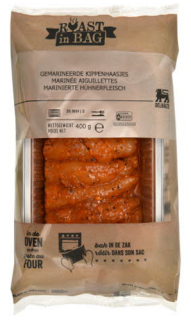
Luxembourg – RECALL: DELHAIZE BRAND MARINATED CHICKEN STRIPS – Salmonella

SAP

Delhaize recalls the following product:

Last name Marinated chicken strips
Mark Delhaize
Unity 400g
EAN code 5400120803508
Use-by date (DLC) 06/13/2022
Sale period from 05-31-2022 to 06-02-2022 inclusive

Danger: Presence of Salmonella

Salmonella can cause symptoms such as nausea, vomiting, abdominal cramps, diarrhea, fever and headache within 6 to 72 hours after consumption. These symptoms may be aggravated in young children, immunocompromised subjects and the elderly. People who have consumed these products and have these symptoms are invited to consult a doctor and report this consumption to him.

Belgium – Marinated chicken strips (400g) of the Delhaize brand – Salmonella

AFSCA

Delhaize recall
Product: Marinated chicken strips (400g) of the Delhaize brand.
Problem: presence of Salmonella.


Delhaize asks its customers not to consume and to return the product below to the store.

In collaboration with the FASFC, Delhaize has decided to withdraw this product from the market and to recall it from consumers due to the presence of Salmonella.

Product info:

Name: Marinated chicken strips
Brand: Delhaize
EAN code: 5400120803508 Best before
date (BBD):
13-06-2022 Marketing period: from 31-05-2022 to 02-06-2022 inclusive
Weight: 400g

Every day, Delhaize performs hundreds of internal quality controls to guarantee the quality and food safety of its products at all times.

In the meantime, Delhaize has already taken all affected products off the shelves and tightened checks on the product and the supplier. Customers who have purchased this product are asked not to consume it. Customers have the option of returning the product in question to the point of sale where they purchased it. Reimbursement for each affected item is guaranteed.

Other products of the same assortment are not affected and can therefore be consumed in complete safety. Delhaize would like to apologize for the inconvenience caused.

Advice and information for consumers:

What if you have already purchased the product?

Do not consume the product and return it to your Delhaize store. The products will be refunded to you.

For further information , customers can contact our Customer Service on the free number 0800/95 713.

Catalonia – Presence of Salmonella in Chicken-Turkey Burger Meat marketed in LIDL supermarkets

asca

alerted product

The Public Health Agency of Catalonia has received through the Coordinated System of Rapid Information Exchange (SCIRI) an alert regarding the presence of  Salmonella  in the Minced Poultry Meat (Burger Meat of Chicken-Turkey) marketed in LIDL supermarkets.

The data of the product involved are:

  • Product name on the label: BURGUER MEAT CHICKEN – TURKEY
  • No. of RGSEAA: 10.027476 / Z
  • Product appearance and type of packaging: Plastic tray
  • Lot number: 3369
  • Expiry date : 06.22
  • Unit weight: 500g.
  • Temperature:

The product has been marketed in Spain through LIDL supermarkets.

The withdrawal of the affected products from the market is being supervised by the competent authorities.

With the information available , there is NO evidence in Spain of any reported cases associated with this alert.

As a precautionary measure, people who have the product in their home are asked not to consume it and return it to the point of sale.

If you have consumed it and have symptoms compatible with salmonellosis (diarrhea, and / or vomiting accompanied by fever and headache), it is recommended to see a doctor.

RASFF Alerts – Salmonella – Polish Chicken Products – Polish Turkey Product – Chicken Meat Preparation – Sesame Seeds – Paprika Powder

RASFF

Salmonella Typhimurium and gr. C1 in chicken elements from Poland in the Czech Republic

RASFF

Salmonella Derby in frozen turkey meat from Poland in Italy

RASFF

Salmonella spp. in sesame seeds from Nigeria in Spain

RASFF

Salmonella spp. in raw poultry kebab from Poland in the Czech Republic

RASFF

Salmonella Enteritidis in fresh poultry meat from Poland in Slovakia

RASFF

Salmonella Kedougou and Salmonella Sandiego in frozen minced poultry from Poland meat in Italy

RASFF

Salmonella Enteritidis in chicken breast meat single with inner from Poland in the Netherlands and UK

RASFF

Salmonella enterica ser. Enteritidis (in 1 out of 5 samples /25g) in whole egg powder from Bulgaria, with raw material from Poland and Bulgaria in Greece, Bulgaria and Republic of North Macedonia.

RASFF

Salmonella in chicken meat preparation from Thailand in the Netherlands

RASFF

Salmonella Brandenburg (in 2 out of 5 samples) chicken leg quarter from Poland in Latvia

RASFF

Salmonella spp in paprika powder from China in Spain

Research – Public Health Response to Multistate Salmonella Typhimurium Outbreak Associated with Prepackaged Chicken Salad, United States, 2018

CDC

Abstract

Quantifying the effect of public health actions on population health is essential when justifying sustained public health investment. Using modeling, we conservatively estimated that rapid response to a multistate foodborne outbreak of Salmonella Typhimurium in the United States in 2018 potentially averted 94 reported cases and $633,181 in medical costs and productivity losses.

The US Centers for Disease Control and Prevention estimates that 48 million illnesses, 128,000 hospitalizations, and 3,000 deaths are caused by foodborne illnesses each year in the United States (1). Salmonella alone accounts for 1.35 million illnesses, 26,600 hospitalizations, and 421 deaths in the United States annually (2). Although incidence of Salmonella enterica serotype Typhimurium has declined since 2000, infection with this serotype continues to pose a public health burden because it can result in higher rates of hospitalization and longer lengths of stay in a hospital relative to other serotypes (36). A subset of Salmonella illnesses are identified and reported as part of an outbreak (defined as >2 persons who become ill from the same exposure); 96% of Salmonella outbreaks are caused by foodborne transmission (7). Outbreaks provide an opportunity to identify implicated food vehicles, as well as root causes for contamination, which can in turn inform broader food safety prevention efforts. If a Salmonella outbreak is suspected, public health officials can limit further cases by quickly identifying the source and issuing a recall for the implicated product or making other recommendations for restricting exposure to it.

UK – Research – A survey of Salmonella, Escherichia coli (E. coli) and antimicrobial resistance in frozen, part-cooked, breaded or battered poultry products on retail sale in the United Kingdom

FSA

A survey of Salmonella, Escherichia coli (E. coli) and antimicrobial resistance in frozen, part-cooked, breaded or battered poultry products on retail sale in the United Kingdom

In this study we estimated how frequently Salmonella spp. were present in frozen, breaded or battered chicken products, intended to be cooked before consumption, on retail sale in the UK between April and July 2021.

Frozen, breaded, ready-to-cook chicken products have been implicated in outbreaks of salmonellosis. Some of these outbreaks can be large. For example, one outbreak of Salmonella Enteritidis involved 193 people in nine countries between 2018 and 2020, of which 122 cases were in the UK. These ready-to-cook products have a browned, cooked external appearance, which may be perceived as ready-to-eat, leading to mishandling or undercooking by consumers. Continuing concerns about these products led FSA to initiate a short-term (four month), cross-sectional surveillance study undertaken in 2021 to determine the prevalence of Salmonella spp., Escherichia coli and antimicrobial resistance (AMR) in frozen, breaded or battered chicken products on retail sale in the UK.

This study sought to obtain data on AMR levels in Salmonella and E. coli in these products, in line with a number of other FSA instigated studies of the incidence and nature of AMR in the UK food chain, for example, the systematic review (2016).

Between the beginning of April and the end of July 2021, 310 samples of frozen, breaded or battered chicken products containing either raw or partly cooked chicken, were collected using representative sampling of retailers in England, Wales, Scotland and Northern Ireland based on market share data. Samples included domestically produced and imported chicken products and were tested for E. coli (including extended-spectrum beta-lactamase (ESBL)-producing, colistin-resistant and carbapenem-resistant E. coli) and Salmonella spp. One isolate of each bacterial type from each contaminated sample was randomly selected for additional AMR testing to determine the minimum inhibitory concentration (MIC) for a range of antimicrobials. More detailed analysis based on Whole Genome Sequencing (WGS) data was used to further characterise Salmonella spp. isolates and allow the identification of potential links with human isolates.

Salmonella spp. were detected in 5 (1.6%) of the 310 samples and identified as Salmonella Infantis (in three samples) and S. Java (in two samples). One of the S. Infantis isolates fell into the same genetic cluster as S. Infantis isolates from three recent human cases of infection; the second fell into another cluster containing two recent cases of infection. Countries of origin recorded on the packaging of the five Salmonella contaminated samples were Hungary (n=1), Ireland (n=2) and the UK (n=2). One S. Infantis isolate was multi-drug resistant (i.e. resistant to three different classes of antimicrobials), while the other Salmonella isolates were each resistant to at least one of the classes of antimicrobials tested. E. coli was detected in 113 samples (36.4%), with counts ranging from ❤ to >1100 MPN (Most Probable Number)/g. Almost half of the E. coli isolates (44.5%) were susceptible to all antimicrobials tested. Multi-drug resistance was detected in 20.0% of E. coli isolates. E. coli isolates demonstrating the ESBL (but not AmpC) phenotype were detected in 15 of the 310 samples (4.8%) and the AmpC phenotype alone was detected in two of the 310 samples (0.6%) of chicken samples. Polymerase Chain Reaction (PCR) testing showed that five of the 15 (33.3%) ESBL-producing E. coli carried blaCTX-M genes (CTX-M-1, CTX-M-55 or CTX-M-15), which confer resistance to third generation cephalosporin antimicrobials. One E. coli isolate demonstrated resistance to colistin and was found to possess the mcr-1 gene.

The five Salmonella-positive samples recovered from this study, and 20 similar Salmonella-positive samples from a previous UKHSA (2020/2021) study (which had been stored frozen), were subjected to the cooking procedures described on the sample product packaging for fan assisted ovens. No Salmonella were detected in any of these 25 samples after cooking.

The current survey provides evidence of the presence of Salmonella in frozen, breaded and battered chicken products in the UK food chain, although at a considerably lower incidence than reported in an earlier (2020/2021) study carried out by PHE/UKHSA as part of an outbreak investigation where Salmonella prevalence was found to be 8.8%.

The current survey also provides data on the prevalence of specified AMR bacteria found in the tested chicken products on retail sale in the UK. It will contribute to monitoring trends in AMR prevalence over time within the UK, support comparisons with data from other countries, and provide a baseline against which to monitor the impact of future interventions. While AMR activity was observed in some of the E. coli and Salmonella spp. examined in this study, the risk of acquiring AMR bacteria from consumption of these processed chicken products is low if the products are cooked thoroughly and handled hygienically.