
Category Archives: Research

Research – A Successful Technique for the Surface Decontamination of Salmonella enterica Serovar Typhimurium Externally Contaminated Whole Shell Eggs Using Common Commercial Kitchen Equipment

Mary Ann Liebert hazegg.jpg

Eggs are a highly nutritious food source used in a wide range of food products. In Australia, eggs are a frequent source of foodborne salmonellosis outbreaks, associated with eggshell contamination with Salmonella enterica serovar Typhimurium (ST). Despite their potentially hazardous nature, raw eggs are often used and consumed in mayonnaise, mousse, ice cream and eggnog. The aim of this study was to develop a shell egg decontamination method that removed ST contamination from the outside of an egg without impacting its usability. The decontamination method was developed by the adaptation of a temperature-controlled water bath (commonly present in kitchens and associated with the sous-vide technique) for the surface decontamination of eggs. The outside of whole eggs was artificially inoculated with two ST strains. The eggs were decontaminated by placing in a sous-vide cooker with the water heated to 57°C. The remaining viable ST present on the whole shell egg, crushed shells, internal egg contents and sous-vide water were enumerated over time by culturing onto XLD agar. The quality of the uncontaminated heat-treated eggs was determined by measuring the Haugh unit, yolk index, albumen pH, thermocoagulation, and stability of foam. A blind control study was conducted to assess the acceptability and usability of the treated eggs by chefs and food handlers for the preparation of mayonnaise. Complete decontamination of ST was achieved by treating eggs for 9 min in the sous-vide cooker (57°C). No statistically significant difference was observed in the quality of treated eggs compared with nontreated eggs using the quality measurements and acceptability score from chefs. This method provides a simple approach that can be adopted by chefs and food handlers to obtain safe eggs before the preparation of raw egg products.
Research -The Complex Effect of Food Matrix Fat Content on Thermal Inactivation of Listeria monocytogenes: Case Study in Emulsion and Gelled Emulsion Model Systems

Frontiers in Microbiology

Previous studies on the influence of food matrix fat content on thermal inactivation kinetics of food pathogens have shown contradictory results due to the combined influence of fat content and other factors such as composition. Therefore, thermal inactivation of Listeria monocytogenes at 59, 64, and 69°C was systematically investigated in emulsion and gelled emulsion food model systems with various fat content (1, 5, 10, and 20%), such that the effect of fat content was isolated. Thermal conductivity and rheological properties of the model systems were quantified, as well as the effect of these properties on the thermal load of the model systems. Thermal conductivity was complexly related to fat content, the nature of the food matrix (i.e., viscous or gelled), and temperature. For the emulsions, the consistency index K increased with increasing fat content, while the flow behavior index n followed the opposite trend. For the gelled emulsions, the storage modulus G′ was always larger than the loss modulus G″ (i.e., measure of elastic and viscous properties, respectively). The phase angle δ [i.e., arctan (G″/G′)] was proportional with fat content, but this relation became more complex at higher temperatures. The thermal load of the model systems was not largely affected by food matrix fat content. Thermal inactivation of L. monocytogenes was investigated by means of the maximum specific inactivation rate kmax, log reductions, and sublethal injury (SI). Both for emulsions and gelled emulsions, kmax decreased with increasing fat content below approximately 60°C, while a more complex behavior was observed at higher temperatures. In the emulsions, log reductions were considerably lower (i.e., 2–3 log) at 1% fat than in systems with higher fat content. In the gelled emulsions, log reductions generally decreased with increasing fat content. SI decreased with increasing fat content, both in emulsions and gelled emulsions. In conclusion, the inactivation rate (i.e., kmax) of L. monocytogenes was affected by a complex relation between food matrix fat content, thermal conductivity, rheological properties, and inactivation temperature. Due to the small scale of the model systems, differences in kmax did not directly affect the final log reductions in a similar fashion.

Research – VA/starch/propolis/anthocyanins rosemary extract composite films as active and intelligent food packaging materials

Wiley Online

Active and intelligent food packaging films has taken more importance over conventional packaging. The aim of this study was to develop active and intelligent food packaging films based on bio‐degradable polymers like polyvinyl alcohol and starch, incorporated with natural additives, that is, propolis extract (PE) and Anthocyanin. Boric acid was used as a cross‐linker. The results proved the compatibility of films mixture. The mechanical strength was also measured and highest value was achieved 6.1 MPa for films containing 20% PE. Moreover, the maximum zone of inhabitation, that is, 21 and 15 mm, was also achieved at same composition against Escherichia coli and methicillin‐resistant Staphylococcus aureus, respectively. Furthermore, all films had shown great color response against different pH ranging from 2 to 14. Finally, food spoilage test was performed using pasteurized milk. Films responded visibly by changing color and protected milk from spoilage. Hence, formulated bio‐degradable active and intelligent films can be used as food packaging material.

Research – Effects of post‐packaging pasteurization process on microbial, chemical, and sensory qualities of ready‐to‐eat cured vacuum‐packed Turkey breast

Wiley Online

Ready‐to‐eat (RTE) cured vacuum‐packed turkey breast was pasteurized (80°C, 5.5 min) and stored at 8°C (like supermarkets refrigerator temperature). After 42 days (current shelf life of this product), in control group (RTE cured vacuum‐packed turkey breast), the number of mesophilic, anaerobic, lactic acid bacteria, mold and yeast, coliform, and psychrotrophic increased 5.82, 6.85, 5.85, 4.75, 1.49, and 5.57 log CFU/g, respectively. However, in the pasteurized samples, the number of mesophilic, anaerobic, and lactic acid bacteria increased 1.86, 2.12, and 2.28 log CFU/g, respectively, and mold and yeast, coliform, and psychrotrophic bacteria were under the detection limit. The effects of post‐packaging pasteurization on the reduction of total mesophilic, anaerobic and lactic acid bacteria counts on Day 42 of storage was 7.04 ± 0.33, 4.73 ± 0.11, and 5.58 ± 0.11 log CFU/g, respectively. Sensory quality of treated samples was significantly better than the control’s (p < .05). Post‐packaging pasteurization (PPP) significantly inhibited the reduction in the pH and the increase in TVB‐N, TBARS, titratable acidity, and drip loss (p < .05). This study shows the effectiveness of PPP on microbial, chemical, and sensory quality of cured vacuum‐packed turkey breast during cold storage.

Research – Predicting the antimicrobial effect of probiotic lactic acid bacteria against Staphylococcus aureus in white cheeses, using Fourier series modeling method

Wiley Online

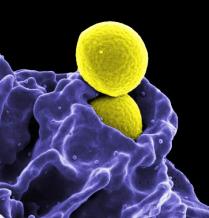
MRSA Staphylococcus KSW Food World

Image CDC

In this study, it was aimed to design the time‐predicted inactivation model for various growth curves and the growth parameters representing the changes in the inactivation of Staphylococcus aureus in probiotic white cheese. For this purpose, S. aureus were inoculated in the pasteurized milk and the production of probiotic white cheese was performed in five different groups, and then samples were matured for 60 days at 4°C. S. aureusLactobacillus rhamnosusLactobacillus casei Shirota, and mesophilic starter culture levels of the samples were analyzed on the 1st, 4th, 7th, 10th, 15th, 30th, and 60th days of maturation. The inactivation model evaluation was performed by using the number of microorganisms counted with Fourier modeling method. In determining the model to be applied, the coefficient of determination (R2) and the sum of squared errors (SSE) for the mean number of microorganisms detected via modeling method were used. As conclusions, the number of S. aureus has decreased by approximately 5 logarithmic units at the end of the storage period by using probiotics together with the starter culture. It was determined that the Fourier modeling method is a suitable inactivation model with R2 values of 0.9847–0.9986 and SSE values of 0.094–0.510.

Research – Salmonella enterica Serovar Typhimurium 14028s Genomic Regions Required for Colonization of Lettuce Leaves

Frontiers in Microbiology

Contamination of edible produce leaves with human bacterial pathogens has been associated with serious disease outbreaks and has become a major public health concern affecting all aspects of the market, from farmers to consumers. While pathogen populations residing on the surface of ready-to-eat produce can be potentially removed through thorough washing, there is no disinfection technology available that effectively eliminates internal bacterial populations. By screening 303 multi-gene deletion (MGD) mutants of Salmonella enterica serovar Typhimurium (STm) 14028s, we were able to identify ten genomic regions that play a role in opening the stomatal pore of lettuce leaves. The major metabolic functions of the deleted regions are associated with sensing the environment, bacterium movement, transport through the bacterial membrane, and biosynthesis of surface appendages. Interestingly, at 21 days post inoculation, seven of these mutants showed increased population titers inside the leaf, two mutants showed similar titers as the wild type bacterium, whereas one mutant with a large deletion that includes the Salmonella pathogenicity island 2 (SPI-2) showed significantly impaired persistence in the leaf apoplast. These findings suggest that not all the genomic regions required for initiation of leaf colonization (i.e., epiphytic behavior and tissue penetration) are essential for continuing bacterial survival as an endophyte. We also observed that mutants lacking either SPI-1 (Mut3) or SPI-2 (Mut9) induce callose deposition levels comparable to those of the wild type STm 14028s; therefore, these islands do not seem to affect this lettuce defense mechanism. However, the growth of Mut9, but not Mut3, was significantly impaired in the leaf apoplastic wash fluid (AWF) suggesting that the STm persistence in the apoplast may be linked to nutrient acquisition capabilities or overall bacterial fitness in this niche, which are dependent on the gene(s) deleted in the Mut9 strain. The genetic basis of STm colonization of leaves investigated in this study provides a foundation from which to develop mitigation tactics to enhance food safety.

Research – Not-so-dirty birds? Not enough evidence to link wild birds to food-borne illness

Science Daily

When food makes people sick, some blame birds because they hang around farms, and their feces can contain E. coli, Salmonella and Campylobacter, three common pathogens that can cause food-borne illness.

But a recent Washington State University study published in Biological Reviews on Jan. 31 has found scant evidence to support the link between wild birds and human illness involving those three pathogens.

The perceived risk of wild birds can impact their survival, said Olivia Smith, lead author on the study and a recent WSU Ph.D. graduate.

“Farmers are being encouraged to remove wild bird habitat to make their food safer, but it doesn’t appear that these actions are based on data,” Smith said. “When you restrict birds from agricultural settings, you are doing something that can lead to their decline.”

Bird populations have been falling rapidly in recent decades. Scientists estimate that since 1970, North America has lost more than three billion birds. In light of this, the WSU researchers highlighted the need for more definitive research before destroying habitat and banning birds from fields in the name of food safety.

Research – Simple solution to ensure raw egg safety.

Medical Express

Salmonella is a key cause of foodborne gastroenteritis around the world, with most outbreaks linked to eggs, poultry meat, pork, beef, dairy, nuts and fresh produce.

Now Flinders University researchers have found a simple solution for preventing salmonellosis affecting  through surface contamination, giving crucial help for food services industries.

Raw eggs are used in many food products such as mayonnaise, mousse, eggnog, and artisanal ice cream. However, a problem is associated with eggshells being contaminated with the bacterium Salmonella enterica serovar Typhimurium (ST).

To address this issue, the Flinders research team aimed to develop a decontamination method that removed ST contamination from the eggshell without impacting the egg’s usability.

Using a method that employed equipment commonly found in commercial kitchens, the researchers decontaminated eggs by placing them in a sous-vide cooker with the water heated to 57C. Complete decontamination of ST was achieved by treating eggs for 9 minutes. The decontamination method uses kitchen equipment commonly used for sous-vide cooking,

The results, published recently in the journal Foodborne Pathogens and Disease, is the first study to look at decontamination of ST on the eggshell.

Mary Ann Liebert – Research Paper


Research – Survival of Salmonella in spaghetti alla carbonara

Science Direct Fig. 2. Visual texture of a spaghetti alla carbonara with a creamy and a silky sauce

Spaghetti alla carbonara is a traditional Italian dish, which the sauce made of raw egg yolks is heated using only the heat of cooked pasta. Concerns about the safety of this preparation have been raised due the possibility of egg yolks be contaminated by Salmonella and the heat treatment may not be sufficient for total Salmonella inactivation. This study was undertaken to analyze the survival of Salmonella in spaghetti alla carbonara in which the only thermal processing of egg yolks was the heat transfer from the pasta. A pool of Salmonella was inoculated in egg yolks reaching 8.8 log10 CFU/g. Contaminated egg yolks were added to the cooked spaghetti, away from the heat source. Results indicated that immediately after cooking and draining, the pasta reached 86.0 °C. After 4.5 min of contact with the egg yolks, the mean temperature of spaghetti alla carbonara decreased to lower than 60 °C. The preparation method was able to inactivate approximately 4.7 log10 CFU/g of Salmonella and the spaghetti alla carbonara processed by this method had a creamy and silky sauce formed by yolks. Based on the results, it should be advisable the use of thermo-processed eggs to ensure the safety of this preparation.

Research – Occurrence and characterisation of biofilms in drinking water systems of broiler houses

NCBI

Abstract

Background

Water quality in the drinking water system (DWS) plays an important role in the general health and performance of broiler chickens. Conditions in the DWS of broilers are ideal for microbial biofilm formation. Since pathogens might reside within these biofilms, they serve as potential source of waterborne transmission of pathogens to livestock and humans. Knowledge about the presence, importance and composition of biofilms in the DWS of broilers is largely missing. In this study, we therefore aim to monitor the occurrence, and chemically and microbiologically characterise biofilms in the DWS of five broiler farms.

Results

The bacterial load after disinfection in DWSs was assessed by sampling with a flocked swab followed by enumerations of total aerobic flora (TAC) and Pseudomonas spp. The dominant flora was identified and their biofilm-forming capacity was evaluated. Also, proteins, carbohydrates and uronic acids were quantified to analyse the presence of extracellular polymeric substances of biofilms. Despite disinfection of the water and the DWS, average TAC was 6.03 ± 1.53 log CFU/20cm2. Enumerations for Pseudomonas spp. were on average 0.88 log CFU/20cm2 lower. The most identified dominant species from TAC were Stenotrophomonas maltophiliaPseudomonas geniculata and Pseudomonas aeruginosa. However at species level, most of the identified microorganisms were farm specific. Almost all the isolates belonging to the three most abundant species were strong biofilm producers. Overall, 92% of all tested microorganisms were able to form biofilm under lab conditions. Furthermore, 63% of the DWS surfaces appeared to be contaminated with microorganisms combined with at least one of the analysed chemical components, which is indicative for the presence of biofilm.

Conclusions

Stenotrophomonas maltophiliaPseudomonas geniculata and Pseudomonas aeruginosa are considered as opportunistic pathogens and could consequently be a potential risk for animal health. Additionally, the biofilm-forming capacity of these organisms could promote attachment of other pathogens such as Campylobacter spp. and Salmonella spp.

Electronic supplementary material

The online version of this article (10.1186/s12866-019-1451-5) contains supplementary material, which is available to authorized users.