Category Archives: Research

Research – Effectiveness of Nitrogen Dioxide Fumigation for Microbial Control on Stored Almonds

Journal of Food Protection

ABSTRACT

Quality of stored almonds is compromised by insect infestations and microbial contamination. Nitric oxide (NO) is a potent fumigant for postharvest pest control on fresh and stored products. NO fumigation must be conducted under ultralow oxygen conditions, and it always produces nitrogen dioxide (NO2), depending on the O2 level in the fumigation chamber. NO and NO2 have proven antimicrobial effects but have not been tested for efficacy against microbes in almonds. We evaluated, in this study, fumigation of unpasteurized almonds with NO2 at different levels for inhibition of bacteria and fungi. Almonds were fumigated with 0.1, 0.3, or 1.0% NO under ambient O2 to generate 0.1, 0.3, or 1.0% NO2 conditions; the fumigation treatments lasted 1 or 3 days at 25°C. GreenLight rapid enumeration tests on diluted wash-off almond samples from NO2 fumigation treatments showed either greatly reduced microbial loads or complete control of microorganisms, depending on NO2 concentration and treatment duration. NO2 fumigation was more effective against fungi than against bacteria. These results suggest that postharvest NO fumigation with proper levels of NO and NO2 can be used for insect and microorganism control on stored almonds.

HIGHLIGHTS
  • NO2 fumigation was effective in controlling both bacteria and fungi on almonds.
  • Complete control of bacteria and fungi was achieved in 1-day fumigation with 1.0% NO2.
  • Postharvest NO+NO2 fumigation has potential to control insects and microorganisms on almonds.

Research – Evaluation of eight essential oils for postharvest control of Aspergillus carbonarius in grapes

Journal of Food Protection

A wide range of fungal species is associated with post-harvest spoilage of grapes. However, Aspergillus carbonarius is the primary fungus responsible for the contamination of grapes with ochratoxin A, a mycotoxin causing several confirmed health effects to humans and animals. Aiming to find a method, safe for the consumers, to prevent post-harvest decay and ochratoxin A contamination of grapes, the potential use of essential oils as preservatives was investigated. Essential oils of Origanum dictamnus (dittany) , Origanum onites (oregano) , Origanum microphyllum (marjoram) , Thymbra capitata (thyme) , Satureja thymbra (savory) , Rosmarinus officinalis (rosemary) , Laurus nobilis (laurel) and Salvia officinalis (sage) were tested. The essential oil components were identified by GC/MS analysis. A first evaluation of the effectiveness of essential oils was performed in vitro , at a range of concentrations up to 300 μL L -1 . Based on the results of the in vitro tests, the four most effective essential oils ( O. dictamnus , O. onites , T. capitata and S. thymbra ) were tested on Sultana grapes, during post-harvest storage. The four essential oils tested, having the carvacrol and/or thymol as a common component, at a high concentration, significantly reduced, or even completely inhibited the growth of the fungus, in all treatments. As revealed from the results, the essential oils of O. dictamnus , O. onites and S. thymbra were the most effective, causing total inhibition on the growth of the fungus with a minimum concentration of 100 μL L -1 , followed by the essential oil of T. capitata , total effective with a minimum concentration of 200 μL L -1 . Essential oils of O. microphyllum , L. nobilis , S. officinalis and R. officinalis , although they had a significant effect on the growth of A. carbonarius , failed to inhibit its growth completely at any of the concentrations tested.

Research – Comparison of stomaching versus rinsing, for recovering bacterial communities from rainbow trout (Oncorhynchus mykiss) fillets.

Journal of Food Protection

The use of high-throughput methods allows a better characterization of food-related bacterial communities. However, such methods require large amounts of high quality bacterial DNA, which may be a challenge when dealing with a complex matrix that has a low concentration of bacteria like fresh fish fillets. Therefore, the choice of method used to recover bacteria from a food matrix in a cost-effective way is critical, yet little information is available on the performance of commonly used methods. We assessed the recovery capacity of two such methods: stomaching and mechanical rinsing. The efficiency of the methods was evaluated through the quantitative recovery and compatibility with end-point qPCR. Fresh rainbow trout ( Oncorhynchus mykiss ) fillets were inoculated with a bacterial marker, Brochothrix thermosphacta , at different concentrations (7.52 to 1.52 log CFU/g). The fillets were processed by one of the two methods and the recovery of the marker in the suspensions was assessed by plate counting and qPCR targeting B. thermosphacta – rpoC . The same analyses were performed on 6 non-inoculated fresh fillets. Stomaching and mechanical rinsing allowed an efficient and repeatable recovery of the bacterial communities from the 42 inoculated fillets. No significant differences of Recovery Ratios were observed between the marker enumerated in the inoculation suspensions and in the corresponding recovery suspensions after rinsing and stomaching. However, the stomaching method allowed too many particles to pass through the filters bag, making necessary a limiting supplementary filtration step. As a consequence, only the rinsing recovery method allowed a proper PCR quantification of the inoculated B. thermosphacta. The mean recovered bacterial level of the fillets was around 3 log CFU/g. It seems more relevant and cost-effective to recover the endogenous bacterial microbiota of a fish fillet structure using the rinsing method rather than the stomaching method.

Research – Pet ownership and pet type and their implications for food safety in the home: Evidence from a national survey

Journal of Food Protection

Physical contact between humans and their pets increases the potential for zoonotic disease transmission. This study used the 2016 FDA Food Safety Survey to compare the food handling behaviors of pet owners and non-pet owners, since poor food handling and hygiene habits can increase the likelihood of disease transmission from animals to humans. Results show that both pet ownership and pet type were important in predicting food safety behaviors. After controlling for sociodemographic factors included in this study (gender, age, household income, household size, and race/ethnicity), pet ownership was significantly associated with overall food safety practices, and more specifically with better handwashing behaviors, kitchen cleaning, and ownership and use of a food thermometer, as well as a greater awareness of foodborne pathogens. Cat owners and cat/dog owners had better overall food safety practices and better handwashing compared to dog owners. After controlling for sociodemographic variables, there were no significant associations between pet ownership and perception of risks associated with unsafe food handling practices.

Research – Poland, poultry and Salmonella

Poultry Med

A series of reports from RASFF (the Rapid Alert System for Food and Feed):
-Salmonella enterica ser. Typhimurium (present /25g) in chilled turkey meat from Poland in Poland (Notification date: 30/4/2020)
-Salmonella enterica ser. Enteritidis (presence /25g) in chilled chicken breasts from Poland in Slovakia (28/4/2020)
-Salmonella enterica ser. Enteritidis (presence /25g) in chilled chicken quarters from Poland in Slovakia (24/4/2020)
-Salmonella enterica ser. Infantis (presence /25g) in frozen chicken legs from Poland in Lithuania (24/4/2020)
-Salmonella enterica ser. Enteritidis (in 2 out of 5 samples /25g) in chilled chicken wings from Poland in Lithuania (24/4/2020)
-Salmonella enterica ser. Enteritidis (presence /25g) in chilled chicken quarters from Poland in Lithuania (24/4/2020)
-Salmonella enterica ser. Newport (3 out of 5 samples /50g) in frozen chicken breast fillets from Poland in Romania (24/4/2020)

Is this the quality of Europe’s largest poultry producer?

I have to agree most of the products are being sold to other eastern European countries although Italy was included in this weeks alerts.

Research – Enhanced elimination of Salmonella Typhimurium and Campylobacter jejuni on chicken skin by sequential exposure to ultrasound and peroxyacetic acid

Wiley Online

The present study investigated the effects of combined ultrasound (37 kHz, 380 W for 5 min) and peroxyacetic acid (PAA; 50–200 ppm) treatment on the reduction of Salmonella Typhimurium and Campylobacter jejuni on chicken skin. Ultrasound was not sufficient to inactivate S. Typhimurium (0.48 log CFU/g reduction) or C. jejuni (0.25 log CFU/g reduction), whereas PAA significantly (p < .05) reduced S. Typhimurium (0.93–1.59 log CFU/g reduction) and C. jejuni (0.77–1.52 log CFU/g reduction). However, maximum reductions of 2.21 and 2.08 log CFU/g were observed for S. Typhimurium and C. jejuni, respectively, for combined treatment with 5 min of ultrasound and 200 ppm PAA. Our results indicate that a combination of ultrasound treatment for 5 min and 200 ppm PAA was more effective in reducing S. Typhimurium and C. jejuni compared to the individual treatments, without significantly affecting the color or texture of the chicken skin, thus, demonstrating its potential to increase the microbial safety during poultry processing.

Research -The impacts of tomato residuum extract with Arabic gum and dill essential oil on the shelf life improvement of trout fillets stored at chilly condition

Wiley Online

The objective of this study was to evaluate the effects of tomato residuum extract (TRE) dipping and Arabic gum (AG) coating enriched with dill essential oil (DEO) on the shelf life extension of refrigerated trout fillets. Gas chromatography/mass spectrometry analysis revealed that the main constituents of DEO were alpha‐phellandrene (30.17%), limonene (28.31%), and carvone (21.31%). Antioxidant activities of acetone, ethanol, methanol, cold, and hot water extracts of tomato residuum were examined using reducing power and 2,2‐azinobis‐3‐ethylbenzothiazoline‐6‐sulphonic acid assays in maceration, ultrasound, and combined ultrasound and maceration extraction methods. The strongest antioxidant activities were found in the ultrasound‐assisted extraction with ethanol 50%. Thiobarbituric acid, total volatile basic nitrogen, and peroxide values indicated that TRE 3%–AG–DEO 2% and TRE 6%–AG–DEO 2% treatments could significantly (p ≤ .05) extend the shelf life of the fillets. Also, sensory evaluation showed that TRE along with DEO had significant (p ≤ .05) pleasant effects on the sensory characteristics of the fillets. It was concluded that TRE dipping along with AG coating containing DEO could be a suitable alternative for the synthetic preservative in the refrigerated trout fillets.

Research – Protective shield: How pathogens withstand acidic environments in the body

Science Daily

Certain bacteria, including the dangerous nosocomial pathogen MRSA, can protect themselves from acidic conditions in our body and thus ensure their survival. Researchers at the Biozentrum of the University of Basel have now elucidated an important mechanism in this process. A transport protein involved in cell wall biosynthesis plays a key role, they report in the journal Nature Structural & Molecular Biology.

Each year, thousands of patients in Swiss hospitals become infected with dangerous pathogens that can hardly be controlled with antibiotics. The methicillin-resistant bacterium Staphylococcus aureus, MRSA for short, is particularly feared among the multi-resistant nosocomial germs. It can cause severe wound, respiratory and urinary tract infections and life-threatening sepsis. This is aggravated by the fact that MRSA causes chronic infections.

Research – 166 sick: Over half under 5 from Salmonella in pet bearded dragons

barf Blog 

We investigated an outbreak of human Salmonella infections resulting from serotypes Cotham and Kisarawe, predominately occurring among children. An outbreak of illnesses was identified in persons with exposure to pet bearded dragon lizards. Human and animal health officials, in cooperation with the pet industry, conducted epidemiologic, traceback and laboratory investigations. Onsite sampling was conducted at two US breeding facilities, one foreign breeding facility, and a large pet retail chain. A total of 166 patients in 36 states were identified with illness onset dates from 02/2012-06/2014. The median patient age was 3 years (range, <1-79 years), 57% were aged ≤5 years, and 37% were aged ≤1 year. Forty-four patients (37%) were hospitalized, predominantly children. Sampling at breeding facilities and a national pet store chain resulted in isolation of outbreak serotypes at each facility; isolation proportions ranged from 2%-24% of samples collected at each facility.

Research – Tips For Handling Flour Safely to Avoid Food Poisoning

Food Poisoning Bulletin

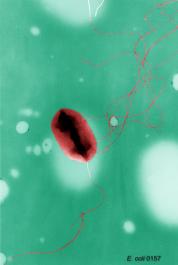
kswfoodworld E.coli O157

Image CDC


When an E. coli O157:H7 outbreak in 2009 was linked to the flour used in prepackaged cookie dough, many people were shocked. How could flour, which seems so innocuous, actually be contaminated with such a serious pathogen? Flour is dry. It seems inert and safe. But flour is a raw agricultural product, and can be contaminated with pathogens just like romaine lettuce. Learn some tips for handling flour safely to avoid food poisoning.