Category Archives: Raw Milk Goats Cheese

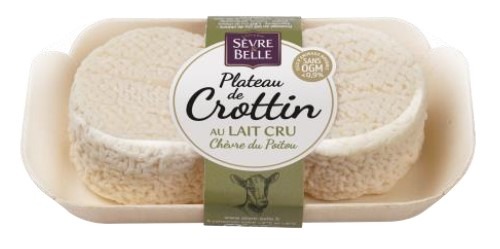
France – Platter of raw Poitou goat’s milk crottin – STEC E.coli O103:H2

Gov France

Product category
Food
Product subcategory
Milk and dairy products
Product brand name
Sèvre and Belle
Model names or references
Freshly packaged raw milk 120g crottin
Product identification
GTIN Batch Date
33199241023423 240451602 Minimum durability date 04/16/2024
Packaging
filmed wooden tray
Start/end date of marketing
From 02/29/2024 to 03/01/2024
Storage temperature
Product to keep in the refrigerator
Health mark
FR 79.061.001 CE
Geographical sales area
Whole France
Distributors
CASINO
List of points of sale
List_of_casino_sales_points.pdf

France – Raw Milk Goat Cheese – Listeria monocytogenes

RASFF

Product category
Food
Product subcategory
Milk and dairy products
Product brand name
THE LAUGHING GOAT
Model names or references
Pavé du Cardinal Cendré Round of Touraine Cendré Ash log Biccou Chabis Cendré
Product identification
Batch Date
2711233 Recommended consumption date 01/27/2024
Products List
List_products_alert.pdfAttachment
Start/end date of marketing
Of 11/28/2023 At 12/12/2023
Storage temperature
Product to keep in the refrigerator
Geographical sales area
Whole France
Distributors
Consult the list of points of sale below
List of points of sale
List_Clients_Alert.pdf

RASFF Alert – STEC E.coli – Raw Goats Milk Cheese

RASFF

E.coli STEC in raw goat’s milk cheese from France, via Germany in Italy

RASFF Alerts – STEC E.coli – Raw Milk Goats Cheese – Morbier Cheese

RASFF

Verotoxin-producing Escherichia coli in raw goat milk cheese from France in Germany

RASFF

Shiga toxin producing Escherichia coli (STEC) in morbier from France in  Belgium, Czech Republic, Estonia, Finland, France, Germany, Luxembourg, Netherlands, Poland, Slovakia, Sweden, United States.

Australia – Listeria rise prompts warning in Australia

Food Safety News

Public health officials in an Australian state have warned people about a rise in Listeria infections.

New South Wales (NSW) Health is reminding people who are immunocompromised, pregnant, or aged over 65 years old to avoid foods that can cause listeriosis.

There are typically 20 to 30 cases of listeriosis reported each year in NSW.

At the end of May 2023, 17 listeriosis notifications had been recorded, which was above the five-year average of 10 cases for the same period. No common foods had been identified and whole genome sequencing has not detected any clustering.

Keira Glasgow, director of NSW Health’s One Health branch, said the advice follows a rise in reported cases and the number of people treated in hospitals for their illnesses.

“Already in 2023, we’ve recorded 25 cases of listeriosis among NSW residents, which is more than we usually expect to see in a whole year,” she said.

“There are a range of foods that present very real risks to people who are older, pregnant or have underlying health conditions such as cancer, diabetes, heart, liver, or kidney disease, or who are on medications such as corticosteroids which impact immune systems.”

People at increased risk of Listeria infections are advised to avoid certain foods, to take care not to contaminate fruit when cutting it and not to store cut fruit and vegetables that are eaten raw, as Listeria survives refrigeration.

Risky foods include cold delicatessen meats, smoked seafood, rockmelon (cantaloupe), pâté or meat spreads, unpasteurized milk products, sprouted seeds, soft cheeses and soft serve ice cream.

RASFF Alerts – STEC E.coli – Raw Goats Milk Cheese – Goat Cheese –

RASFF

Suspicion of E.coli O103 and O26 in cheese made from raw goat’s milk from France in Slovenia

RASFF

Shigatoxin-producing Escherichia coli (STEC) in goat cheese from France in Germany and Switzerland

RASFF

Shigatoxin-producing Escherichia coli (STEC) in goat cheese from France in Belgium, Germany, Poland, Spain, Switzerland