Category Archives: Poisoning

Catalonia – Information on cases of botulism

ACSA

4 cases of botulism have been confirmed and 2 probable with a common link of consumption in the previous days of packaged potato omelet purchased from different supermarkets. The cases have occurred in several autonomous communities.

The public health services of the communities and autonomous cities are informed to strengthen early detection in the event of the appearance of new cases with suspicion of botulism should they occur.

The Spanish Food Safety Agency (AESAN) has transferred all the available information to the contact points of the autonomous communities so that they can carry out the relevant investigations in relation to the products that could have been consumed in some of the cases.

In at least three of the confirmed cases and one of the probable ones, the company that makes the tortillas is the same. To date, no evidence has been established, neither in the products nor in the processes, that relate cause and effect. However, investigations are continuing with the collaboration of the production company.

Investigations are being carried out in relation to the possibility that there is any product on the market that is not safe or if there are deviations in the processes of production, distribution, storage or transport that justify the existence of this risk.

It is public knowledge that some distribution chain, applying the precautionary principle and in the face of the lack of certainties, has decided to withdraw from sale the products to which the epidemiological surveys have pointed, while waiting for the investigations to progress.

In any case, we want to remind consumers of the importance, especially at this time of year due to the heat, of preserving food products at the storage temperatures indicated on the labeling and following the instructions for use indicated by the manufacturers, already which guarantee the safety of products for which an expiration date is established.

The case of packaged potato tortillas is particularly important, as one can get the false impression that they are like canned foods, which have thermal stability, and keeping them unrefrigerated at the current room temperature can lead to health problems after consumption

When new information becomes available in relation to this matter, this news will be updated.
USA – How the FDA Uses Traceback to Respond to Foodborne Illness Outbreaks

FDA

Every year the FDA responds to dozens of foodborne outbreaks, but what does that mean? What are the steps the FDA and other public health agencies take to determine the source of a foodborne illness outbreak and protect public health?

In a video and infographic, the FDA provides an overview of the traceback process used to examine the complex path of food as it travels through the supply chain. Typically, in a traceback investigation, investigators trace food that ill people report eating all the way back to a farm or production facility. Finding commonalities in the supply chains of foods eaten by ill people helps investigators zero in on a potential source of the outbreak. Traceback is one tool used by FDA investigators during the many steps taken by the agency along with the Centers for Disease Control and Prevention (CDC) and local, state, and international public health authorities to respond to outbreaks in FDA-regulated food products.

The video explores how the CDC works with public health authorities to learn more about what might be making consumers sick, and then if an FDA-regulated food product is identified, how the FDA investigates the cause of the outbreak and works with industry to remove any potentially contaminated product from store shelves. The FDA, CDC, and local and state partners also work together to warn the public, as appropriate, and to help prevent additional illnesses.

Infographic (PDF)

Japan sees rise in food poisoning from eating raw chicken

The Mainichi

TOKYO — Japan’s health ministry is calling for caution amid an increase in food poisoning caused by Campylobacter, a form of bacteria found in raw and half-cooked chicken.

Food poisoning cases usually rise in Japan during the damp rainy season from late May to early July. This year, experts have expressed concern about a sudden rise due to the easing of coronavirus-related restrictions, which have brought more customers back to dining out.

Once infected with Campylobacter, commonly found in raw or not fully cooked meat dishes such as sashimi, Korean “yukhoe” and lightly seared “tataki,” the bacteria can cause stomach pain and diarrhea among other symptoms. Although usually not fatal, children and the elderly are at risk of developing serious illness. In addition, the bacteria can result in Guillain-Barre syndrome (GBS), which can bring about difficulty breathing and paralysis of the limbs and face.

Around 2,000 people are afflicted with food poisoning by Campylobacter annually. Some regions, such as Kagoshima Prefecture, where chicken sashimi is part of the local cuisine, have established strict hygiene standards for the consumption of raw chicken meat, but caution is needed as about 70% of cases occur at restaurants.

A Beginner’s Guide to Spotting Food Poisoning: The Summer Months are Peak Time for Food Borne Illness – So What to Look Out for?

Food Poisoning News

Food poisoning illnesses are already pesky enough in the cold weather, but what happens when the bacteria that causes these illnesses are exposed to warmer temperatures? Well, since bacteria tends to thrive in a warmer, more humid environment, food poisoning illnesses tend to become more common during the summer time. This also means that it is important for consumers to clean and store their products properly in order to prevent both bacterial contamination and the spread of these harmful pathogens. Rules such as always washing hands, or rinsing off fruits and vegetables before consumption, become that much more vital to a person’s safety and health in the summer.

Although true commitment to there remedial actions is vital, it is also important to realize that some cases of food poisoning illness are simply unavoidable is the summer heat. Even if one follows all the health rules, sometimes that slippery bacteria still manages to make it into the food consumers eat. Leafy greens, earthy-grown vegetables, hard to clean fruits, and tenacious pathogens like Cyclospora and Hepatitis A, can and do “fall through the cracks” at times. Usually this is ok, and here is no need to panic, as most cases of foodborne illnesses aren’t life-threatening.

But even so, it is still important to be able to identify the different symptoms and signs so that if one does become ill, they can contact their health provider before things get serious.

Read More at the Link Above

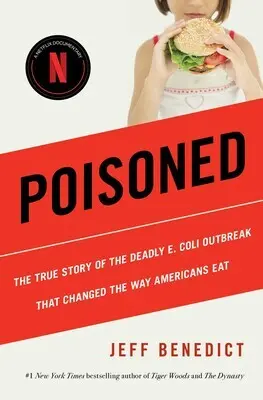
New in August on Netflix – Poisoned: The Dirty Truth About Your Food

Food Poison Journal

The doc first premiered at the Tribeca Film Festival with multiple screenings taking place between June 9th and June 17th first premiering at the SVA Theatre on June 9th.  It also was shown in the author, Jeff Benedict’s, hometown, as well as Bill Marler’s, the main character of the film.

Here’s what you can expect from the documentary based on the book Poisoned by Jeff Benedict (which has an updated cover to reflect the Netflix adaptation).Netflix was first announced to be attached to develop the documentary on the 2011 book back in November 2022.  Here is the link and the cover:

India – Students fall ill due to food poisoning in Sedam, Bailhongal

Deccan Herald

As many as 52 students of Kittur Rani Chennamma Residential School in Kodla, Sedum taluk, and about 25 students residing in Backward Classes Pre-Metric Hostel for Boys at Harukoppa, Bailhongal taluk, took ill after consuming food.

India – Suspected food poisoning: Over 75 people seek treatment after feast at EKM wedding.

Mathrubhumi

Udayamperoor: Over 75 people have fallen ill after consuming food at a wedding reception in Malekadu in Ernakulam food poisoning is suspected

India – 31 fall ill after attending funeral service ; food poisoning suspected

The Shillong Times

Nongpoh, May 12: Dozens of villagers from Nongladew village in Ri Bhoi district of Meghalaya fell ill after attending a funeral service in Mariampur under Goalpara District of Assam. As many as 41 villagers had attended the funeral rituals of their relative on May 9. However, on Wednesday night (May 10), 31 of them returned home and fell ill, prompting immediate action from health officials.

The villagers had consumed fish, potato, and dal during the funeral service, and many of them complained of illness when they returned home. While the exact cause of the illness is not known, the villagers suspect the fish, which they believe was poisoned, to be the reason for their condition

Viet Nam – Seventy children hospitalized in Nghe An, food poisoning suspected

Vietnamnet

More than 70 children aged from three to five from a preschool in the central province of Nghe An were rushed to hospitals after eating a snack on the evening of May 9.

Doctors at a general hospital in Do Luong District said the hospital admitted more than 70 children with symptoms of vomiting, stomach pain, diarrhea and dehydration.

They suspected that the children were food poisoned and that the yogurt was suspected as the cause of the incident, as many other two-year-old kids who did not eat the yogurt were well, the local media reported.

All of the children are rehydrated and in stable condition, and an investigation into the incident is underway.

India – 40 hospitalised due to food poisoning

Deccan Chronicle

Kurnool: Around 40 people of Karivena in Atmakur of Nandyal district got hospitalized during the early hours of Wednesday with complaints of food poisoning.

On Tuesday night, they had been to an engagement function in the village, where they had their dinner. Following complaints of vomiting and diarrhea, other villagers shifted them to Nandikotkur and Atmakur hospitals for treatment by 108 ambulance services.

Their condition is said to be stable after treatment.