Category Archives: Microbial Spoilage

Research -Improvement of Microbial Quality, Physicochemical Properties, Fatty Acids Profile, and Shelf Life of Basa (Pangasius bocourti) Fillets during Chilling Storage Using Pepsin, Rosemary Oil, and Citric Acid

MDPI

Abstract

Meat discoloration, lipid oxidation, and undesirable texture are inevitable phenomena in basa fish fillets during storage, which in turn limits their exportation as well as decreases consumer acceptability. In addition, increasing consumers’ requirements for high-quality, minimally processed, and ready-to-cook fish fillets with an extended shelf-life is a great challenge, particularly with lifestyle changes. Accordingly, this study aimed to improve the quality, lipid stability, fatty acid profile, and lipid nutritional quality indices (LNQI) of basa fish fillets during chilling storage at 4 °C for 15 days using pepsin enzyme (E, 0.1%), rosemary oil (R, 0.5%), citric acid (CA, 0.5%), and their combination (0.1% E + 0.5% R; 0.1% E + 0.5% CA; and 0.1% E + 0.5% R + 0.5% CA). Our results revealed that all treated samples exhibited a significant increase in protein content, a significant decrease in fat content, and a marked reduction in pH, total volatile base nitrogen (TVBN), thiobarbituric acid (TBA), free fatty acids, and shear force (SF) values in comparison to control ones. Moreover, significant improvements in sensory scores, color stability, fatty acid profile, LNQI, and microbial quality of all treated samples were observed. Such findings were more pronounced in samples treated with a mixture of pepsin, rosemary, and citric acid (TVBN: 2.04 vs. 6.52 mg%; TBA: 0.40 vs. 2.68 mg malonaldehyde/Kg; and SF: 8.58 vs. 19.51 Kgf). Based on the obtained results, there was an extension for the shelf life of all treated basa fish fillet samples, especially in samples treated with a mixture of pepsin, rosemary, and citric acids when compared with the control samples (˃15 days versus 10 days). Additionally, eucalyptol, camphor, isoborneol, and α-pinene are the main components of rosemary, with great antioxidant and antimicrobial activity. In conclusion, the mixture of pepsin, rosemary, and citric acid can be applied easily in the seafood industry and at the household level to provide ready-to-cook fish fillets of high quality with great health benefits.

Research – Sage Essential Oil as an Antimicrobial Agent against Salmonella enterica during Beef Sous Vide Storage

MDPI

Abstract

Sous-vide is a process comprising vacuum-sealing food, heating it to the desired temperature, and circulating it in a water bath in a sous vide machine. This cooking technique is increasingly common in homes and catering establishments due to its simplicity and affordability. However, manufacturers and chef’s recommendations for low-temperature and long-term sous-vide cooking in media raise food safety concerns, particularly when preparing beef tenderloin. In this study, Salmonella enterica was found to be inactivated by heat and sage essential oil (EO) in beef samples from musculus psoas major that had been sous vide processed. To determine whether heat treatment was likely to increase the sous vide efficiency, Senterica and sage EO were mixed. After being vacuum-packed and injected with S. enterica, the samples were cooked at 50–65 °C through the sous vide technique for the prescribed time. On days 1, 3, and 6, the amounts of S. enterica, total bacteria, and coliform bacteria were measured in the control and treated groups of beef processed sous vide. Mass spectrometry was used to identify bacterial isolates on different days. On each day that was measured, a higher number of all the microbiota was found in the samples exposed to 50 °C for 5 min. The most frequently isolated microorganisms from both groups of samples were Pseudomonas fragi (17%), Pseudomonas cedrina (8%), and Proteus vulgaris (8%); in the treated group, also S. enterica (21%), Pseudomonas fragi (13%), and Pseudomonas veronii (6%). After the heat treatment of samples at 65 °C for 20 min, the total count of bacteria and coliform bacteria was zero. It has been shown that adding sage essential oil (EO) in combination with sous vide processing technique leads to the stabilization and safety of beef tenderloin.

World – Nearly 150 sick in Salmonella outbreak affecting 11 countries

Food Safety News

Eleven countries, including the United States, have recorded almost 150 Salmonella infections that could be linked to tomatoes.

Since January 2023, 149 cases of Salmonella Strathcona have been reported. Germany has the most patients, with 47, while Italy has 34. Most people fell sick between August and October.

The U.S. has eight cases. Six interviewed sick people had been to Spain, Italy, Croatia, France, and Slovenia. Four patients reported travel to Italy.

Austria has 17 cases, the Czech Republic and the United Kingdom have 13, and France has nine. Other affected countries are Finland, Denmark, Luxembourg, and Norway.

Read more at the link above

Italy – Clams – VONGOLE VERACI – Microbiological Risk

Salute

Brand : CAM srl

Name : VONGOLE VERACI

Reason for reporting : Recall due to microbiological risk

Publication date : 20 November 2023

Documentation

Documentation

Denmark – Lactic acid bacteria in mayonnaise

Foedevarestyrelsen

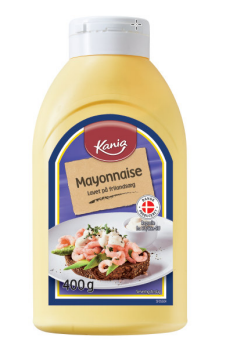
Lidl Denmark is recalling Kania mayonnaise, as growth of lactic acid bacteria has been detected in the product.

If you have the product, you should discard it or return it to the store where it was purchased.

Kania mayonnaise
Image of the product

Which food is recalled

Kania mayonnaise
Net content 400 g
Best-before date 27-02-2024

Where is the product sold

The product is sold in Lidl stores throughout the country.

Why is the product being recalled?

Growth of lactic acid bacteria makes the product unsuitable as food.

What should you do as a consumer?

The Danish Veterinary and Food Administration advises consumers to return the product to the store where it was purchased or to discard it.

Who recalls the product

Lidl Denmark K/S, Carl Blochs Gade 89, 8000 Aarhus C.

Denmark – Lactic acid bacteria in Harboe Exotic ZERO sugar

Foedevarestyrelsen

Harboes Bryggeri A/S is recalling a batch of Harboe Exotic Zero Sugar, as the development of lactic acid bacteria has been detected in the product. If you have the product, you should discard it or return it to the store where it was purchased.

Which food is recalled
Harboe Exotic ZERO Sugar
Net content: 1.5 L
Best before date: 29.05.2024
LOT no. 290524
EAN barcode no.: 5711018035742

Where is the product sold
The product is sold in: Rema1000 stores throughout the country

Why is the product being recalled?
Lactic acid bacteria make the product unsuitable as food.

What should you do as a consumer?
The Danish Veterinary and Food Administration advises consumers to return the product to the store where it was purchased, or to discard it.

Who recalls the product
Harboes Bryggeri A/S
Spegerborgvej 34
4230 Skælskør

Singapore – Recall of Marusan Banana Soy Milk (1000ml) from Japan due to possible product spoilage

SFA

The Consumer Affairs Agency, Government of Japan has recalled Marusan Banana Soy Milk from Japan due to possible  product spoilage. As the implicated product was imported into Singapore, SFA has directed the importer, Imei (Exim) Pte Ltd., to recall the implicated product. The recall is ongoing.
Consumers who have purchased the implicated products should not consume it. Those who have consumed the products and are unwell should seek medical attention. Consumers may contact their point of purchase for enquiries.
Details of the implicated product as follows:
Product Name:
Marusan Banana Soy Milk (1000ml)
Country of Origin: Japan
Lot No.: JAN code – 4901033 630188
Expiry Date: November 4, 2023 to April 12, 2024
Picture: Consumer Affairs Agency, Government of
Japan
Issued by the Singapore Food Agency
5 November 2023

Click to access for-immediate-release-recall-of-marusan-banana-soy-milk-(1000ml)-from-japan-due-to-possible-product-spoilage.pdf

Research – Unveiling Fresh-Cut Lettuce Processing in Argentine Industries: Evaluating Salmonella Levels Using Predictive Microbiology Models

MDPI

Abstract

A survey was performed to gather information on the processing steps, conditions, and practices employed by industries processing ready-to-eat (RTE) leafy vegetables in Argentina. A total of seven industries participated in the survey. A cluster analysis of the data obtained was performed to identify homogeneous groups among the participating industries. The data collected were used as inputs of two predictive microbiology models to estimate Salmonella concentrations after chlorine washing, during storage and distribution of final products, and to rank the different practices according to the final estimated Salmonella levels. Six different clusters were identified by evaluating the parameters, methods, and controls applied in each processing step, evidencing a great variability among industries. The disinfectant agent applied by all participating industries was sodium hypochlorite, though concentrations and application times differed among industries from 50 to 200 ppm for 30 to 110 s. Simulations using predictive models indicated that the reductions in Salmonella in RTE leafy vegetables would vary in the range of 1.70–2.95 log CFU/g during chlorine-washing depending on chlorine concentrations applied, washing times, and vegetable cutting size, which varied from 9 to 16 cm2 among industries. Moreover, Salmonella would be able to grow in RTE leafy vegetables during storage and distribution, achieving levels of up to 2 log CFU/g, considering the storage and transportation temperatures and times reported by the industries, which vary from 4 to 14 °C and from 18 to 30 h. These results could be used to prioritize risk-based sampling programs by Food Official Control or determine more adequate process parameters to mitigate Salmonella in RTE leafy vegetables. Additionally, the information gathered in this study is useful for microbiological risk assessments.

Research – UK retailers report Campylobacter in chicken data for 2023

Food Safety News

Supermarkets in the United Kingdom have reported mixed Campylobacter in chicken results for the first two quarters of 2023.

The Food Standards Agency (FSA) maximum target level is up to 7 percent of birds with more than 1,000 colony-forming units per gram (CFU/g) of Campylobacter.

Data from the retailers covers the first half of 2023 on high findings of Campylobacter in fresh, shop-bought, UK-produced chickens.

Results at Morrisons, Asda, and Sainsbury’s went up while Marks and Spencer recorded lower levels. The percentage of positives varied by quarter at Waitrose and Lidl and stayed the same for Co-op.

Campylobacter is the most common cause of bacterial food poisoning in the UK, and the dose needed to make people sick can be as low as a few hundred cells.

Tesco has stopped publishing data as it has changed how it monitors the pathogen in chicken, so findings are not comparable with other retailers. Aldi has not updated its related webpage or provided the figures when asked to do so by Food Safety News.

Research – Haemolytic uraemic syndrome in children England, Wales, Northern Ireland, and Ireland: A prospective cohort study

Cambridge Org

Abstract

Haemolytic uraemic syndrome (HUS) caused by infection with Shiga toxin-producing Escherichia coli (STEC) is a relatively rare but potentially fatal multisystem syndrome clinically characterised by acute kidney injury. This study aimed to provide robust estimates of paediatric HUS incidence in England, Wales, Northern Ireland, and the Republic of Ireland by using data linkage and case reconciliation with existing surveillance systems, and to describe the characteristics of the condition. Between 2011 and 2014, 288 HUS patients were included in the study, of which 256 (89.5%) were diagnosed as typical HUS. The crude incidence of paediatric typical HUS was 0.78 per 100,000 person-years, although this varied by country, age, gender, and ethnicity. The majority of typical HUS cases were 1 to 4 years old (53.7%) and female (54.0%). Clinical symptoms included diarrhoea (96.5%) and/or bloody diarrhoea (71.9%), abdominal pain (68.4%), and fever (41.4%). Where STEC was isolated (59.3%), 92.8% of strains were STEC O157 and 7.2% were STEC O26. Comparison of the HUS case ascertainment to existing STEC surveillance data indicated an additional 166 HUS cases were captured during this study, highlighting the limitations of the current surveillance system for STEC for monitoring the clinical burden of STEC and capturing HUS cases.