Category Archives: Laboratory

Ireland – FSAI Recall – E.coli VTEC in Raw Milk Cheese

FSAIfsai

Verocytotoxigenic Escherichia coli (VTEC) has been detected in several batches of gouda cheese produced by Kilshanny Farmhouse Cheese using raw milk.  The company has been ordered by the Department of Agriculture, Food and the Marine to withhold placing any further batches on the market. Consumers are advised not to eat the implicated cheese.

USA – USDA Recall – Staphylococcus Enterotoxin – Pork Sausages

USDAEurofins Food Testing UK

Lee Bros. Foodservice Inc., a San Jose, Calif., establishment, is recalling 740 pounds of sausage products that may be contaminated with Staphylococcus aureus enterotoxin, the U.S. Department of Agriculture’s Food Safety and Inspection Service (FSIS) announced today.

The following products are subject to recall: [View Label]

  • 16 oz packages of Lee’s Sandwiches brand Pork Sausages produced on 2/11/13 with an identifying code “042P” printed on the back of the package
  • 16 oz packages of Lee’s Sandwiches brand Pork and Chicken Sausages produced on 2/12/13 with an identifying code of “043PC” printed on the back of the package

Each package bears the establishment number “Est. 11041” inside the USDA Mark of Inspection. The products were sold at the wholesale and retail level in Arizona, California, Oklahoma, Nevada, Texas and online.

The problem was discovered by FSIS personnel during a food safety assessment. The inspector was reviewing processing records and found that the water level in the product may have been high enough to allow for the production of Staphylococcus aureus enterotoxin. FSIS has received no reports of illnesses associated with consumption of these products. Individuals concerned about an illness should contact a physician.

USA – Recall Meatballs – Listeria monocyotgenes

USDAEurofins Food Testing UK

E. & F. Inc., a St. Louis establishment, is recalling approximately 123
pounds of frozen, ready-to-eat meatballs due to possible contamination with
Listeria monocytogenes, the U.S. Department of Agriculture’s Food
Safety and Inspection Service (FSIS) announced today.

Research – Effect of Temperatures on the Growth, Toxin Production, and Heat Resistance of Bacillus cereus in Cooked Rice

Mary Ann LeibertBacillus_cereus_01

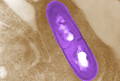
Bacillus cereus is capable of producing enterotoxin and emetic toxin, and Bacillus foodborne illnesses occur due to the consumption of food contaminated with endospores. The objectives of this study were to investigate the growth and toxin production of B. cereus in cooked rice and to determine the effect of temperature on toxin destruction. Cooked rice inoculated with B. cereus was stored at 15, 25, 35, and 45°C or treated at 80, 90, and 100°C. The results indicated that emetic toxin was produced faster than enterotoxin (which was not detected below 15°C) at all the storage temperatures (15–45°C) during the first 72 h. Emetic toxin persisted at 100°C for 2 h, although enterotoxin was easily to be destroyed by this treatment within 15 min. In addition, B. cereus in cooked rice stored at a warm temperature for a period was not inactivated due to survival of the thermostable endospores. These data indicate that the contaminated cooked rice with B. cereus might present a potential risk to consumers. Results from this study may help enhance the safety of such food, and provide valuable and reliable information for risk assessment and management, associated with the problem of B. cereus in cooked rice.

RASFF Alerts – E.coli – Chilled Beef Carpaccio – Warty Venus – Clams

RASFF-shigatoxin-producing Escherichia coli in chilled beef carpaccio from Italy in Germany

RASFF-too high count of Escherichia coli (330 MPN/100g) in warty venus (Venus verrucosa) from Croatia in Italy

RASFF -too high count of Escherichia coli (930 MPN/100g) in chilled clams from Spain in France

Research – Current Intervention Strategies for the Microbial Safety of Sprouts

Ingenta Connect

Sprouts have gained popularity worldwide due to their nutritional values and health benefits. The fact that their consumption has been associated with numerous outbreaks of foodborne illness threatens the $250 million market that this industry has established in the United States. Therefore, sprout manufacturers have utilized the U.S. Food and Drug Administration recommended application of 20,000 ppm of calcium hypochlorite solution to seeds before germination as a preventative method. Concentrations of up to 200 ppm of chlorine wash are also commonly used on sprouts. However, chlorine-based treatment achieves on average only 1- to 3-log reductions in bacteria and is associated with negative health and environmental issues. The search for alternative strategies has been widespread, involving chemical, biological, physical, and hurdle processes that can achieve up to 7-log reductions in bacteria in some cases. The compilation here of the current scientific data related to these techniques is used to compare their efficacy for ensuring the microbial safety of sprouts and their practicality for commercial producers. Of specific importance for alternative seed and sprout treatments is maintaining the industry-accepted germination rate of 95% and the sensorial attributes of the final product. This review provides an evaluation of suggested decontamination technologies for seeds and sprouts before, during, and after germination and concludes that thermal inactivation of seeds and irradiation of sprouts are the most practical stand-alone microbial safety interventions for sprout production.

Research – Food Poisoning and Online Food Shopping

Liebert Open Access

Food sold over the internet is an emerging business that also presents a concern with regard to food safety. A nationwide foodborne disease outbreak associated with sandwiches purchased from an online shop in July 2010 is reported. Consumers were telephone interviewed with a structured questionnaire and specimens were collected for etiological examination. A total of 886 consumers were successfully contacted and completed the questionnaires; 36.6% had become ill, with a median incubation period of 18 h (range, 6–66 h). The major symptoms included diarrhea (89.2%), abdominal pain (69.8%), fever (47.5%), headache (32.7%), and vomiting (17.3%). Microbiological laboratories isolated Salmonella enterica serovar Enteritidis, Salmonella Virchow, Staphylococcus aureus, Bacillus cereus, and enterotoxigenic Escherichia coli from the contaminated sandwiches, Salmonella Enteritidis and Salmonella Virchow from the patients, and Salmonella Enteritidis and Staphylococcus aureus from food handlers. Pulsed-field gel electrophoresis genotyping suggested a common origin of Salmonella bacteria recovered from the patients, food, and a food handler. Among the pathogens detected, the symptoms and incubation period indicated that Salmonella, likely of egg origin, was the probable causative agent of the outbreak. This outbreak illustrates the importance of meticulous hygiene practices during food preparation and temperature control during food shipment and the food safety challenges posed by online food–shopping services.

Research – Pathogen Adaptation – Salmonella – Staphylococcus aureus

Science DailyiStock_000012710183Small

Bacteria can evolve rapidly to adapt to environmental change. When the “environment” is the immune response of an infected host, this evolution can turn harmless bacteria into life-threatening pathogens. A study published on December 12 in PLOS Pathogens provides insight into how this happens.

Science Daily

A protein in Salmonella inactivates mast cells — critical players in the body’s fight against bacteria and other pathogens — rendering them unable to protect against bacterial spread in the body, according to researchers at Duke Medicine and Duke-National University of Singapore (Duke-NUS).

Science Daily

Scientists have used a new method to map the response of every salmonella gene to conditions in the human body, providing new insight into how the bacteria triggers infection.

Science Daily

Scientists at the Stanford University School of Medicine have revealed that formerly overlooked sites deep inside the nose may be reservoirs for Staphylococcus aureus, a major bacterial cause of disease.

Research – Pecan Shell Inhibition of Listeria

Wiley Online LaboratoryEurofins Food Testing UK

Growers and processors of USDA certified organic foods are in need of suitable organic antimicrobials. The purpose of the research reported here was to develop and test natural antimicrobials derived from an all-natural by-product, organic pecan shells. Unroasted and roasted organic pecan shells were subjected to solvent free extraction to produce antimicrobials that were tested against Listeria spp. and L. monocytogenes serotypes to determine the minimum inhibitory concentrations (MIC) of antimicrobials. The effectiveness of pecan shell extracts were further tested using a poultry skin model system and the growth inhibition of the Listeria cells adhered onto the skin model were quantified. The solvent free extracts of pecan shells inhibited Listeria strains at MICs as low as 0.38%. The antimicrobial effectiveness tests on a poultry skin model exhibited nearly a 2 log reduction of the inoculated cocktail mix of Listeria strains when extracts of pecan shell powder were used. The extracts also produced greater than a 4 log reduction of the indigenous spoilage bacteria on the chicken skin. Thus, the pecan shell extracts may prove to be very effective alternative antimicrobials against food pathogens and supplement the demand for effective natural antimicrobials for use in organic meat processing.

Research – Listeria in Cheese sites – E.coli O157/Salmonella on Spinach

Science Direct

Inhibition of Escherichia coli O157:H7 and Salmonella enterica on spinach and identification of antimicrobial substances produced by a commercial Lactic Acid Bacteria food safety intervention
The microbiological safety of fresh produce is of concern for the U.S. food supply. Members of the Lactic Acid Bacteria (LAB) have been reported to antagonize pathogens by competing for nutrients and by secretion of substances with antimicrobial activity, including organic acids, peroxides, and antimicrobial polypeptides. The objectives of this research were to: (i) determine the capacity of a commercial LAB food antimicrobial to inhibit Escherichia coli O157:H7 and Salmonella enterica on spinach leaf surfaces, and (ii) identify antimicrobial substances produced in vitro by the LAB comprising the food antimicrobial. Pathogens were inoculated on freshly harvested spinach, followed by application of the LAB antimicrobial. Treated spinach was aerobically incubated up to 12 days at 7 °C and surviving pathogens enumerated via selective/differential plating. l-Lactic acid and a bacteriocin-like inhibitory substance (BLIS) were detected and quantified from cell-free fermentates obtained from LAB-inoculated liquid microbiological medium. Application of 8.0 log10 CFU/g LAB produced significant (p < 0.05) reductions in E. coli O157:H7 and Salmonella populations on spinach of 1.6 and 1.9 log10 CFU/g, respectively. It was concluded the LAB antimicrobial inhibited foodborne pathogens on spinach during refrigerated storage, likely the result of the production of metabolites with antimicrobial activity.

Mary Ann Leibert

Collaborative Survey on the Colonization of Different Types of Cheese-Processing Facilities with Listeria monocytogenes

Cross-contamination via equipment and the food-processing environment has been implicated as the main cause of Listeria monocytogenes transmission. The aim of this study, therefore, was to determine the occurrence and potential persistence of L. monocytogenes in 19 European cheese-processing facilities. A sampling approach in 2007–2008 included, respectively, 11 and two industrial cheese producers in Austria and the Czech Republic, as well as six Irish on-farm cheese producers. From some of the producers, isolates were available from sampling before 2007. All isolates from both periods were included in a strain collection consisting of 226 L. monocytogenes isolates, which were then typed by serotyping and pulsed-field gel electrophoresis (PFGE). In addition, metabolic fingerprints from a subset of isolates were obtained by means of Fourier-transform infrared (FTIR) spectroscopy. PFGE typing showed that six processing environments were colonized with seven persistent PFGE types of L. monocytogenes. Multilocus sequence typing undertaken on representatives of the seven persisting PFGE types grouped them into distinct clades on the basis of country and origin; however, two persistent strains from an Austrian and an Irish food processor were shown to be clonal. It was concluded that despite the fact that elaborate Hazard Analysis and Critical Control Point concepts and cleaning programs are applied, persistent occurrence of L. monocytogenes can take place during cheese making. L. monocytogenes sanitation programs could be strengthened by including rapid analytical tools, such as FTIR, which allow prescreening of potentially persistent L. monocytogenes contaminants.