Category Archives: Klebsiella

Research – Microbial analysis and factors associated with contamination of ready-to-eat chili pepper sauce in Buea municipality, Cameroon

AJFS

Chili peppers sauce is a dietary complement largely consumed in Cameroon. It is consumed in a powder or wet (pepper sauce) form or directly introduced into cooked food. In this study, the microbiological quality of chili pepper sauce used as food complement in the Buea municipality was assessed. The study was an observational and cross-sectional study involving 70 chili pepper sauce samples from food vendors. The samples were cultured on Salmonella-Shigella agar, violet red bile agar, plate count agar and the colonies isolated were enumerated and identified using the Enterosystem 18R. Factors associated with microbial count were identified using a multiple linear regression model. Bacteria isolate from chili pepper sauce were mainly Entrobacter cloacae (31.57%), Citrobacter freundii (15.78%) and Klebsiella pneumonia (15.78%) and other Enterococcal speciesFactors associated with bacteria count were: age of the vendor, number of customers served, types of food and food storage conditions (covering, heating, type of storage containers). Chili pepper sauce used as food complement in Buea Municipality were contaminated with Enteric microorganisms and may represents a potential public health hazard to consumers. The presence of these microorganisms from chilli pepper sauce could result from poor handling.

Research – Survival and Histamine Production by Histamine-Forming Bacteria Exposed to Low Doses of Gamma Irradiation

JFP

ABSTRACT

Histamine poisoning occurs when fish containing high amount of histamine are consumed. Because histamine is thermally stable, control of histamine-forming bacteria in seafood is an appropriate strategy for preventing the formation of histamine. One prevention method is the use of gamma irradiation on the histamine formers. To understand the effect of gamma irradiation on the histamine-forming bacteria, laboratory isolates of the prolific histamine formers Morganella morganii, Klebsiella variicola, and Proteus vulgaris were exposed to various doses of gamma radiation in nutrient broth and tuna muscle spiked with histamine formers. None of the test bacteria survived in tuna muscle irradiated at 2.0 kGy. K. variicola was highly sensitive to gamma irradiation and was eliminated at a dose of 1.5 kGy. Histamine production also was reduced significantly as the radiation dose increased. These results suggest that gamma irradiation can effectively eliminate histamine-forming bacteria and reduce the threat of histamine poisoning from seafood.

HIGHLIGHTS
  • Histamine-forming bacteria are highly susceptible to low levels of gamma irradiation.
  • Prolific histamine formers in tuna meat were eliminated by irradiation at 2.0 kGy.
  • Irradiation at 1.5 kGy reduced the level of histamine formers in tuna meat by 4 to 5 log CFU.
  • Histamine formation in tuna meat can be controlled by low levels of gamma irradiation.

Research – Foodborne Klebsiella pneumoniae: Virulence Potential, Antibiotic Resistance, and Risks to Food Safety

JFP

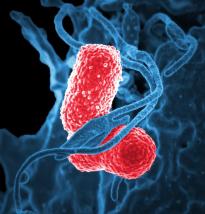
CDC Klebsiella

Image CDC

ABSTRACT

Gastrointestinal carriage of Klebsiella pneumoniae is a predisposing factor for liver abscess in several Asian countries. To determine whether hypervirulent K. pneumoniae in the gut may be transmitted through food, we screened a range of raw and ready-to-eat retail food by culture and recovered K. pneumoniae in 21% (147 of 698) of samples tested. Based on PCR, no K. pneumoniae isolates carried the rmpA gene linked to community-acquired pyogenic liver abscess, providing no evidence of a link between food and liver disease. However, phenotypic resistance to multiple antibiotic classes was seen through disk diffusion tests, and carriage of genetic elements (wcaG and capsule types K1, K2, and K54) associated with increased virulence (8%, 11 of 147) was observed by PCR. Multidrug-resistant isolates were from raw vegetables, chicken or pork liver, and a ready-to-eat poultry dish; one multidrug-resistant K. pneumoniae isolate from raw bean sprouts was resistant to a third-generation cephalosporin (ceftriaxone). Although K. pneumoniae may be present in food without causing harm, we found isolates belonging to the K1 capsular serotype coexisting with the wcaG gene, one also conferring multidrug resistance. K. pneumoniae that carry antibiotic resistance genes, regardless of pathogenicity, may increase the available genetic pool of resistance along the food chain. Hygienic food handling practices are necessary to lower risks of acquiring K. pneumoniae and other opportunistic pathogens.

Research – Inactivation modeling of microorganisms using organic chlorine and acetic acid solutions and estimation of growth kinetics of adhered Enterobacteriaceae to lettuce (Lactuca sativa L.)

Wiley Online

This study was aimed to evaluate the efficiency of the organic chlorine and acetic acid solutions on the inactivation of adhered cells of Escherichia coliCronobacter sakazakii and Klebsiella pneumoniae to lettuce. Besides, the growth and inactivation of K. pneumoniae adhered to lettuce was modeled. According to the findings, the use of chlorine solution (170 mg/ml of total residual chlorine) caused reductions of 1.8, 1.9, and 1.9 log for E. coliC. sakazakii, and K pneumoniae, respectively, were recorded. In this regard, the organic chloramine was more effective in controlling the adhered microorganisms while compared with 1.5% acetic acid solution, while the addition of 0.5% sodium chloride to 1.5% acetic acid solution increased microbial inactivation. K. pneumoniae RC‐34 inactivation was characterized by the presence of two sub‐populations with different resistances against the proposed sanitizers. Moreover, the growth kinetic parameters of K. pneumoniae RC‐34 adhered to lettuce leaves were very similar to that reported in the literature for nonadhered microorganisms. The predictive data generated can be valuable to assess the growth and inactivation of produce adhered microorganisms in leafy produce.

Research – Your energy-efficient washing machine could be harbouring pathogens

Science Daily 

For the first time ever, investigators have identified a washing machine as a reservoir of multidrug-resistant pathogens. The pathogens, a single clone of Klebsiella oxytoca, were transmitted repeatedly to newborns in a neonatal intensive care unit at a German children’s hospital. The transmission was stopped only when the washing machine was removed from the hospital. The research is published this week in Applied and Environmental Microbiology, a journal of the American Society for Microbiology.

Research – Effect of Sodium Hypochlorite on Biofilm-Forming Ability of Histamine-Producing Bacteria Isolated from Fish

Journal of Food Protection

ABSTRACT

Histamine poisoning occurs when temperature-abused marine fish containing elevated levels of histamine are consumed. Histamine-producing bacteria found in fish can colonize processing surfaces and form biofilms. In this study, the biofilm-forming abilities of histamine-producing bacteria from Indian mackerel (Rastrelliger kanagurta) and the effect of hypochlorite treatment on biofilm formation were studied. The isolates of this study produced histamine in the range of 471 to 2,126 ppm. The histidine decarboxylase gene hdc was detected in all isolates producing histamine except in one strain each of Psychrobacter pulmonis and Proteus vulgaris. All isolates tested in this study produced moderate biofilms under control conditions, whereas exposure to 1 and 3 ppm of sodium hypochlorite significantly enhanced biofilm formation. However, exposure to 5 ppm of sodium hypochlorite showed an inhibitory effect on biofilm formation by all the isolates except Klebsiella variicola. The results of this study suggest that histamine-producing bacteria can form stable biofilms and that this activity may be enhanced by the application of low levels of sodium hypochlorite, a phenomenon that might influence the persistence of histamine-producing bacteria in fish processing areas.

HIGHLIGHTS
  • Bacteria isolated from Indian mackerel produced histamine in the range of 471 to 2,126 ppm.

  • Histamine-producing bacteria isolated from the same fish can vary in the levels of histamine produced.

  • The hdc gene was not detected in one strain each of Psychrobacter pulmonis and Proteus vulgaris.

  • All histamine-producing bacteria formed moderate biofilms under control conditions.

  • Exposure to 1 and 3 ppm of sodium hypochlorite increased biofilm formation by histamine-producing bacteria.

Research – Lactic acid fermentation of legume seed sprouts as a method of increasing the content of isoflavones and reducing microbial contamination

Science Direct

CDC Klebsiella

Image CDC

Legume seeds and sprouts are a rich source of phytoestrogens in the form of isoflavonoids. For the first time, lactic acid fermentation of four types of legume sprouts was used to increase the content of isoflavonoids and microbiological safety. After germination, the highest content of isoflavonoids was observed in the clover and chickpea sprouts, which amounted to 1.1 g/100 g dw., whereas the lactic acid fermentation allowed the increase to as much as 5.5 g/100 g dw. The most beneficial properties were shown by fermented chickpea sprouts germinated in blue light. During fermentation the number of lactic acid bacteria increased by 2 Log10CFU/mL (LU), whereas mold decreased by 1 LU, E.coli and Klebsiellasp. by 2 LU, Salmonella sp. and Shigella sp did not occur after fermentation, similar to Staphylococcus epidermidis, while S. aureus and S. saprophyticus decreased by 3 LU and in some trials were not detected.

Research – Sick pets as potential reservoirs of antibiotic-resistant bacteria in Singapore

BiomedCentral 


An analysis of 186 diagnostic reports collected from a veterinary clinic in Singapore between 2014 to 2016 showed that sick companion animals can carry bacteria that are of significance to human health. Among the 186 specimens submitted, 82 showed polymicrobial growth (45%, 82/186) and in total, 359 bacteria were isolated. Of the 359 bacteria reported, 45% (162/359) were multi-drug resistant and 18% (66/359) were extended-spectrum-beta-lactamase species. Resistance to broad-spectrum antibiotics were also observed among individual species. Namely, methicillin-resistance among Staphylococcus pseudintermedius (63%, 32/51) and Staphylococcus aureus (50%, 4/8); fluoroquinolone-resistance among Escherichia coli (40%, 17/42) and carbapenem-resistance among Klebsiella pneumoniae (7%, 2/30) were noted. Our analysis suggests that sick pets may contribute to the pool of clinically relevant antibiotic-resistant bacteria and play a role in the spread of antibiotic resistance in Singapore. A more extensive study to better understand the extent of distribution and the factors affecting transmission of antibiotic-resistant bacteria to and from pets is necessary.

UK – Publication of survey of antimicrobial resistance in bacteria in chicken and pork

FSA

We have today published the results of a survey we commissioned to assess the amount of antimicrobial resistance (AMR) in bacteria in fresh pork mince and fresh and frozen chicken on sale in shops in the UK. These findings will help to establish a baseline of the occurrence, types and levels of AMR in bacteria found in these UK retail meats which will inform future surveillance on AMR in these foods.

This survey follows on from an authoritative report by a group established by the Advisory Committee on Microbiological Safety of Food (ACMSF) to advise us on research questions and potential approaches to AMR in the food chain.

The survey involved the testing of Campylobacter in chicken samples and Salmonella in pork mince samples for the occurrence of antimicrobial resistant bacteria. The survey also looked for AMR in other bacteria in both types of meat including Enterococci, Klebsiella and Escherichia coli.  Read the final report of the survey.

Research – Europe: Officials warn of the rise of carbapenem resistance, ‘We should be very concerned’

Outbreak News Today 


Infections with bacteria resistant to carbapenems, a group of highly effective antibiotics, pose a significant threat to patients and healthcare systems in all EU/EEA countries, warns ECDC in a Rapid Risk Assessment.

Resistance to carbapenems has been reported with increasing frequency and geographical spread since the beginning of the 1990s. The global rise of carbapenem resistance in a certain family of bacteria called Enterobacteriaceae, or carbapenem-resistant Enterobactericaeae (CRE), represents a threat to healthcare delivery and patient safety.

“We should be very concerned about the rise in carbapenem resistance in the EU/EEA as there are very few options for the treatment of patients with CRE infections” says Dominique Monnet, Head of ECDC’s Antimicrobial Resistance and Healthcare-Associated Infections Programme. “In recent years, the proportions of carbapenem resistance in Klebsiella pneumoniae – a type of Enterobacteriaceae – rapidly increased to high levels in Greece, Italy and Romania. The same could happen to other EU/EEA countries if appropriate measures are not taken. But the spread of CRE can likely be controlled in most countries through the implementation of appropriate prevention and control measures in hospitals and other healthcare settings.”