Category Archives: Illness

USA – Article – How do Pathogens get into Produce

This is a very interesting article in Food Safety News which I think would be of interest to Food Microbiologists and the Produce industry alike. the link will take you to the full article

Food Safety News

Leafy greens, lettuce, cantaloupes, mangoes and strawberries. These are just some of the foods that have sickened or even killed people when they were contaminated with foodborne pathogens such as E. coli, Listeria and Salmonella.

Amidst the confusing swirl of information about these and other produce outbreaks, the question arises: Were some of these pathogens inside the produce? Could it be — in some cases, anyway — that the plant’s roots sucked the pathogens up out of the soil and transferred them through the plant into its edible parts?

Hong Kong – Recall Australian Cheese Implicated in the Listeria Outbreak

Center for Food SafetyFood Testing

The Centre for Food Safety (CFS) of the Food and Environmental Hygiene Department today (January 21) urged the public not to consume certain soft cheese products, manufactured in Australia, which might have been contaminated with Listeria monocytogenes. The trade should stop selling the concerned products.

“The CFS noticed through its routine Food Incident Surveillance System that some cheese products produced by an Australian manufacturer, Jindi Cheese Pty Ltd, were suspected to be contaminated with Listeria monocytogenes.  The concerned company is now voluntarily recalling all soft and semi-soft cheese products it manufactured on or before January 6 this year,” a spokesman for the CFS said.

“The CFS subsequently received notification from the International Food Safety Authorities Network of the World Health Organisation / the Food and Agriculture Organisation of the United Nations that some of the affected products have been imported to Hong Kong,” he added.

According to the information provided by the Australian authorities, the CFS has contacted two chain stores which had imported the affected products, namely PARKnSHOP and Pacific Gourmet. The shops were instructed to stop selling the products concerned (see attached table). The CFS was also informed that the companies had set up hotlines to answer consumers’ enquiries about the product recall, PARKnSHOP at 2606 8658 and Pacific Gourmet at 3184 0805.

“In case any consumers have bought the affected soft cheese products, they should stop eating them, regardless of batches. To be prudent, consumers who recently bought any cut portion of gourmet soft cheese and are unsure of the product details should also stop eating it. People are advised to seek medical advice if they feel sick after consuming the products concerned. So far the CFS has not received any reports of persons feeling unwell after consumption of the affected products,” the spokesman said.

Australia – Two Dead and a Miscarriage Listeria Cheese Outbreak

Food Safety News

A Listeria monocytogenes outbreak linked to soft cheeses has sickened 18 people in Australia; two victims have died and one woman miscarried as a result of infection with the bacteria.

The outbreak began in November of 2012, at which time an 84-year-old man from Victoria and a 44-year-old Tasmanian man died as a result of their illnesses, and a New South Wales woman suffered a miscarriage.  By mid-December, 11 cases of listeriosis (Listeria infection) had been identified as part of the outbreak, and brie and camembert cheese sold under the brand names of Jindi and Wattle Valley were implicated as the source of the bacteria.

As a result, health authorities announced a recall of four types of cheeses – 1kg packages of Jindi brie, 1kg packages of Jindi camembert, 1kg  packages of Wattle Valley double brie and 1kg packages of Wattle Valley camembert – all with a best before date of December 21.

Now a further seven cases have been connected to the outbreak, health authorities announced Friday. Officials also expanded the recall to include all cheeses manufactured by the Jindi company up to and including January 6.

UK – Takeaway Owner Jailed for E.coli Outbreak

BBC NewsEcoli Istock

The owner of a Cardiff takeaway has been jailed for eight months following an outbreak of E. coli.

Diar Wali Ali admitted at Cardiff magistrates’ court to 23 food hygiene offences and was jailed on Monday.

In August 2011, nine customers fell ill with food poisoning after visiting the Adonis Kebab House in City Road, Roath.

The takeaway was closed for two weeks while inspections were carried out and the council was satisfied the risks had been removed.

Councillor Derek Morgan, chair of Cardiff council’s public protection committee, said people had a right to eat safe food and certain levels of hygiene.

“However, where poor hygiene practices and substandard conditions are found, we take immediate action to safeguard public health,” he said.

“I hope this case helps to show how seriously we take this commitment and demonstrate that, where appropriate, we will use the full force of the law to ensure food safety regulations are met.”

Australia New Advice About Listeriosis – Rising Number of Cases

NSW Food Authority

The NSW Food Authority advises those most at risk to avoid the following ready to eat foods:

  • soft cheese such as brie, blue, fetta, camembert and ricotta
  • cold chicken or turkey particularly if sliced or diced – such as used in chicken sandwiches
  • cold meats, pate and meat spreads
  • pre-prepared or packaged salads greens and salads
  • raw seafood such as oysters, sashimi, smoked salmon or oysters (canned oysters are safe)
  • sushi
  • unpasteurised dairy products including raw goat’s milk and Roquefort cheese

“Signs of listeriosis include flu-like symptoms such as fever, muscle aches, nausea and diarrhoea that can sometimes lead to septicemia, meningitis and in some cases, miscarriage in pregnant women,” Dr McAnulty said.

Investigations into listeriosis are complex as it can be difficult to identify the source. Symptoms of illness can take up to 70 days to appear.

Healthy people usually show only mild symptoms. However, in people at risk, early symptoms of listeria infection include fever, headache, tiredness and aches and pains.

Other useful links can be found at the base of the articel in the link above.

USA – E.coli O157 – Outbreak in Leafy Greens

Food Poisoning Bulletin

 E.coli outbreak likely caused by leafy greens has sickened five people in Hamilton County, Ohio, Food Poisoning Bulletin has learned. The outbreak was confirmed this morning by  Mike Samet, a public information officer, for the county’s public health department.

There are five confirmed cases and one probable case of  E.coli 0157:H7 infection which were likely caused by tainted leafy greens, he said. The case patients, four females and two males,  range in age from 12 to 83 and first showed signs of illness from December 10 to December 15, 2012

UK – HPA Update on Norovirus Activity

HPANorovirus

Latest figures from the Health Protection Agency (HPA) show there have been 4,140 laboratory confirmed cases of norovirus this season (from week 27 to week 52 2012). The latest figures are 63 per cent higher than the number of cases reported at this point last year, when there were 2,535 cases.

The downward trend in the number of confirmed cases has continued in line with the previous report although this is to be expected following the Christmas and New Year period. We will expect to see the number of cases increase again over the following few weeks.

During the two weeks up to 6 January there were 33 hospital outbreaks reported, compared to 30 in the previous fortnight, bringing the total of outbreaks for the season to 673.

Research Papers – Pathogens – Celery – Irradiation – Spinach – Boiling Shrimp – Low Water Activity and Pathogens

Science Direct

Illnesses from Escherichia coli O157:H7, Listeria monocytogenes, and Salmonella have been associated with the consumption of numerous produce items. Little is known about the effect of consumer handling practices on the fate of these pathogens on celery. The objective of this study was to determine pathogen behavior at different temperatures under different storage conditions. Commercial fresh-cut celery was inoculated at ca. 3 log CFU/g onto either freshly cut or outer uncut surfaces and stored in either sealed polyethylene bags or closed containers. Samples were enumerated following storage for 0, 1, 3, 5, and 7 days when held at 4 °C or 12 °C, and after 0, 8, and 17 h, and 1, and 2 days when held at 22 °C. At 4 °C, all populations declined by 0.5–1.0 log CFU/g over 7 days. At 12 °C, E. coli O157:H7 and Salmonella populations did not change, while L. monocytogenes populations increased by ca. 0.5 log CFU/g over 7 days. At 22 °C, E. coli O157:H7, Salmonella, and L. monocytogenes populations increased by ca. 1, 2, or 0.3 log CFU/g, respectively, with the majority of growth occurring during the first 17 h. On occasion, populations on cut surfaces were significantly higher than those on uncut surfaces. Results indicate that populations are reduced under refrigeration, but survive and may grow at elevated temperatures.

The Packer

Researchers say common packinghouse practices for fresh spinach are not sufficient to avoid outbreaks of salmonella-related illnesses and recently showed that irradiation eliminated almost all cross contamination from field and packing operations.

Scientists at Texas A&M University and Pusan National University in South Korea set out to develop a quantitative risk assessment model to evaluate microbial hazards during the processing of baby spinach leaves, according to their abstract recently published with their results in the journal “ScienceDirect.”

IngentaConnect

The purpose of this study was to determine whether the current consumer method of boiling shrimp until floating and pink in color is adequate for destroying Listeria and Salmonella. Shrimp samples were submerged in bacterial suspensions of Listeria and Salmonella for 30 min and allowed to air dry for 1 h under a biosafety cabinet. Color parameters were then measured with a spectrophotometer programmed with the CIELAB system. Twenty-four shrimp samples were divided into groups (days 0, 1, or 2) and stored at 4°C. The samples were treated by placing them in boiling water (100°C) on days 0, 1, and 2. The shrimp were immediately removed from the boiling water once they floated to the surface, and color parameters were measured. Bacterial counts were determined, and the log CFU per gram was calculated. The effect of sodium tripolyphosphate on the color change of cooked shrimp also was determined. Initial bacterial counts on shrimp after air drying were 5.31 ± 0.14 log CFU/g for Salmonella Enteritidis, 5.24 ± 0.31 log CFU/g for Salmonella Infantis, 5.40 ± 0.16 log CFU/g for Salmonella Typhimurium, 3.91z 0.11 log CFU/g for Listeria innocua, 4.45 ± 0.11 log CFU/g for Listeria monocytogenes (1/2a), and 3.70 ± 0.22 log CFU/g for Listeria welshimeri. On days 0, 1, and 2, all bacterial counts were reduced to nondetectable levels for shrimp samples that floated. The average time for shrimp to float was 96 ± 8 s. The bacterial counts remained at nondetectable levels (<10 log CFU/g) during refrigerated (4°C) storage of cooked shrimp for 2 days. The redness, yellowness, and lightness were significantly higher (P < 0.0001) for the cooked shrimp than for the uncooked shrimp on all days tested. The standard deviation for redness in the cooked shrimp was large, indicating a wide range of pink coloration on all days tested. The results suggest that boiling shrimp until they float will significantly reduce Listeria and Salmonella contamination, but color change is not a good indication of reduction of these pathogens because of the wide natural color variation.

IngentaConnect

Foods and food ingredients with low water activity (aw) have been implicated with increased frequency in recent years as vehicles for pathogens that have caused outbreaks of illnesses. Some of these foodborne pathogens can survive for several months, even years, in low-aw foods and in dry food processing and preparation environments. Foodborne pathogens in low-aw foods often exhibit an increased tolerance to heat and other treatments that are lethal to cells in high-aw environments. It is virtually impossible to eliminate these pathogens in many dry foods or dry food ingredients without impairing organoleptic quality. Control measures should therefore focus on preventing contamination, which is often a much greater challenge than designing efficient control measures for high-aw foods. The most efficient approaches to prevent contamination are based on hygienic design, zoning, and implementation of efficient cleaning and sanitation procedures in the food processing environment. Methodologies to improve the sensitivity and speed of assays to resuscitate desiccated cells of foodborne pathogens and to detect them when present in dry foods in very low numbers should be developed. The goal should be to advance our knowledge of the behavior of foodborne pathogens in low-aw foods and food ingredients, with the ultimate aim of developing and implementing interventions that will reduce foodborne illness associated with this food category. Presented here are some observations on survival and persistence of foodborne pathogens in low-aw foods, selected outbreaks of illnesses associated with consumption of these foods, and approaches to minimize safety risks.

Canada – First E.coli O157 of 2013

Ecoli Blog

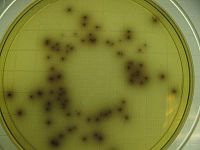
CBC News reports that Canadian health officials say seven people in Nova Scotia have been infected with E. coli, likely E. coli O157:H7. Five people have been treated in hospital and released, while two people remain hospitalized. One is suffering from kidney failure. The people who have fallen ill range from their late teens to their 80s.

Five to six cases of E. coli O157:H7 have also been reported in New Brunswick, leading health officials to believe the common denominator is likely a food item that is sold in both provinces.

According to the Herald News, because there are no known new cases, officials are hoping that whatever caused the illness was a food with a short shelf life, such as a type of fruit or vegetable

USA – 10 Largest Food Poisoning Outbreaks 2012

Food Poisoning BulletinEcoli Istock

The 10 largest multi-state food poisoning outbreaks of 2012 poisoned 1,071 people in 45 states. Various strains of just three pathogens- Salmonella, E.coli and  Listeria were the cause of the 10 largest multi-state foodborne illness outbreaks, based on the total number of people sickened.  Six of them were caused by Salmonella, three by E.coli and one by Listeria. These dangerous bacteria  made their way into unsuspecting consumers through a variety of food sources including  meat, cheese, fish, peanut butter, fruit and vegetables.