Category Archives: Foodborne Illness

US Ground Beef Recall – E.coli Risk

Food Safety News 

Lancaster Frozen Foods and G&W Incorporated are recalling about 6,908 pounds of ground beef products that may be contaminated with E. coli, according to the South Carolina meat and poultry inspection department.
 
Lab testing by the meat and poultry inspection department confirmed a positive result for E.coli in a ground product at Lancaster Frozen Foods. That lot was held by the company, but additional ungroud product from the same lot had been used in other production lots resulting in the recall.
 
No illnesses have been reported.

Bagged Salads Recall Expanded – US and Canada – Listeria monocytogenes

Food Safety News

The California Department of Public Health warned California residents not to eat certain bagged salads manufactured by River Ranch Fresh Foods, LLC due to potential contamination with Listeria monocytogenes on Friday. 

According to a news release from CDPH, Salinas, California-based River Ranch Fresh Foods initiated a voluntary recall of bagged salads after routine sampling detected Listeria monocytogenes in two packages of shredded iceberg lettuce purchased from retail locations in California and Colorado. The recalled salad products were distributed nationwide to retail and foodservice outlets under various sizes and packaged under the brand names of River Ranch, Farm Stand, Hy-Vee, Marketside, Shurfresh, The Farmer’s Market, Cross Valley, Fresh n Easy, Promark, and Sysco.  

Although the bagged salads being recalled are no longer available for sale, CDPH issued a news release to warn consumers that they may have the recalled products in their homes.  The agency published a list of all recalled products to aid consumers in identifying recalled products.

CIFA – Recall

The public warning issued on May 19, 2012has been expanded to include new products and Best Before date codes.

The Canadian Food Inspection Agency (CFIA) is warning the public as well as various importers, distributors, retailers and food service establishments such as hotels, restaurants, cafeteria, hospitals and nursing homes not to serve or consume various salads described below because these products may be contaminated with Listeria monocytogenes.

This is a part of the larger recall of retail and foodservice salads initiated by River Ranch Fresh Foods, LLC, California, USA with distribution in Canada.
Anyone who finds recalled lettuce should discard it or return it to the point of purchase for a refund. 

There have been no reported illnesses associated with the consumption of these products.

RASFF Reports –

RASFF – Mould in German Hazlenuts

RASFF – Enterobacteria in German dried bovine meat

RASFF – Salmonella Montivideo in Netherlands lamb meal.

RASFF – Histamine in frozen Indonesian tuna,

Canadian Recalls – Listeria- Salads and Onions

CIFA

The Canadian Food Inspection Agency (CFIA) and Sobeys Inc. are warning the public not to consume Compliments brand salads and prepared foods described below because they may be contaminated with Listeria monocytogenes.

CIFA

The Canadian Food Inspection Agency (CFIA) is warning the public not to consume the Gills Onions brand Fresh Diced Red Onions described below because the product may be contaminated with Listeria monocytogenes.

The affected product, Gills Onions brand Fresh Diced Red Onions, Product of U.S.A., is sold in 198 g packages, bearing UPC 6 43550 00045 0, Best Before date 05/17/12, and lot code 51RDA1A2119. This product is known to be distributed in Ontario and may have been distributed nationally.

There have been no reported illnesses associated with the consumption of this product.

US – Bagged Salads Recall – Listeria monocytognes

FDA

River Ranch Fresh Foods, LLC of Salinas, CA is initiating a voluntary recall of retail and foodservice bagged salads, because they have the potential of being contaminated with Listeria monocytogenes following routine random retail salad finished product tests conducted in the marketplace by the Food & Drug Administration.

Listeria monocytogenes is an organism which can cause serious and sometimes fatal infections in young children, frail or elderly people, and others with weakened immune systems. Although healthy individuals may suffer only short-term symptoms such as high fever, severe headache, stiffness, nausea, abdominal pain and diarrhea, Listeria infection can cause miscarriages and stillbirths among pregnant women.

Retail salad products under this recall were distributed nationwide under various sizes and packaged under the brand names of River Ranch, Farm Stand, Hy-Vee, Marketside, Shurfresh, and The Farmer’s Market.

There have been NO reported illnesses associated with this recall.

US Papaya Recall – Salmonella

FDA

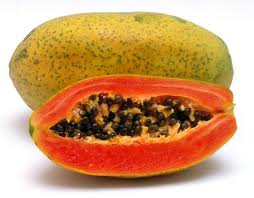
Caribe Produce LTD Co. of McAllen, TX, is recalling 286 cases of Papaya Maradol, Caribeña Brand papayas packed in 35 lb. cartons marked with the brand “ Caribeña “ and “ Product of Mexico” stamped on the side.

These papayas have the potential to be contaminated with Salmonella, an organism which can cause serious and sometimes fatal infections in young children, frail or elderly people, and others with weakened immune systems. Healthy persons infected with Salmonella often experience fever, diarrhea (which may be bloody), nausea, vomiting and abdominal pain. In rare circumstances, infection with Salmonella can result in the organism getting into the bloodstream and producing more severe illnesses such as arterial infections (i.e., infected aneurysms), endocarditis and arthritis.

The recalled Papaya Maradol, Caribeña Brand cases were distributed in the Bronx, New York in wholesale stores and through retail stores from May 14th, 2012 to May 17th, 2012.

No illnesses have been reported to date in connection with this problem.

The potential for contamination was noted after routine testing by the company revealed the presence of Salmonella in the product.

Research Netherlands – Norovirus Implications-Food

Cambridge Journals

Noroviruses are an important cause of acute gastroenteritis in humans. We incorporated new insights gained over the past decade in an updated estimate of the disease burden of (foodborne) norovirus illness in The Netherlands in 2009. The disease outcomes – non-consulting cases, visiting a general practitioner, hospitalization and mortality – and the foodborne proportion were derived from cohort studies, surveillance data and literature. Age-specific incidence estimates were applied to the population age distribution in The Netherlands in 2009. The general population incidence was 3800/100 000 (95% CI 2670–5460), including 0·4 fatal cases/100 000, resulting in 1622/100 000 (95% CI 966–2650) disability-adjusted life-years in a population of 16·5 million. The updated burden of norovirus is over twofold higher than previously estimated, due in particular to the new insights in case-fatality ratios. Results suggest that the burden of norovirus institutional outbreaks is relatively small compared to the burden of community-acquired norovirus infections.

Research Papers – Raw Milk Cheese Microbiology, Salmonella PCR, Hydrogen Peroxide – Listeria

Science Direct – Microbiology of Raw Milk Cheese

Cheese may be manufactured in the United States using raw milk, provided the cheese is aged for at least 60 days at temperatures not less than 35 °F (1.7 °C). There is now increased concern among regulators regarding the safety of raw milk cheese due to the potential ability of foodborne pathogens to survive the manufacturing and aging processes. In this study, 41 raw milk cheeses were obtained from retail specialty shops, farmers’ markets, and on-line sources. The cheeses were then analysed for the presence of Listeria monocytogenes, Salmonella, Escherichia coli O157:H7, Staphylococcus aureus, and Campylobacter. Aerobic plate counts (APC), coliform and yeast/mould counts were also performed. The results revealed that none of the enteric pathogens were detected in any of the samples tested. Five samples contained coliforms; two of those contained E. coli at less than 102 cfu/g. Three other cheese samples contained S. aureus. The APC and yeast-mould counts were within expected ranges. Based on the results obtained from these 41 raw milk cheeses, the 60-day aging rule for unpasteurized milk cheeses appears adequate for producing microbiologically safe products.

Science Direct – Salmonella Serotyping PCR

The most commonly used method for serotyping Salmonella spp. is based on the Kaufmann–White scheme, and is composed of serological reactions using antibodies to LPS agglutinins. The multiplex PCR used in this investigation was established by Kim et al. to serotype the 30 most common clinical Salmonella serotypes, as determined by CDC. The PCR assay consists of two five-plex reactions and a single two-plex PCR reaction, based on six genetic loci from Salmonella enterica serotype Typhimurium and four loci from S. enterica serotype Typhi. In this investigation, we further evaluated the method for serotyping Salmonella spp. using a reference collection, environmental samples collected from a Mid-Atlantic region tomato farm study, four food matrices spiked with different Salmonella serotypes and a proficiency test. The PCR assay was first evaluated using DNA isolated from pure cultures of isolates obtained from various clinical and environmental samples, and then DNA isolated from broth cultures of food matrices of “Red round” and Roma tomatoes, Romaine lettuce, green onions and Serrano peppers spiked with serotypes Newport, Typhimurium, Javiana and Saintpaul, respectively. The results showed that the PCR assay correctly serotyped Salmonella spp. from the clinical, environmental, spiked food matrices, and proficiency test samples. These findings are significant because the PCR assay was successful in the identification of Salmonella in the spiked samples in a broth culture containing other non-salmonella organism. This method may be a useful resource for the food safety community.

Science Direct – Hydrogen Peroxide – Listeria

The impact of sodium hypochlorite and hydrogen peroxide (H2O2 at 1 and 5%) solutions on Listeria innocua in red bell peppers, total mesophiles in strawberries and total coliforms in watercress was studied. Quality attributes such as colour, firmness and pH were studied for all products; total anthocyanins content was determined for strawberries. Sensorial analyses were also carried out for all products. Results showed that H2O2 (5%) provided the highest reductions of microbial loads. Besides H2O2 (1%) had a lower impact, it was more effective than water-washings. Sodium hypochlorite solutions lead to microbial reductions comparable to water risings. In terms of quality, H2O2 (5%) was the solution with higher negative impact on products’ colour. For strawberries, such colour alterations were also detected by sensorial analyses. The anthocyanins content decreased significantly. Overall it was found that H2O2 (1%) was a good sanitizer solution, since microbial reduction was attained while quality factors did not suffer considerable alterations.

E.coli HUS Syndrome

Food Poisoning Bulletin

These are 10 things you should know if your child has an E. coli infection or has been diagnosed with HUS:

  • When your child is diagnosed with E. coli and/or HUS, you should contact your local health department immediately because additional testing needs to be done to determine if your child’s case of E. coli-HUS is part of an outbreak of illnesses. This is important because you may be able to provide information to health officials that helps them find the source of the outbreak.
  • You should not throw away food you have that you suspect is the source of your child’s E. coli infection.  The food may need to be tested for the presence of E. colibacteria and may be the “smoking gun” that determines the source of the outbreak.
  • The food eaten immediately before onset of illness is generally not the cause of the illnessbecause the incubation period for E. coli is from 3 to 10 days.
  • Because of the long incubation period, finding the source of an outbreak of E. coli-HUS can be difficult.During that time, the contaminated food responsible for the illnesses may have been eaten or thrown out. Even if a specific food source is not found, the outbreak investigation may lead to a legally responsible party, such as a restaurant.
  • Quickly finding the source of an E. coli-HUS outbreak can help prevent additional illnesses.
  • The CDC recommends that antibiotics not be used for E. coli infectionsbecause these medications increase the risk of developing HUS. You should make sure your doctor is aware of this.
  • Medical research and better understanding of HUS by medical professionals has improved care for HUS patients, lowering the mortality rate. Even if your child is extremely ill, he or she will most likely survive.
  • HUS may result in major long-term complications, including chronic renal failure, neurologic dysfunction, and hypertension.
  • Even if your child appears to have recovered, he or she is at greater risk of developing kidney problems in the future, including renal failure, and may need a kidney transplant.

It should be noted that a closely related illness, thrombotic thrombocytopenic purpura (TTP), is also caused by infection with  Shiga-toxin producing E. coli (generally E. coli O157). In adults, the diagnosis for E. coli victims with kidney failure is often TTP-HUS and often involves neurological problems, including stroke, that result in permanent brain damage.

EFSA – Scientific Opinion – Food Safety Risk Management of Composite Foods

EFSA

This Opinion reviews the factors that affect microbial survival and growth in composite products, and in foods in general. It concludes that the main factors to be considered are: water activity, pH, temperature and duration of storage, processing, and intensity and duration of other non-thermal physical processes applied. Prevalence and concentration of the pathogens in food are important to determine the risk for consumers. The opinion presents a review of the quantitative microbiology models and databases that can be used to provide quantitative estimations of the impact of the above factors on the survival and growth of the main bacterial pathogens. In composite products, migration and diffusion of moisture and substances among the ingredients may change their physico-chemical parameters, particularly at the interfaces. Therefore, the assessment of the risk posed by composite products needs to consider the combinations of parameters most permissive to survival and growth of pathogens. Two complementary approaches are proposed for the identification and profiling of microbiological hazards in different specific composite products. The first one is based on past outbreaks and prevalence of hazards in the products and leads to the conclusion that the most frequent hazard-composite product combinations are Salmonella in cakes and bakery products. The second one consists in decision tools based on the impact on the pathogens of food composition and food processing. Categorisation of the risk for composite products requires information on their composition, processing and further handling, which can largely differ for foods belonging to the same category. Further conditions may influence the risk and should be verified, i.e. hygienic conditions during preparation of the composite products and their ingredients, shelf-life conditions, and reliability of cooking by consumers to inactivate pathogens. The decision tools developed apply to all composite products considered by the mandate, as well as to all other foods.