Category Archives: Food Testing

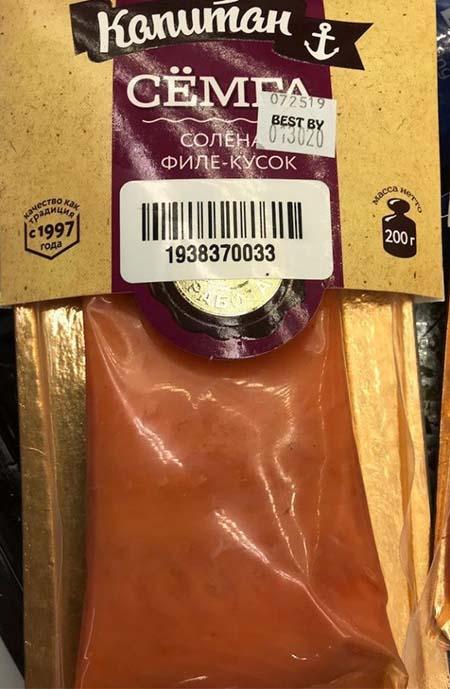
USA – Euphoria Fancy Food Inc. Recalls “Capitan K Salmon Fillet” Due to Possible Health Risk – Listeria monocytogenes

FDA

Company Announcement

Euphoria Fancy Food Inc of Brooklyn, NY is recalling its 7.05 oz packages of “CAPITAN K” salmon slightly salted pieces because they may be contaminated with Listeria monocytogenes, an organism which can cause serious and sometimes fatal infections in young children, frail or elderly people and others with weakened immune systems. Although healthy persons may suffer only short-term symptoms such as high fever, severe headache, stiffness, nausea, abdominal pain and diarrhea, Listeria infection can cause miscarriages and stillbirths among pregnant women.

The recalled “ CAPITAN K ” salmon slightly salted pieces were distributed nationwide in retail stores and through mail orders. The product comes in 7.05 oz, vacuum package marked with container code of 070519 and with a best by date of 01/30/20. The product UPC code is 607059000362.

No illnesses have been reported to date and connection with this problem.

The contamination was discovered after sampling by New York State Department of Agriculture and Market Food Inspectors and subsequent analysis by Food Laboratory personnel revealed the presence of Listeria monocytogenesin some 7.05 oz vacuum packages of “CAPITAN K” salmon slightly salted pieces.

Consumers who have purchased 7.05 oz vacuum packages of “CAPITAN K” salmon slightly salted pieces are urged to return them to the place of purchase for a full refund. Consumers with questions may contact the company at 718-768-3400.


Company Contact Information

Consumers:
Michael Briskin
 718-768-3400

Product Photos

Australia – The Flagstaff Group Ltd t/as Flagstaff Fine Foods — Frozen Meals 360g – Listeria monocytogenes

Gov Au

Photograph of Flagstaff Frozen Meals

Identifying features

Other
See attached list of batch numbers

What are the defects?

The recall is due to potential microbial contamination (Listeria monocytogenes).

What are the hazards?

Listeria may cause illness in pregnant women and their unborn babies, the elderly and people with low immune systems.

What should consumers do?

Any consumers concerned about their health should seek medical advice and should return the products to the place of purchase for a full refund.

For further information, contact Flagstaff Fine Foods by phone on 02 4272 0280 or at https://www.flagstaffgroup.com.au

Traders who sold this product

Meals on Wheels and community organisations

Where the product was sold
Australian Capital Territory
New South Wales
Queensland
South Australia
Dates available for sale
  • 16 May 2019 – 20 September 2019

Recall advertisements and supporting documentation

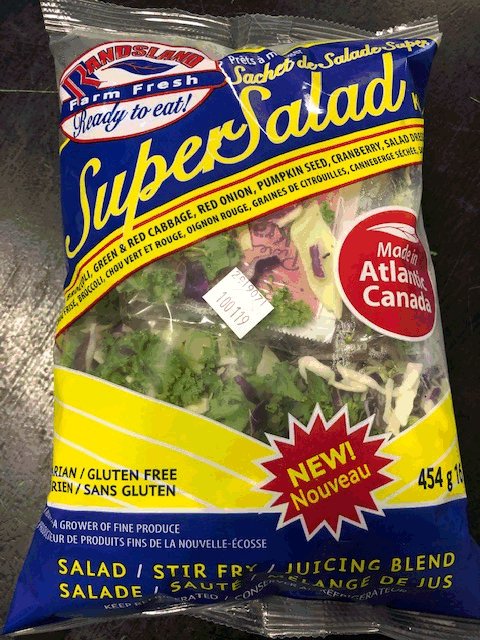
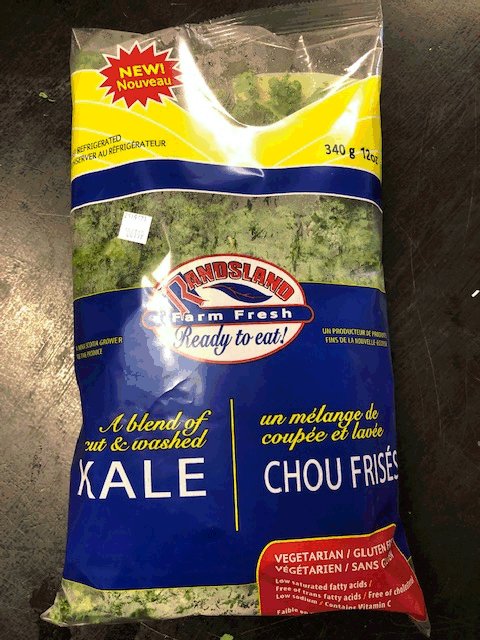
Canada – Food Recall Warning – Randsland brand Super Salad Kit and Randsland brand Kale recalled due to Listeria monocytogenes

CFIA

Recall details

Ottawa, September 24, 2019 – Randsland Farms Inc. is recalling Randsland brand Super Salad Kit and Randsland brand Kale from the marketplace due to possible Listeria monocytogenes contamination. Consumers should not consume the recalled products described below.

Recalled products

Brand Name Common Name Size UPC Code(s) on Product
Randsland Super Salad Kit 454 g 0 57225 00005 6 2919071
100119
Randsland Kale 340 g 0 57225 00006 3 2919071
100119

What you should do

If you think you became sick from consuming a recalled product, call your doctor.

Check to see if you have the recalled products in your home. Recalled products should be thrown out or returned to the store where they were purchased.

Food contaminated with Listeria monocytogenes may not look or smell spoiled but can still make you sick. Symptoms can include vomiting, nausea, persistent fever, muscle aches, severe headache and neck stiffness. Pregnant women, the elderly and people with weakened immune systems are particularly at risk. Although infected pregnant women may experience only mild, flu-like symptoms, the infection can lead to premature delivery, infection of the newborn or even stillbirth. In severe cases of illness, people may die.

Background

This recall was triggered by the Canadian Food Inspection Agency’s (CFIA) inspection activities. The CFIA is conducting a food safety investigation, which may lead to the recall of other products. If other high-risk products are recalled, the CFIA will notify the public through updated Food Recall Warnings.

The CFIA is verifying that industry is removing the recalled products from the marketplace.

Illnesses

There have been no reported illnesses associated with the consumption of these products.

Product photos

Printer ready version of photos

  • Randsland - Super Salad Kit
  • Randsland - Kale

UK – Factory put uncooked sausages in pre-packed sandwiches posing ‘danger to health’ – Listeria monocytogenes

The Mirror

Middlesbrough factory Café Class Ltd extended the use-by dates of boiled eggs, cheddar cheese and streaky bacon, in ‘listeria outbreak risk’

A factory has been ordered to stop making food after it put uncooked sausages into pre-packed sandwiches.

The Middlesbrough-based factory has been told by health authorities it risked causing a listeria outbreak.

Café Class Ltd has been served with a hygiene emergency prohibition order for food safety practices that posed an “immediate danger to human health”.

A court this week heard how the company extended the use-by dates of boiled eggs, cheddar cheese and streaky bacon, putting consumers’ health at risk.

The risk to the public was so severe that the Food Standards Agency (FSA) issued an immediate product recall on sandwiches, wraps and salads made by the company.

USA – University of Maryland – Salmonella Outbreak

Health UMD

kswfoodworld Salmonella

Image CDC

As of today, we are aware of three UMD students who have been identified with Salmonella, two confirmed at outside medical facilities and one at the University Health Center. The source of the infection is not yet clear – two of the three individuals have eaten at a variety of campus dining facilities and one has not eaten on campus at all.  The three students who were identified with this infection have fully recovered without incident.  The Prince George’s County Health Department and the Maryland Department of Health are looking into these incidents to form a better understanding of any potential source.

USA -Roland Foods, LLC Initiates a Voluntary Recall of Roland Red Lumpfish Caviar and Roland Black Lumpfish Caviar Due to Possible Health Risk – Clostridium botulinum

FDA

Company Announcement

Roland Foods, LLC of New York, New York is initiating a voluntary recall of its red and black lumpfish caviar products, which were manufactured at Ora ehf in Iceland, because they have the potential to be contaminated with Clostridium botulinum, a bacterium which can cause life-threatening illness or death. Consumers are warned not to use the product even if it does not look or smell spoiled.

Botulism, a potentially fatal form of food poisoning, can cause the following symptoms: general weakness, dizziness, double-vision and trouble with speaking or swallowing. Difficulty in breathing, weakness of other muscles, abdominal distension and constipation may also be common symptoms. People experiencing these problems should seek immediate medical attention.

The Red Lumpfish Caviar and Black Lumpfish Caviar, sold in glass jars, were distributed nationwide to retailers and foodservice distributors across the United States. The UPC code is located on the back of the label, under the bar code.

The following products are subject to the voluntary recall:

Affected Product
Product Name Roland® Black Caviar Whole Grain Lumpfish Roland® Black Caviar Whole Grain Lumpfish Roland® Black Caviar Whole Grain Lumpfish Roland® Black Caviar Whole Grain Lumpfish
Item # 20002 20004 20020 20040
Batch # 206 J018803, J019622, J020834 226 223
Pack Size 2×48/2 oz 48/2 oz 2×24/3.5 oz 12X12 oz
UPC #s
Item UPC 41224200029 41224200029 41224200203 41224200401
Outside Case UPC 10041224200026 10041224200040 10041224200200 10041224200408
Carton Markings
Product Name Roland Caviar Roland Caviar Roland Caviar Roland Caviar
Item # 20002 20004 20020 20040
Batch # 206 J018803, J019622, J020834 226 223
UPC # 10041224200026 10041224200040 10041224200200 10041224200408
Other Relevant Info This product is sold as 2 cases tie wrapped together This is a repack therefore product UPC is different than item # This product is sold as 2 cases tie wrapped together
Affected Product
Product Name Roland® Red Caviar Whole Grain Lumpfish Roland® Red Caviar Whole Grain Lumpfish Roland® Red Caviar Whole Grain Lumpfish Roland® Red Caviar Whole Grain Lumpfish
Item # 20202 20204 20220 20240
Batch # 154, 155 J018821, J020767 168 175
Pack Size 2×48/2 oz 48/2 oz 2×24/3.5 oz 12×12 oz
UPC #s
Item UPC 41224202023 41224202023 41224202207 41224202405
Outside Case UPC 10041224202020 10041224202044 10041224202204 10041224202402
Carton Markings
Product Name Roland Caviar Roland Caviar Roland Caviar Roland Caviar
Item # 20202 20202 20220 20240
Batch # 154, 155 J018821, J020767 168 175
UPC # 10041224202020 10041224202044 10041224202204 10041224202402
Other Relevant Info This is sold as 2 cases tie wrapped together This is a repack therefore product UPC is different than item # This is sold as 2 cases tie wrapped together

No other sizes or lots of red and black caviar or Roland® products are affected by this voluntary recall.

No illnesses have been reported to date.

The potential for contamination was noted after routine testing found that the product experienced a processing issue.

Production and distribution of the product has been suspended as FDA and the company continue their investigation as to the source of the problem.

Consumers can visit our website at www.rolandfoods.comExternal Link Disclaimer, or contact our 24-Hour Consumer Hotline at 800.221.4030 ext. 222 for further information about this voluntary recall and for further instructions.

USA – Worker Diagnosed With Hepatitis A At Yumcious Donuts in Philadelphia

Food Poisoning Bulletin

A food worker at Yumcious Donuts at the Quick Stop at 3001 Kensington Avenue in Philadelphia, Pennsylvania has been diagnosed with hepatitis A, according to news reports. That person worked at that location between August 20, 2019 and September 4, 2019.

While the risk of contracting the illness is “very low” according to the Philadelphia Department of Public Health, they are recommending that anyone who ate there within the last two weeks get vaccinated against the pathogenic virus. Unfortunately, at this time everyone who ate there when the worker was contagious is past the two week window when the vaccine is effective.

USA – Philadelphia mystery E. coli outbreak adds 19th Victim

Food Poison Journal

ecoli

Image CDC

According to Food Safety News, Philadelphia officials have added more people to the patient list in an E. coli outbreak that is associated with “shared restaurant exposure.”

Earlier this month the Philadelphia Department of Public Health reported the outbreak but did not name a specific restaurant or restaurants. The department continues to decline to provide that information.

“A total of 19 cases were identified in this cluster. The last report was received on Sept. 6, and our investigation into the source continues,” department spokesman James Garrow told Food Safety News.

Outbreak investigations typically involve interviews with patients to find out what they ate and where they ate it in the days before becoming ill.

Canada – Gripe Water products recalled over microbial contamination

CTV News

Gripe Water

TORONTO — Products sold at major Canadian retailers to treat symptoms of upset stomachs and other gastrointestinal issues in babies have been recalled.

Health Canada announced the recall Saturday, saying that tests by the products’ manufacturer showed microbial contamination.

The recalled product is sold as Gripe Water and advertised as being alcohol- and preservative-free. According to Health Canada, it is marketed as a “gentle antacid for quick relief of baby’s minor stomach upsets such as colic, cramps, gas, sour stomach, and hiccups especially during teething.”

UK – The BIJ: At least 100 cases of salmonella poisoning from British eggs

Poultry Med


Source: BIJ22 September, 2019

At least 100 cases of people have been poisoned after eating British eggs contaminated with one of the most dangerous forms of salmonella, The Bureau of Investigative Journalism can reveal, despite government assurances that the risk had been virtually eliminated.
There have been at least 100 cases recorded in the past three years, and 45 since January, in a major outbreak that health officials have traced back to contaminated eggs and poultry farms.
Despite outbreaks of this strain occurring for more than three years, the government has issued no public warnings about the safety of hens’ eggs. In 2017, the Food Standards Agency (FSA) told the public that it was safe for vulnerable people, including pregnant women, the elderly and children, to eat raw, runny or soft-boiled eggs. At the time the head of the FSA said: “The risk of salmonella is now so low you needn’t worry.” Internal records obtained by the Bureau show that 25 egg-laying poultry flocks in the UK have tested positive for salmonella this year. Seven were contaminated with the most serious strains of the bacteria, including Salmonella enteritidis, the strain behind this major outbreak. Two egg-packing factories – one of which supplies leading supermarkets – have also been contaminated.
Eggs from the infected flocks were kept from sale and either sent for processing to kill the bacteria or disposed of, while the birds were culled.
However, contaminated eggs still reached the public, with Public Health England (PHE) confirming 45 people had been poisoned since January. The exact route to the public is unclear. PHE told the Bureau it was not aware of any deaths.
An egg business that supplies major supermarkets is among those contaminated by the bug. One of Fridays Ltd’s egg-packing factories was temporarily closed this year to deal with salmonella, which has also been found on three farms that supply the business. The company, which produces 10m eggs a week, confirmed it had removed the farms from its supply chain and disinfected the factory.
Fridays said in a statement: “Like all responsible UK egg farmers and egg packers, we carry out regular testing of our firms and those of our suppliers … Salmonella occurs naturally in the environment. However, with regular precautionary testing, vaccination of hens and rigorous control procedures, its prevalence in farming can be minimised.” Public Health England told the Bureau that it had been investigating this strain of salmonella for three years. The Bureau has established that in 2018, 28 flocks tested positive for salmonella, four of them with dangerous strains.
This means that PHE knew of poisoning cases even as the FSA declared that almost all eggs produced in the UK were free of salmonella, and that it was safe once again for those vulnerable to infection to eat raw eggs.
In October 2017 the FSA said that the presence of salmonella in eggs had been “dramatically reduced” and that British Lion eggs – which make up about 90% of UK egg production – were safe to eat.
The FSA confirmed the outbreak to the Bureau.