Category Archives: Food Technology

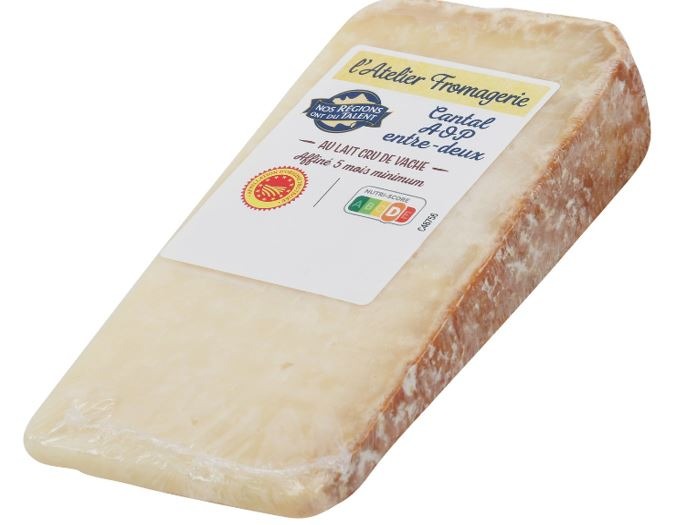
France – CANTAL BETWEEN TWO AOP 200G – STEC E.coli 026

RASFF

Product Category
Food
Product subcategory
Milk and dairy products
Product brand name
THE CHEESE WORKSHOP – OUR REGIONS HAVE TALENT
Model names or references
CANTAL BETWEEN TWO AOP 200G
Product identification
GTIN Batch Date
3564709190280 24157105 Minimum durability date 03/07/2024
Packaging
200G
Start/End of marketing date
From 06/08/2024 to 07/04/2024
Storage temperature
Product to be kept in the refrigerator
Health mark
FR 31.582.001.CE
Geographic area of ​​sale
Whole France
Distributors
E.LECLERC

Research – Avoiding Food Poisoning: How a Tiny Chip Can Make Your Food Safer Than Ever

Scitech Daily

A new microfluidic chip developed by researchers enables quick, effective detection of multiple foodborne pathogens simultaneously, improving food safety and preventing contaminated products from entering the market.

Every so often, a food product is recalled because of some sort of contamination. For consumers of such products, a recall can trigger doubt in the safety and reliability of what they eat and drink. In many cases, a recall will come too late to keep some people from getting ill.

In spite of the food industry’s efforts to fight pathogens, products are still contaminated and people still get sick. Much of the problem stems from the tools available to screen for harmful pathogens, which are often not effective enough at protecting the public.

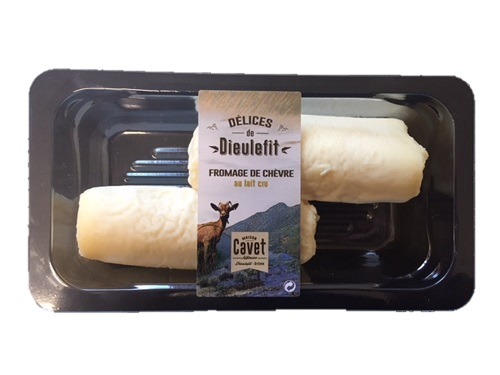
France – PURE GOAT BUCHETTE -Salmonella

Gov France

Product category
Food
Product subcategory
Milk and dairy products
Product brand name
CAVET PICODONS
Model names or references
BUCHETTE PUR GOAT – Box 2x100g BUCHETTE PUR GOAT ORGANIC – Box 2x100g BUCHETTE PUR GOAT ORGANIC – Box 12x100g
Product identification
GTIN Batch Date
3332300069126 1806_5 Use-by date 07/18/2024
3332300009153 AB127_0806 Expiry date 07/17/2024
3332300069164 1906_5 Expiry date 07/19/2024
3332300009153 1906_6 Expiry date 07/19/2024
3332300069126 AB127_0806 Use-by date 07/21/2024
3332300009153 AB127_0806 Expiry date 07/14/2024
Packaging
Plastic tray x 2 logs Wooden box x 12 logs
Start/end date of marketing
From 06/15/2024 to 06/24/2024
Storage temperature
Product to keep in the refrigerator
Health mark
FR 26-114-001
Geographic area of ​​sale
Whole France
Distributors
METRO – CARREFOUR – U – MARKET – LECLERC – INTERMARCHE

RASFF Alert – E.coli – Chilled Beef

RASFF

E.coli in chilled beef from Argentina in Spain

Belgium – Raw milk butter “Beurre de Gribelle” from the Lenoir-Thibaut brand – Listeria monocytogenes

AFSCA

Boter-LP

In agreement with the AFSCA, Lenoir Pierre is withdrawing the salted and unsalted butter “Beurre de Gribelle” (250gr and 500gr) of the Lenoir-Thibaut brand from sale and is recalling it from consumers following the possible presence of Listeria monocytogenes.

Lenoir Pierre asks its customers not to consume this product and to return it to the point of sale at which it was purchased, where it will be refunded.

Product description Product
name: Gribelle butter
Use-by date: 06/24/2024
Batch number: 06/24/2024
Sales period: from 06/03/24 to 06/13/24
Packaging: paper
Weight: 250gr and 500gr

The product was sold in Gedinne’s own point of sale and intermarché (5575, Gedinne)

For any further information , contact: Thibaut Claudia via 0474958716 or lenoirpierre@skynet.be

Research – Bacteria Can Transfer from Plastic Mulch to Basil and Spinach Salad Leaves

Natural Science

Key Findings

  • The University of Stirling study found that human pathogens can transfer from plastic mulch fragments to ready-to-eat crops like basil and spinach within 24 hours
  • Pathogens such as Salmonella Typhimurium and Vibrio cholerae can persist on plastic mulch fragments for up to 14 days
  • The study highlights that removing plastic fragments and washing crops may not be enough to eliminate these pathogens, stressing the need for better management practices in agriculture
Plastic pollution is increasingly found in agricultural environments, where it contaminates soil and crops. A recent study from the University of Stirling[1] examined whether human pathogens can transfer from plastic mulch fragments to ready-to-eat crop plants, posing a risk to food safety and human health. The study focused on two pathogens, Salmonella Typhimurium and Vibrio cholerae, and found that both could persist on plastic mulch fragments for 14 days and transfer to the leaves of basil and spinach within 24 hours. This finding is significant as it highlights a new pathway for pathogen contamination in fresh produce, which has been a persistent issue with severe health, economic, and social impacts[2]. The study’s results suggest that even removing plastic fragments and washing crops may not be sufficient to eliminate these pathogens, emphasizing the need for better management practices in agricultural systems that use plastic mulches. Previous research has shown that biodegradable plastic films, although more environmentally friendly, can degrade rapidly and potentially release more microplastics into the soil compared to conventional films[3]. These microplastics can alter soil microbial communities and nutrient cycling, potentially affecting plant health and crop productivity. The University of Stirling study expands on this by demonstrating that these microplastics can also serve as vectors for human pathogens, further complicating the issue. Moreover, the degradation of plastic fragments in soil is highly variable, with some commercial polymer mixtures taking up to 48 days to degrade, while biodegradable formulations can degrade completely within 32 days[4]. The incorporation of plant growth-promoting bacteria like Bacillus subtilis can even accelerate this process. However, the rapid degradation of biodegradable plastics also means they can release pathogens more quickly into the environment, posing a continuous risk. Another concern is the contamination of agricultural soils through fertilizers composted from livestock and poultry manure, which often contain microplastics[5]. These microplastics can enter the soil and potentially carry pathogens, adding another layer of complexity to managing plastic pollution in agricultural settings. The University of Stirling study underscores the urgent need to address the co-pollutant pathogen risk associated with plastic pollution in agriculture. As the demand for intensive food production grows, so does the use of plastic mulches, making it crucial to understand and mitigate the risks they pose to food safety and human health. This research calls for improved agricultural practices and further studies to develop effective strategies for managing plastic pollution and its associated risks in food production systems.

Research – Cold plasma processing for food safety

Food Safety News

 Cold plasma is an emerging food processing technology which has been shown to effectively inactivate pathogenic bacteria, viruses, parasites, and fungi. The process uses high-voltage electricity to ionize air and/or defined gas blends to create a mixture of ions, free electrons, ozone, radical species, and other reactive products. This energetic plasma, which operates near room temperature, has been tested with fruits, vegetables, nuts, meats, cheeses, poultry, seeds, powders, and other foods.

Once created at the high voltage electrodes, the cold plasma is applied to foods and food contact surfaces. Forced air can blow the cold plasma over products and surfaces, as with plasma jet systems. This allows for the varying treatment distances of irregularly shaped foods. The commodity may also be moved in and out of the plasma field, as with dielectric barrier (DBD) systems. In either case, reactive chemical species in the cold plasma break the cellular structures, DNA, and proteins of pathogens on foods, inactivating them. Efficacy is dependent on treatment intensity and duration. Combining cold plasma with chemical sanitizers, high intensity light, or other food safety interventions can provide enhanced, synergistic pathogen inactivation. Short treatments with cold plasma can induce sublethal injury in pathogens, rendering them more susceptible to another sanitizing processes.

Research – Acid Adaptation Enhances Tolerance of Escherichia coli O157:H7 to High Voltage Atmospheric Cold Plasma in Raw Pineapple Juice

MDPI

Abstract

Pathogens that adapt to environmental stress can develop an increased tolerance to some physical or chemical antimicrobial treatments. The main objective of this study was to determine if acid adaptation increased the tolerance of Escherichia coli O157:H7 to high voltage atmospheric cold plasma (HVACP) in raw pineapple juice. Samples (10 mL) of juice were inoculated with non-acid-adapted (NAA) or acid-adapted (AA) E. coli to obtain a viable count of ~7.00 log10 CFU/mL. The samples were exposed to HVACP (70 kV) for 1–7 min, with inoculated non-HVACP-treated juice serving as a control. Juice samples were analyzed for survivors at 0.1 h and after 24 h of refrigeration (4 °C). Samples analyzed after 24 h exhibited significant decreases in viable NAA cells with sub-lethal injury detected in both NAA and AA survivors (p < 0.05). No NAA survivor in juice exposed to HVACP for 5 or 7 min was detected after 24 h. However, the number of AA survivors was 3.33 and 3.09 log10 CFU/mL in juice treated for 5 and 7 min, respectively (p < 0.05). These results indicate that acid adaptation increases the tolerance of E. coli to HVACP in pineapple juice. The potentially higher tolerance of AA E. coli O157:H7 to HVACP should be considered in developing safe juice processing parameters for this novel non-thermal technology.

Research – Fully automated E. coli and Enterococci monitoring

Envirotech

Rather than enduring the tedious procedure associated with the microbiological procedure in which bacteria colonies are left to grow and are then counted, the ColiMinder technology, which is sold and marketed in the UK by QCL (QuadraChem Laboratories Ltd), operates by taking a direct measurement of the sampled target organisms’ specific metabolic activity. ColiMinder provides fully automated, real-time microbiological measurements thereby offering users a continuous overview of water quality, therefore enabling quick and decisive reactions to contamination events. The live measurement data is highlighted on a dedicated website and users receive automatic notifications via SMS and email.

Research – Comparison of Three Air Sampling Methods for the Quantification of Salmonella, Shiga-toxigenic Escherichia coli (STEC), Coliforms, and Generic E. coli from Bioaerosols of Cattle and Poultry Farms

Science Direct

Abstract

Recent fresh produce outbreaks potentially associated with bioaerosol contamination from animal operations in adjacent land highlighted the need for further study to better understand the associated risk. The purpose of this research was to evaluate three sampling methods for quantifying target bacterial bioaerosols from animal operations. A dairy cattle and poultry farm located in Georgia, U.S. were visited six times each. Air was collected for 10 min using: 2-stage Andersen impactor with and without mineral oil overlay and impingement samplers. Sampling devices were run concurrently at 0.1, 1, and 2 m heights (n = 36). Andersen samplers were loaded with CHROMagar™ Salmonella, CHROMagar™ STEC, or Brilliance™ coliforms/E. coli. The impingement sampler contained buffered peptone water (20 mL) which was vacuum filtered through a 0.45 µm filter and placed onto the respective media. Plates were incubated at 37 ℃ for 48 h. PCR confirmation followed targeting ttr for Salmonella and stx1stx2, and eae genes for STEC. No significant differences were found among methods to quantify coliforms and E. coliSalmonella and STEC bioaerosols were not detected by any of the methods (Limit of detection: 0.55 log CFU/m3). E. coli bioaerosols were significantly greater in the poultry (2.76–5.00 log CFU/m3) than in the cattle farm (0.55–2.82 log CFU/m3) (p < 0.05), and similarly distributed at both stages in the Andersen sampler (stage 1:>7 μm; stage 2: 0.65–7 μm particle size). Sampling day did not have a significant effect on the recovery of coliforms/E. coli bioaerosols in the poultry farm when samples were taken at the broiler house exhaust fan (p > 0.05). A greater and constant emission of coliforms and E. coli bioaerosols from the poultry farm warrants further investigation. These data will help inform bioaerosol sampling techniques which can be used for the quantification of bacterial foodborne pathogens and indicator organisms for future research.