Category Archives: Food Technology

Research – Use of Acetic Acid to Partially Replace Lactic Acid for Decontamination against Escherichia coli O157:H7 in Fresh Produce and Mechanism of Action

MDPI

Escherichia coli O157:H7 is frequently detected in ready-to-eat produce and causes serious food-borne diseases. The decontamination efficacy of lactic acid (LA) is clearly established. In this study, LA was mixed with acetic acid (AA) to reduce costs while achieving consistent or better inhibitory effects. Time-kill curves and inoculation experiments using fresh-cut spinach and arugula indicated that 0.8%LA+0.2%AA shows similar antibacterial effects to those of 1%LA. To determine whether 1%LA and 0.8%LA+0.2%AA exert antibacterial effects by similar mechanisms, proteomics analysis was used. The proteins related to macromolecule localization, cellular localization, and protein unfolding were uniquely altered after the treatment with 1%LA, and the proteins related to taxis, response to stress, catabolic process, and the regulation of molecular function were uniquely altered after the treatment with 0.8%LA+0.2%AA. Based on these findings, combined with the results of a network clustering analysis, we speculate that cell membrane damage is greater in response to LA than to 0.8%LA+0.2%AA. This prediction was supported by cell membrane permeability experiments (analyses of protein, nucleotide, ATP, and alkaline phosphatase leakage), which showed that LA causes greater membrane damage than 0.8%LA+0.2%AA. These results provide a theoretical basis for the application of an acid mixture to replace LA for produce decontamination. View Full-Text

Research – A pilot-scale evaluation of using gaseous chlorine dioxide for decontamination of foodborne pathogens on produce and low-moisture foods

Wiley Online

Small-scale studies have shown that chlorine dioxide gas, ClO2(g), was effective for decontamination of produce, nuts, and spices. This study conducted a pilot-scale evaluation to identify effective ClO2(g) treatment parameters for commercial-scale applications. The gas was produced by a generator utilizing sodium chlorite and chlorine gas for decontamination of Shiga toxin-producing Escherichia coli (STEC), Listeria monocytogenes, and Salmonella inoculated on tomatoes, blueberries, baby-cut carrots, almonds, and peppercorns. Inoculated samples and 45 kg tomatoes in a 1,246-L treatment chamber were exposed to various ClO2(g) concentrations (mg/L) and times 9 (hr) at 70–95% RH to determine the treatment effects on the pathogen reductions. Results showed that the treatment caused higher reductions on produce. A ClO2(g) treatment of 1 mg/L-3 hr at 70% RH reduced 4.9–6.8, 5.1–5.6, and 4.2–6.3 log CFU/g of STEC, L. monocytogenes, and Salmonella, respectively, on produce, with the highest reductions on baby-cut carrots. For almonds and peppercorns, ClO2(g) treatments under higher RH caused higher reductions. The treatment of 2 mg/L-9 hr or 3 mg/L-4 hr at 95% RH reduced >4.0 log of STEC and Salmonella on almonds, and 1 mg/L-5 hr at 85% RH achieved >5.0 log reductions on peppercorns. Applying moisture to the surfaces of almonds caused >4.0 log reductions using 1 mg/L-5 hr at 95% RH. This study identified effective ClO2(g) treatment parameters for achieving >4.0 log reductions of common pathogens on tomatoes, blueberries, baby-cut carrots, almonds, and peppercorns and showed that ClO2(g) generator is suitable for large-scale decontamination. These findings can be used for pilot-scale ClO2(g) decontamination of these products and for testing using ClO2(g) for commercial-scale decontamination trials.

Research – Inactivation of Salmonella enterica serovar Typhimurium and Staphylococcus aureus in rice by radio-frequency heating 

Journal of Food Protection

The objectives of this study were to determine the effect of the milling degree (MD) of Oryza sativa L. (Korean rice) on the heating rate, pathogen inactivation (Salmonella Typhimurium and Staphylococcus aureus), and color change resulting from radio-frequency (RF) heating. Rice samples inoculated with pathogens were placed in a polypropylene jar and subjected to RF heating for 0-75 s. The heating rate of rice with a 2% MD was the highest during RF heating, followed by those with a 0, 8, and 10% MD, and the reduction of pathogens showed the same trend. The reduction of the levels of pathogens in rice with a MD 0 and 2% was significantly higher than that observed for rice with a MD of 8 and 10% under the same treatment conditions. For example, log reductions of S. Typhimurium in rice by 55 s RF heating were 3.64, 5.19, 2.18, and 1.80 for milling degree of 0, 2, 8, and 10%, respectively. At the same treatment conditions, log reduction of S. aureus were 2.77, 5.08, 1.15, and 0.90 for milling degree of 0, 2, 8, and 10%, respectively. The color of rice measured according to L*, a*, and b* was not significantly altered after RF heating, regardless of the MD. Therefore, the MD of rice should be considered before RF heating is applied to inactivate foodborne pathogens.

Research – Transfer of Salmonella from inert food contact surfaces to wheat flour, cornmeal and NaCl.

Journal of Food Protection

Salmonella contamination in a dry processing facility frequently requires removal methods that are non-aqueous. Removal of pathogens from food processing systems with a purge of uncontaminated dry food materials has been proposed, however, little is known with the respect to efficacy. In this study, survival of Salmonella on inert contact surfaces and transfer of Salmonella from inert contact surfaces to low-moisture foods was evaluated. Six stainless steel and polymeric food contact material types, in bead form, were contaminated at 11 log CFU/mL and then stored at two temperatures, 25°C and 4°C for six months. Simultaneously, three dry food materials/ingredients were used to remove Salmonella from contaminated beads. Wheat flour, cornmeal, and NaCl (1 g each) were mechanically mixed with 3 beads of each material type. The rate of microbial transfer from contaminated beads to food materials was measured. Further experimentation using multiple transfers were applied on two representative beads types, 316 stainless steel and polypropylene, representing common surface contact materials used in processing equipment. Survival of Salmonella on beads depended on storage temperature, surviving longer at 4°C compared to 25°C (p<0.05), but was not influenced by type of bead material. Transfer of Salmonella from stainless steel beads to flour was significantly greater than from plastic (p<0.05). Transfer rates from stainless steel to wheat flour, cornmeal, and NaCl were measured as -0.5713, -0.2592, and -1.4221 Log CFU Salmonella removed/cm 2 /g clean material used. Transfer rates for polypropylene to whole wheat flour, cornmeal, and NaCl were more than 10-fold lower at -0.0156, -0.0148, and -0.0129 Log CFU Salmonella removed/cm 2 /g clean material used. These results indicate that while material type may not influence Salmonella survival during storage, Salmonella is more easily removed from stainless steel than polyethylene.

Research – Evaluation of steam-ultrasound decontamination on naturally contaminated broilers through the analysis of Campylobacter, total viable count, and Enterobacteriaceae

Journal of Food Protection

Combined steam-ultrasound process was investigated for decontamination of freshly slaughtered broilers. Combined steam-ultrasound was delivered simultaneously through specially designed nozzles. The nozzles were installed inside of a constructed machine that allowed for continuous processing. The aim of this study was to evaluate the decontamination effect of the steam- ultrasound application with a capacity of 10,500 birds/hour on naturally contaminated broilers, using three different skin sampling areas for microbial analysis (back, breast and the neck skin). Microbial analysis of Campylobacter , Enterobacteriaceae and Total Viable Count (TVC), was performed pre- and -post steam-ultrasound treatment. A total of 648 skin samples were analyzed for Campylobacter and a total of 216 samples were analyzed for Enterobacteriaceae and TVC. R esults showed significant (p<0.001) Campylobacter reductions of 0.8 log, 1.1 log and 0.7 log, analyzed from skin samples taken from the back, breast and the neck, respectively. Significant reductions of Enterobacteriaceae (p<0.001) by 1.6 log, 1.9 log and 1.1 log and significant reductions of TVC (p<0.001) by 2.0 log, 2.4 log and 1.3 log were found on back, breasts and neck, respectively. Refrigeration effect on Campylobacter numbers pre- and post- steam-ultrasound treatment and incubation at 4°C for eight days was determined in a small trial with 12 samples. Results showed significant (p<0.01) reductions of 0.9 log analyzed on breast skin samples, and 0.7 log reduction (p<0.05) on neck skin samples. Results in this study showed that significant bacteria reduction was achieved on three different surface areas on broilers at a slaughter-speed of 10,500b/h with temperatures over 80°C. The rapid treatment of less than 1.5s exposure time per bird chamber, makes this technology potentially suitable for modern and fast poultry processing lines.

EU – EU-funded project targets produce safety

Food Safety News

A sensor is being developed by an EU-funded consortium to check for pesticides or bacteria in fruits and vegetables.

The project, called GRACED, is coordinated by the Cyprus Research and Innovation Centre and includes experts from across Europe.

The detector uses light particles to spot traces of pesticide or bacteria. From preparing a sample to detection, the system can give a result in 30 minutes.

It uses laser light to detect chemical or biological analytes. Called a plasmo-photonic bimodal multiplexing sensor, it can spot bacteria or pesticides without having to use chemicals or dyes as a marker.

Current safety checks on fruit and vegetables are made in random batches then sent to a laboratory for testing, a process that can take two to three days to get a result. Analyzing data from these checks can be time consuming and costly.

Research – Controlling Campylobacter jejuni in vitro and in chicken using combinations of citrus-based and trisodium phosphate formulations

Wiley Online

Campylobacter kswfoodworld

Campylobacter frequently contaminates chicken. Trisodium phosphate (TSP) is used for chicken decontamination; however, reduction of chemical preservatives is desirable. This study analyzed the efficacy of two commercial citrus-based products (CitroSan [CS] and Citrol-K Ultra [CK]) alone and in combination with TSP for reduction of Campylobacter in vitro and in chicken. The minimum bactericidal concentration (MBC) of the preservatives alone or in combination was determined against Campylobacter jejuni. Their ability to reduce bacteria in raw chicken and their effect on the sensorial characteristics of the meat were determined. The MBCs obtained were 0.5 ± 0.04% for TSP, 0.05 ± 0.0006% for CS, and 0.0006 ± 0.0001% for CK. When combined, bactericidal concentrations varied. Following contact with TSP–CS and TSP–CK for 6 hr, C. jejuni was reduced from 106 to <100 CFU/g. Concentrations below those used in industry (2% TSP, 0.3% CS, and 0.05% CK) were added on the raw chicken skin before (B: treated with TSP and then inoculated) and after (A: inoculated and then treated with TSP) inoculation of Campylobacter. TSP (A) reduced C. jejuni by 92.6% after 24 hr, whereas TSP (B) caused a 36% reduction. TSP (A and B) in combination with both CS and CK caused 98.9 and 95.9% reduction, respectively, after 120 hr. The CS–CK combination (without TSP) reduced bacteria to undetectable levels after 48 hr. No significant differences were detected in the sensorial characteristics of treated wings. All the combinations tested, but especially 0.3% TSP + 0.0003% CK represent alternatives to control C. jejuni in chicken and reduce or avoid synthetic preservatives.

Canada – Unisoya brand Organic Tofu – Fine Herbs recalled due to Listeria monocytogenes

CFIA

Recall details

Ottawa, September 24, 2021 – Unisoya (1986) Inc. is recalling Unisoya brand Organic Tofu – Fine Herbs from the marketplace due to possible Listeria monocytogenes contamination. Consumers should not consume the recalled product described below.

The following product has been sold in Quebec.

Recalled product

Brand Product Size UPC Codes
Unisoya Organic Tofu – Fine Herbs 454 g 0 62859 00006 8 Best before
21OC04

What you should do

If you think you became sick from consuming a recalled product, call your doctor.

Check to see if you have the recalled product in your home. Recalled products should be thrown out or returned to the store where they were purchased.

Food contaminated with Listeria monocytogenes may not look or smell spoiled but can still make you sick. Symptoms can include vomiting, nausea, persistent fever, muscle aches, severe headache and neck stiffness. Pregnant women, the elderly and people with weakened immune systems are particularly at risk. Although infected pregnant women may experience only mild, flu-like symptoms, the infection can lead to premature delivery, infection of the newborn or even stillbirth. In severe cases of illness, people may die.

Background

This recall was triggered by the company. The Canadian Food Inspection Agency (CFIA) is conducting a food safety investigation, which may lead to the recall of other products. If other high-risk products are recalled, the CFIA will notify the public through updated Food Recall Warnings.

The CFIA is verifying that industry is removing the recalled product from the marketplace.

Illnesses

There have been no reported illnesses associated with the consumption of this product.

Product photos

Printer ready version of photos

  • Unisoya - Organic Tofu - Fine Herbs - 454 grams - label

Public enquiries and media

Company information
Unisoya (1986) Inc.: Mohammed Kouaou, Email: qualite@unisoya.com
Public enquiries
Toll-free: 1-800-442-2342 (Canada and U.S.)
Telephone: 1-613-773-2342 (local or international)
Email: information@inspection.gc.ca
Media relations
Telephone: 613-773-6600
Email: cfia.media.acia@inspection.gc.ca

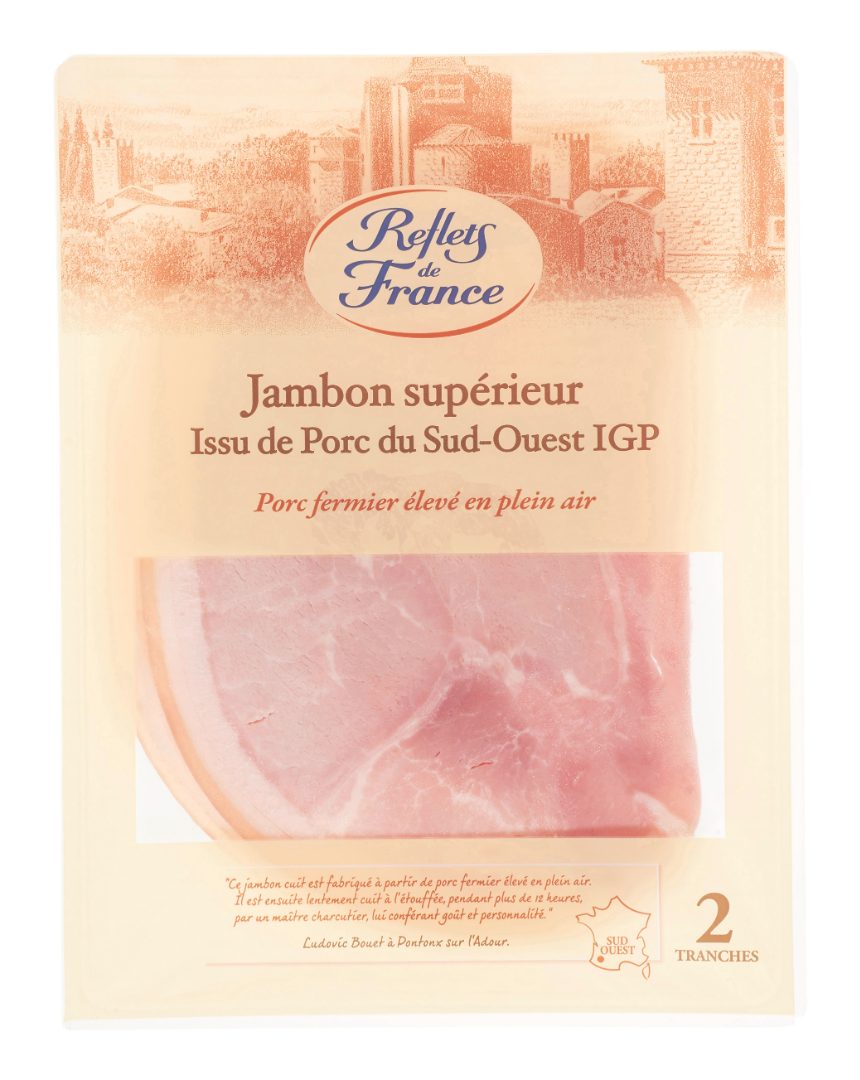
France – SUPERIOR HAM -Listeria monocytogenes

Gov france

Identifying information for the recalled product

  • Product category Food
  • Product sub-category Others
  • Product brand name REFLET from FRANCE
  • Names of models or references SUPERIOR HAM 2 slices 120g
  • Product identification
    GTIN Lot Dated
    3560071193706 1243 Use-by date 02/10/2021
  • Packaging2 slices
  • Start date / End of marketing From 08/31/2021 to 10/02/2021
  • Storage temperature Product to be stored in the refrigerator
  • Further information Supplier: SLICING OF JASSE. SAS
  • Geographical sales areaWhole France
  • Distributors crossroads

Practical information regarding the recall

  • Reason for recall Listeria
  • Risks incurred by the consumer Listeria monocytogenes (causative agent of listeriosis)

Research – The influence of organic load and free chlorine on Salmonella cross-contamination of tomatoes in a model flume system

Journal of Food Protection

The process of washing tomatoes in dump (flume) tanks has been identified as a potential source of cross-contamination. This study’s objective was to assess the potential for Salmonella enterica cross-contamination at various inoculation levels at the presence of 0 and 25 mg/L free chlorine (HOCl) and organic matter.  Uninoculated tomatoes were introduced into a laboratory-based model flume containing tomatoes inoculated with a cocktail of five rifampicin-resistant Salmonella enterica serovars at 104, 106, or 108 CFU/tomato in water containing 0 or 25 mg/L HOCl and 0 or 300 mg/L chemical oxygen demand (COD). Uninoculated tomatoes were removed from the water at after 5, 30, 60, 120 s and were placed in bags containing tryptic soy broth supplemented with rifampicin and 0.1% sodium thiosulfate. Following incubation, enrichments were plated on tryptic soy agar supplemented with rifampicin and xylose lysine deoxycholate agar to determine the presence of Salmonella. HOCl and pH were measured before and after each trial. The HOCl in water containing 300 mg/L COD significantly (P≤0.05) declined by the end of each 120 s trial, most likely due to the increased demand for the oxidant. Higher inoculum levels and lower HOCl concentrations were (P≤0.05) significant factors that contributed to increased cross-contamination seen in this study. When HOCl levels were at 25 mg/L, no Salmonella was recovered on non-inoculated tomatoes under all conditions when inoculum levels were at 104 CFU/tomato. When the inoculum was increased to 106 and 108 CFU/tomato, cross-contamination was observed, independent of COD levels. The results from this study show that the currently required sanitizer level (e.g., 100 or 150 mg/L) for flume water may be higher than necessary and warrants re-evaluation.