Category Archives: Food Safety Alert

Bulgaria – Chicken meat infected with Salmonella from Poland

Poultry Med

At least 100 tons of chicken infected with salmonella has reached the Bulgarian market. Some of the meat, imported from Poland, has been seized and so far there are no reporters of consumers infected with salmonella. Poland is the major producer of poultry meat in the European Union. the majority of poultry meat exports are directed to the internal EU market.
This is not the first time that poultry products imported from Poland are contaminated with Salmonella. Salmonella has been detected in 16 tons of poultry imported to the Czech Republic from Poland in April-May 2019.
In 2018 The EU has reported  almost 1,500 people sickened by Salmonella linked to Polish eggs in an outbreak that has lasted more than six years and affected 18 countries.

Australia – Food safety in an emergency

FSANZ

food safety in an emergency infographic. for a more detailed explaination email information@foodstandards.gov.au


Australia -Food safety advice for bush fires and power outages

Food Safety Council

The Food Safety Information Council today issued food safety advice for consumers about bush fires and power outages.

‘Here are some key food safety points after a fire:

  • throw out any food that has been near a fire, including food in cans and jars even if it appears ok
  • any raw food, or food in packaging such as cardboard, plastic wrap, screw-topped jars and bottles should also be thrown out
  • throw out food from a refrigerator as the refrigerator seal isn’t airtight, fumes can get inside
  • wash cooking utensils exposed to fire-fighting chemicals in soapy hot water, then sanitise in 1 tablespoon of chlorine bleach per 2 litres of water and rinse.
  • When you dispose of food, wrap it in newspaper and place in the rubbish bin. A small volume of food may be safely buried.
  • Where larger quantities have to be disposed of your local government’s environmental health officer should be contacted. Without correct disposal, fly breeding, animal and pest scavenging may result and increase the risk of the spread of infectious diseases.

‘If your power has gone out your food will remain safe in your refrigerator for 2 hours. If it has been more than 4 hours, throw the food out. Don’t open the fridge door during the power cut, unless necessary. The best option is to keep the refrigerated foods as cold as possible by not opening the door unless necessary to remove food to eat or check the temperature after 2 hours. or place items in the freezer. If this is not possible:

  • Remove ice bricks from the freezer and place in an esky.
  • Remove all meats, poultry, dairy and potentially hazardous food (for example dips, pâté, ham, prepared and cooked food) from the refrigerator and place in an cooler with frozen bricks or gel packs.
  • Salted butter, margarine and hard cheeses will remain safe at room temperature.
  • Place the ice or ice bricks throughout the stored food to ensure an even temperature. Make sure the lid of the cooler has a good seal.
  • If the temperature of the food stored in an cooler or refrigerator reaches more than 5 °C for less than 2 hours you should find alternative refrigeration at less than 5 °C or, if possible, freeze or use immediately.
  • Food stored in a refrigerator or esky at more than 5 °C for 4 hours or more should be thrown out.
  • Freezers that are in good condition and operate at minus 15 °C or below can keep foods at safe temperatures for between 1 and 2 days. If the freezer door is kept shut, a full freezer can keep food chilled for up to 48 hours, while a half full freezer can be kept food chilled for 24 hours.
  • It is important that the doors of freezers are not opened unless necessary. Opening and closing the doors will reduce the time the contents will remain at safe temperatures.
  • Foods that have partly defrosted or defrosted but remain very cold (5 °C or less) can be refrozen.  Remember that some food types, for example ice cream which will thaw other foods defrost. Although there is no safety issue, some foods become icy or their texture will be damaged when refrozen and may not be usable after defrosting and refreezing.
  • If your food has been in a freezer where the temperature has reached more than 5 °C for more than 2 hours, but less than 4 hours, it should be consumed immediately.
  • Food stored in a freezer for more than 4 hours at more than 5 °C should be thrown out.

‘Also remember to throw out food that was being cooked when the power failed if cooking cannot be completed properly within 2 hours. If food is already properly cooked, eat it within 2 hours or throw it out,’ Ms Buchtmann concluded

Media contact Lydia Buchtmann 0407626688

Australia – Australian Salmonella outbreak grows; bush fires threaten food safety

Food Safety News

kswfoodworld Salmonella

Image CDC

Nearly 90 people are part of a Salmonella outbreak across Australia after eating a particular brand of frozen microwave meals.

A total of 84 people in New South Wales (NSW), Queensland, South Australia, Western Australia and the Australian Capital Territory (ACT) reported eating Core Powerfoods products before becoming sick.

The number of people ill in the Salmonella Weltevreden outbreak previously stood at 46.

Core Ingredients issued a recall in October. Products were available for sale at IGAs and Coles stores nationally, independent retailers in NSW, ACT, Queensland, Victoria, South Australia, Western Australia and the Northern Territory and some Woolworths metro stores in Victoria.

USA – Lipari Foods Issues Recall of Various Wedge Deli Sandwiches Due to Potential Contamination of Listeria Monocytogenes

FDA

Lipari Foods has issued a voluntary recall of various Premo and Fresh Grab wedge sandwiches due to potential contamination of Listeria monocytogenes.

The product was distributed exclusively by Lipari Foods in Warren, Michigan to food service and retail stores throughout Florida, Illinois, Indiana, Kentucky, Maryland, Michigan, Ohio, Pennsylvania, Tennessee, West Virginia, and Wisconsin.

The affected product can be identified by:

Brand Product Lipari # Size Best By Date Lot # UPC
Premo Wedge Ham & Cheese On Wheat 915509 5 oz. 1/23/2020 31201912 612510002001
Premo Wedge Egg Salad On Wheat 915523 5 oz. 1/23/2020 31201912 612510002025
Premo Wedge Chicken Salad On Wheat 915530 5 oz. 1/20/2020 31201912 612510002032
Premo Wedge Tuna Salad On Wheat 915579 5 oz. 1/23/2020 31201912 612510002049
Fresh Grab Wedge Ham/American On Wheat 252646 5 oz. 1/23/2020 31201912 612510002001
Fresh Grab Wedge Egg Salad On Wheat 252901 5 oz. 1/20/2020, 1/23/2020 31201912 612510002025
Fresh Grab Wedge Chicken Salad On Wheat 253377 5 oz. 1/23/2020 31201912 612510002032
Fresh Grab Wedge Tuna Salad On Wheat 282022 5 oz. 1/23/2020 31201912 612510002049
Fresh Grab Wedge Turkey No Cheese On Wheat 253445 5 oz. 1/23/2020 31201912 612510002100
Fresh Grab Wedge Ham/American On White 253479 5 oz. 1/23/2020 31201912 612510093962

This was brought to our attention by JLM Manufacturing after environmental sampling returned a positive test result for Listeria monocytogenes. No illnesses have been reported to date in relation to these products or recall.

Lipari Foods began shipping this product on December 31, 2019.

Consumers who have purchased these recalled products should not consume them. Consumers should discard the products or return them to the point of purchase. Consumers with questions should call Customer Service at 800- 729-3354, 8:15 am – 4:30 pm, EST, Monday through Friday.

Label, Premo Fresh Ham & Cheese Wedge

Austria – Austrian Listeria infections linked to German meat producer

Food Safety News

Austrian officials have linked six Listeria infections to a German meat producer.

Products from Wilke Waldecker Fleisch- und Wurstwaren are suspected to be behind a Listeria outbreak in Germany involving 37 people and three deaths. One infection was recorded in 2014, three in 2016, four in 2017, 21 in 2018 and at least eight in 2019.

Between May 24 and Aug. 8, 2019, six people in Austria contracted an identical Listeria strain identified as Listeria monocytogenes IIa.

Following illnesses in the federal states of Carinthia, Styria, and Vienna the Federal Ministry of Labor, Social Affairs, Health and Consumer Protection (BMASGK) asked the Austrian Agency for Health and Food Safety (AGES) to investigate the outbreak.

Authorities in the Waldeck-Frankenberg district of Germany stopped production at a Wilke facility in Twistetal, Berndorf in October.

Denmark – Several ill in Danish Salmonella outbreak ate undercooked sausage

Food Safety News

kswfoodworld salmonella

Image CDC


Several people part of a Salmonella outbreak in Denmark tasted or ate raw or undercooked sausage, according to a recently published study.

In November 2018, an outbreak of monophasic Salmonella Typhimurium was detected. It sickened at least 49 people across the country.

A traditional form of raw Danish pork sausage called medister sausage was believed to be the source of illnesses. Product samples were negative for Salmonella and investigations at the production site did not reveal the source of contamination. Medister sausage is often served in the late autumn months and Christmas season. It is a long, thick sausage made from ground pork, seasoned and stuffed into casings.

Due to a control program, Salmonella Enteritidis is all but eliminated in Danish broiler poultry and egg production but Salmonella Typhimurium still exists in pigs and pork.

USA – Outbreak of Salmonella Infections Linked to Ground Beef Final Update

CDC

Final Outbreak Information
Illustration of a clipboard with check marks on it.
  • As of December 30, 2019, this outbreak appears to be over.
  • Thirteen people infected with the outbreak strain of Salmonella Dublin were reported from eight states.
    • Illnesses started on dates ranging from August 8, 2019, to October 22, 2019.
    • Nine hospitalizations were reported, including one death reported from California.
  • Epidemiologic, traceback, and laboratory evidence indicated that contaminated ground beef was the likely source of this outbreak.
  • On November 15, 2019, Central Valley Meat Co. in Hanford, Calif., recalledexternal icon 34,222 pounds of ground beef products that may have been contaminated with Salmonella Dublin.
    • A single, common supplier of ground beef that accounts for all of the illnesses was not identified.

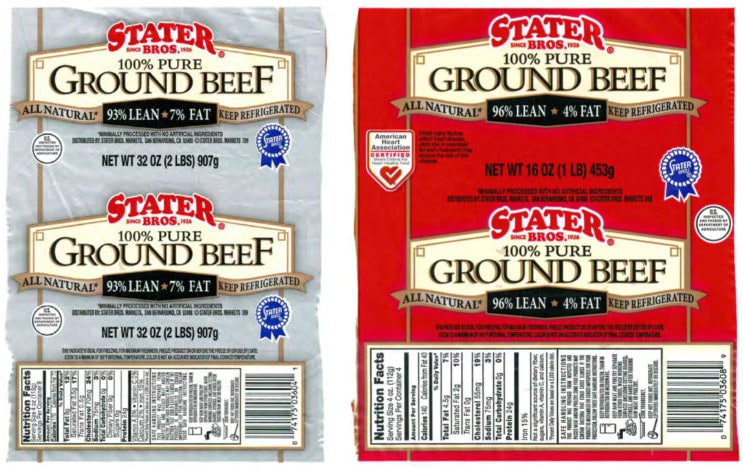
Photo of packaging.

Malaysia -Food Poisoning outbreak in Kuala Lumpur

Outbreak News Today

The Malaysia Ministry of Health received a report about a food poisoning incident involving PAST kindergarten teachers throughout the Federal Territory of Kuala Lumpur attending a training course at a center in Cheras, Kuala Lumpur on Jan. 5.

Course participants presented with symptoms of vomiting, stomach ache and diarrhea and are being treated at the hospital.

Further investigations by health officials at the training center found that 137 people of the 280 exposed course participants had the same symptoms

All cases are stable and the vast majority are being treated as outpatients. Food suspected to be the cause of this food poisoning situation include chicken cooked at dinner at the training center on the day of the incident. Clinical samples from cases as well as food samples were taken and sent to the laboratory for analysis.


USA -Cheesewich Bacon N Eggs Recalled For Possible Listeria Monocytogenes

Food Poisoning Bulletin

Cheesewich Bacon N Eggs Recalled For Possible Listeria Monocytogenes

The USDA is issuing a public health alert due to illnesses linked to recalled Almark Foods hard boiled eggs. The product in question is Cheesewich Bacon N Eggs that were allegedly made with Almark Foods eggs. At the same time, the notice states, “There have been no confirmed reports of illness due to consumption of the FSIS-regulated products produced containing these eggs.” FSIS regulates products made with meat such as this particular product.

The recalled item is ready to eat Cheesewich Bacon N Eggs sold in 3.6 ounce plastic packages. The product contains separately packaged bacon and hard boiled eggs. The use by dates on this product are 12/27/19, 1/3/20, 1/23/20, 1/30/20, 2/6/20, 2/14/20, 2/19/20, and 2/28/20; and the lot codes are 281191, 302191, 309191, 316191, 323191, 331191, 336191, and 344191. The product has the establishment number “P-45031” inside the USDA mark of inspection.

If you bought this product, do not eat it. Throw it away in a sealed container in a secure garbage can so other people and animals can’t access it, or take it back to the place of purchase for a full refund.