Category Archives: Food Microbiology Testing

France – Ham pancakes; Pancakes Ham and Mushrooms – Listeria monocytogenes

Gov france

Identification information of the recalled product

  • Product category Feed
  • Product subcategory Prepared meals and snacks
  • Product brand name PPNP (Prepared By Our Pros)
  • Model names or references Ham pancakes; Pancakes Ham and Mushrooms
  • Identification of products
    Batch
    Manufacturing from 21/10 to 28/10/22
  • Marketing start/end date From 21/10/2022 to 28/10/2022
  • Storage temperature Product to be stored in the refrigerator
  • Further information Products sold in the LS department with a packing date between 21/10 and 28/10/2022 Or offered in the traditional department between 21/10 and 28/10/2022
  • Geographic area of ​​sale Regions: Grand-Est
  • Distributors Supermarkets MATCH RAMBERVILLERS 88700 Supermarkets MATCH NEUFCHATEAU 88300 Supermarkets MATCH DOMBASLE 54110

Practical information regarding the recall

  • Reason for recallPresence of Listeria monocytogenes in a raw material
  • Risks incurred by the consumer Listeria monocytogenes (causative agent of listeriosis)

France -Pizza: Hawaiian / Ham Pizza / Ham Pizza – Mushrooms – Listeria monocytogenes

Gov france

Identification information of the recalled product

  • Product category Feed
  • Product subcategory Prepared meals and snacks
  • Product brand name PPNP (Prepared By Our Pros)
  • Model names or references Pizza: Hawaiian / Ham Pizza / Ham Pizza – Mushrooms
  • Identification of products
    Batch
    Manufacturing from 21/10 to 28/10/22
  • Marketing start/end date From 21/10/2022 to 28/10/2022
  • Storage temperature Product to be stored in the refrigerator
  • Further information Products sold in the LS department with a packaging date between 21/10 and 28/10/2022
  • Geographic area of ​​sale Regions: Grand-Est
  • Distributors Supermarket MATCH RAMBERVILLERS 88700 Supermarket MATCH NEUFCHATEAU 88300 Supermarket MATCH DOMBASLE 54110

Practical information regarding the recall

  • Reason for recall Presence of Listeria monocytogenes in a raw material
  • Risks incurred by the consumer Listeria monocytogenes (causative agent of listeriosis)

France – Vol au vent Ham / Vol au vent Ham – Mushrooms / Vol au vent Dumplings of veal with ham and mushrooms / Vol au vent with goat cheese and ham – Listeria monocytogenes

Gov france

Identification information of the recalled product

  • Product category Feed
  • Product subcategory Prepared meals and snacks
  • Product brand name PPNP (Prepared By Our Pros)
  • Model names or references Vol au vent Ham / Vol au vent Ham – Mushrooms / Vol au vent Dumplings of veal with ham and mushrooms / Vol au vent with goat cheese and ham
  • Identification of products
    Batch
    production from 21/10/22 to 28/10/22
  • Marketing start/end date From 21/10/2022 to 28/10/2022
  • Storage temperature Product to be stored in the refrigerator
  • Further information Products sold in the LS department with a packaging date between 21/10 and 28/10/2022 Or product sold in the TRAD department between 21/10 and 28/10/2022
  • Geographic area of ​​sale Regions: Grand-Est
  • Distributors Supermarkets MATCH RAMBERVILLERS 88700 Supermarkets MATCH DOMBASLE 54110 Supermarkets MATCH NEUFCHATEAU 88300

Practical information regarding the recall

  • Reason for recall Presence of Listeria monocytogenes in a raw material
  • Risks incurred by the consumer Listeria monocytogenes (causative agent of listeriosis)

France – Saint-Nectaire Farmer Cheese – Listeria monocytogenes

Gov france

Identification information of the recalled product

  • Product category Feed
  • Product subcategory Milk and dairy products
  • Product brand name the emperor
  • Model names or referencesSaint Nectaire Farmer
  • Identification of products
    Batch Date
    AAL 39-4 Date of minimum durability 09/12/2022
    22270111-4 Date of minimum durability 09/12/2022
  • Products List Client_list_AAL_39-4.pdfAttachment
  • Packaging whole cheese
  • Marketing start/end date From 25/10/2022 to 31/10/2022
  • Storage temperature Product to be stored in the refrigerator
  • Health mark FR 15 141 001 EC
  • Geographic area of ​​saleWhole France
  • DistributorsDirect to store delivery

Practical information regarding the recall

  • Reason for recallPresence of Listeria monocytogenes
  • Risks incurred by the consumer Listeria monocytogenes (causative agent of listeriosis)

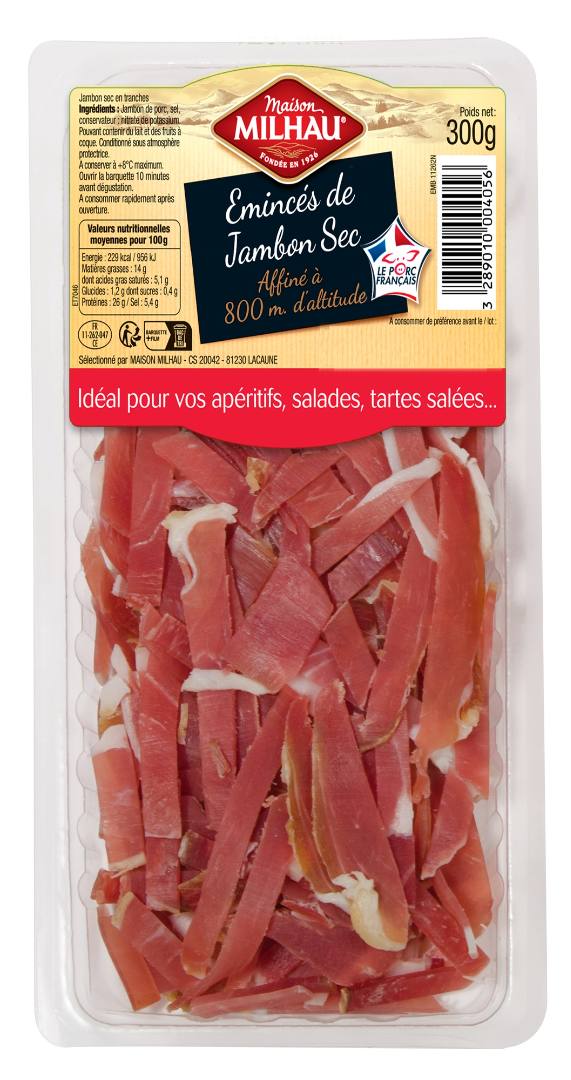
France – EMINCES DE JAMBON SEC 300 GR – Listeria monocytogenes

Gov france

Identification information of the recalled product

  • Product category Feed
  • Product subcategory Meats
  • Product brand name MILHAU HOUSE
  • Model names or references SLICED CURED HAM 300 GR
  • Identification of products
    GTIN Batch Date
    3289010004056 210154097 Use-by date 07/12/2022
  • Products Lis List_point_of_sales_(Department).pdfAttachment
  • Packaging Under protective atmosphere
  • Marketing start/end date From 19/10/2022 to 26/10/2022
  • Storage temperature Product to be stored in the refrigerator
  • Health mark EN 11.262.047 EC
  • Geographic area of ​​sale Regions: Occitania
  • Distributors Wholesaler, GMS (crossroads, Inter, Leclerc, Super U,

Practical information regarding the recall

  • Reason for recall Listeria monocytogenes
  • Risks incurred by the consumer Listeria monocytogenes (causative agent of listeriosis)

Research – Ciguatera in Europe project granted follow-up

Food Safety News

A project looking at the surveillance and control of ciguatera poisoning in Europe has been given a second edition.

A launch meeting for EuroCigua II was attended this past week by representatives of 11 organizations involved in food safety and public health from five European countries.

Partners include the Spanish Institute of Agrifood Research and Technology (IRTA), Canary Islands Health Service (SCS), the French Agency for Food, Environmental and Occupational Health and Safety (ANSES), German Federal Institute for Risk Assessment (BfR), Portuguese Economic and Food Safety Authority (ASAE), and Dutch National Institute for Public Health and the Environment (RIVM).

Also participating in the three-year effort are the European Food Safety Authority (EFSA), the European Center for Disease Prevention and Control (ECDC), European Environment Agency of the European Commission, the United Nations Food and Agriculture Organization (FAO) and experts from research groups in the United States and Japan.

Research – Virulence Potential and Antibiotic Susceptibility of S. aureus Strains Isolated from Food Handlers

MDPI

Staphylococcus spp. are common members of the normal human flora. However, some Staphylococcus species are recognised as human pathogens due to the production of several virulence factors and enterotoxins that are particularly worrisome in food poisoning. Since many of Staphylococcal food poisoning outbreaks are typically associated with cross-contamination, the detection of S. aureus on food handlers was performed. Hand swabs from 167 food handlers were analysed for the presence of S. aureus. More than 11% of the samples were positive for S. aureus. All S. aureus strains were isolated and analysed for the presence of virulence and enterotoxin genes, namely, sea, seb, sec, sed, seg, sei, tsst-1 and pvl. The same strains were phenotypically characterised in terms of antibiotic susceptibility using the disc diffusion method and antimicrobial agents from 12 different classes. A low prevalence of antibiotic-resistant strains was found, with 55.6% of the strains being sensitive to all of the antimicrobial agents tested. However, a high prevalence of resistance to macrolides was found, with 44.4% of the strains showing resistance to erythromycin. At least one of the virulence or toxin genes was detected in 61.1% of the strains, and seg was the most prevalent toxin gene, being detected in 44.4% of the strains.

Research – Occurrence of Listeria spp. in Soft Cheese and Ice Cream: Effect of Probiotic Bifidobacterium spp. on Survival of Listeria monocytogenes in Soft Cheese

MDPI

Listeria monocytogenes is one of the most important emerging foodborne pathogens. The objectives of this work were to investigate the incidence of Listeria spp. and L. monocytogenes in soft cheese and ice cream in Assiut city, Egypt, and to examine the effect of some probiotic Bifidobacterium spp. (Bifidobacterium breve, Bifidobacterium animalis, or a mixture of the two) on the viability of L. monocytogenes in soft cheese. The existence of Listeria spp. and L. monocytogenes was examined in 30 samples of soft cheese and 30 samples of ice cream. Bacteriological analyses and molecular identification (using 16S rRNA gene and hlyA gene for Listeria spp. and L. monocytogenes, respectively) were performed on those samples. Additionally, Bifidobacterium spp. were incorporated in the making of soft cheese to study their inhibitory impacts on L. monocytogenes. Out of 60 samples of soft cheese and ice cream, 25 samples showed Listeria spp., while L. monocytogenes was found in only 2 soft cheese samples. Approximately 37% of soft cheese samples (11 out of 30) had Listeria spp. with about 18.0% (2 out of 11) exhibiting L. monocytogenes. In ice cream samples, Listeria spp. was presented by 47% (14 out of 30), while L. monocytogenes was not exhibited. Moreover, the addition of B. animalis to soft cheese in a concentration of 5% or combined with B. breve with a concentration of 2.5% for each resulted in decreasing L. monocytogenes efficiently during the ripening of soft cheese for 28 d. Listeria spp. is widely found in milk products. Probiotic bacteria, such as Bifidobacterium spp., can be utilized as a natural antimicrobial to preserve food and dairy products. View Full-Text

Research – Microbiological and physicochemical properties of farm bulk tank milk and antimicrobial resistance of its dominant bacteria

Wiley Online

Abstract

This study determined the antibiotic resistance of the dominant bacteria in the 85 farm BTMs according to the guidelines recommended by the epidemiological cutoff values in the EUCAST. In addition, some physicochemical and microbiological properties of farm BTMs were investigated. The milk samples were divided into two groups according to their SCC values. The milk samples with higher SCC than 400,000 cells mL−1 were further examined bacteriologically, and the antibiotic resistance of isolates was determined. The average TAMB value was 6.34 log CFU/mL in farm BTM. It was found that high-SCC values did not affect other physicochemical properties of BTM samples, such as fat, protein and total solids, except for lactose content. Seventy-two strains were isolated from 45 bulk milk samples. The most prevalent bacteria were Enterococcus spp. (23.61%). The other isolates were Citrobacter spp. (12.5%), Staphylococcus spp. (12.51%), Serratia spp. (11.12%), Klebsiella spp. (9.72%), Bacillus spp. (9.72%), and Enterobacter spp. (8.33%). In antibiotic resistance analysis, 52.6% of Enterobacterales isolates showed cefoxitin resistance, and nine Enterobacterales isolates were determined as the presumptive ESBL producers. None of them was confirmed as ESBL producers. Moreover, MDR was detected in 83.3% of Enterobacter spp. isolates and all Bacillus spp. isolates. The over and inappropriate use of antibiotics in mastitis treatment may cause antibiotic-resistant microorganisms in milk. It was found that 52.7% of the isolated bacteria were MDR, which could pose a risk to public health and food safety, with the consumer’s increasing interest in consuming raw milk.

Research UK – CFA – EU’s proposed Listeria legislation latest

CFA

The EU’s proposed potential changes to Listeria monocytogenes (Lm) legislation (CFA News #56) continue to attract attention. It is understood that next year (2023) the EC will engage with Member States to seek a common understanding of the rules. A recent European Court case has raised clarifying points regarding the interpretation of criteria and, could result in major changes to Lm criteria in the EU Microbiological Criteria for Foodstuffs Regulation 2073/2005 and, potentially, to established effective approaches to shelf life validation and verification of ongoing control.

The expanding Industry Listeria Group (ILG) run by Karin Goodburn comprises more than 30 CFA members, UK trade associations, retailers and the European meat processors’ association (CLITRAVI). The ILG’s Position has also been endorsed by the European Chilled Food Federation and is broadly supported by the European Salmon Smokers’ Association.

The Position on the potential changes opposes challenge testing to set shelf life rather than established methods such as storage trials combined with data streams from Day of Production and End of Life sampling coupled with environmental monitoring data. Given the common root cause of listeriosis outbreaks being insufficient environmental hygiene controls, specific guidance for FBOs and enforcers on effective environmental sampling and the use of data gathered is being developed by CFA to support the Position.