Category Archives: Food Microbiology Research

Belgium – Jumbo brand grated goat cheese – Listeria monocytogenes

AFSCA

Geraspte geitenkaas - Jumbo

In agreement with the AFSCA, Jumbo is withdrawing the product Geraspte geitenkaas from the Jumbo brand and recalling it from consumers due to the possible presence of listeria.

Jumbo asks its customers not to consume this product and to return it to the point of sale where it was purchased, where they will be refunded.

Product description
Product name: Geraspt Geitenkaas
Brand: Jumbo
EAN on the label: 8718452749768
Expiry date: from 23-10-2024 to 29-1-2025
Sales period: from 23-06
Nature of packaging: Plastic packaging
Weight: 150g

The product was sold through Jumbo’s subsidiaries in Belgium.

For further information , customers can contact customer service at 0800 – 98998 or Jumbo.com. We apologize for any inconvenience caused.
Canada – Update – Various brands of frozen waffles and pancakes recalled due to Listeria monocytogenes

Gov Canada

Product
Waffles and Pancakes
Issue
Food – Microbial contamination – Listeria
What to do

Do not consume, use, sell, serve or distribute recalled products

Distribution
National

Issue

The food recall warning issued on 2024-10-21 has been updated to include additional product information. This additional information was identified during the Canadian Food Inspection Agency’s food safety investigation.

The affected products are being recalled from the marketplace due to possible Listeria monocytogenes contamination.

What you should do

  • If you think you became sick from consuming a recalled product, contact your healthcare provider
  • Check to see if you have recalled products
  • Do not consume, serve, use, sell, or distribute recalled products
  • Recalled products should be thrown out or returned to the location where they were purchased

Food contaminated with Listeria monocytogenes may not look or smell spoiled but can still make you sick. Symptoms can include vomiting, nausea, persistent fever, muscle aches, severe headache and neck stiffness. Pregnant women, the elderly and people with weakened immune systems are particularly at risk. Although infected pregnant women may experience only mild, flu-like symptoms, the infection can lead to premature delivery, infection of the newborn or even stillbirth. In severe cases of illness, people may die.

Research – Evaluating Chlorine Sanitization at Practical Concentrations for Controlling Listeria monocytogenes and Salmonella on Fresh Peaches

MDPI

Abstract

Recent foodborne outbreaks and recalls involving Listeria monocytogenes and Salmonella-contaminated peaches have caused significant economic losses to the peach industry. This study evaluated the effectiveness of chlorine, a commonly used sanitizer in the fresh produce industry, against L. monocytogenes and Salmonella and its ability to control cross-contamination in fresh peaches. Peaches inoculated with L. monocytogenes or Salmonella (~6 log10 CFU/peach) were treated with 50–150 mg/L of free chlorine (FC, pH6.8) 24 h post-inoculation. The results revealed that chlorine had similar efficacy against L. monocytogenes and Salmonella on peaches (p > 0.05). A 30 s treatment at 50, 100, and 150 mg/L FC resulted in dose-dependent reductions (p < 0.05), achieving reductions of 0.88–0.92, 1.54–1.61, and 1.73–1.79 log10 CFU/peach, respectively. Extending the contact time to 2 min slightly but significantly enhanced the chlorine efficacy (p < 0.05). Additionally, a 30 s to 2 min exposure to chlorine with 50–150 mg/L FC resulted in a 1.05–1.43 log10 CFU/peach reduction in yeasts and molds. Tap water exposure led to substantial cross-contamination between inoculated and uninoculated fruits and processed water, with Salmonella exhibiting higher transfer rates than L. monocytogenes. The application of chlorine mitigated the cross-contamination of both pathogens but did not entirely prevent it. These findings offer valuable insights for the peach and other stone fruit industries to verify process controls.

Research – Fortification of Orange and Apple Juices with Ferulic Acid: Implications for Food Safety and Quality

MDPI

Abstract

In recent years, the awareness of healthier lifestyles among consumers has driven to an increased interest in more natural, nutritious, and low-processed foods. Ferulic acid, one of the most abundant phenolic acids in plants, has demonstrated a wide spectrum of antimicrobial activities and a range of biomedical effects, including antioxidant, antiallergic, hepatoprotective, anticarcinogenic, anti-inflammatory, and antithrombotic, among others. The objective of this work was to study the antilisterial effect of ferulic acid (FA, 1500 mg/L) on fresh, ready-to-eat orange (FOJ) and apple (FAJ) juices and evaluate its effect on product quality. The results showed that FA reduced the Listeria monocytogenes population after 9 days of storage at 4 °C, but no effect on the indigenous microbiota was observed. The titratable acidity and color significantly changed. The antioxidant capacity and total phenolic content significantly increased with the addition of FA, being at least two times greater in fortified juices. FAJ and FOJ containing FA were scored lower (6.8 and 5.7 on a 9-point hedonic scale, respectively) than their respective controls. Overall, our results demonstrated that FA treatment could be a useful strategy to maintain the safety of fresh apple and orange juices and increase the antioxidant activity and phenolic content. The potential industrial applications and health benefits of the fortification of fruit juices with FA should be further explored.

Research – Innovative Pathogen Reduction in Exported Sea Bass Through Atmospheric Cold Plasma Technology

MDPI

Abstract

The safety of sea bass is critical for the global food trade. This study evaluated the effectiveness of atmospheric cold plasma in reducing food safety risks posed by Salmonella Enteritidis and Listeria monocytogenes, which can contaminate sea bass post harvest. Cold plasma was applied to inoculated sea bass for 2 to 18 min, achieving a maximum reduction of 1.43 log CFU/g for S. Enteritidis and 0.80 log CFU/g for L. monocytogenes at 18 min. Longer treatments resulted in greater reductions; however, odor and taste quality declined to a below average quality in samples treated for 12 min or longer. Plasma treatment did not significantly alter the color, texture, or water activity (aw) of the fish. Higher levels of thiobarbituric acid reactive substances (TBARSs) were observed with increased exposure times. Cold plasma was also tested in vitro on S. Enteritidis and L. monocytogenes on agar surfaces. A 4 min treatment eliminated the initial loads of S. Enteritidis (2.71 log CFU) and L. monocytogenes (2.98 log CFU). The findings highlight the potential of cold plasma in enhancing the safety of naturally contaminated fish. Cold plasma represents a promising technology for improving food safety in the global fish trade and continues to be a significant area of research in food science.

Denmark – Mould/Mold into mini muffins

Foedevarestyrelsen

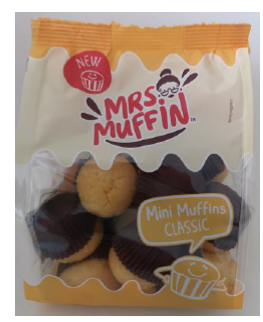
Conaxess Trade Denmark A/S is recalling mini muffins, as there may be mold in the product, which makes the product unsuitable as food. If you have the product, you should discard it or return it to the store where it was purchased.

Image of mini muffins.

Which food is recalled

Mrs. Muffin mini muffins classic
Net weight: 225 g
Best before date: 18.01.2025
Lot number: L-204
EAN code: 8411037884754

Where is the product sold

The product is sold in: Bilka and Netto stores all over the country, as well as online at Nemlig.dk.

Why is the product being recalled?

Mold has been found in the product. The presence of mold makes the product unsuitable as food.

Read more about spoilage bacteria, yeasts and molds here

What should you do as a consumer?

If you have the product, you should discard it or return it to the store where it was purchased. 

Who recalls the product

Conaxess Trade Denmark A/S
Stamholmen 151, 4th floor
2650 Hvidovre

USA – Dakota Tom’s Sandwiches Recalls Pepperjack Cheeseburger, Bacon Cheeseburger and The Gambler Because of Possible Health Risk – Listeria moncytogenes

FDA

FOR IMMEDIATE RELEASE- Dakota Tom’s Sandwiches Corsica, SD is voluntarily recalling our Pepperjack Cheeseburger, Bacon Cheeseburger and The Gambler due to the burger patty being included in a recall from an outside supplier (BrucePac). The ingredient supplier (BrucePac) recall is due to possible Listeria monocytogenes contamination.

Listeria monocytogenes is an organism which can cause serious and sometimes fatal infections in young children, frail or elderly people, and others with weakened immune systems. Although healthy individuals may suffer only short-term symptoms such as high fever, severe headache, stiffness, nausea, abdominal pain and diarrhea, Listeria infection can cause miscarriages and stillbirths among pregnant women.

These sandwiches were distributed in grocery stores, convenience stores, etc. in the following states: SD, ND, MN, IA, WY. Pepper Jack Cheeseburger UPC 737296806008, The Gambler UPC 737296601788, Bacon Cheeseburger UPC 3729680300, With a Best By Date ranging 9/1/24 – 11/23/24.

No illnesses have been reported to date for our product.

Dakota Tom’s Sandwiches is no longer using this ingredient from the ingredient supplier’s (BrucePac) impacted facility.

Consumers who have purchased these sandwiches should not consume; rather, they may return it to the store for a full refund or discard the item.

Consumers who have questions regarding this recall may call Dakota Tom’s Sandwiches at the following number:


Company Contact Information

Consumers:
 605-946-5123

Product Photos

Research – Identification of Biofilm-Forming Foodborne Pathogens and Development of Prevention Strategies

Food Safety.com

A recent study emerged from Penn State University about multispecies biofilms that provide Listeria monocytogenes with a strategy against sanitizers.1 This study brings much-needed attention to a persistent problem in the food safety community. Here, I provide several comments on this topic. Read More at the Link Above

A biofilm is a complex and dynamic community of microorganisms that adhere to surfaces and are encased in a matrix of extracellular polymeric substances (EPS). Biofilms can form on a wide range of surfaces, including natural substrates such as rocks and plant surfaces, as well as artificial surfaces such as medical implants, industrial equipment, and food processing equipment.

Research – Antibacterial Effects of Thermosonication Technology on Salmonella typhimurium Strains Identified from Swine Food Chain: An In Vitro Study

MDPI

Among innovative food technologies, ultrasounds have demonstrated physical damages (provided by frequency and intensity factors) on bacterial structures while determining the microbiological stabilization of many foodstuffs. This study tested the efficacy of the thermosonication process on 16 Salmonella typhimurium strains belonging to the academic biobank (isolated from swine slaughterhouses). All strains were exposed to focused ultrasounds, generated by the Waveco® system (Milan, Italy), with the following settings: 40 KHz coupled with 80 W at different 5 min intervals starting from 5 to 15 ones, and focusing on two different temperatures: 40 °C and 50 °C. After each treatment, all strains were directly plated onto count agars immediately (t0) and after 24 h (t24) of storage at refrigerated temperature. The results showed bacterial reductions by prolonging the sonication treatments until 15 min (i.e., 50 °C for 15 min reduced of 2.16 log CFU/gr the initial loads). In the present in vitro study, the most considerable decrease was observed after 24 h. It meant that Salmonella strains were lethally damaged at the wall level, confirming the ultrasound bactericidal effect on loads. The present in vitro scientific investigation demonstrates the practical bactericidal effects of thermosonication, highlighting promising applications at the industry level for food microbial stabilization and shelf-life prolongation.

Information – Shigella is a serious foodborne pathogen

Food Poison Journal

Shigella - kswfoodworld

Shigella is a significant cause of bacterial gastroenteritis worldwide and can have serious health implications, depending on the population affected as well as the specific strain involved. Here are some key points: Read more at the link above.