Category Archives: Food Illness

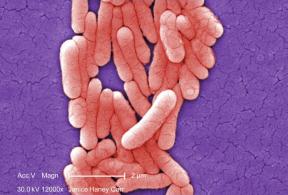
USA – Salmonella outbreak sickens 50 after picnic

Altoona Mirror 


STATE COLLEGE — Health officials said at least 50 people were treated after a reported salmonella infection at a weekend picnic in central Pennsylvania.

The Centre Daily Times reported that Grace Prep High School said in a Facebook video Saturday that at least half of the 100 to 150 guests at a going-away picnic for a longtime teacher Friday had fallen ill with symptoms of nausea and vomiting.

South Africa – Woolworth recalls savoury rice after Listeria outbreak in Europe

Times Live

Woolworths is recalling a frozen savoury rice product as a precaution after a listeria outbreak in Europe.

Woolworths Frozen Savoury Rice‚ which is sourced from Belgium‚ contains frozen sweetcorn from the Greenyard Factory in Hungary – which has been implicated as a potential source of the outbreak.


“Listeria bacteria are easily destroyed by cooking. The Frozen Savoury Rice Mix product is uncooked and frozen and so requires cooking before consumption. Thorough cooking ensures that the product is safe. We are voluntarily recalling this product as a precautionary measure‚ on the global instruction of the Hungarian Food Safety Agency‚” the retailer said in a statement announcing the recall. “None of our other frozen sweetcorn or vegetable products are affected.”

USA – FDA Investigating Multistate Outbreak of Salmonella Mbandaka Infections Linked to Kellogg’s Honey Smacks Cereal

FDA

The FDA Reminds Consumers and Retailers that All Kellogg’s Honey Smacks Cereal is Recalled

July 12, 2018 Update

The FDA has become aware that recalled Kellogg’s Honey Smacks cereal are still being offered for sale. All Honey Smacks cereal was recalled in June 2018.

Retailers cannot legally offer the cereal for sale and consumers should not purchase Kellogg’s Honey Smacks cereal.

The FDA has learned that some retailers are still selling this product. The FDA will continue to monitor this situation closely and follow up with retailers as we become aware of recalled products being offered for sale. Additionally, the public is urged to report any product being offered for sale to the FDA Consumer Complaint Coordinator in their region. More information about the recall can be found at FDA.gov.

New Zealand – Campylobacter cases increase in Nelson Marlborough

Outbreak News Today 


Officials with Nelson Marlborough Health are reporting an increase in campylobacteriosis cases during the past month. 24 cases have been notified to the Medical Officer of Health in the past four weeks, compared to a range of 6-16 cases in the same period over the previous five years.

A number of known risk factors for campylobacteriosis have been identified in the people affected. These are: drinking raw (unpasteurised) milk or untreated water, and contact with animals and/or nappies (diapers).

A single source cause has yet to be found and investigations are ongoing.

Denmark – Two concurrent outbreaks of hepatitis A highlight the risk of infection for non-immune travellers to Morocco, January to June 2018

Eurosurveillance Virusds

On 2 May 2018, Denmark reported a cluster of hepatitis A virus (HAV) infections with the subgenotype IA strain DK2018_231, through the European Centre for Disease Prevention and Control (ECDC)’s Epidemic Intelligence Information System (EPIS) for food- and waterborne diseases and zoonoses (FWD). One of the three confirmed cases had travelled to Morocco. In response, five additional European Union (EU) countries (France, Germany, the Netherlands, Spain and the United Kingdom (UK)) reported cases (n = 20) infected with the same strain between 21 January and 10 April 2018. Concurrently, Germany reported to EPIS that it observed more cases of hepatitis A with travel history to Morocco than expected, compared with the same period in the previous 5 years. Molecular analysis of the HAV VP1/P2A region revealed an unrelated cluster of the HAV subgenotype IB strain V18–16428. Cases infected with this unrelated strain were also reported from France, the Netherlands, Sweden and UK.

The appearance of clusters with a link to Morocco triggered further epidemiological investigations.

The occurrence of the two concurrent HAV clusters in the first 6 months of 2018 serve as a reminder of the risk of contracting hepatitis A in Morocco, a country with intermediate endemicity [4,5]. HAV subgenotypes IA and IB are known to circulate in Morocco and strain DK2018_231 has been observed in sporadic cases with travel history to Morocco in previous years [68]. Despite the different characteristics of the two reported clusters, cases with a travel history to Morocco feature in both. In a recent study of European travellers, Turkey, Egypt and Morocco were listed as the top three destinations for acquiring travel-associated hepatitis A and accounted for one third of cases in the period 2009–15 [9]. The epidemiological link to Morocco is more apparent in cluster IB, where the majority of cases had confirmed travelling to Morocco and all interviewed autochthonous cases had reported consuming food items brought home from there.

In the IA cluster, only three cases had travelled to Morocco. However, the large proportion of autochthonous cases and their spatial distribution in this cluster suggest that an imported food item may have served as the vehicle in this outbreak. Large food-borne hepatitis A outbreaks from frozen berries and semi-dried tomatoes have previously affected European countries, further indicating that imported contaminated food products pose a risk to the increasingly susceptible general population in Europe [1013].

The outbreaks described here illustrate the increased risk that non-immune travellers face when visiting HAV-endemic areas like Morocco. All of the eight countries where cases occurred have explicit recommendations of hepatitis A vaccination for travel to endemic countries, in accordance with World Health Organization (WHO) recommendations [14,15]. Yet it appears that it is not uncommon for people to travel unvaccinated to HAV-endemic countries. An outbreak investigation of hepatitis A in travellers to Egypt between 2012 and 2013 found a high proportion of travellers who were not immunised before travelling [16,17]. Interviews with the German cases have rendered similar results, suggesting that there may be an information gap regarding both the risk of hepatitis A and the availability of a safe and effective vaccine.

UK – UPDATED: Greenyard Frozen UK Ltd recalls various frozen vegetable products due to possible contamination with Listeria monocytogenes

FSA

11 July 2018

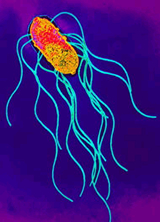
Greenyard Frozen UK Ltd has taken the precautionary step of voluntarily recalling various frozen vegetable products because they might contain Listeria monocytogenes.
Please use the information below as the most recent, replacing product information for this product in earlier versions.

Product details

Lidl Frozen Green Grocer’s Supersweet Corn

Pack size 1kg
Batch code all
Best before all codes to July 2020 inclusive

New Zealand – Various frozen vegetable products 10 July 2018 (Pinguin product added 11 July 2018): Greenyard Group is recalling all batches of Bell Farms brand Steam Veggies carrot, corn, and broccoli and Pinguin brand 4 mixed vegetables due to the possible presence of Listeria monocytogenes.

MPI

Product identification

Product type Frozen vegetables
Name of product
  • Bell Farms brand Steam Veggies carrot, corn, and broccoli (450g)
  • Pinguin brand 4 mixed vegetables (1kg, appears as 1,000g)
Batch marking All batches
Date marking All dates
Package size and description Bell Farms brand Steam Veggies carrot, corn, and broccoli are sold frozen in a 450g plastic bag.

Pinguin brand 4 mixed vegetables are sold frozen in a 1kg plastic bag (appears as 1,000g)

Distribution The product is imported from Belgium and the UK

Bell Farms brand Steam Veggies carrot, corn, and broccoli is sold in Countdown, SuperValue and FreshChoice supermarkets throughout New Zealand.

Kuwait – Salmonella, other bacteria found in Hawally restaurant food samples

Kuwait Times 


KUWAIT: Test results on samples taken from a Hawally restaurant where nearly 300 customers were recently hospitalized with food poisoning came positive for contamination with salmonella and other types of bacteria, said sources familiar with the results.

The Public Authority for Food and Nutrition (PAFN) had received samples of the food served by the popular falafel joint, and tests revealed traces of salmonella and other bacteria which makes the food completely inedible, the sources noted.

Other sources said meanwhile that the owner, who is currently detained with his staff members pending investigations, accused his former partner, a Syrian man, of conspiring with one of the restaurant’s staff members, and had him contaminate the falafel, which resulted in poisoning a large number of customers. The sources added that the former partner would be summoned for interrogation as well.

On a related concern, PAFN urged Kuwait Municipality to hand over authority of the main food lab to it, said the capital food and nutrition department’s manager Abdul Rahman Al-Fares. He noted that food inspectors are incapable of detecting food contamination by virtual inspection, adding that samples have to be collected and examined in labs, which would enable routine inspection rounds to examine food and prevent any further poisoning cases.

Sweden – Thirteen infected with Hepatitis A virus from frozen strawberries

Food Safety News

Thirteen people in Sweden have been infected by Hepatitis A virus linked to frozen strawberries from Poland.

Eleven confirmed and two suspected cases come are reported from four Swedish counties, Skåne, Blekinge, Kalmar and Gävleborg. 

Nine women and four men aged 11 to 92 are affected. The most recent person to fall ill had symptoms begin on June 18.

The Public Health Agency of Sweden (Folkhälsomyndigheten), the National Food Agency (Livsmedelsverket) and local authorities are involved in the investigation. They traced the source of Hepatitis A virus (HAV) infection to frozen strawberries from Poland and informed Polish authorities of their findings.

All of the cases had smoothies or a dessert containing frozen imported strawberries that were not heated prior to consumption. The strawberries were not sold directly to consumers.

Australia – Frozen vegetables pulled from shelves in Woolworths, ALDI, IGA amid Listeria monocytogenes fears

9News

Fears over the deadly listeria strain of bacteria have sparked a recall of popular frozen vegetable products from supermarket shelves across Australia.

Belgium-based company Greenyard Frozen Belgium NV has recalled the frozen vegetables – which include frozen corn, carrot, broccoli and mixed vegetable bags – from Woolworths, IGA and ALDI stores.

The recall comes after a number of listeria deaths in Europe in the past three years.

The European Food Safety Authority said there had been nine deaths among 47 cases of listeria since an outbreak in 2015, the ABC reported.