Category Archives: Food Illness

USA – Hy-Vee Cheesecake Mix Recalled over Salmonella concerns

Food Poisoning Journal

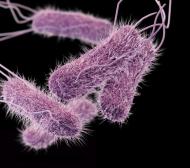
Salmonellaa

Hy-Vee, Inc. is voluntarily recalling its cheesecakes made with Diamond Crystal Brands cheesecake mix due to the potential that they may be contaminated with Salmonella. The potential for contamination was brought to Hy-Vee’s attention today after receiving a letter from the supplier.The voluntary recall includes 32 varieties of cheesecakes in both 8-ounce and 32-ounce packages with best if used by dates of Dec. 6, 2018, through Jan. 11, 2019. No illnesses have been reported to date.

The mixture was distributed to 117 of Hy-Vee’s 249 grocery stores across its eight-state region of Iowa, Illinois, Missouri, Kansas, Nebraska, South Dakota, Minnesota and Wisconsin. The product comes in a plastic container with a plastic lid. The expiration date range is between Dec. 6, 2018, and Jan. 11, 2019. The expiration date can be found on the label.

USA – Possible Hepatitis A Exposure at On the Border Grill inn Jonesboro, Arkansas

Food Poisoning Bulletin Virusds

The Arkansas Department of Health is warning consumers that there is a possible hepatitis A exposure at the On the Border Mexican Grill & Cantino at 2324 Red Wolf Boulevard in Jonesboro. Anyone who ate there between December 13 and December 17, 2018 may have been exposed to the pathogenic virus.

USA – Passengers on Frontier Airlines Out of Cleveland Sickened

Food Poisoning Bulletin

The City of Cleveland has posted a press release that six passengers who were traveling on Frontier Airlines from Cleveland to Tampa were sick during the flight. There is no information about what type of illness these people had, their symptoms, whether or not they were hospitalized, or if they have recovered. The flight was on January 1, 2019.

Bangledesh – 9 nursing students fall sick from food poisoning

The Daily Star

At least nine female students of a nursing college in Habiganj fell sick on Friday due to food poisoning.

All the nine students of Habiganj Nursing Institute are now undergoing treatment at Habiganj Sadar Hospital.

A number of guardians of the victims alleged that after having their lunch, provided by the institution, at around 3:00pm on Friday, the girls started vomiting and also complained of abdominal pain.

The authorities of the nursing institute often supply low quality food to the students, said Nusrat Jahan, a student of the institute, adding that earlier they found ants and flies in their food on different occasions.

Nusrat also demanded a probe body to investigate the incident.

India – Telangana: 67 girl students hospitalised, food poisoning suspected Food Posioning

Times of India

The girls had taken fruit salad before dinner at the hostel By 8am on Sunday, 67 out of 191 developed severe stomach pains and vomiting and were taken to hospital.
There is no information on the type of illness or the food that caused it.

USA – Bacterial Outbreak Associated With Xi’an Noodles in Seattle Sickens Three

Food Poisoning Bulletin

Three people are sick after a bacterial toxin is associated with Xi’an Noodles restaurant in Seattle, Washington. None of the patients have been hospitalized. The people ate at that restaurant on December 21, 2018.

The press release states that symptoms and timing suggest that a bacterial toxin is responsible for the illnesses, such as Clostridium perfringens or Bacillus cereus. The exact food or beverage served at Xi’an Noodles that caused the illness has not yet been identified.

Environmental Health investigators were at the restaurant on December 31, 2018. Earlier food safety inspections and the current rating for the restaurant were good.

Investigators looked for potential risk factors, including lack of thermometer use, incorrect cooling of foods that can be dangerous, and improper storage of foods at room temperature.

USA – Peanut Corporation of America: 10 Years Later after the Salmonella Outbreak

Food Processing


Ten years ago, one of the most extensive food recalls in the U.S. forced more than 360 companies to recall more than 3,900 peanut products across 46 states. One company, the Peanut Corp. of America (PCA) was the cause in what eventually became one of the most massive and lethal foodborne contamination cases in the U.S., killing nine and sickening thousands.

The Food Safety Modernization Act (FSMA), signed into law by President Obama in 2011, was enacted in large part in response to the PCA recall. FSMA shifted the focus to preventing outbreaks rather than just reacting to them. The law requires that companies implement best practices to prevent hazards that may be introduced as part of the manufacturing or packaging process.

Despite the advent of FSMA, food safety in the U.S. continues to be an issue. The recent romaine lettuce recalls have sickened hundreds. There have been bats found in bags of salad and golf ball remains identified in frozen hash browns. The Centers for Disease Control (CDC) estimates that more than 48 million Americans get sick each year, 128,000 are hospitalized and 3,000 die due to foodborne illnesses.

Information – What is it with Sesame Seeds and Salmonella?

ses


Sesame seeds used in sesame seed products undergo a roasting step that should be sufficient to inactivate Salmonella spp.

Post-processing contamination can occur due to poor hygiene. Some foods, such as canned, retorted, cooked or baked products receive a further heat treatment step which will mitigate post-processing contamination.

Key risk factors associated with on-farm production of sesame seeds include the quality of the irrigation water, use of untreated manure as fertiliser and animal access to the crop.

Plants may be dried unprotected in the open air and in some cases the product is left to dry directly on the ground.

Risk factors associated with this include the cleanliness of the drying area and the presence of animals and birds that can shed or transmit Salmonella spp.

Sesame seeds used in sesame seed products undergo a roasting step that should be sufficient to inactivate Salmonella spp. However, contamination of sesame seed products can occur after the heat treatment step due to poor hygiene during subsequent grinding of the sesame seeds, slicing, packaging and transport. The presence of both high lipid content and low water activity in sesame seed products enables Salmonella spp. to survive in these products for long periods.

Therefore, sesame seeds and sesame seed products that are not further processed after roasting (for example retorting or cooking) have the potential to be contaminated with Salmonella spp. One recent example would be Tahini with issues in the USA and UK.

Results of this study (https://www.sciencedirect.com/science/article/pii/S0168160513001554) demonstrated that the standard roasting process is sufficient to inactivate Salmonella in sesame seeds and low water activity of tahini prevents microbial growth, but its composition allows Salmonella to survive for at least 16 weeks. Therefore, prevention of cross-contamination after roasting is crucial for food safety.

Illness associated with consumption of sesame seeds and sesame seed products contaminated with Salmonella spp.

There have been a number of salmonellosis outbreaks associated with consumption of sesame seeds and sesame seed products 1990 – 2016:

• Outbreak in the United States in 2013 – 16 cases of salmonellosis linked to consumption of tahini sesame paste imported from Turkey. Both Salmonella Montevideo (4 cases) and Salmonella Mbandaka (12 cases) were associated with this outbreak. Both outbreak strains were isolated from the product (CDC 2013).

• Outbreak in New Zealand in 2012 – 16 cases of salmonellosis linked to consumption of hummus made from tahini sesame paste imported from Turkey. Salmonella Montevideo (12 cases), Salmonella Mbandaka (3 cases) and Salmonella Maastricht (1 case) were associated with this outbreak. All three outbreak strains were detected in unopened containers of tahini. The tahini associated with this outbreak was imported from the same company in Turkey as that implicated in the United States outbreak described above (CDC 2013; Paine et al. 2014).

• Three outbreaks across Australia and New Zealand in 2002/2003 – with a total of 68 cases of Salmonella Montevideo infection linked to consumption of hummus and tahini imported from Egypt and Lebanon. The outbreak strain was isolated from the sesame seed products implicated in the outbreaks (Unicomb et al. 2005).

• International outbreak in 2001 – Salmonella Typhimiurium DT104 infection linked to consumption of halva imported from Turkey. There were 27 cases in Sweden and 23 cases in Australia. The outbreak strain was isolated from a number of halva products manufactured in Turkey (OzFoodNet 2001; Brockmann 2001; de Jong et al. 2001).

Prevalence of Salmonella spp. in sesame seeds and sesame seed products

A search of the scientific literature via Web of Science, PubMed, Scopus, CAB abstracts and other publications during the period 1990 – April 2016 identified that data on the prevalence of Salmonella spp. in sesame seeds and sesame seed products is limited:

• Survey in Germany in 2001 – Salmonella spp. were isolated from 11.1% of sesame seeds and sesame seed products (halvah and sesame paste) (n=99) collected at retail (Brockmann et al. 2004).

• Survey in the United States in 2006/2009 – Salmonella spp. were isolated from 11.3% of imported shipments of sesame seeds (n=177) (Van Doren et al. 2013a).

• Survey in the United States in 2010 – Salmonella spp. were isolated from 9.9% of imported shipments of sesame seed (n=233) (Van Doren et al. 2013b).

• Survey in the United Kingdom in 2007/2008 – Salmonella spp. were isolated from 1.7% of sesame seeds (n=771) collected at retail (Willis et al. 2009).

There have also been over 150 RASFF Alerts in Europe in 2018 for Sesame Seeds or Sesame Seed products with Salmonella identified with products from Nigeria, Sudan, Egypt, Burkina Faso, India and Uganda


RASFF Alert -Foodborne Outbreak – Norovirus in live oysters

RASFF-Logo

RASFF-foodborne outbreak suspected to be caused by norovirus in live oysters (Crassostrea gigas) from Ireland, purified in United Kingdom in the UK

India – Dead lizard spotted in food, over 100 kids fall ill – Salmonella?

Barf Blog 

Reshma Ravishanker and Bellie Thomas of the Deccan Herald report a calm Sunday night turned into a nightmare for the children at a remand home in Siddapura as several of them fell ill after consuming food in which they had spotted a lizard. As many as 103 children of Siddapura Balamandira were rushed to the Indira Gandhi Institute of Child Health (IGICH) in the early hours of Monday. While some had started gagging and had diarrhoea, the others were nauseated after consuming rice and sambar for dinner.