Category Archives: food contamination

USA – Salmonella Honey Smacks now linked to 130 illnesses in 36 States

Food Poison Journal

As of August 30, 2018, 130 people infected with the outbreak strain of Salmonella Mbandaka have been reported from 36 states – AL, AZ, CA, CO, CT, DE, FL, GA, IL, IN, KY, LA, ME, MD, MA, MI, MN, MO, MT, NC, NH, NJ, NY, OH, OK, OR, PA, RI, SC, TN, TX, UT, VA, WA, WI, WV.

untitled.png

Illnesses started on dates from March 3, 2018, to August 7, 2018. Ill people range in age from less than one year to 95, with a median age of 57. Of ill people, 69% are female. Out of 98 people with information available, 34 (35%) have been hospitalized. No deaths have been reported. Illnesses that occurred after August 4, 2018, might not yet be reported due to the time it takes between when a person becomes ill and when their illness is reported. This takes an average of 2 to 4 weeks.
Europe – Rare Salmonella strain sickens 50 in five EU countries – Salmonella Mikawasima

Food Safety News

Around 50 people in five European countries have been struck down with a rare strain of Salmonella.

Salmonella Mikawasima has infected 15 people in Germany, 13 in Sweden, eight in both Denmark and the Czech Republic and six in Austria.

USA – FDA documents first Cyclospora contamination of U.S. fresh produce

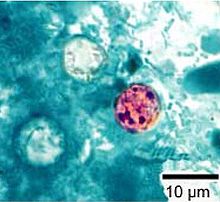
Food Safety News 220px-Cyclospora_cayetanensis_stained

A special FDA testing program on fresh herbs has documented the first confirmed evidence of the Cyclospora parasite in U.S. produce.

The Food and Drug Administration found the microscopic parasite on fresh cilantro at a U.S. distribution facility in July. In a follow-up investigation, the FDA found Cyclospora on fresh cilantro at a farm. The federal agency worked with state and local officials to embargo the cilantro. Staff from FDA have been working with the farmer on “corrective actions geared toward common routes of contamination,” according to a constituent update from the agency. 

“Although this is the first confirmed evidence of the presence of Cyclospora in domestic produce, FDA is currently unaware of illnesses associated with the product, and traceforward efforts do not indicate there are any connections between this domestic finding of contaminated cilantro and multistate outbreaks of Cyclospora illnesses investigated this spring and summer,” the agency reported.

Those Cyclospora outbreaks were linked to Del Monte vegetable-dip trays and salads made with Fresh Express chopped lettuce and carrots that were served at McDonald’s restaurants.

New Zealand -Campylobacter in raw milk leads to recall in New Zealand

Food Safety News 

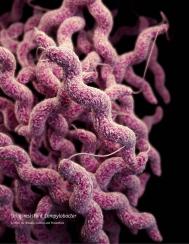
campy2

BOI Farming Ltd., trading as Bella Vacca Jerseys, is recalling raw, unpasteurized milk in New Zealand because of contamination with Campylobacter bacteria.

Bella Vacca brand unpasteurized, raw drinking milk is sold in 750-ml glass bottles.

Batch numbers 270818, 280818, 310818, 010918 and 030918 with use by dates Aug. 27, 28 and 31, and Sept. 1 and 3 are included in the recall. The product is delivered directly to customers or sold from the farm at 568 Pokapū Road, RD1 Kawakawa, Northland. It is not exported.

Consumers who have unused portions of Bella Vacca brand raw milk are urged to check the batch and date mark on stickers on the lids of bottles. Health officials say people should not to consume affected product. They should return the products for a full refund.

There have been no reports of illness but those who have consumed the product and have developed symptoms of infection from Campylobacter bacteria should seek medical advice.

Bella Vacca Jerseys representatives said until the next five tests are clear it is unable to sell raw milk.

South Africa – South Africa declares end to largest ever Listeria outbreak

Food Safety News

The largest ever detected Listeria outbreak in known history is over, according to officials in South Africa.

Between Jan. 1, 2017, and July 17, 2018, South Africa recorded 1,060 laboratory-confirmed cases of listeriosis, including 216 deaths.

The outbreak was linked to a ready-to-eat (RTE) processed meat plant owned by Tiger Brands, the Enterprise Foods production facility in Polokwane. However, investigators for the government and in the private sector have not been able to determine how the outbreak strain was introduced in the affected factory.

A total of 12 million South African rand ($810,000) was spent to deal with the outbreak.

Health Minister Aaron Motsoaledi gave processed meats the all clear at a media briefing on Monday.

“A team of World Health Organization, international and local experts (have) agreed that because no cases of listeriosis due to the outbreak strain have been identified since the first week of June 2018, and that over the last two months the incidence rate of laboratory-confirmed listeriosis cases has dropped to pre-outbreak levels, the outbreak of listeriosis is over,” Motsoaledi said

Listeriosis cases have been recorded for 40 years in South Africa. There have been between 60 and 80 cases every year for the past five years.


Canada – Pinty’s Italian Style Chicken Schnitzel Recalled for Listeria

Food Poison Bulletin

The food recall warning on August 9, 2018 for Pinty’s chicken products in Canada has been updated to include more product information. Now, Pinty’s Delicious Foods is recalling Pinty’s brand Italian Style Chicken Schnitzel for possible Listeria monocytogenes contamination. The original recall was for the company’s Oven Roasted Chicken Breast Strips.

The recalled product is Pinty’s Italian Style Chicken Schnitzel – Gluten Free Fully Cooked Breaded and Seasoned Cutlettes. It is packaged in 4 kg packages, with code 8172 and UPC number 10069094626371. This product was sold nationally to hotels and restaurants.

Consumers should not eat this product, and hotels, restaurants, and cafeterias should not sell it. No illnesses have been reported to date in connection with this recalled product.

Anyone who has this product should throw it away in a sealed container so other people and animals can’t access it. It’s a good idea to then clean out the refrigerator or freezer or wherever the product was stored with a mild bleach solution to kill any remaining bacteria.

USA – Cooked Ground Beef Patty Crumbles Recalled for Possible Listeria

Food Poisoning Bulletin 

Listeria kswfoodworld food safety food poisoning

Image CDC


J.T.M. Provisions of Ohio is recalling about 960 pounds of cooked ground beef patty products because they may be contaminated with Listeria monocytogenes bacteria. No confirmed reports of illness have been received by the company to date.

The recalled product is 20 pound cases containing four 5-pound sealed pouches of “Cooked Beef Patty Crumbles,” with case code 47860 and a Jaulian date of “18137.” This product has the establishment number “EST. 1917” inside the USDA mark of inspection. They were shipped to distribution centers in California.

The problem was discovered on August 31, 2018 during routine inspections. The establishment tested the product and it was positive for Listeria monocytogenes bacteria.

If you purchased these cooked ground beef patty crumbles, do not eat it, even if you are going to heat it. Discard it in a wrapped or sealed package in a secure garbage can, or take it back to the store where you bought it for a refund.

Research – What Sparked An E. Coli Outbreak In Lettuce? Scientists Trace A Surprising Source

NPR

The illnesses started appearing in late March. Here and there, across the country, people were checking themselves in to hospitals, sick from toxic E. coli bacteria. At least 200 people got sick. Five of them died.

Investigators quickly identified romaine lettuce as the source of the outbreak, but have had trouble pinpointing the cause for months. Now, the Food and Drug Administration has a theory for how E. coli ended up on that lettuce. According to the FDA, it probably came from a large cattle feedlot at one end of a valley near Yuma, Ariz., which is one of the country’s biggest lettuce-growing areas.

The finding has put lettuce growers in Yuma in a tough spot. The feedlot has been their neighbor for many years. Some vegetable farmers are wondering whether they can still co-exist with all those cattle nearby

USA – Food Safety and Dining Out

CDC

Going out to eat? When choosing a restaurant, look for one that keeps food safety on the menu. Read on for more tips to stay healthy while dining out.

Food Safety Tips for Eating at Restaurants

  • Check inspection scores. Check a restaurant’s score at your health department’s website, ask the health department for a copy of the report, or look for it when you get to the restaurant.
  • Look for certificates that show kitchen managers have completed food safety training. Proper food safety training can help improve practices that reduce the chance of spreading foodborne germs and illnesses.
  • Look for safe food-handling practices.  Sick food workers[272 KB](https://www.cdc.gov/nceh/ehs/ehsnet/plain_language/food-workers-working-when-sick.pdf) can spread their illness to customers. Most kitchens are out of the customer’s sight, but if you can see food being prepared, check to make sure workers are using gloves or utensils to handle foods that will not be cooked further, such as deli meats and salad greens.
  • Order food that’s properly cooked. Certain foods,(https://www.cdc.gov/foodsafety/foods-linked-illness.html) including meat, poultry, and fish, need to be cooked to a temperature high enough to kill harmful germs that may be present. If you’re served undercooked meat, poultry, seafood, or eggs, send them back to be cooked until they are safe to eat.
  • Watch out for food served lukewarm. Cold food should be served cold, and hot food should be served hot. If you’re selecting food from a buffet or salad bar, make sure that the hot food is steaming, and the cold food is chilled. Germs that cause food poisoning grow quickly when food is in the danger zone, between 40˚F and 140F˚.
  • Ask your server if raw or lightly cooked eggs are used in foods such as Caesar salad dressing, custards, or hollandaise sauce. Raw or undercooked eggs can make you sick unless they’re pasteurized to kill germs.
  • Take care of your leftovers quickly. Get them to the fridge within two hours, or just one hour if it’s a hot day.  Eat them within three to four days. Throw them out after that time.

Research – Escherichia coli ST131-H22 as a Foodborne Uropathogen – Analysis ties resistant E coli from poultry meat to human UTIs

MBIO ASM