Category Archives: E.coli

New Zealand – Water at Christchurch’s Princess Margaret Hospital contaminated with E coli

STUFF ecoli

Staff, patients and visitors are unable to drink the water at a Christchurch hospital after it was found to be contaminated with E coli.

In an email to Princess Margaret Hospital staff on Sunday, the Canterbury District Health Board (CDHB) said people should avoid drinking the water until further notice.

“Everyone on the site should use bottled water where possible and do not use zips or plumbed in water coolers until further notice,” the email said.

CDHB chief of psychiatry Dr Peri Renison said on Monday evening the water supply had since tested negative for contaminants and no-one had been harmed.


Research – Spokane Produce Linked to E. coli Recall

Food Poison Journal

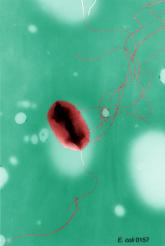
kswfoodworld E.coli O157

Image CDC


Spokane Produce Inc. of Spokane, WA initiates a voluntary recall of sandwiches containing green leaf lettuce and foodservice lettuce filets following notice of a produce industry ingredient recall by Adam Bros. Farming Inc. Sandwich products bearing the Northwest Cuisine Creations and Fresh&Local labels. These products are recalled because they may be contaminated with Escherichia coli O157:H7 bacteria (E. coli O157:H7).

Research – Control of pathogens in cheeses made from unpasteurised milk

HPS Scotland

A new report, prepared for Food Standards Scotland (FSS), outlines the scientific evidence on food safety controls, which can be used to reduce the risks of food poisoning bacteria in the production of raw milk cheeses.

The report, by Dr Catherine Donnelly, was prepared to supply evidence for Scottish artisan cheesemakers and enforcement officials in managing the microbiological safety of artisan cheeses, particularly those produced from unpasteurised milk. The main pathogens of concern posing a risk to the safety of cheeses made from unpasteurised milk are Listeria monocytogenes, Shiga toxin-producing Escherichia coli, Salmonella and Staphylococcus aureus.

The report, which is in three parts:

  • examines categorisation of commonly produced cheese types in Scotland and provides an overview of potential critical control points (CCPs) at each stage of the cheesemaking process, in order to control bacterial pathogens of primary concern;
  • analyses currently available predictive models, challenge testing methods and results of challenge testing, providing evidence of the safety, or lack thereof, attained during cheesemaking;
  • provides an analysis of microbiological and physicochemical results obtained from cheesemakers, as well as from the scientific literature and recommendations on testing targets and frequencies to assure process control and production of microbiologically safe products.

‘Review of controls for pathogen risks in Scottish artisan cheeses made from unpasteurised milk’ can be accessed at: https://www.foodstandards.gov.scot/downloads/FSS_2017_015_-_Control_of_path….

[Source: FSA, 12 December 2018. https://www.foodstandards.gov.scot/publications-and-research/publications/c…]

USA – Adam Bros. Farming, Inc. Recalls Red and Green Leaf Lettuce and Cauliflower Because of Possible Health Risk

FDA

Adam Bros. Farming, Inc. of Santa Maria, California is recalling red leaf lettuce, green leaf lettuce and cauliflower harvested on November 27 through 30, 2018 out of an abundance of caution, because it may be contaminated with Escherichia coli O157:H7 bacteria (E. Coli O157:H7).

None of the recalled product has tested positive for E. coli O157:H7. No illnesses have been reported.

Adam Bros. Farming, Inc. feels a strong commitment to its customers and has worked for years to provide a safe and healthy food supply. Out of an abundance of caution, Adam Bros.

Farming, Inc. is initiating this voluntary recall in cooperation with the FDA. The recall involves produce harvested between November 27, 2018 and November 30, 2018, grown in particular fields. It does not involve all of Adam Bros. Farming, Inc.’s products.

As of 12/13/2018 Adam Bros. Farming, Inc. has notified its effected customers of all product that was recalled, asking that the product not be eaten, sold, or transferred. Furthermore, Adam Bros. Farming, Inc. asked that its customers notify the downline chain of custody to insure a full recall.

USA – FDA Investigating Multistate Outbreak of E. coli O157:H7 Infections Likely Linked to Romaine Lettuce Grown in California

FDA Eurofins Food Testing UK

Update: December 17, 2018

The FDA, along with CDC, state and local agencies, is investigating a multistate outbreak of E. coli O157:H7 illnesses linked to romaine lettuce grown in California this fall. The Public Health Agency of Canada (PHAC) and Canadian Food Inspection Agency (CFIA) are also coordinating with U.S. agencies as they investigate a similar outbreak in Canada.

On December 13, 2018, Adam Bros. Farming, Inc., in Santa Barbara County, recalled products that may have come into contact with water from the water reservoir where the outbreak strain was found. The firm recalled red leaf lettuce, green leaf lettuce and cauliflower harvested on November 27 through 30, 2018. According to the firm, cauliflower was distributed to wholesalers in the U.S. Mexico, and Canada.

The Adam Bros. recall has prompted a sub-recall by Spokane Produce Inc. of Spokane, WA. The firm recalled sandwiches and other products under the Northwest Cuisine Creations and Fresh&Local labels.

Recommendation:

Consumers:

Consumers should not eat recalled products and should throw them away. Consumers also should not eat romaine from Monterey, San Benito, and Santa Barbara counties in California.

Based on discussions with producers and distributors, romaine lettuce entering the market will now be voluntarily labeled with a harvest location and a harvest date or labeled as being hydroponically- or greenhouse-grown. Romaine lettuce with the new labeling is available in stores. Consumers should look for signs in stores where labels are not an option. If signs or labels do not have this information, you should not eat or use it.

If it does have this information, we advise avoiding romaine from Monterey, San Benito, and Santa Barbara counties in California. Romaine from outside those regions need not be avoided. Additional counties may be added or subtracted as FDA traceback investigation continues.

For example, romaine lettuce harvested from areas that include, but are not limited to, the following do not appear to be related to the current outbreak:

  • the desert growing region near Yuma, Arizona
  • the California desert growing region near Imperial County and Riverside County
  • the counties of Ventura, San Luis Obispo, and Santa Cruz in California
  • the state of Florida
  • Mexico

Additionally, there is no evidence hydroponically- and greenhouse-grown romaine is related to the current outbreak, and there is, also, no recommendation to avoid romaine from these sources.

Restaurants and Retailers:

Restaurants and retailers should not serve or sell romaine from Monterey, San Benito, and Santa Barbara counties in California. Romaine from outside those regions need not be avoided. See the list above of examples of growing areas not related to the current outbreak. Retailers and restaurants should discard any recalled product.

Retailers should ensure that there is labeling with the harvest date and location on each bag of romaine, or that there is signage when labels are not an option.

Suppliers and Distributors:

Suppliers, distributors and others in the supply chain should not ship or sell romaine from Monterey, San Benito, and Santa Barbara counties in California. Romaine from outside those regions need not be. Distributors and suppliers should discard any recalled product.

FDA recommends that labels are placed on romaine lettuce entering the market to help consumers, restaurants and retailers determine that the romaine is from unaffected growing regions outside of Monterey, San Benito, or Santa Barbara counties in California.


USA – Spokane Produce Voluntarily Recalls Northwest Cuisine Creations and Fresh&Local Sandwiches and Green Leaf Lettuce Filets

FDA

Spokane Produce Inc. of Spokane, WA initiates a voluntary recall of sandwiches containing green leaf lettuce and foodservice lettuce filets following notice of a produce industry ingredient recall by Adam Bros. Farming Inc. Sandwich products bearing the Northwest Cuisine Creations and Fresh&Local labels. These prod- ucts are recalled because they may be contaminated with Escherichia coli O157:H7 bacteria (E. Coli O157:H7). E. coli O157:H7 causes a diarrheal illness often with bloody stools. Although most healthy adults can recover completely within a week, some people can develop a form of kidney failure called Hemolytic Uremic Syndrome (HUS). HUS is most likely to occur in young children and the elderly. The condition can lead to serious kidney damage and even death.

All sandwiches bear the “best buy” dating 12/14/18-12/21/18. The product was distributed to grocery markets in Washington, Idaho, Montana, Wyoming and Oregon. In addition, Green Leaf Filets (no label) in five(5) and ten(10) pound containers are being recalled from foodservice accounts.

Research – An approach to improve the safety and quality of ready‐to‐eat blueberries – E.coli O157

Wiley Online Library

Abstract

Bioactive edible coatings were developed and applied to blueberries as a natural treatment. E. coli O157:H7, L. innocua, S. aureus, and P. aeruginosa were subjected to four bioactive compounds and to three film‐forming solutions (FFS). Vanillin and geraniol at low concentrations (1.2–1.8 mg/mL and 0.4–1 μL/mL) demonstrated significant inhibitory effects on all pathogens counts. Chitosan (Ch) showed a high antimicrobial activity (final counts below 2 log CFU/mL). The effectiveness of Ch plus vanillin (Ch‐Va) and geraniol (Ch‐Ge) in improving the safety were tested against pathogens inoculated on blueberries. Ch, Ch‐Va, and Ch‐Ge coatings exerted a bactericidal effect on all pathogens (from 1.24 to more than 2 log reductions). Significant reduction in yeast and mold counts was achieved with Ch (1.09 log) and Ch + Va (1.74 log). Sensory attributes of blueberries remained acceptable. Ch‐Va and Ch‐Ge were an alternative to improve the quality and safety and could be effective in extending the shelf life of ready‐to‐eat blueberries.

Practical applications

The present study proposes the use of natural coatings enriched with biopreservatives as a technological alternative to enhance the quality and safety of minimally processed fruits. According to the results obtained, the application of chitosan plus vanillin/geraniol coatings on fresh blueberries would allow to offer a safe product and respond the growing demand of consumers for fresh, environmentally friendly and chemical preservatives‐free foods. These findings and those obtained by the sensory evaluation support the practical application of this alternative in the minimally processed fruit industry.

Canada – Food Recall Warning – Certain cauliflower, red leaf lettuce and green leaf lettuce produced by Adam Bros Farming Inc. recalled due to E. coli O157:H7

CFIA CIFA

Recall details

Ottawa, December 15, 2018 – Industry is recalling certain cauliflower, red leaf lettuce and green leaf lettuce produced by Adam Bros. Farming Inc. of Santa Maria, California, United States (US) from the marketplace due to possible E. coli O157:H7 contamination. The affected products described below have been imported from Adam Bros Farming Inc. by: Courchesne Larose Ltd., Anjou, QC, Dominion Citrus, Toronto, ON; Fresh Taste Produce Limited, Milton, ON; and Fruits et Legumes Gaetan Bono Inc., Montreal, QC. Consumers, retailers, restaurants and institutions should not sell, use or consume the recalled products described below.

The following products, grown in the US, are known to have been sold in Ontario, Quebec, New Brunswick, Nova Scotia, Prince Edward Island, and Newfoundland and Labrador and may have been sold in other provinces.

Recalled products

Brand Name Common Name Size Code(s) on Product Additional Info
Adam Brothers Family Farms Cauliflower Variable Carton tag numbers:
203-27263 331-18;
203-27263 332-18;
203-27263 333-18;
203-27263 334-18;
203-27268 334-18;
204-27268 332-18.
This cauliflower is wrapped and has the Adam Brothers Family Farms logo but no coding information.
If you are unsure as to whether products are included in this recall, contact the location where they were purchased.
None Green Leaf Lettuce Sold in bulk Carton Tag Numbers:
204-27247 331-18;
253-27268 331-18;
204-27268 331-18;
204-27268 332-18.
This product was sold in bulk without a brand name.
If you are unsure as to whether products are included in this recall, contact the location where they were purchased.
None Red Leaf Lettuce Sold in bulk Carton Tag Numbers:
253-27267 331-18;
204-27267 331-18;
203-27267 331-18.
This product was sold in bulk without a brand name.
If you are unsure as to whether products are included in this recall, contact the location where they were purchased.

Research – Survival of Escherichia coli O157:H7 and Salmonella on Bruised and Unbruised Tomatoes from Three Ripeness Stages at Two Temperatures

Journal of Food Protection


Tomatoes are one of the major fresh produce commodities consumed in the United States. Harvesting tomato fruit at a later stage of development can enhance consumer acceptance but can also increase damage due to bruising. Bruising can affect the quality of whole tomatoes by causing an unacceptable appearance and accelerating decay. Bruising may also facilitate bacterial attachment to the fruit surface and support growth of pathogens. This study evaluated the survival and/or proliferation of Escherichia coli O157:H7 and Salmonella on the surface of artificially bruised and unbruised tomatoes at three ripeness stages (breaker, pink, and red) and two storage temperatures (10 and 20°C). A total of 1,440 tomatoes, 720 for each organism, were analyzed. Both E. coli O157:H7 and Salmonella counts declined significantly (P < 0.05) on the bruised and unbruised tomatoes over the 7-day storage period, by approximately 2.5 and 2.0 log, respectively. E. coli O157:H7 was not detected on pink tomatoes on day 7, whereas Salmonella persisted on the tomato surfaces throughout the 7-day study at all ripeness stages. Bruising had no significant effect (P > 0.05) on the survival of E. coli O157:H7 (CFU per tomato) compared with the unbruised tomatoes, in most cases. Tomatoes from the red ripeness stage showed a significant effect (P < 0.05) of bruising on Salmonella survival at both 10 and 20°C. Similar to the colony count results, the frequency (presence or absence) of inoculated tomatoes with detectable levels of inoculated bacteria decreased significantly (P < 0.05) over time. At the lower temperature, E. coli O157:H7 was recovered from significantly higher (P < 0.05) numbers of breaker and pink tomatoes, whereas there was no effect of temperature on the overall survival of E. coli O157:H7 on red tomatoes. Results from this study are essential for understanding the effects of bruising on produce safety and for producers and packers to develop mitigation strategies to control pathogenic and spoilage organisms.

UK – Deep clean under way after E.coli scare at Perthshire nursery

The Courier UK

A Perthshire nursery school is at the centre of a three-day deep clean after a suspected case of E-coli was detected.

Health bosses say suspected symptoms were detected in a child with links to Errol nursery and stressed the risks to the wider public were very low.

NHS Tayside and Perth and Kinross Council are investigating how the infection may have come about.

The school remained open while the nursery area was cleaned thoroughly overnight on the advice of public health experts. Council chiefs insisted the operation by Tayside Contracts was being carried out as a precaution.

The health board wrote to parents last week to say experts were investigating a single case of suspected Escherichia coli, more commonly known as E. coli.

The germs are commonly found in farm animals and can cause sickness, diarrhoea and a fever in humans.

An NHS Tayside spokeswoman confirmed yesterday the infection was in a nursery pupil and that investigations are ongoing.