Category Archives: E.coli

USA – Statement from FDA Commissioner Scott Gottlieb, M.D. and FDA Deputy Commissioner Frank Yiannas on new findings and updated consumer recommendations related to the romaine lettuce E. coli O157:H7 outbreak investigation

FDA Eurofins Food Testing UK

On Nov. 20, the U.S. Food and Drug Administration and the Centers for Disease Control and Prevention warned the American public of a multi-state outbreak of E. coli O157:H7 linked to romaine lettuce and advised against eating any romaine lettuce on the market at that time. The FDA then worked quickly with romaine producers and distributors who voluntarily withdrew the product from the market to help contain this new outbreak. This was an especially important step in advance of the Thanksgiving holiday. At the same time, we immediately launched a broad traceback investigation to determine the source of this outbreak.

We have new results to report from this investigation tracing the source of the contamination to at least one specific farm. Based on these and other new findings, we’re updating our recommendations for the romaine lettuce industry and consumers.

Shortly after our initial public warning, our traceback investigation was able to narrow down the scope of implicated product. Based on these initial findings, we immediately issued an updated public warning to consumers to avoid consuming romaine lettuce specifically from Monterey, San Benito, San Luis Obispo, Santa Barbara, Santa Cruz and Ventura counties in California. This information about the implicated regions helped consumers avoid potentially affected product. The information was provided in conjunction with a voluntary agreement that we reached with industry to provide more specific labeling information on the origin and harvest date of romaine lettuce as it was shipped to the market.
Information – The disgusting reason why you shouldn’t pepper your food at restaurants – E.coli

The Metro US

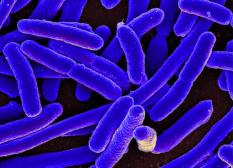
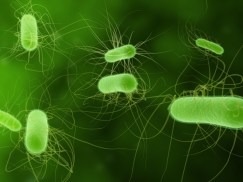
Surprisingly, the dirtiest items in a restaurant are not in the bathroom, It’s right on the table in front of you: Pepper shakers are the dirtiest item at restaurants and are ontaminated with E. coli bacteria.

According to a study by ABC News, pepper shakers at 12 different restaurants in New York, Arizona and Ohio had an average bacteria count of 11,600. An even more disgusting finding was that the restaurant’s menus carried an average bacteria count of 185,000.

UK – Dorset declared as E.coli hotspot

Dorset Echo CDC E.coli

Dorset has been ranked as the third highest hotspot for E.coli in the country, according to research by chemist-4-u.com.Between September 2017 and September 2018, 733 cases of E.coli were recorded by the NHS Dorset Clinical Commissioning Group (CCG).

Birmingham and Solihull CCG recorded the highest number of cases with 987, followed by Northern, Eastern and Weston Devon CCG in second with 781 recorded cases.

E.coli is a type of bacteria common in human and animal intestines, and forms part of the bacteria that exist in the bowel.Symptoms of E.coli include stomach cramps, diarrhoea, blood in diarrhoea, and occasionally a fever.

There are a number of different types of E.coli and, while the majority are harmless, some can cause serious food poisoning and serious infection.

In October, two children from the same family died after contracting E.coli. The pair died from a complication of E.coli called hemolytic uremic syndrome (HUS) which affects the kidneys.

The bacteria appears to be on the rise. 3791 cases were recorded in the 12 months to September this year across 195 CCGs in England, compared with 3535 during the same period the year before.

Indonesia – 34 snacks popular with Depok students found to contain E. coli

The Jakarta Post

Ecoli Istock

Thirty-four snacks that are popular with students have been found to contain Escherichia coli (E. coli) bacteria.

“There should be zero E. coli in food and beverages,” Health Agency secretary Ernawati told Tempo magazine on Wednesday.

She explained that the agency had collected samples from 44 primary schools for its research, including four schools in each district.

The amount of E. coli that could cause diarrhea varied from person to person. The bacteria were usually waterborne, meaning they could be spread by food sellers touching or washing utensils, she added.

Europe – The European Union summary report on trends and sources of zoonoses, zoonotic agents and food-borne outbreaks in 2017

ECDC

This report of the European Food Safety Authority and the European Centre for Disease Prevention and Control presents the results of zoonoses monitoring activities carried out in 2017 in 37 European countries (28 Member States (MS) and nine non-MS). Campylobacteriosis was the commonest reported zoonosis and its EU trend for confirmed human cases increasing since 2008 stabilised during 2013–2017. The decreasing EU trend for confirmed human salmonellosis cases since 2008 ended during 2013–2017, and the proportion of human Salmonella Enteritidis cases increased, mostly due to one MS starting to report serotype data. Sixteen MS met all Salmonella reduction targets for poultry, whereas 12 MS failed meeting at least one. The EU flock prevalence of target Salmonella serovars in breeding hens, laying hens, broilers and fattening turkeys decreased or remained stable compared to 2016, and slightly increased in breeding turkeys. Salmonella results on pig carcases and target Salmonella serovar results for poultry from competent authorities tended to be generally higher compared to those from food business operators. The notification rate of human listeriosis further increased in 2017, despite Listeria seldom exceeding the EU food safety limit in ready-to-eat food. The decreasing EU trend for confirmed yersiniosis cases since 2008 stabilised during 2013–2017. The number of confirmed shiga toxin-producing Escherichia coli (STEC) infections in humans was stable. A total of 5,079 food-borne (including waterborne) outbreaks were reported. Salmonella was the commonest detected agent with S. Enteritidis causing one out of seven outbreaks, followed by other bacteria, bacterial toxins and viruses. The agent was unknown in 37.6% of all outbreaks. Salmonella in eggs and Salmonella in meat and meat products were the highest risk agent/food pairs. The report further summarises trends and sources for bovine tuberculosis, Brucella, Trichinella, Echinococcus, Toxoplasma, rabies, Coxiella burnetii (Q fever), West Nile virus and tularaemia.

UK – E.coli scare at nursery sparks NHS probe

The World News

kswfoodworld E.coli O157

Image CDC


Perthshire school was involved in an E.coli scare last week, the PA can reveal.NHS Tayside launched an investigation after a suspected case of the bacteria in a child at Errol Primary School’s nursery.

The nursery will undergo three days of deep cleaning as a “precautionary measure”.

Parents at the school were issued with letters from the health board with information on the infection.

The child was being tested for the non O157 strain of the infection.

Speaking on Friday a spokesperson at NHS Tayside confirmed: “NHS Tayside’s health protection team is aware of and currently investigating a single suspected case of E.coli non O157 infection in a child who attends a nursery in Perthshire.

“As a precaution, a letter has been issued to parents of children at the nursery for information and reassurance.

“The risk to the wider public is very low.”

Research – Effect of surrounding vegetation on microbial survival or die‐off on watermelon surface in an agriculture setting

Wiley Online Library

Abstract

Preharvest contamination of produce with food borne pathogens has been a major food safety issue. In this study, we investigated the effect of surrounding vegetation on the survival of natural and inoculated generic Escherichia coli on watermelon rinds in an agricultural field setting. There was no significant difference (p > .05) on the populations of natural generic E. coli (1–1.46 log Most Probable Number (MPN)/sample) and coliforms (<3.99 log CFU/cm2) on watermelons harvested from low, medium, and high levels of vegetation. However, the survival rate of generic E. coli inoculated on watermelon rind discs was variable with the level of vegetation. A significant reduction in generic E. coli count was observed within 12 hr at all vegetation levels. After 108 hr, discs placed at low vegetation level had a highest die‐off reduction (3 log Colony Forming Units (CFU)/cm2) compared to medium and high vegetation levels.

Practical applications

To ensure preharvest produce safety, the Food Safety Modernization Act (FSMA) produce safety rule has suggested a time interval between last irrigation and harvest for potentially contaminating microorganisms to die‐off. However, a knowledge gap exists regarding the influence of surrounding vegetation on microbial die‐off rates on produce in the agricultural field. The findings of this study emphasize the importance of considering the surrounding vegetation while making decisions for developing preharvest risk management strategies based on microbial die‐off rate calculations.

USA – CDC Warns Against Eating Raw Dough

Food Poisoning Bulletin

Warnings against eating raw dough have been issued by the Centers for Disease Control and Prevention. The holiday season is when most people bake sweets, and eating raw dough and batter is a fun thing to do. But it can make you very sick. People also often make doughs for crafts, such as making Christmas ornaments. Never use raw flour for those projects.

There’s a special warning, too, about the Salmonella outbreak that is linked to Duncan Hines cake mixes. Check your pantry to see if you have any of these recalled cake mixes. If you do, throw them away.

The problem ingredients in cookie doughs and cake batters are eggs and flour. Eggs are often contaminated with Salmonella bacteria. And flour has been linked to E. coli outbreaks in the past.

Flour is a raw agricultural product, which means that it isn’t treated to kill pathogens. Bacteria can contaminate grains in the field, during harvest, during transport, and during processing. People don’t usually think of flour as being a risk for food poisoning, but it is.

So, do not taste or eat any raw dough or batter. This applies whether you are making biscuits, pie crust, cookies, cakes, or craft doughs. Never let children play with or eat raw doughs.

Always follow the baking directions when you are making cookies and cakes. And refrigerate any doughs or batters that contain raw flour or eggs.

Research -Microbacteria can build up in your reusable water bottle

The Jakarta Post

Both oral and environmental bacteria and viruses could be building up on reusable water bottles that are not cleaned on a regular basis, according to a scientist from the Center for Ecology and Hydrology.

Senior scientist Andrew Singer was recently interviewed by the Huffington Post UK, where he explained that even E. coli could find its way into an unclean reusable water bottle.

“When you flush the toilet, the toilet water will get aerosolized and a fraction of the water droplets can land on and in your water bottle,” Singer explained.

Singer said that poor personal hygiene habits, such as rarely or not washing your hands after using the toilet, or taking your water bottle to the toilet with you, could increase the chances of getting serious infections.


Research – Soil bacteria provide a promising E. coli treatment

Medical Express

kswfoodworld E.coli O157

Image CDC


While thoroughly cooking meat and washing vegetables and hands after can prevent E. coli , treatment for the severe stomach bug can be difficult, as antibiotics are known to make the disease worse by releasing a potent toxin into the infected person’s gut.

Now, scientists from the University of Glasgow have found a product made by natural soil-living bacteria that can successfully treat E. coli O157 – [one of] the most serious types of the bug – without producing any serious side effects.

The new study, published in Infection and Immunity, found that Aurodox, a compound first discovered in 1973 but found to be poorly active as a true antibiotic, was able to successfully block E. coli O157 infections.

Scotland has one of the highest incidences of E. coli O157 in the world, and almost half of O157 cases in Scotland are in children under 16 years of age.

The Aurodox compound was able to reduce the ability of E. coli O157 to bind to human cells and, unlike traditional antibiotics, did not cause the release of potent toxins. The researchers believe that this compound could be used as a promising future treatment of E. coli O157 infections.