Category Archives: E.coli O157:H7

UK – E.coli scare at nursery sparks NHS probe

The World News

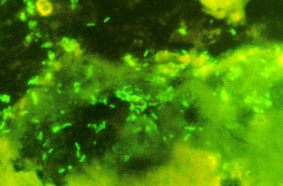
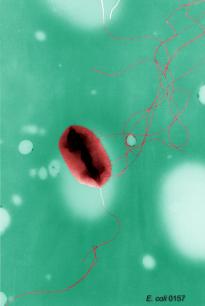
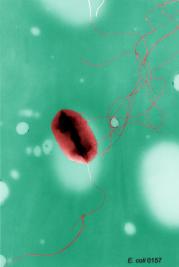
kswfoodworld E.coli O157

Image CDC


Perthshire school was involved in an E.coli scare last week, the PA can reveal.NHS Tayside launched an investigation after a suspected case of the bacteria in a child at Errol Primary School’s nursery.

The nursery will undergo three days of deep cleaning as a “precautionary measure”.

Parents at the school were issued with letters from the health board with information on the infection.

The child was being tested for the non O157 strain of the infection.

Speaking on Friday a spokesperson at NHS Tayside confirmed: “NHS Tayside’s health protection team is aware of and currently investigating a single suspected case of E.coli non O157 infection in a child who attends a nursery in Perthshire.

“As a precaution, a letter has been issued to parents of children at the nursery for information and reassurance.

“The risk to the wider public is very low.”
Research – Soil bacteria provide a promising E. coli treatment

Medical Express

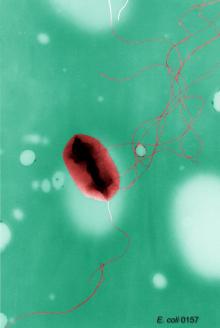
kswfoodworld E.coli O157

Image CDC


While thoroughly cooking meat and washing vegetables and hands after can prevent E. coli , treatment for the severe stomach bug can be difficult, as antibiotics are known to make the disease worse by releasing a potent toxin into the infected person’s gut.

Now, scientists from the University of Glasgow have found a product made by natural soil-living bacteria that can successfully treat E. coli O157 – [one of] the most serious types of the bug – without producing any serious side effects.

The new study, published in Infection and Immunity, found that Aurodox, a compound first discovered in 1973 but found to be poorly active as a true antibiotic, was able to successfully block E. coli O157 infections.

Scotland has one of the highest incidences of E. coli O157 in the world, and almost half of O157 cases in Scotland are in children under 16 years of age.

The Aurodox compound was able to reduce the ability of E. coli O157 to bind to human cells and, unlike traditional antibiotics, did not cause the release of potent toxins. The researchers believe that this compound could be used as a promising future treatment of E. coli O157 infections.

USA – E. coli O157:H7 Romaine Outbreak Increases With 52 Sick and 19 Hospitalized

Food Poisoning Bulletin

E. coli O157:H7 Romaine Outbreak 12618

The E. coli O157:H7 romaine outbreak has grown, according to an update posted by the Centers for Disease Control and Prevention (CDC). Since the last update posted in November 26, 2018, an additional nine patients have been added to the total for 52 sick. Those patients live in 15 states. Nineteen people have been hospitalized.

Research – Disposition of Salmonella and Escherichia coli O157:H7 following Spraying of Contaminated Water on Cucumber Fruit and Flowers in the Field

Journal of Food Protection cucumber

Cucumbers are frequently consumed raw and have been implicated in several recent foodborne outbreaks. Because this item may become contaminated at the farm, it is vital to explore the fate of attenuated Salmonella Typhimurium or Escherichia coli O157:H7 sprayed onto foliage, flowers, and fruit in fields and determine whether pre- or postcontamination spray interventions could minimize contamination. After spraying cucumber plants with contaminated irrigation water (3.8 log CFU/mL of Salmonella Typhimurium and E. coli O157:H7), 60 to 78% of cucumber fruit were not contaminated because the plant’s canopy likely prevented many of the underlying fruit from being exposed to the water. Subsequent exposure of contaminated cucumber plants to a simulated shower event did not appear to dislodge pathogens from contaminated foliage onto the fruit, nor did it appear to consistently wash either pathogen from the fruit. Spraying flowers and attached ovaries directly with a pathogen inoculum (4.6 log CFU/mL) initially led to 100% and 65 to 90% contamination, respectively. Within 3 days, 30 to 40% of the flowers were still contaminated; however, contamination of ovaries was minimal (≤10%), suggesting it was unlikely that internalization occurred through the flower to the ovary with these pathogen strains. In another study, both pathogens were found on a withered flower but not on the fruit to which the flower was attached, suggesting that this contaminated flower could serve as a source of cross-contamination in a storage bin if harvested with the fruit. Because pre- and postcontamination acetic acid–based spray treatments failed to reduce pathogen prevalence, the probability that fruit initially contaminated at 1.3 to 2.8 log CFU of Salmonella Typhimurium or E. coli O157:H7 per cucumber would be positive by enrichment culture decreased by a factor of 1.6 and 1.9 for Salmonella Typhimurium and E. coli O157:H7, respectively, for every day the fruit was held in the field (P ≤ 0.0001). Hence, to reduce the prevalence of Salmonella Typhimurium on cucumbers below 5%, more than 1 week would be required.

Research – Survival of Escherichia coli O157:H7 and Salmonella on Bruised and Unbruised Tomatoes from Three Ripeness Stages at Two Temperatures

Journal of Food Protection


Tomatoes are one of the major fresh produce commodities consumed in the United States. Harvesting tomato fruit at a later stage of development can enhance consumer acceptance but can also increase damage due to bruising. Bruising can affect the quality of whole tomatoes by causing an unacceptable appearance and accelerating decay. Bruising may also facilitate bacterial attachment to the fruit surface and support growth of pathogens. This study evaluated the survival and/or proliferation of Escherichia coli O157:H7 and Salmonella on the surface of artificially bruised and unbruised tomatoes at three ripeness stages (breaker, pink, and red) and two storage temperatures (10 and 20°C). A total of 1,440 tomatoes, 720 for each organism, were analyzed. Both E. coli O157:H7 and Salmonella counts declined significantly (P < 0.05) on the bruised and unbruised tomatoes over the 7-day storage period, by approximately 2.5 and 2.0 log, respectively. E. coli O157:H7 was not detected on pink tomatoes on day 7, whereas Salmonella persisted on the tomato surfaces throughout the 7-day study at all ripeness stages. Bruising had no significant effect (P > 0.05) on the survival of E. coli O157:H7 (CFU per tomato) compared with the unbruised tomatoes, in most cases. Tomatoes from the red ripeness stage showed a significant effect (P < 0.05) of bruising on Salmonella survival at both 10 and 20°C. Similar to the colony count results, the frequency (presence or absence) of inoculated tomatoes with detectable levels of inoculated bacteria decreased significantly (P < 0.05) over time. At the lower temperature, E. coli O157:H7 was recovered from significantly higher (P < 0.05) numbers of breaker and pink tomatoes, whereas there was no effect of temperature on the overall survival of E. coli O157:H7 on red tomatoes. Results from this study are essential for understanding the effects of bruising on produce safety and for producers and packers to develop mitigation strategies to control pathogenic and spoilage organisms.

Research – Study could explain higher rates of human E. coli infection in Scotland

The Roslin Institute ecoli

A subtype of E. coli O157 found in cattle may be responsible for higher rates of severe human infection in Scotland, report suggests.

E. coli O157 is a bacterium carried by cattle, which can cause life-threatening human infections when it enters the food chain. Scientists found that cattle in Scotland have a higher level of a subtype of E. coli O157 – PT21/28, which is known to cause more severe human infection.

It may be that local exposure to this particular subtype is a potential factor for the rates of people infected by E. coli O157 in Scotland being around three times higher than in England and Wales.

Causes of E. coli outbreaks

Researchers used Whole Genome Sequencing (WGS) to define which specific subtypes of E. coli caused an outbreak. For example, data obtained from WGS helped to understand whether a human infection is likely to have arisen from local farm animals or by a strain present in imported food or as a consequence of travel abroad.

The team have also combined WGS data with machine learning to predict which subtypes of  E. coli O157 pose the greatest threat to human health.

Hong Kong – Food Alert Not to consume romaine lettuce from the US, Canada and unknown sources – E.coli

CFS

Issue Date 22.11.2018
Source of Information Centre for Food Safety
Food Product Romaine lettuce
Product Name and Description All romaine lettuce imported from the US and Canada
Reason For Issuing Alert
  • The Centre for Food Safety (CFS) of the Food and Environmental Hygiene Department, through its routine Food Incident Surveillance System, learnt on November 21 that there were reports in the United States (US) and Canada about outbreaks of Escherichia coli (E. coli) infection that might be linked to the consumption of romaine lettuce contaminated with E. coli.
Action Taken by the Centre for Food Safety
  • The CFS immediately contacted the US and Canadian authorities for more information (including about the place of origin of the affected romaine lettuce). The Centre also, starting from November 21, held all romaine lettuce imported from the US and Canada for testing at the import level, which will only be released to the market upon satisfactory test results.
  • The CFS has also enhanced surveillance of romaine lettuce from the two countries at retail level.
  • The CFS will continue to closely monitor the latest developments of the incident in the US and Canada and take appropriate follow-up action.
Advice to the Trade
  • Retailers have voluntarily removed the product concerned from shelves.
Advice to Consumers
  • For the sake of prudence, the CFS urges the public not to consume romaine lettuce from the US, Canada and unknown sources.
Further Information The CFS press release

USA – CDC Alert: Do Not Eat Romaine Lettuce, Throw It Out

CDC

Illustration with a triangle and exclamation mark and text reading Food Safety Alert

CDC, public health and regulatory officials in several states, Canada, and the U.S. Food and Drug Administration (FDA) are investigating a multistate outbreak of Shiga toxin-producing Escherichia coli O157:H7 (E. coli O157:H7) infections linked to romaine lettuce.

CDC is advising that U.S. consumers not eat any romaine lettuce, and retailers and restaurants not serve or sell any, until we learn more about the outbreak. This investigation is ongoing and the advice will be updated as more information is available.

  • Consumers who have any type of romaine lettuce in their home should not eat it and should throw it away, even if some of it was eaten and no one has gotten sick.
    • This advice includes all types or uses of romaine lettuce, such as whole heads of romaine, hearts of romaine, and bags and boxes of precut lettuce and salad mixes that contain romaine, including baby romaine, spring mix, and Caesar salad.
    • If you do not know if the lettuce is romaine or whether a salad mix contains romaine, do not eat it and throw it away.
    • Wash and sanitize drawers or shelves in refrigerators where romaine was stored. Follow these five steps(https://www.cdc.gov/foodsafety/communication/clean-refrigerator-steps.html) to clean your refrigerator.
  • Restaurants and retailers should not serve or sell any romaine lettuce, including salads and salad mixes containing romaine.
  • Take action(https://www.cdc.gov/vitalsigns/foodsafety-2015/index.html) if you have symptoms of an E. coli infection(https://www.cdc.gov/ecoli/ecoli-symptoms.html):
    • Talk to your healthcare provider.
    • Write down what you ate in the week before you started to get sick.
    • Report your illness to the health department.
    • Assist public health investigators by answering questions about your illness.

Advice to Clinicians

  • Antibiotics are not recommended(https://www.cdc.gov/ecoli/clinicians.html) for patients with E. coli O157 infections. Antibiotics are also not recommended for patients in whom E.coli O157 infection is suspected, until diagnostic testing rules out this infection.
  • Some studies have shown that administering antibiotics to patients with E. coli O157 infections might increase their risk of developing hemolytic uremic syndrome (a type of kidney failure), and the benefit of antibiotic treatment has not been clearly demonstrated.


USA – Majestic Meat Company Recalls Ground Beef Products due to Possible E. Coli O157:H7 Contamination

FSIS USDA

kswfoodworld E.coli O157

Image CDC


WASHINGTON, Nov. 16, 2018 – Majestic Meat Company, a Salt Lake City, Utah establishment, is recalling approximately 532 pounds of ground beef products that may be contaminated with E. coli O157:H7, the U.S. Department of Agriculture’s Food Safety and Inspection Service (FSIS) announced today.

The bulk ground beef, ground beef patties, and meatballs were produced on November 8, 2018. The product list can be found here: [View Labels (PDF only)]

The products subject to recall bear establishment number “EST. 19915” inside the USDA mark of inspection. These items were shipped to restaurants in the state of Utah.

The problem was discovered on November 15, 2018 when FSIS identified that product associated with a sample that confirmed positive for E. coli O157:H7 had been shipped. The establishment held 2 of the 3 boxes of source material associated with the sampled product, however, the third box of source material was further processed and shipped.  There have been no confirmed reports of adverse reactions due to consumption of these products.

Anyone concerned about an injury or illness should contact a healthcare provider. E. coli O157:H7 is a potentially deadly bacterium that can cause dehydration, bloody diarrhea and abdominal cramps 2–8 days (3–4 days, on average) after exposure the organism. While most people recover within a week, some develop a type of kidney failure called hemolytic uremic syndrome (HUS). This condition can occur among persons of any age but is most common in children under 5-years old and older adults. It is marked by easy bruising, pallor, and decreased urine output. Persons who experience these symptoms should seek emergency medical care immediately.

USA – Swift Beef Company Recalls Ground Beef Products due to Possible E. Coli O157:H7 Contamination

FSIS USDA USDA

WASHINGTON, Nov. 17, 2018 – Swift Beef Co., a Hyrum, Utah establishment, is recalling approximately 99,260 pounds of raw non-intact ground beef products that may be contaminated with E. coli O157:H7, the U.S. Department of Agriculture’s Food Safety and Inspection Service (FSIS) announced today.

The bulk ground beef was produced on Oct. 24, 2018. The following products are subject to recall: [View Labels (PDF only)]

  • 2,000 lb. – bulk pallets of Swift Ground Beef 81/19 (81% lean) Fine Grind Combo bearing product code 42982.
  • 8-10 lb. – plastic wrapped chubs of “blue ribbon BEEF” Ground Beef 81/19 (81% lean) Coarse Grind bearing product code 42410.
  • 8-10 lb. – plastic wrapped chubs of “blue ribbon BEEF” Ground Beef 93/07 (93% lean) Coarse Grind bearing product code 42413.
  • 8-10 lb. – plastic wrapped chubs of “blue ribbon BEEF” Ground Beef 85/15 (85% lean) Coarse Grind bearing product code 42415.
  • 8-10 lb. – plastic wrapped chubs of “blue ribbon BEEF” Ground Beef 73/27 (73% lean) Coarse Grind bearing product code 42510.

The products subject to recall bear establishment number “EST. 628” inside the USDA mark of inspection. These items were shipped to retail distributors for further processing and food service distributors for institutional use in locations in California, Nevada, Oregon, Utah, and Washington.

The problem was discovered on November 15, 2018, when FSIS visited Swift Beef Company in response to a FSIS ground beef sample that was collected at a further processing establishment and was confirmed positive for E. coli O157:H7. FSIS confirmed that Swift Beef Company was the sole source supplier for the ground beef products. That affected product was recalled on Nov. 16 and information on that recall can be found here. There have been no confirmed reports of adverse reactions due to consumption of these products.