Category Archives: Bacillus

Research -Enterotoxigenic structures of Bacillus cereus strains isolated from ice creams

Wiley Online Library

Abstract

This study was conducted to investigate the presence of Bacillus cereus in ice cream samples and to identify associated toxin genes by mPCR. 125 ice cream samples were used as material. A total of 38 samples were found to be positive for B. cereus. It was found that 31.9% of the isolates had three enterotoxic HBL complex encoding genes, 10.6% had two hbl genes and 6.3% contained one hbl gene. On the other hand, 15.9% of the isolates contained three NHE complex encoding genes, 31.9% had two nhe genes and 20.2% contained one nhe gene. Also 7.4% of isolates were found to contain both NHE and HBL complexes while ctyK1 was not detected from any isolate. The presence of B. cereus and their enterotoxigenic genes in ice creams may be a potential risk for public health.

Practical applications

The presence of the B.cereus in high numbers and the toxins in foods pose a potential risk in terms of health and food spoilage. In food poisoning cases, hbl, nhe, cytK, and the effect of emetic toxin are especially notable. The resistance of spores against pasteurization and psychrotolerant feature enable the explanation of the existence of B. cereus in ice‐cream.

Hong Kong – Test results on microbiological quality of poon choi all satisfactory

CFS


The Centre for Food Safety (CFS) of the Food and Environmental Hygiene Department today (November 26) announced the test results of a recently completed seasonal food surveillance project on the microbiological quality of poon choi. Thirty samples were collected and all passed the tests.

A CFS spokesman said, “As poon choi is popular for gatherings during winter and there were previous cases of bacterial food poisoning associated with poon choi, the CFS has continued to conduct a seasonal food surveillance project this year to assess the microbiological quality of poon choi. A total of 30 poon choi samples were collected from different retailers (including online retailers) for testing of common food poisoning organisms including Bacillus cereus, Clostridium perfringens, Salmonella, coagulase-positive staphylococci organisms and Vibrio parahaemolyticus.”

Despite the satisfactory results of all samples tested, the spokesman reminded people to be careful when purchasing and enjoying this seasonal delicacy. He advised consumers to order poon choi from licensed and reliable shops, avoid prolonged storage of poon choi at room temperature to reduce the risk of bacteria growth, reheat poon choi thoroughly before consumption, consume cooked or reheated poon choi as soon as possible or keep the food at temperatures above 60 degrees Celsius, and stop consuming the food if it tastes or smells abnormal.

“The public should also maintain a balanced diet and avoid eating too much food with high levels of energy, sugar, salt or fat,” the spokesman said.

He also appealed to the food trade not to entertain orders beyond handling capacity. Traders are reminded to check the quality of food and ingredients when they are delivered to them. In addition, to reduce the risk of food poisoning, they should avoid preparing food too far in advance and take note of the temperature in storing, transporting and preparing food.

“All food and food ingredients should be stored at safe temperatures while perishable items should be stored at 4 degrees C or below. The cooling time of cooked food should be reduced as far as possible, for example, by dividing food into smaller portions or placing it in shallow containers. When transporting hot poon choi, it should be kept at above 60 degrees C, and for chilled poon choi, it should be kept at 4 degrees C or below,” the spokesman said.

“Traders should also provide clear advice on the proper methods of storing and reheating of poon choi to consumers so as to further reduce the risk of food poisoning due to improper handling,” he added.

The CFS will continue its surveillance of poon choi available in the market to ensure food safety and protect the health of the public.

Research – Analysis of Bacillus cereus cell viability, sublethal injury, and death induced by mild thermal treatment

Wiley Online Library bacillus

Abstract

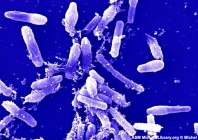
As the most cost‐effective tool to ensure microbial safety, thermal processing induces a large portion of sublethal injury presenting a potential hazard to food safety. Thermal treatment at 63 °C for 1 min injured 2.22 log cfu/ml totally, half of which were sublethally injured using plate counting method. After 2 min, the inactivation log of Bacillus cereus reached 1.55 while the sublethally injured log even reached 2.16. As for the sublethally injured rate of the B. cereus, it was over 65% after 0.5 min and kept ever‐increase with time. In the end, the injured rate arrived at 99.30% after 2 min processing time. Partial esterase enzyme inactivation was found after 0.5 min heat treatment with flow cytometry combining carboxyfluorescein diacetate/propidium iodide (PI) double‐staining, but B. cereus was not dyed by PI at 63 °C. Comparing with the initial protein concentration of 0.57 ± 0.02 μg/ml, the leakage of the protein was not so notable though the general trend was increasing with duration of heat. Scanning and transmission electron microscopy analysis revealed that a portion of cells morphology and structure had changed after thermal process.

Practical applications

Bacillus cereus is an endospore forming pathogenic, causing foodborne illnesses and outbreaks all over the world. This research indicated that thermal treatment at 63 °C was a sublethal stress for B. cereus that a portion of cells were sublethally injured which could resume growth in suitable condition and might exist potential safety hazard if used for food pasteurization.

RASFF Alert – Bacillus cereus – Cockles

RASFF-Logo

RASFF -Bacillus (91000 CFU/g) in and inadequate thermal processing of canned common cockles from Spain in Spain

RASFF Alert – Bacillus cereus – TVC – Moulds – Dried Black Fungus

RASFF-Logo

RASFF-Bacillus cereus (10000 CFU/g), too high count of aerobic mesophiles (2000000 CFU/g) and high count of moulds (230000 CFU/g) in dried black fungus from China, via Germany in Austria

RASFF Alerts – Bacillus cereus – Five Grains Mix

RASFF-Logo

RASFF-Bacillus cereus (1900 CFU/g) in five grains mix from Italy in Italy

Hong Kong -Bacillus cereus in Pasteurised Milk

CFS bacillus

In June 2018, the Food Surveillance Programme of the Centre for Food Safety (CFS) detected excessive Bacillus cereus at a level of 4.6 million per gram in a packed pasteurised milk collected at a local supermarket. In September, in response to a food complaint, another packed pasteurised milk was found to contain Bacillus cereus at an excessive level of 3.8 million per gram. According to the Microbiological Guidelines for Food of CFS, if a ready-to-eat food contains Bacillus cereus at a level of more than 100 000 per gram, it is considered unsatisfactory. This article discusses Bacillus cereus in milk from the perspective of Hazard Analysis and Critical Control Point (HACCP) and the measures to control its growth during production and storage.


RASFF Alerts – Backdated 22/9/18 – 05/10/18 – Animal Feed – Bacillus subtilis – Vitamin B2

RASFF-Logo

RASFF-unauthorised genetically modified (Bacillus subtilis) bacteria in vitamin B2 80% from the Netherlands in Belgium

Hong Kong – Packed milk drink sample found to contain excessive Bacillus cereus

CFS bacillus

Issue Date 4.9.2018
Source of Information Centre for Food Safety
Food Product Kowloon Dairy Hi-Calcium Skimmed milk drink
Product Name and Description Product name: Kowloon Dairy Hi-Calcium Skimmed milk drink

Manufacturer: The Kowloon Dairy Ltd

Volume: 236 millilitres per pack

Use-by date: August 23, 2018

Reason For Issuing Alert
  • Following up on a food complaint, the Centre for Food Safety (CFS) collected the concerned sample from a supermarket in Sha Tin for testing. The test result showed that the sample contained Bacillus cereus at a level of 3.8 million per gram. Under the Microbiological Guidelines for Food, if ready-to-eat food contains Bacillus cereus at a level of more than 100 000 per gram, it is considered unsatisfactory.
Action Taken by the Centre for Food Safety
  • The CFS had informed the manufacturer and the vendor concerned of the test result. Investigation was conducted at the production plant and the supermarket concerned and follow-up samples were collected for further testing. Investigation is ongoing.
  • The CFS has also provided health education on food safety and hygiene for the staff of the production plant and the supermarket and requested them to carry out thorough cleaning and disinfection.
  • The CFS will alert the trade, continue to follow up on the incident and take appropriate action in order to safeguard public health and food safety.
Advice to the Trade
  • According to Section 54 of the Public Health and Municipal Services Ordinance (Cap 132), all food available for sale in Hong Kong, locally produced or imported, should be fit for human consumption. An offender is subject to a maximum fine of $50,000 and imprisonment for six months upon conviction.
Advice to Consumers
  • Bacillus cereus is commonly found in the environment. Unhygienic conditions in food processing and storage may give rise to its growth. Consuming food contaminated with excessive Bacillus cereus may cause gastrointestinal upset such as vomiting and diarrhoea.
Further Information The CFS press release

Research -Bacteria isolated from the bovine gelatin production line: biofilm formation and use of different sanitation procedures to eliminate the biofilms

Wiley Online

Abstract

The objective of this study was to evaluate the biofilm formation by Staphylococcus aureus, Bacillus cereus, and Bacillus licheniformis, as well to verify the efficiency of the sanitation procedures (cleaning, disinfection, and cleaning + disinfection) on the biofilm removal. Biofilms were formed after immersion of stainless steel and PVC coupons into different culture media (semi‐finished bovine gelatin, final gelatin, and hydrolyzed collagen) at 35°C for 5, 32, and 48 hr. After 32 hr of contact, all microorganisms were capable to form biofilms on the different surfaces in contact with all culture media tested. The semi‐finished gelatin and the hydrolyzed collagen provided a higher biofilm formation (counts between 3.54 and 7.87 log CFU/cm2) when compared to the final gelatin (counts between 3.05 and 6.70 log CFU/cm2). The cleaning step complemented with the disinfection with peracetic acid was the only procedure capable of removing all biofilms (counts ❤ log CFU/cm2).

Practical applications

In this study, we investigated the biofilm formation by different isolates from bovine gelatin, simulating the processing conditions of gelatin and hydrolyzed collagen. The present study showed a peculiar result since the gelatin was the culture medium that provided a lower biofilm formation, while the hydrolyzed collagen and the semi‐finished gelatin provided the best conditions for the formation of biofilms. In addition, we verified that the use of detergent or disinfectant alone was not efficient in the removal of the biofilms formed. In view of this, we suggest the requirements to prevent the formation of microbial biofilms of different bacterial species in the gelatin processing industry. In addition, we suggest measures to remove the biofilms from food processing surfaces.