Category Archives: Antibiotic Resistance

Research – Multidrug resistance of Escherichia coli in fish supply chain: A preliminary investigation

Wiley Online

Abstract

Ninety-five Escherichia coli isolates recovered from different supply points of freshwater fish namely fish pond (W1, n = 16), wholesale fish market (W2, n = 14), retail fish market (R1, n = 29), street fish vending unit (R2, n = 30), and modern fish vending unit (R3, n = 6) were investigated for antimicrobial-resistant profile and prevalence of antibiotic-resistant genes. Overall, multidrug-resistant (MDR) E. coli in the fish supply chain was 21% with higher MDR incidence in the downstream fish supply points. MDR was relatively higher in the tertiary fish supply points viz., retail fish market (45%), street fish vending unit (30%), and modern fish vending unit (15%) compared to the secondary fish supply point, that is, wholesale fish market (5%) and primary fish supply point, that is, fish pond (5%). All the ampicillin-resistant isolates carried ampC gene, whereas only 21% of the β-lactam resistant isolates carried blaCTX-M-gp1. The tetracycline resistance determinant, tetA (89%) was predominant in the tetracycline-resistant isolates compared to tetB and tetD (11%). The trimethoprim resistance gene, dfrA and sulfonamide-resistance gene, Sul1 were detected in 9% of the trimethoprim-resistant isolates and 9% of the sulfonamide-resistant isolates, respectively. Enterobacterial repetitive intergeneric consensus-PCR has delineated the MDR isolates from the different fish supply points into three major clusters but all the MDR isolates from the street fish vending point are grouped into a single cluster. The results indicate an increase in the proportion of MDR E. coli and the occurrence of diverse MDR profiles in the downstream points of the fish supply chain that needs to be addressed to avoid fish-food-borne antimicrobial resistance.

Research – UC-Santa Cruz undergraduates win award for system that fights E. coli

Food Safety News

A team of undergraduates at the University of California-Santa Cruz has developed a system called Progenie that’s designed to target and eliminate a toxic gene found in Shiga toxin-producing E. coli.

The team’s method provides an alternative to antibiotics commonly used in agriculture. This new method is designed in part to stop the rise of drug-resistant bacteria.

The team’s project won a gold medal at the International Genetically Engineered Machine (iGEM) Jamboree, an annual competition that brings together student teams from around the world to present synthetic biology projects that aim to address pressing global issues.

At the jamboree, teams are judged on their virtual project posters, wiki pages, and video presentations. Teams are awarded gold medals if they demonstrate excellence across multiple categories.

Research – Predicting the growth of Listeria monocytogenes in cooked sliced deli turkey breast as function of clean label antimicrobial, pH, moisture and salt

Journal of Food Protection

The use of antimicrobials in formulations of ready-to-eat meat and poultry products has been identified as a major strategy to control Listeria monocytogenes . The USDA-FSIS recommends no more than 2-logs of Listeria outgrowth over the stated shelf life if antimicrobials are used as a control measure for a product with post-lethality environmental exposure. This study was designed to understand the efficacy of a clean label antimicrobial against the growth of L. monocytogenes as affected by the product attributes. A response surface method-central composite design was used to investigate the effects of product pH, moisture, salt content, and a commercial “clean-label” antimicrobial on the growth of L. monocytogenes in a model turkey deli meat formulation. Thirty treatment combinations of pH (6.3, 6.5, and 6.7), moisture (72, 75, and 78%), salt (1.0, 1.5, and 2.0%), and antimicrobial (0.75, 1.375, and 2.0%) with six replicated center points and eight design star points were evaluated. Treatments were surface inoculated with a 3 log 10 CFU/g target of a five-strain L. monocytogenes cocktail, vacuum packaged, and stored at 5°C for up to 16 weeks. Populations of L. monocytogenes were enumerated from triplicate samples every week until the stationary growth phase was reached. The enumeration data was fitted to a Baranyi and Roberts growth curve to calculate the lag time and maximum growth rate for each treatment.  Linear least-squares regression of the lag-time and growth-rate against the full quadratic, including the second order interaction terms, design matrix was performed. Both lag time and maximum growth rate were significantly affected ( p <0.01) by the antimicrobial concentration and product pH. Product moisture and salt content affected ( p <0.05) lag phase and maximum growth rate, respectively. The availability of a validated growth model assists meat scientists and processors with faster product development and commercialization.

Research – Super bugs bedevil food safety

Food Safety News

“Super bugs” and “food safety.” You can say the two in one breath simply because they are so closely connected.

“Super bugs” is a popularized term for “antibiotic resistance,” or “antimicrobial resistance.” They don’t go by that name for nothing. According to the federal Centers for Disease Control and Prevention, each year in the United States, at least 2.8 million people are infected with antibiotic-resistant bacteria or fungi. More than 35,000 people die as a result. Antibiotic resistant bacteria frequently show up in outbreak strains of pathogens such as E. Coli, Salmonella and Listeria monocytogenes.

When looking ahead, the picture only gets more daunting. Some medical experts predict that worldwide by 2050 the number of deaths attributed to antibiotic resistance could reach 10 million and cost trillions of dollars — unless collective action is taken on a global scale.

No wonder then that some human and animal health experts are referring to this as a “slow moving pandemic.”

Research – Evaluation of the use of ampicillin- and streptomycin-resistant Shiga toxin-producing Escherichia coli to reduce the burden of background microbiota during food safety studies

Wiley Online

Tracking artificially seeded foodborne pathogens in foods with high background microbiota is challenging. Wheat flour and its subsidiary products are known to carry a high native microbial load, which could interfere with tracking and enumeration of target organisms in such matrices. Shiga toxin-producing Escherichia coli (STEC) serogroups O26, O121, and O157:H7 were transformed with the pGFPuv plasmid encoding ampicillin resistance (+Amp) and green fluorescent protein and were additionally conferred resistance to streptomycin (+Amp + Strep) through exposure to incremental concentrations of the antibiotic. Growth characteristics of these antibiotic-resistant strains were compared to those of the nonresistant native strains (NR). The supplementation of ampicillin and ampicillin + streptomycin in growth media was evaluated for its ability to suppress growth of the native microbial load of three different commercial cake mixes. Antibiotic supplementation in growth media was successful in suppressing the native microbiota of the cake mixes, while the growth characteristics of the +Amp + Strep variants of the three STEC strains did not differ significantly from the NR strains (p > .05). These results indicate that STEC strains with ampicillin and streptomycin resistance markers have improved trackability over their wild-type counterparts when isolated from food matrices with high background microbiota. These strains would be advantageous for use in laboratory experiments on STEC survival in wheat and wheat derived products as their detection and enumeration can occur without interference from native microbial load.

Research – FAO and the Republic of Korea join forces to reduce foodborne antimicrobial resistance

FAO

The Food and Agriculture Organization of the United Nations (FAO) and the Republic of Korea, through its Ministry of Food and Drug Safety (MFDS), today signed a new Framework Arrangement which establishes overarching terms and conditions that will govern the cooperation through voluntary contributions and facilitate future negotiations between MFDS and FAO.

The Arrangement focuses on food safety and standard setting, and contains a Contribution Arrangement which will help to simplify the implementation of individual projects.

The Republic of Korea will provide $10 million to help implement and monitor Codex Alimentarius international food standards, with the goal of containing and reducing foodborne antimicrobial resistance (AMR). AMR not only poses a major threat to human and animal health, but also has serious implications for food safety, food security and the economic wellbeing of millions of farming households.

The first project under the Arrangement will be implemented by the Joint FAO/WHO Centre on CODEX Food Standards and Zoonotic Diseases the FAO Division on Food Systems and Food Safety, and will focus on implementing Codex standards to support containment and reduction of foodborne AMR in six countries: Cambodia, Mongolia, Pakistan, Nepal, Bolivia and Colombia.

Signing on behalf of FAO, Deputy Director-General, Beth Bechdol, praised the Republic of Korea’s continuous interest and effort to increase cooperation with FAO and its deep commitment for the development of international food standards and to the Codex Alimentarius. “The COVID-19 pandemic has shown us how important it is to boost international food safety standards to ensure our food keeps travelling safely across borders, safeguarding food and nutritional security. We must transform our agri-food systems to make them more resilient and inclusive if we are to ensure a better food future for all.”

Since joining FAO as a recipient country in 1949, the Republic of Korea has transformed into a major G-20 economy and a dedicated FAO resource partner. The country is a long-standing Member and strong supporter of the Codex Alimentarius Commission, which sets international and regional standards, guidelines and codes of practice. The broad scope of Codex, which covers areas such as contaminants, nutrition, food hygiene, additives, antimicrobial resistance and pesticide and veterinary drug residues, makes it an essential tool to achieve food security and end hunger.

Jinseok Kim, Vice Minister of the MFDS welcomed the new Arrangement as a way to streamline and enhance the long-lasting cooperation between FAO and the Republic of Korea, and, in the years to come, as a basis for both parties to increase interventions within their joint areas of interest.

“Without global collaboration, we cannot overcome the difficulties due to the pandemic and I believe this is why we are here today: to work together,” Vice Minister Kim affirmed. “It is our responsibility to support other countries, and the most effective way to do this is through FAO, the key player in food safety in the UN.  It is essential to continue to move forward, and as of today Korea would like to play a leading role in world food safety.”

The Republic of Korea currently hosts the Codex ad hoc Intergovernmental Task Force on Antimicrobial Resistance (TFAMR), which is charged with developing science-based guidance on the management of foodborne antimicrobial resistance. The TFAMR is expected to complete its work in 2021.

In addition to hosting the TFAMR and supporting international standard development, the Republic of Korea leads by example in its own efforts to minimize and contain AMR in the food chain, and has expressed a desire to assist other countries in addressing AMR, by supporting the transition from standard-setting to the implementation of Codex guidance, with the collaboration and support of FAO.


Research – Prevalence, Antibiogram and Genetic Characterization of Listeria monocytogenes from Food Products in Egypt

MDPI

World Health Organization classified Listeria monocytogenes as a major notable foodborne pathogen associated with high mortality and hospitalization. The study reports the prevalence, antibiogram, virulence determination and genetic characterization of L. monocytogenes from different food products. A total of 250 food samples, fifty samples each from raw milk, ice cream, minced meat, fish fillet and sausage were collected from the Menoufiya governorate in Egypt. L. monocytogenes was detected in 17 (6.8%) of the tested food samples including minced meat (14%), fish fillet (8%), sausage (6%) and raw milk (6%). The antimicrobial susceptibility assay of 17 L. monocytogenes isolates against seventeen antibiotics belonging to eight antibiotics classes revealed a high susceptibility to norfloxacin (82.3%), amoxicillin-clavulanic acid (76.4%), cefotaxime (70.5%), erythromycin (64.6%), amoxicillin (64.6%), gentamicin (58.7%) and vancomycin (58.7%). While, high resistance was observed against oxytetracycline (76.4%), trimethoprim-sulfamethoxazole (76.4%), chloramphenicol (70.5%), doxycycline (64.6%), levofloxacin (41.2%) and azithromycin (41.2%). Of note, all L. monocytogenes isolates were multidrug-resistant. The multiplex PCR successfully amplified L. monocytogenes in all tested isolates. Screening of the five virulence-related genes revealed the hlyA and iap as the most prevalent genes followed by actA gene, however, the inlA and prfA genes were not detected in any of the studied isolates. The partial 16S rRNA gene sequencing of three L. monocytogenes isolates showed a high nucleotide similarity (99.1–99.8%) between the study isolates and various global clones, and phylogenetic analysis clustered these L. monocytogenes strains with other Listeria species including L. welshimeriL. seeligeri and L. innocua. This study demonstrates the impact of L. monocytogenes as a major contaminant of various food products and suggests more attention to the awareness and hygienic measures in the food industry. View Full-Text

Research – Resistance levels still high in bacteria causing foodborne infections

EFSA

A sizeable proportion of Salmonella and Campylobacter bacteria is still resistant to antibiotics commonly used in humans and animals, as in previous years, says a report released today by the European Centre for Disease Prevention and Control (ECDC) and the European Food Safety Authority (EFSA).

In humans, high proportions of resistance to ciprofloxacin, an antibiotic commonly used to treat several types of infections, were reported in a specific Salmonella type known as S. Kentucky (82.1%). In recent years, S. Enteritidis resistant to nalidixic acid and/or ciprofloxacin has been increasingly reported in several countries. The increasing occurrence of fluoroquinolone and/or quinolone resistance in these types of Salmonella probably reflects the spread of particularly resistant strains.

In Campylobacter, resistance to ciprofloxacin is now so common in most countries that this antimicrobial has limited use in treatment of Campylobacter infections in humans.

However, the report also includes some positive findings. Over the period 2015-2019, a decline in resistance to ampicillin and tetracyclines has been observed in Salmonella isolates from humans in eight and eleven Member States respectively.

A decreasing trend has also been observed in the prevalence of extended-spectrum β-lactamase (ESBL)- producing E. coli in samples from food producing animals from 13 Member States between 2015 and 2019. This is an important finding as particular strains of ESBL-producing E. coli are responsible for serious infections in humans.

Combined resistance to two critically important antimicrobials – fluoroquinolones and third generation cephalosporines in Salmonella and fluoroquinolones and macrolides in Campylobacter – remains low. These critically important antimicrobials are commonly used to treat serious infections from Salmonella and Campylobacter in humans.

The rate of E. coli bacteria in samples from food producing animals that respond to all antimicrobials tested also increased. This was observed in nine Member States over the period 2014-2019.

The report was based on antimicrobial resistance monitoring data collected by Member States as part of their EU regulatory obligations and jointly analysed by EFSA and ECDC with the assistance of external contractors.

Research – Microbial Safety of Smoothie Drinks from Fresh Bars Collected in Slovakia

MDPI

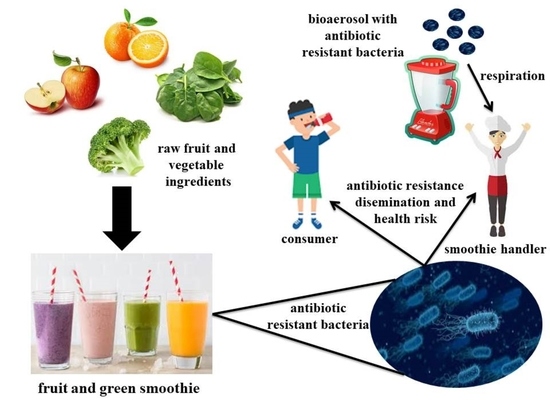
Among the many consumers in Slovakia, smoothies are nowadays gaining popularity. Smoothie drinks are prepared from raw fruits and vegetables. Therefore, their microbiological safety depends on hygiene standards. The aim of this work was to monitor and quantify selected sensitive and antibiotic-resistant microorganisms present in collected smoothies. Twenty analyzed smoothie samples were collected from six food service establishments (fresh bars) in the capital city of Slovakia, Bratislava. Antibiotic-resistant bacteria were found in at least one of each fresh bar. Antibiotic-resistant coliform bacteria prevailed, especially in green smoothies or juices containing more vegetable ingredients. Resistance to ampicillin, ciprofloxacin, tetracycline, chloramphenicol, and gentamicin was observed in the case of coliform bacteria. More than half of the smoothie drink samples did not contain resistant enterococci. On the other hand, vancomycin-resistant enterococci were detected in 20% of samples. The most frequently isolated antibiotic-resistant strains belonged to the Enterobacter spp. or Klebsiella spp. genus. In the last part of the work, the pretreatment effect of smoothie components on the selected microorganisms’ counts in the final product was investigated. Washing ingredients with an aqueous solution of a biocide agent containing silver and hydrogen peroxide proved to be the most effective way to decrease bacterial counts. View Full-Text

Research – Garcinia mangostana extract inhibits the attachment of chicken isolates of Listeria monocytogenes to cultured colorectal cells potentially due to a high proanthocyanidin content

Wiley Online

Listeria monocytogenes are pathogenic microorganisms and of particular concern in the poultry industry. They are frequently isolated from raw chicken products due to their ability to attach to a wide variety of food and food‐contact surfaces. The application of synthetic antimicrobial agents is often limited by potential emergence of antimicrobial resistance and regulations associated to organic poultry products. Development of natural antimicrobial agents controlling Listeria monocytogenes contamination and pathogenesis represent an alternative approach. This study screened a range of plant extracts (including those from cranberry, mangosteen, persimmon, and roselle) for their ability to affect five Listeria monocytogenes strains with respect to their bacterial surface hydrophobicity, auto‐aggregation, and attachment to cultured human colorectal cells. Results show that mangosteen extracts showed significant inhibitory effects on the attachment of Listeria monocytogenes to the cell line, potentially due to a high level of proanthocyanidin content. In addition, the plant extracts influenced bacterial auto‐aggregation (increase in most of the cases) by increasing bacterial surface hydrophobicity. These results may support future development of alternative antimicrobial agents controlling the contamination and pathogenesis of Listeria monocytogenes.