Tag Archives: health protection agency

Europe – Surveillance of Six Priority Food- and Waterborne Diseases in the EU/EEA 2006 -2009

ECDC

The European Centre for Disease Prevention and Control (ECDC) is an EU agency [1] with a mandate to operate surveillance networks and to identify, assess, and communicate current and emerging threats to human health from communicable diseases. The agency became operational in 2005. Initially, data were collected for 49 diseases (2008), with three more added in 2012. All data are entered in ECDC’s database system, known as the European Surveillance System (TESSy). Epidemiological overviews of all diseases are provided in the ECDC’s Annual Epidemiological Report. The surveillance of salmonellosis, campylobacteriosis and Shiga toxin/verotoxin-producing Escherichia coli (STEC/VTEC) infection was carried out until 2007 by an EU-funded dedicated surveillance network, Enter-net, which was hosted by the Health Protection Agency in the United Kingdom. In October 2007, the coordination of Enter-net was transferred to ECDC and Enter-net is now under the auspices of the Programme of Food- and Waterborne Diseases and Zoonoses (FWD). After the transfer, the scope was broadened to also cover listeriosis, yersiniosis and shigellosis. For the six priority diseases, surveillance was developed further in close collaboration with nominated disease experts, epidemiologists and microbiologists. This report is the first dedicated epidemiological report on these six diseases, offering a detailed analysis for the years 2006 to 2009. The intended readership includes public health and food safety professionals, policymakers, scientists, and the general public.
Research – Ready to Eat Salads

HACCPSalmonella

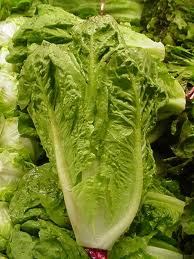
Ready to eat salad is considered one of the products most likely to cause food-related illness, said Professor Hugh Pennington, an emeritus professor of bacteriology at the University of Aberdeen in Scotland — who worked for the British, Scottish and Welsh governments as an expert on microbiology and food safety.

His claim follows a Health Protection Agency investigation into an outbreak of salad-linked Cryptosporidium infections that affected around 300 people in England and Scotland in May.

In the analysis of the exposure to different salad vegetables a significant statistical association was found between infection and the consumption of pre-cut spinach. The strongest association with infection was found to be with consumption of ready to eat pre-cut mixed salad leaves from a major supermarket chain. These findings suggest that one or more types of salad vegetables could have been contaminated.

That is largely because greens are grown directly in the soil, and some pathogens can only be killed by heat or strong detergents, not just water. Certain types of bacteria found in the ready to eat salad bags can be almost impossible to kill, unless the leaves are irradiated – a process the public would oppose.

“You could irradiate it – but that would be a `no, no` with the public. You just can`t be absolutely sure that the bagged salad you are buying – which has been put through a chemical wash to kill the bugs, is actually free of them.”

Food pathogens are very good at clinging on to salad and the risk from cryptosporidium, salmonella and listeria is very real.

“I would advise people to thoroughly wash salad even when it says it has been washed and is ready to eat,” Pennington said.

Vegetables are fine and safe if they are cooked in the traditional way of boiling them to death. The only danger comes when you eat them raw.

The responsibility falls on the people who produce food. But much of our vegetables are now grown in countries that do not necessarily have the same hygiene standards. The consumer has no way of knowing how the food has been produced.

HPA – New Strain of Norovirus – Sydney 2012

HPANorovirus

As part of its surveillance for norovirus the Health Protection Agency (HPA) carries out genetic testing of norovirus strains from cases in England and Wales.

Testing carried out when cases started to rise in October revealed a cocktail of different strains that were circulating including Sydney 2012 and another called New Orleans 2009, although no one strain was dominant.

The latest testing of the most recent outbreaks, completed this week, has now shown that Sydney 2012 has overtaken all others to become the dominant strain.

Syndey 2012 was first seen in Australia (and takes its name from the place it was first identified) and has also been seen in France, New Zealand and Japan.

This new strain does not cause more serious illness than others and the methods of managing cases and outbreaks are the same for any strain of norovirus. These measures include washing the hands thoroughly and regularly particularly after using the toilet and before eating.

Dr David Brown, Director of Virology Reference Department at the HPA said, “It is always difficult to predict the norovirus season and this year is no different.

“Noroviruses mutate rapidly and new strains are constantly emerging. At the start of the season it is normal for outbreaks to be caused by a range of different strains. However as the season progresses particular strains are more successful and become dominant. The emergence of a new strain does not mean that it causes more serious illness and managing outbreaks and those will the illness remains the same.

HPA- Norovirus Update

HPANorovirus

Figures from the Health Protection Agency (HPA) show that there were 337 confirmed laboratory reports of norovirus in the week ending December 9 2012 and 236 for the week ending 2 December 2012. The latest weekly report is now published.

In this season to date there have been 3,046 confirmed laboratory reports of norovirus. This is 83 per cent higher than the same period in the last season when there were 1,669 cases reported.

The figures for the number of hospital outbreaks show that there were 61 hospital outbreaks during the last two weeks up to December 16 2012. In the same fortnight in the previous year there were 35 outbreaks reported by the same time.

The data show that the increase in norovirus laboratory reports is earlier this season than in previous years; however, there are no indications as to why this is the case.

BBC – Schools Norovirus

BBC – Hospital Norovirus

BBC – Hospital Norovirus

Guardian – Norovirus

UK – HPA – Legionnaires Information and Research

HPALeigionella


Around half (116) of the 235 cases of Legionnaires’ disease reported to the Health Protection Agency (HPA) in England and Wales in 2011 were in returning holiday makers. The annual number of Legionnaires’ cases has fallen from 355 cases in 2010, when around a third (114) were in returning travellers.

Legionnaires’ disease can be contracted by breathing in droplets of water or aerosols containing the legionella bacteria from water sources which may have had temperature problems, or where water has remained stagnant for a period of time. Spa pools, shower heads or taps can sometimes be the source of an outbreak.

The illness usually affects vulnerable people, such as the elderly and almost 70 per cent of the cases reported in 2011 were in people with an underlying health condition, including almost 30 per cent in people with heart disease. Smokers and people with diabetes or a weakened immune system were also at higher risk.


UK – Legionnaires Outbreak – Stoke on Trent

BBC

Seven people are being treated for Legionnaires’ disease in an outbreak in Stoke-on-Trent.

Those affected are six men and a woman, aged between their late 40s and 75, health officials said. wo men in their 70s are described as “stable” and the other patients are said to be “improving”.

The Health Protection Agency (HPA) said all seven patients were being treated at the University Hospital of North Staffordshire

HPS – Norovirus – Rotavirus- Cryptosporidium and Giardia Report 2011

HPA 

The Health Protection Agency Scotlan (HPA) has released its 2011 report into the incidence of viral and protozoal reported infections 2011.

There were 1668 laboratory reports of Norovirus (NV) to HPS in 2011, a marked decrease of 1441 (46.3%) on 2010 when there were 3109 reports.

There were 1465 laboratory reports of Rotavirus to HPS in 2011, a decrease of 326 (18.2%) compared to 2010 when there were 1791 reports.

A total of 442 isolates of Cryptosporidium sp. were reported to HPS in 2011. This compares with 584 in 2010, a statistically significant decrease of 24%.

A total of 194 isolates of Giardia sp. were reported to HPS in 2011.


Schmallenberg virus – FSA Advice to Consumers

FSA 

The Food Standards Agency is advising the public that, based on current evidence, there is unlikely to be any risk to consumers through the food chain from the virus that is causing abnormalities in livestock.

No illness has been reported to date in humans exposed to animals infected with the Schmallenberg virus, which is thought to be carried by midges. The European Centre for Disease Prevention and Control (ECDC) and the Health Protection Agency (HPA) have stated the virus is unlikely to cause disease in humans.

Defra is actively monitoring the situation and the FSA is in contact with both Defra and the HPA to keep the issue under review.

HPA – Legionella Cluster in Spain Update

HPA

The Health Protection Agency (HPA) has this week been alerted by the Spanish public health authorities about a further case of Legionnaires’ Disease in a UK resident who stayed at the Diamante Beach Hotel in Calpe, Costa Blanca, as well as two French cases. This brings the total number of UK residents associated with this cluster to 12, with three deaths.

FSA – Salmonella Newport

FSA

The Food Standards Agency (FSA) has been notified by the Health Protection Agency (HPA) of an outbreak of a strain of Salmonella Newport infection that is known to have affected more than 30 people in the UK.

Although it is too soon to say for certain what the likely cause of infection is, a potential link to watermelons has been identified.

One person has died in the outbreak, although they also had serious underlying health complications. The outbreak was first detected in early December 2011 and the most recently reported illness was at the end of that month.