Tag Archives: climate

USA – “No Illness” Declaration Viewpoint

Food Safety News

Food companies that are voluntarily recalling a product usually use the language suggested by regulatory agencies that is then distributed electronically via the federal government websites. Recalls not connected to outbreaks almost always contain a line saying there are no reported illnesses associated with the recalled product.

William E. Keene, Oregon’s senior state epidemiologist, thinks it’s time for reporters and editors to “not let themselves be duped into amplifying press release boilerplate.”

Both the U.S. Food and Drug Administration (FDA) and USDA’s Food Safety and Inspection Service (FSIS) have templates for companies to use when writing a recall announcement. They are:

FDA: ”No illnesses have been reported to date.”

FSIS: “There have been no reports of illnesses associated with consumption of these products.”

“Until they have the isolate(s) serotyped, have PFGE’d (conducted a pulsed-field gel electrophoresis analysis), and compared to PulseNet or analogous data,” says Keene, “they are just blowing smoke.” He says that without subtyping data, the media should not fall for it. The only accurate report is that there is no way of knowing (at this time) if there are any associated illnesses.

New Zealand Recall – Cheese Products Implicated in the Australian Listeria Outbreak

Ministry for Primary Industries

Jindi’ Brand Cheese  imported from Australia – includes brand names ‘Old Telegraph Road’ and ‘Top  Paddock’.

This is a precautionary recall due to an  outbreak of Listeriosis illness in Australia linked to other Jindi brand  products.

Research UK – Poultry Vaccinations – Reduction in Salmonella Infections

Food Safety NewsSalmonella

The United Kingdom’s mass poultry vaccinations introduced to combat Salmonella infections have led to a dramatic fall in the number of cases since the late 1990s, according to a researcher at the University of Liverpool.

Salmonella are dangerous foodborne bacteria that affect people worldwide, causing diarrhea, vomiting, nausea, fever and abdominal pain. The European Union currently sees around 6 million Salmonella infections per year, the majority of which are linked to food items such as eggs, chicken, beef, pork, salad vegetables and dairy products.

Between 1981 and 1991, the number of salmonella infections rose by 170 percent in the UK, driven primarily by an epidemic of Salmonella Enteritidis which peaked in 1993.

UK – Product Recall Aflatoxins in Egusi

RASFF – Aflatoxins in Egusi in the UK sourced in Ghana

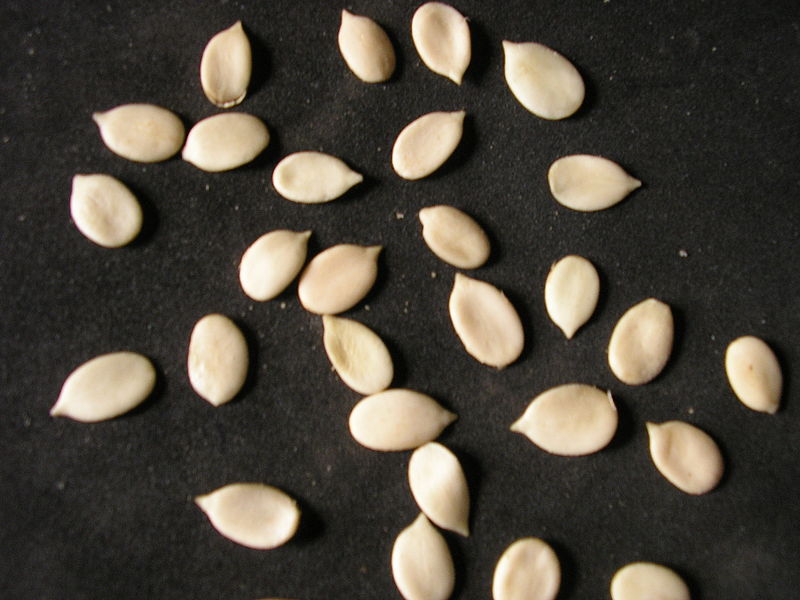
Egusi seeds are the fat- and protein-rich seeds of certain cucurbitaceous (squash, melon, gourd) plants. Authorities disagree whether the word is used more properly for the seeds of the colocynth, those of a particular large-seeded variety of the watermelon, or generically for those of any cucurbitaceous plant. The characteristics and uses of all these seeds are broadly similar.

EGUSI


USA – E.coli O157 – Outbreak in Leafy Greens

Food Poisoning Bulletin

 E.coli outbreak likely caused by leafy greens has sickened five people in Hamilton County, Ohio, Food Poisoning Bulletin has learned. The outbreak was confirmed this morning by  Mike Samet, a public information officer, for the county’s public health department.

There are five confirmed cases and one probable case of  E.coli 0157:H7 infection which were likely caused by tainted leafy greens, he said. The case patients, four females and two males,  range in age from 12 to 83 and first showed signs of illness from December 10 to December 15, 2012

Research Papers – Pathogens – Celery – Irradiation – Spinach – Boiling Shrimp – Low Water Activity and Pathogens

Science Direct

Illnesses from Escherichia coli O157:H7, Listeria monocytogenes, and Salmonella have been associated with the consumption of numerous produce items. Little is known about the effect of consumer handling practices on the fate of these pathogens on celery. The objective of this study was to determine pathogen behavior at different temperatures under different storage conditions. Commercial fresh-cut celery was inoculated at ca. 3 log CFU/g onto either freshly cut or outer uncut surfaces and stored in either sealed polyethylene bags or closed containers. Samples were enumerated following storage for 0, 1, 3, 5, and 7 days when held at 4 °C or 12 °C, and after 0, 8, and 17 h, and 1, and 2 days when held at 22 °C. At 4 °C, all populations declined by 0.5–1.0 log CFU/g over 7 days. At 12 °C, E. coli O157:H7 and Salmonella populations did not change, while L. monocytogenes populations increased by ca. 0.5 log CFU/g over 7 days. At 22 °C, E. coli O157:H7, Salmonella, and L. monocytogenes populations increased by ca. 1, 2, or 0.3 log CFU/g, respectively, with the majority of growth occurring during the first 17 h. On occasion, populations on cut surfaces were significantly higher than those on uncut surfaces. Results indicate that populations are reduced under refrigeration, but survive and may grow at elevated temperatures.

The Packer

Researchers say common packinghouse practices for fresh spinach are not sufficient to avoid outbreaks of salmonella-related illnesses and recently showed that irradiation eliminated almost all cross contamination from field and packing operations.

Scientists at Texas A&M University and Pusan National University in South Korea set out to develop a quantitative risk assessment model to evaluate microbial hazards during the processing of baby spinach leaves, according to their abstract recently published with their results in the journal “ScienceDirect.”

IngentaConnect

The purpose of this study was to determine whether the current consumer method of boiling shrimp until floating and pink in color is adequate for destroying Listeria and Salmonella. Shrimp samples were submerged in bacterial suspensions of Listeria and Salmonella for 30 min and allowed to air dry for 1 h under a biosafety cabinet. Color parameters were then measured with a spectrophotometer programmed with the CIELAB system. Twenty-four shrimp samples were divided into groups (days 0, 1, or 2) and stored at 4°C. The samples were treated by placing them in boiling water (100°C) on days 0, 1, and 2. The shrimp were immediately removed from the boiling water once they floated to the surface, and color parameters were measured. Bacterial counts were determined, and the log CFU per gram was calculated. The effect of sodium tripolyphosphate on the color change of cooked shrimp also was determined. Initial bacterial counts on shrimp after air drying were 5.31 ± 0.14 log CFU/g for Salmonella Enteritidis, 5.24 ± 0.31 log CFU/g for Salmonella Infantis, 5.40 ± 0.16 log CFU/g for Salmonella Typhimurium, 3.91z 0.11 log CFU/g for Listeria innocua, 4.45 ± 0.11 log CFU/g for Listeria monocytogenes (1/2a), and 3.70 ± 0.22 log CFU/g for Listeria welshimeri. On days 0, 1, and 2, all bacterial counts were reduced to nondetectable levels for shrimp samples that floated. The average time for shrimp to float was 96 ± 8 s. The bacterial counts remained at nondetectable levels (<10 log CFU/g) during refrigerated (4°C) storage of cooked shrimp for 2 days. The redness, yellowness, and lightness were significantly higher (P < 0.0001) for the cooked shrimp than for the uncooked shrimp on all days tested. The standard deviation for redness in the cooked shrimp was large, indicating a wide range of pink coloration on all days tested. The results suggest that boiling shrimp until they float will significantly reduce Listeria and Salmonella contamination, but color change is not a good indication of reduction of these pathogens because of the wide natural color variation.

IngentaConnect

Foods and food ingredients with low water activity (aw) have been implicated with increased frequency in recent years as vehicles for pathogens that have caused outbreaks of illnesses. Some of these foodborne pathogens can survive for several months, even years, in low-aw foods and in dry food processing and preparation environments. Foodborne pathogens in low-aw foods often exhibit an increased tolerance to heat and other treatments that are lethal to cells in high-aw environments. It is virtually impossible to eliminate these pathogens in many dry foods or dry food ingredients without impairing organoleptic quality. Control measures should therefore focus on preventing contamination, which is often a much greater challenge than designing efficient control measures for high-aw foods. The most efficient approaches to prevent contamination are based on hygienic design, zoning, and implementation of efficient cleaning and sanitation procedures in the food processing environment. Methodologies to improve the sensitivity and speed of assays to resuscitate desiccated cells of foodborne pathogens and to detect them when present in dry foods in very low numbers should be developed. The goal should be to advance our knowledge of the behavior of foodborne pathogens in low-aw foods and food ingredients, with the ultimate aim of developing and implementing interventions that will reduce foodborne illness associated with this food category. Presented here are some observations on survival and persistence of foodborne pathogens in low-aw foods, selected outbreaks of illnesses associated with consumption of these foods, and approaches to minimize safety risks.

All I Want for Christmas is Norovirus !

CBC News Canadanorovirus-2(1)

The Thunder Bay District Health Unit confirmed Friday that it was the Norovirus that caused an outbreak of gastrointestinal illness that affected dozens of people.

Maltese Grocery had shut down its catering operations temporarily after 85 people became sick after eating food at three events the company had catered the previous week. They’ve since resumed, but with additional precautions.

Senior Public Health Inspector Abby Mackie said clinical specimens submitted to a lab confirmed the Norovirus to be the source of the outbreak.

USA – Colorado

DENVER— The Colorado Department of Public Health and Environment is reporting widespread gastrointestinal illness (norovirus) throughout Colorado, including in nursing homes, assisted living facilities, schools and child care centers. Everyone is encouraged to increase simple prevention measures to stop further spread of illness in the community. Symptoms of the illness include nausea, vomiting, diarrhea and stomach cramping.

Alicia Cronquist, epidemiologist at the department, said, “We believe the illness is being caused by a virus germ called norovirus. This infection is very common this time of year.

Japan Times

MIYAZAKI — Six patients have died of gastroenteritis caused by a norovirus outbreak at Shunkokaihigashi Hospital in Nichinan, Miyazaki Prefecture, hospital officials said Sunday.

The victims — all men aged between 78 and 88 — were among 44 patients and staff who came down with symptoms of the illness, including vomiting and diarrhea, the officials said. All six were bedridden.

The health ministry has issued a nationwide warning about the norovirus because infections are approaching the record high set in 2006.

The China Post

TAIPEI–Health experts said Tuesday that an unusually high number of diarrhea cases have been reported this winter due to norovirus outbreaks and it warned that the peak season is yet to come.//

About 10,108 patients sought treatment for watery diarrhea at emergency departments across the country last week, which was a five-year high, said Chuang Jen-hsiang, director of the Epidemic Intelligence Center at the Centers for Disease Control (CDC).

Canada – Salmonella Outbreak

Global NewsSalmonella

EDMONTON – Health officials in southwestern Alberta are dealing with an acute  outbreak of salmonella. Officials in Lethbridge say there are more than 30 cases, mostly in rural  areas. Many of the infections are secondary ones, meaning it is being spread by  household contact. Symptoms include nausea and vomiting and residents are warned that the most  serious complication is dehydration.


HPA – Scotland Cryptosporidum Increase 2012

HPA Scotland763px-Cryptosporidium_parvum_01

By the end of the first 50 weeks of 2012, 684 cases of cryptosporidiosis had been reported to Health Protection Scotland. This was an increase of 256 (60%) over the same period in 2011.

In weeks 41-44 of 2012, 128 cases were reported. This was an increase of 84 (191%) over the same period in 2011. In weeks 45-48 of 2012, 74 cases were reported, an increase of 38 (106%) over the same period in 2011. However, in the first two weeks of the current period (weeks 49-52) of 2012, only 17 cases have been reported. In weeks 49-52 of 2011, a total of 39 cases were reported so the figure for weeks 49-52 of 2012, thus far, is unremarkable.


USA – FDA Recall Clostridium botulinum – Hot Smoked Trout

FDA

True Taste, LLC of Kenosha, WI, is recalling it’s vacuum packaged Hot Smoked Rainbow Trout, Hot Smoked Whitefish, Hot Smoked Herring, Hot Smoked Mackerel, Hot Smoked Salmon Steak, Cold Smoked Mackerel, and Cold Smoked Whitefish because they have the potential to be contaminated with Clostridium botulinum, a bacterium which can cause life- threatening illness or death. Consumers are warned not to use the product even if it does not look or smell spoiled.

Botulism, a potentially fatal form of food poisoning, can cause the following symptoms: general weakness, dizziness, double-vision and trouble with speaking or swallowing. Difficulty in breathing, weakness of other muscles, abdominal distension and constipation may also be common symptoms. People experiencing these problems should seek immediate medical attention.

The recalled product is vacuum packaged and can be identified with either the True Taste Label in CA and IL or the Lowell Foods Label in IL. The recalled product has a white sticker applied to the package with two sets of numbers. The first set of numbers represent the date of processing the second set of numbers represents the best if used by date. This recall includes all production dates beginning on 01/01/2012 through current.

No illnesses have been reported to date in connection with this recall.