France – Shrimp assortment platter 430g – Listeria monocytogenes

Gov france

Identification information of the recalled product

  • Product category Feed
  • Product subcategory Others
  • Product brand name Vitasia
  • Model names or references Shrimp assortment tray 430g VITASIA
  • Identification of products
    GTIN Batch Date
    20534714 223133C Use-by date 08/26/2022
  • Packaging Tray
  • Marketing start/end date From 08/08/2022 to 08/26/2022
  • Storage temperature Product to be stored in the refrigerator
  • Health markFR.36.231.017.CE
  • Further information Assorted platter made up of spring rolls with prawns, prawn fritters and ravioli with prawns
  • Geographic area of ​​sale See the list of stores concerned
  • Distributors LIDL
  • List of points of saleList_Supermarkets.pdf

Practical information regarding the recall

  • Reason for recall A self-check revealed the presence of listeria
  • Risks incurred by the consumer Listeria monocytogenes (causative agent of listeriosis)

France – HELVA COCOA 300G – Salmonella

Gov france

Identification information of the recalled product

  • Product category Feed
  • Product subcategory Sweet products
  • Product brand name EKONOMIK
  • Model names or references EKONOMIK HELVA COCOA 300G
  • Identification of products
    Batch Date
    L16B22 Use-by date 02/29/2024
  • Packaging Transparent and plastic tray, lid of the packaging coloured in yellow background and the format is 300g
  • Storage temperature Product to be stored at room temperature
  • Further information Helva is a pastry composition that is made from tahini (sesame cream)
  • Geographic area of ​​sale Departments: ISERE (38)
  • Distributors IYI MARKET GRENOBLE (38100), IYI MARKET Saint Martin d’Hères (38400) and GANI MARKET Echirolles (38130)

Practical information regarding the recall

  • Reason for recall Improper consumption due to Salmonella contamination
  • Risks incurred by the consumer Salmonella spp (causative agent of salmonellosis)

France – HELVA NATURE 300G – Salmonella

Gov france

Identification information of the recalled product

  • Product category Feed
  • Product subcategory Sweet products
  • Product brand name EKONOMIK
  • Model names or references EKONOMIK HELVA NATURE 300G
  • Identification of products
    Batch Date
    L04M21 Use-by date 11/30/2023
  • Packaging Transparent and plastic tray, lid of the packaging coloured yellow background and the format is 300g
  • Marketing start/end date From 02/05/2022 to 16/08/2022
  • Storage temperature Product to be stored at room temperature
  • Further information Helva is a pastry composition that is made from tahini (sesame cream)
  • Geographic area of ​​sale Departments: ISERE (38)
  • Distributors IYI MARKET GRENOBLE (38100), IYI MARKET Saint Martin d’Hères (38400) and GANI MARKET Echirolles (38130)

Practical information regarding the recall

  • Reason for recall Unfit for consumption due to Salmonella contamination
  • Risks incurred by the consumer Salmonella spp (causative agent of salmonellosis)

France – Plain raw vegetables sauce – Bacterial Contamination

Gov france

Identification information of the recalled product

  • Product category Feed
  • Product subcategory Soups, sauces and condiments
  • Product brand name Dilecta
  • Model names or references Natural raw vegetables sauce – 500ml bottle
  • Identification of products
    GTIN Date
    26020471 Date of minimum durability 07/26/2023
  • Packaging500ml plastic bottle
  • Marketing start/end date From 02/08/2022 to 31/08/2022
  • Storage temperature Product to be stored at room temperature
  • Geographic area of ​​sale Regions: Auvergne-Rhône-Alpes, Burgundy-Franche-Comté, Grand-Est, Hauts-de-France, Île-de-France, Normandy, New-Aquitaine, Occitanie, Provence-Alpes-Côte d’azur
  • Distributors ALDI

Practical information regarding the recall

  • Reason for recall Potential bacterial development and bottle swelling.
  • Risks incurred by the consumer Other biological contaminants

France – MARINE BACON – Salmonella

Gov france

Identification information of the recalled product

  • Product category Feed
  • Product subcategory Meats
  • Product brand name WITHOUT
  • Model names or references slice of bacon
  • Identification of products
    Batch
    01d1222923050
  • Marketing start/end date From 08/23/2022 to 08/24/2022
  • Storage temperature Product to be stored in the refrigerator
  • Geographic area of ​​sale Charleville-Mezieres
  • Distributors intermarche 69 roads of monthermé

Practical information regarding the recall

  • Reason for recall presence of salmonella
  • Risks incurred by the consumer Salmonella spp (causative agent of salmonellosis)

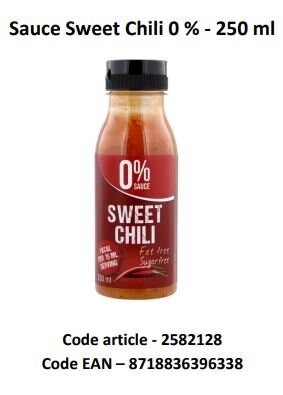
France – Sweet Chili Sauce 0% – 250ml – Lactic Acid Bacteria

Gov france

Identification information of the recalled product

  • Product category Feed
  • Product subcategory Soups, sauces and condiments
  • Product brand name Sweet Chili Sauce 0% – 250ml
  • Model names or references Sweet Chili Sauce 0% – 250ml
  • Identification of products
    Batch
    see attached product list
  • Products List EN_Product_recall__Action_-_Chile.pdf Attachment
  • Storage temperature Product to be stored at room temperature
  • Geographic area of ​​sale Whole France
  • Distributors STOCK

Practical information regarding the recall

  • Reason for recall The reason is that a potential lactic acid bacteria infection can cause the packaging to swell. The product itself poses no risk to public health in the event of accidental consumption.

Research – Washing or rinsing chicken increases Microbial risk.

Fight Bac

Don't Wash Your Chicken Text block

Research – Virulence Characteristics and Distribution of the Pathogen Listeria ivanovii in the Environment and in Food

MDPI

Listeria ivanovii and L. monocytogenes, are the only pathogenic species of the genus Listeria and share many virulence factors and mechanisms of pathogenicity. L. ivanovii shows host tropism towards small ruminants and rodents and much lower virulence for humans compared to L. monocytogenes. However, severe infections caused by L. ivanovii, resulting in bacteremia, abortion and stillbirth, occasionally occurred in immunocompromised persons and in pregnant women, while in immunocompetent hosts L. ivanovii can cause gastroenteritis. In this review, the updated knowledge on virulence aspects and distribution of L. ivanovii in the environment and in food is summarized. Recent research on its virulence characters at genome level gave indications on how pathogenicity evolved in this bacterial species. As for L. monocytogenes, L. ivanovii infections occurred after the ingestion of contaminated food, so an overview of reports regarding its distribution in food products was carried out to obtain indications on the categories of foods exposed to contamination by L. ivanovii. It was found that a wide variety of food products can be a source of this microorganism and that, like L. monocytogenes, L. ivanovii is able to persist in the food production environment. Studies on its ability to grow in enrichment and isolation media suggested that its occurrence in nature might be underestimated. Moreover, virulence varies among strains for differences in virulence character regulation, presence/absence of genetic regions and the possible instability of a Listeria pathogenicity genomic island, LIPI-2, which is unique to L. ivanovii. We can conclude that L. ivanovii, as a possible pathogen for animals and humans, requires more focused investigations regarding its occurrence in the environment and in food and on intra-species variability of pathogenic potential. View Full-Text

Research – Eco-Friendly Edible Packaging Systems Based on Live-Lactobacillus kefiri MM5 for the Control of Listeria monocytogenes in Fresh Vegetables

MDPI

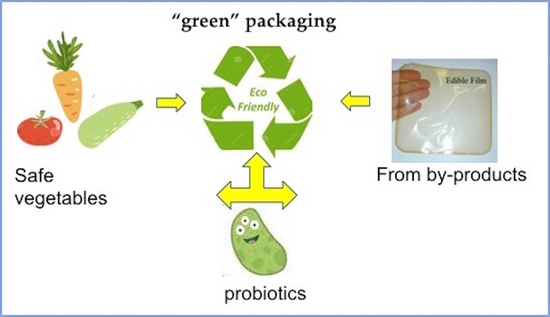
To meet consumer requirements for high quality food free of chemical additives, according to the principles of sustainability and respect for the environment, new “green” packaging solutions have been explored. The antibacterial activity of edible bioactive films and coatings, based on biomolecules from processing by-products and biomasses, added with the bacteriocin producer Lactobacillus kefiri MM5, has been determined in vegetables against L. monocytogenes NCTC 10888 (i) “in vitro” by a modified agar diffusion assay and (ii) “on food” during storage of artificially contaminated raw vegetable samples, after application of active films and coatings. Both polysaccharides-based and proteins-based films and coatings showed excellent antilisterial activity, especially at 10 and 20 days. Protein-based films displayed a strong activity against L. monocytogenes in carrots and zucchini samples (p < 0.0001). After 10 days, both polysaccharide-based and protein-based films demonstrated more enhanced activity than coatings towards the pathogen. These edible active packagings containing live probiotics can be used both to preserve the safety of fresh vegetables and to deliver a beneficial probiotic bacterial strain. The edible ingredients used for the formulation of both films and coatings are easily available, at low cost and environmental impact.

Research – Whole-Genome Analysis of Staphylococcus aureus Isolates from Ready-to-Eat Food in Russia

MDPI

This study provides a thorough investigation of a diverse set of antimicrobial resistant (AMR) Staphylococcus aureus isolates collected from a broad range of ready-to-eat (RTE) food in various geographic regions of Russia ranging from Pskov to Kamchatka. Thirty-five isolates were characterized using the whole genome sequencing (WGS) analysis in terms of clonal structure, the presence of resistance and virulence determinants, as well as plasmid replicon sequences and CRISPR/Cas systems. To the best of our knowledge, this is the first WGS-based surveillance of Russian RTE food-associated S. aureus isolates. The isolates belonged to fifteen different multilocus sequence typing (MLST)-based types with a predominant being the ones of clonal complex (CC) 22. The isolates studied can pose a threat to public health since about 40% of the isolates carried at least one enterotoxin gene, and 70% of methicillin-resistant (MRSA) isolates carried a tsst1 gene encoding a toxin that may cause severe acute disease. In addition, plasmid analysis revealed some important characteristics, e.g., Rep5 and Rep20 plasmid replicons were a “signature” of MRSA CC22. By analyzing the isolates belonging to the same/single strain based on cgMLST analysis, we were able to identify the differences in their accessory genomes marking their dynamics and plasticity. This data is very important since S. aureus isolates studied and RTE food, in general, represent an important route of transmission and dissemination of multiple pathogenic determinants. We believe that the results obtained will facilitate performing epidemiological surveillance and developing protection measures against this important pathogen in community settings. View Full-Text