Canada – Updated Food Recall Warning – Al-Rabih brand Halva / Halawa and Tahini recalled due to Salmonella

CFIA

Ottawa, July 23, 2021 – The food recall warning issued on July 5, 2021 has been updated to include additional product information. This additional information was identified during the Canadian Food Inspection Agency’s (CFIA) food safety investigation.

Phoenicia Group Inc. is recalling Al-Rabih brand Halva / Halawa and Tahini from the marketplace due to possible Salmonella contamination. Consumers should not consume and distributors, retailers and food service establishments such as hotels, restaurants, cafeterias, hospitals and nursing homes should not sell or use the recalled products described below.

Recalled product

Brand Product Size UPC Codes
Al-Rabih Halva / Halawa – With chocolate 200 g 7 70338 10058 0 All lot codes containing 19620 up to and including 36020
Al-Rabih Halva / Halawa – With chocolate 454 g 7 70338 10065 8 All lot codes containing 19620 up to and including 36020
Al-Rabih Halva / Halawa – With chocolate 907 g 7 70338 10060 3 All lot codes containing 19620 up to and including 36020
Al-Rabih Halva / Halawa – Plain light 454 g 7 70338 10064 1 All lot codes containing 19620 up to and including 36020
Al-Rabih Halva / Halawa – With pistachios 200 g 0 62356 54452 2 All lot codes containing 19620 up to and including 36020
Al-Rabih Halva / Halawa – With pistachios 454 g 7 70338 10057 3 All lot codes containing 19620 up to and including 36020
Al-Rabih Halva / Halawa – With pistachios 907 g 7 70338 10056 6 All lot codes containing 19620 up to and including 36020
Al-Rabih Halva / Halawa – With pistachios 2.5 kg 5 281003 552580 All lot codes containing 19620 up to and including 36020
Al-Rabih Halva / Halawa – Plain / Traditional 200 g 0 62356 54451 5 All lot codes containing 19620 up to and including 36020
Al-Rabih Halva / Halawa – Plain / Traditional 454 g 7 70338 10055 9 All lot codes containing 19620 up to and including 36020
Al-Rabih Halva / Halawa – Plain / Traditional 907 g 7 70338 10054 2 All lot codes containing 19620 up to and including 36020
Al-Rabih Halva / Halawa – Plain / Traditional 2.5 kg 5 281003 552085 All lot codes containing 19620 up to and including 36020
Al-Rabih Tahini (100% Sesame) – Sesame Paste 200 g 0 62356 54450 8 All lot codes containing 19620 up to and including 36020
Al-Rabih Tahini (100% Sesame) – Sesame Paste 454 g 7 70338 10053 5 All lot codes containing 19620 up to and including 36020
Al-Rabih Tahini (100% Sesame) – Sesame Paste 907 g 7 70338 10052 8 All lot codes containing 19620 up to and including 36020
Al-Rabih Tahini (100% Sesame) – Sesame Paste 4.54 kg 5 281003 551101 All lot codes containing 19620 up to and including 36020
Al-Rabih Tahini (100% Sesame) – Sesame Paste 18 kg 5 281003 551187 All lot codes containing 19620 up to and including 36020

What you should do

If you think you became sick from consuming a recalled product, call your doctor.

Check to see if you have the recalled products in your home or establishment. Recalled products should be thrown out or returned to the location where they were purchased.

Food contaminated with Salmonella may not look or smell spoiled but can still make you sick. Young children, pregnant women, the elderly and people with weakened immune systems may contract serious and sometimes deadly infections. Healthy people may experience short-term symptoms such as fever, headache, vomiting, nausea, abdominal cramps and diarrhea. Long-term complications may include severe arthritis.

Background

This recall was triggered by CFIA test results. The CFIA is conducting a food safety investigation, which may lead to the recall of other products. If other high-risk products are recalled, the CFIA will notify the public through updated Food Recall Warnings.

The CFIA is verifying that industry is removing the recalled products from the marketplace.

Illnesses

There have been no reported illnesses associated with the consumption of these products.

Product photos

Printer ready version of photos

  • Al-Rabih-Halva – Chocolate – 454 grams (front)
  • Al-Rabih-Halva – Chocolate – 907 grams (front)
  • Al-Rabih-Halva – Pistachio – 2.5 kilograms (front and UPC)
  • Al-Rabih-Halva – Pistachio – 200 grams – (top and side)
  • Al-Rabih-Halva – Pistachio – 454 grams (front)
  • Al-Rabih-Halva – Pistachio – 907 grams (front)
  • Al-Rabih-Halva – Plain – 2.5 kilograms (front)
  • Al-Rabih-Halva – Plain – 200 grams (front)
  • Al-Rabih-Halva – Plain – 454 grams (front)
  • Al-Rabih-Halva – Plain – 907 grams (front)
  • Al-Rabih-Halva – Plain Light – 454 grams (front)
  • Al-Rabih-Tahini – 4.54 kilograms (front)
  • Al-Rabih-Tahini – 18 kilograms (front)
  • Al-Rabih-Tahini (lot code)
  • Al-Rabih – Tahini (100% Sesame) – Sesame Paste – 200 grams
  • Al-Rabih – Tahini (100% Sesame) – Sesame Paste – 454 grams
  • Al-Rabih – Tahini (100% Sesame) – Sesame Paste – 907 grams

Public enquiries and media

Public enquiries
Toll-free: 1-800-442-2342 (Canada and U.S.)
Telephone: 1-613-773-2342 (local or international)
Email: information@inspection.gc.ca
Media relations
Telephone: 613-773-6600
Email: cfia.media.acia@inspection.gc.ca

Canada- Food Recall Warning – Cahill’s brand Original Irish Porter Cheese recalled due to Listeria monocytogenes

CFIA

Ottawa, July 23, 2021 – Tree of Life Canada ULC is recalling Cahill’s brand Original Irish Porter Cheese from the marketplace due to possible Listeria monocytogenes contamination. Consumers should not consume the recalled products described below.

Recalled product

Brand Product Size UPC Codes
Cahill’s Original Irish Porter Cheese 2.27 kg 00034463010160 22-JA-13
21125
Cahill’s Original Irish Porter Cheese 200 g 00034463016056 21-DE-13
21126

What you should do

If you think you became sick from consuming a recalled product, call your doctor.

Check to see if you have the recalled products in your home. Recalled products should be thrown out or returned to the store where they were purchased.

Food contaminated with Listeria monocytogenes may not look or smell spoiled but can still make you sick. Symptoms can include vomiting, nausea, persistent fever, muscle aches, severe headache and neck stiffness. Pregnant women, the elderly and people with weakened immune systems are particularly at risk. Although infected pregnant women may experience only mild, flu-like symptoms, the infection can lead to premature delivery, infection of the newborn or even stillbirth. In severe cases of illness, people may die.

Background

This recall was triggered by the company. The Canadian Food Inspection Agency (CFIA) is conducting a food safety investigation, which may lead to the recall of other products. If other high-risk products are recalled, the CFIA will notify the public through updated Food Recall Warnings.

The CFIA is verifying that industry is removing the recalled products from the marketplace.

Illnesses

There have been no reported illnesses associated with the consumption of these products.

Product photos

Printer ready version of photos

  • Cahill's – Original Irish Porter Cheese – 200 grams
  • Cahill's – Original Irish Porter Cheese – 2.27 kilograms

Public enquiries and media

Company information
Tree of Life Canada ULC: Canada.qa@treeoflife.com, 1-800-263-7054
Public enquiries
Toll-free: 1-800-442-2342 (Canada and U.S.)
Telephone: 1-613-773-2342 (local or international)
Email: information@inspection.gc.ca
Media relations
Telephone: 613-773-6600
Email: cfia.media.acia@inspection.gc.ca

Canada – Food Recall Warning – Harvest Fresh brand Zucchini Spirals recalled due to Listeria monocytogenes

CFIA

Recall details

Ottawa, July 25, 2021 – Veg Pak Produce is recalling Harvest Fresh brand Zucchini Spirals from the marketplace due to possible Listeria monocytogenes contamination. Consumers should not consume the recalled product described below.

Recalled product

Brand Product Size UPC Codes
Harvest Fresh Zucchini Spirals 340 g 0 59559 00042 9 24 JUL 2021 C 195

What you should do

If you think you became sick from consuming a recalled product, call your doctor.

Check to see if you have the recalled product in your home. Recalled products should be thrown out or returned to the store where they were purchased.

This recall was triggered by Canadian Food Inspection Agency (CFIA) test results. The CFIA is conducting a food safety investigation, which may lead to the recall of other products. If other high-risk products are recalled, the CFIA will notify the public through updated Food Recall Warnings.

The CFIA is verifying that industry is removing the recalled product from the marketplace.

Illnesses

There have been no reported illnesses associated with the consumption of this product.

Product photos

Printer ready version of photos

  • Harvest Fresh Zucchini Spirals - front
  • Harvest Fresh Zucchini Spirals - lot code
  • Harvest Fresh Zucchini Spirals - UPC
  • Harvest Fresh Zucchini Spirals - back

Public enquiries and media

Company information
Veg Pak Produce: info@vegpakproduce.com
Public enquiries
Toll-free: 1-800-442-2342 (Canada and U.S.)
Telephone: 1-613-773-2342 (local or international)
Email: information@inspection.gc.ca
Media relations
Telephone: 613-773-6600
Email: cfia.media.acia@inspection.gc.ca

Research – A Series of Papaya-Associated Salmonella Illness Outbreak Investigations in 2017 and 2019 – A Focus on Traceback, Laboratory, and Collaborative Efforts

Journal of Food Protection

kswfoodworld

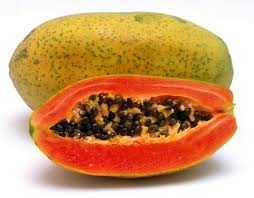
In 2017 and 2019, five outbreaks of infections from multiple strains of Salmonella linked to the consumption of whole, fresh Maradol papayas were reported in the United States, resulting in 325 ill persons. Traceback, laboratory, and epidemiologic evidence indicated papayas as the likely vehicle for each of these outbreaks and identified the source of papayas. State and FDA laboratories recovered Salmonella from papaya samples from various points of distribution, including at import entry, and conducted serotyping, pulsed-field gel electrophoresis (PFGE), and phylogenetic analyses of whole genome sequencing (WGS) data. Federal and state partners led traceback investigations to determine the source of papayas. Four different suppliers of papayas were linked by traceback and laboratory results to five separate outbreaks of Salmonella infections associated with papayas. In 2017, multiple states tested papaya samples collected at retail, and Maryland and Virginia investigators recovered strains of Salmonella associated with one outbreak. FDA collected 183 papaya samples in 2017, and 11 samples yielded 62 isolates of Salmonella. Eleven serotypes of Salmonella were recovered from FDA papaya samples, and nine serotypes were closely related genetically by PFGE and WGS to clinical isolates of four outbreaks, including the outbreak associated with positive state sample results. Four farms in Mexico were identified and their names were released to the general public, retailers, and foreign authorities. In 2019, FDA collected 119 papaya samples, three of which yielded Salmonella; none yielded the 2019 outbreak strain. Investigators determined that papayas of interest had been sourced from a single farm in Campeche, Mexico through traceback. This information was used to protect public health through public guidance, recalls, and import alerts and helped FDA collaborate with Mexican regulatory partners to enhance the food safety requirements for papayas imported from Mexico.

Research – Interactions between Microbial Food Safety and Environmental Sustainability in the Fresh Produce Supply Chain

MDPI

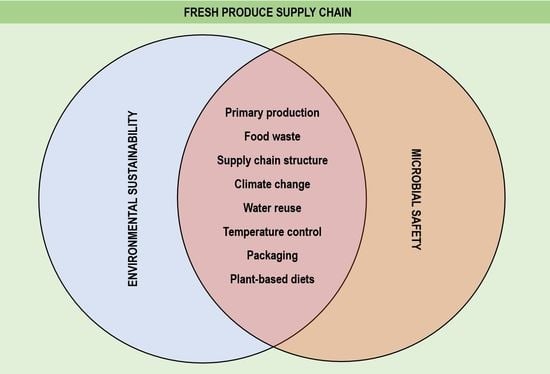
Improving the environmental sustainability of the food supply chain will help to achieve the United Nations Sustainable Development Goals (SDGs). This environmental sustainability is related to different SDGs, but mainly to SDG 2 (Zero Hunger), SDG 12 (Responsible Production and Consumption), SDG 13 (Climate Action), and SDG 15 (Life on Land). The strategies and measures used to improve this aspect of the food supply chain must remain in balance with other sustainability aspects (economic and social). In this framework, the interactions and possible conflicts between food supply chain safety and sustainability need to be assessed. Although priority must be given to safety aspects, food safety policies should be calibrated in order to avoid unnecessary deleterious effects on the environment. In the present review, a number of potential tensions and/or disagreements between the microbial safety and environmental sustainability of the fresh produce supply chain are identified and discussed. The addressed issues are spread throughout the food supply chain, from primary production to the end-of-life of the products, and also include the handling and processing industry, retailers, and consumers. Interactions of fresh produce microbial safety with topics such as food waste, supply chain structure, climate change, and use of resources have been covered. Finally, approaches and strategies that will prove useful to solve or mitigate the potential contradictions between fresh produce safety and sustainability are described and discussed. Upon analyzing the interplay between microbial safety and the environmental sustainability of the fresh produce supply chain, it becomes clear that decisions that are taken to ensure fresh produce safety must consider the possible effects on environmental, economic, and social sustainability aspects. To manage these interactions, a global approach considering the interconnections between human activities, animals, and the environment will be required. View Full-Text

Research – Bacteriophage Therapy to Reduce Colonization ofCampylobacter jejuniin Broiler Chickens before Slaughter

Click to access viruses-13-01428.pdf

UK – Sysco recalls Cahill’s Original Irish Porter Cheddar because of contamination with Listeria monocytogenes

FSA

Sysco recalls Cahill’s Original Irish Porter Cheddar because of contamination with Listeria monocytogenes

23 July 2021

Sysco is recalling Cahills Original Irish Porter Cheddar because Listeria monocytogenes has been found in the product.

Product details

Product code CH1139
Use by Batch: 21118 Use by date: 28.09.21

Risk statement

The presence of Listeria monocytogenes in the product listed above.

Symptoms caused by this organism can be similar to flu and include high temperature, muscle ache or pain, chills, feeling or being sick and diarrhoea. However, in rare cases, the infection can be more severe, causing serious complications, such as meningitis.

Some people are more vulnerable to listeria infections, including those over 65 years of age, pregnant women and their unborn babies, babies less than one month old and people with weakened immune systems.

Action taken by the company

Sysco is recalling the above product. Point of sale notices will be displayed in all retail stores that are selling this product. These notices explain to customers why the product is being recalled and tell them what to do if they have bought the product. Please see the attached notice.

Our advice to consumers

If you have bought any of the above product do not eat it. Instead, return it to the store from where it was bought for a full refund.

Ireland – Recall of Several Cahills Farm Cheese Products due to the Possible Presence of Listeria monocytogenes

FSAI

Summary
Category 1: For Action
Alert Notification: 2021.52
Product: Cahill’s Ireland Original Irish Porter; Cahill’s Ireland Original Irish Whiskey, Cahill’s Ireland Red Wine, Cahill’s Ireland Original Irish Cream Liqueur and Cahill’s Ireland Wild Blueberries & Vodka; pack size: all blocks, wheels and pieces
Batch Code: 21109 – 21141 inclusive
Country Of Origin: Ireland

Message:

As a precaution, Cahills Farm Cheese are recalling the above batches of its cheddar cheeses with Original Irish Porter, Original Irish Whiskey, Red Wine, Original Irish Cream Liqueur and Wild Blueberries & Vodka due to possible presence of Listeria monocytogenes.

Nature Of Danger:

Symptoms of Listeria monocytogenes infection can include mild flu-like symptoms, or gastrointestinal symptoms such as nausea, vomiting and diarrhoea.  In rare cases, the infection can be more severe, causing serious complications. Some people are more vulnerable to Listeria monocytogenes infections, including pregnant women, babies, and people with weakened immune systems, including the elderly.  The incubation period (time between initial infection and first symptoms appearing) is on average 3 weeks but can range between 3 and 70 days.

Action Required:

Manufacturers, wholesalers, distributors, caterers & retailers:

Retailers are requested to remove the implicated batches from sale and to display a point-of-sale recall notice in stores where the affected batches were sold.

Wholesalers/distributors are requested to contact their affected customers, recall the affected batches and provide a point-of-sale recall notice to their retail customers.

Caterers should not use the implicated batches.

Consumers:

Consumers are advised not to eat the implicated batches.

Cahills Photos 1
Cahills Photos 2
Cahills Photo 3

Research – Reduction of Escherichia coli O157:H7, Listeria monocytogenes, or Salmonella on Whole Yellow Onions (Allium cepa) Exposed to Hot Water

Journal of Food Protection

In-home or food service antimicrobial treatment options for fresh produce are limited. Hot water treatments for whole (unpeeled) produce have been proposed but data to support this practice for onions are not available. Separate cocktails of rifampin-resistant Escherichia coli O157:H7, Listeria monocytogenes , or Salmonella were cultured on agar and suspended in sterile water. The outer papery skin at the equator or root or stem ends of the whole yellow onions was spot inoculated at 6 log CFU/onion. After drying for 30 min and, in some cases, storage at 4°C for 6 days, onions were immersed in water at ~100°C for 5 s or 85°C for 10 to 180 s. There was no significant difference ( P > 0.05) in the mean decline of Salmonella on onions that were exposed to hot water after drying the inoculum for 30 min or after storage at 4°C for 6 days. Exposure of whole onions at 100°C for 5 s reduced E. coli O157:H7 and L. monocytogenes populations by >5 log CFU/onion at all inoculum sites and Salmonella populations by >5 log CFU/onion at the stem end and equator but not consistently at the root end. Mean root-end reductions of ≥5 log CFU/onion of E. coli O157:H7, L. monocytogenes , or Salmonella were achieved consistently when the root end was fully immersed in 85°C hot water for 45 or 60 s, except in a small number of cases (4/57; 7%) when the root end oriented above the water line during treatment. When onions were held at 85°C for 180 s with the root end above the water line in an uncovered water bath, no significant declines in Salmonella populations were observed; significant mean declines of Salmonella were achieved (mean 5 log CFU/onion [range 3.49 to 6.25]) when the water bath was covered. Short exposure to hot water can significantly reduce pathogens on the surface of whole onions; reductions are more consistent when the root end is submerged, or when the water bath is covered.

Research – Shiga Toxin-Producing Escherichia coli Outbreaks in the United States, 2010–2017

MDPI

Shiga toxin-producing Escherichia coli (STEC) cause illnesses ranging from mild diarrhea to ischemic colitis and hemolytic uremic syndrome (HUS); serogroup O157 is the most common cause. We describe the epidemiology and transmission routes for U.S. STEC outbreaks during 2010–2017. Health departments reported 466 STEC outbreaks affecting 4769 persons; 459 outbreaks had a serogroup identified (330 O157, 124 non-O157, 5 both). Among these, 361 (77%) had a known transmission route: 200 foodborne (44% of O157 outbreaks, 41% of non-O157 outbreaks), 87 person-to-person (16%, 24%), 49 animal contact (11%, 9%), 20 water (4%, 5%), and 5 environmental contamination (2%, 0%). The most common food category implicated was vegetable row crops. The distribution of O157 and non-O157 outbreaks varied by age, sex, and severity. A significantly higher percentage of STEC O157 than non-O157 outbreaks were transmitted by beef (p = 0.02). STEC O157 outbreaks also had significantly higher rates of hospitalization and HUS (p < 0.001).