Category Archives: Water

USA – FDA Advises Restaurants and Retailers Not to Serve or Sell and Consumers Not to Eat Chopped Clams Illegally Harvested in Massachusetts and Distributed by Red’s Best

FDA

Audience
Restaurants and food retailers in Connecticut (CT), Massachusetts (MA), New York (NY), and Rhode Island (RI) that have recently purchased Red’s Best chopped clams, labeled as lot numbers # 331 and # 333, with shuck dates of 23/331 and 23/333. These clams were illegally harvested from prohibited waters in MA on 11/25/2023 and 11/26/2023.
Consumers in CT, MA, NY, and RI who have recently purchased or consumed Red’s Best chopped clams, labeled as lot numbers # 331 and # 333, with shuck dates of 23/331 and 23/333, that were illegally harvested from prohibited waters in MA on 11/25/2023 and 11/26/2023.
Product
Red’s Best chopped clams illegally harvested from prohibited waters in MA on 11/25/2023 and 11/26/2023 and distributed to CT, MA, NY, and RI. It is possible that chopped clams may have been distributed to other states as well. These chopped clams can be identified by lot numbers # 331 and # 333, with shuck dates of 23/331 and 23/333 and harvest area mhb4, packed by 13027 ma-sp. All chopped clams were packed in one-gallon (8 lbs) plastic containers with “Red’s Best” printed on the sidewall. Both the lot number and shuck date should be printed on a decal label adhered to either the lid or sidewall of each container.

Purpose
The US Food and Drug Administration (FDA) is advising consumers not to eat, and restaurants and food retailers not to sell, and to dispose of Red’s Best chopped clams illegally harvested from prohibited waters in MA on 11/25/2023 and 11/26/2023 with lot numbers # 331 and # 333, and shuck dates of 23/331 and 23/333, because they may be contaminated. The chopped clams were directly distributed to distributors and retailers in CT, MA, NY, and RI and may have been distributed further from these states.

Clams harvested illegally may be contaminated with human pathogens, toxic elements or poisonous or deleterious substances and can cause illness if consumed. Clams are filter feeders that remove and bioaccumulate bacteria and other pathogens from the water. It is not uncommon for shellfish to be consumed raw and whole. Contaminated clams can cause illness if eaten raw, particularly in people with compromised immune systems. Clams contaminated with pathogens may look, smell, and taste normal.
Research – Is Chlorine Dioxide the Perfect Way to Control Legionella Bacteria?

Legionella Control

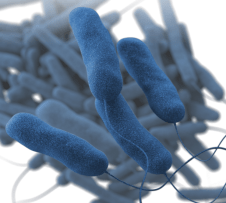
Chlorine and chlorine dioxide are two popular, but very different chemicals that are commonly used to treat water against lots of different bugs including legionella and other potentially dangerous bacteria. Both have their advantages and disadvantages especially when it comes to the control of Legionella bacteria in water systems.

Research – Flood-Associated, Land-to-Sea Pathogens’ Transfer: A One Health Perspective

MDPI

Similarly to many other countries across the globe, several floods have been recorded in Italy throughout the last few decades, including those of catastrophic magnitude that occurred in the Emilia-Romagna and Tuscany regions last May and a few weeks ago, respectively. This, once again, underscores the increasingly growing probability, in the current “Anthropocene Epoch”, of global warming-related, extreme weather phenomena. Indeed, the last 8 years (2015–2022) have been characterized by the highest average temperatures ever recorded on Earth throughout the last 140 years [1].
How can we imagine to stay healthy in a sick world?”, Pope Francis wrote three years ago in his missive addressed to the President of Columbia on the “2020 World Environment Day”, while the COVID-19 pandemic was dramatically affecting the entire world, with SARS-CoV-2 likely representing a clear-cut example of a climate change-driven pathogen spillover from bats to humans [2].
Within such a challenging and alarming scenario, the land-to-sea transfer of a huge (and progressively increasing) number of infectious agents appears to be a matter of relevant concern [3,4]. This especially applies to bacterial microorganisms shed into the external environment via the fecal route, such as Salmonella spp., Escherichia coliVibrio cholerae and Listeria monocytogenes, alongside protozoan pathogens like Toxoplasma gondii and/or viral agents like the one causing hepatitis A and, last but not least, the pandemic SARS-CoV-2 betacoronavirus. As a matter of fact, evidence of viral fecal shedding has been documented for a median duration of 22 days in 59% of subjects from a cohort of SARS-CoV-2-infected patients in China [5]. Once transferred into sea and ocean waters by flood-derived mud and debris, fecally excreted microbial pathogens may be ingested by edible bivalve mollusks like mussels, an organism in which a single individual is able to filter over 100 liters of water on a daily basis, thus potentially hosting inside its body tissues significant amounts of biological and chemical environmental pollutants [6]. Within this context, it is worth mentioning a V. cholerae infection outbreak linked to the consumption of raw, non-sterilized mussels which diffusely involved the human population from the cities of Naples and Bari during the summer and early autumn months of 1973 [7]. Moreover, the land-to-sea transfer of infectious agents may additionally involve free-ranging cetaceans, whose health and conservation status appear to be increasingly threatened by a long and progressively expanding list of both natural and anthropogenic factors. This holds particularly true for “inshore” species like bottlenose dolphins (Tursiops truncatus), which are more prone to acquire infections caused by “terrestrial” pathogens like T. gondii [8] while being simultaneously able to accumulate and “biomagnify” inside their body tissues consistent amounts of human-made, persistent, immunotoxic, neurotoxic and endocrine-disrupting environmental pollutants, based upon their well-known position of “apex predators” within the marine and oceanic food chains. Furthermore, the proven capability of micro-nanoplastics—exceedingly contaminating global seawaters—to behave as “attractors and concentrators” for the aforementioned anthropogenic xenobiotics should also be taken into serious account, together with the demonstrated interaction of micro-nanoplastics in marine and oceanic ecosystems with zoonotic protozoan pathogens like T. gondiiCryptosporidium parvum and Giardia enterica [9]. This scenario, which already appears to be quite intricate and complex by itself, is made even more alarming by the fact that micro-nanoplastics may also host and carry a wide range of antibiotic-resistant bacteria, from which an active and powerful exchange of antimicrobial resistance genes may additionally occur, through horizontal gene transfer, with several environmental bacterial species colonizing the same plastic substrates [10].

Ireland – Kildare café closed due to evidence of E coli in the drinking water

The Independent

A closure order was issued on October 26 as the drinking water supply was found to pose “grave and immediate danger to public health”

A Kildare café was among five businesses around Ireland that were served with closure orders by the Food Safety Authority in October.

Base Coffee, at The Mart, on Newbridge Road in Kilcullen, County Kildare, was served the order on October 26, after the FSAI inspectors had “concerns of grave and immediate danger to public health.”

The reasons for closure as stated in the FSAI food hygiene inspection report was that “a drinking water sample taken on October 24 2023 from the food business indicated that the supply [was] contaminated.”

According to the inspection report: “Coliforms, Enterococci and E coli were detected in the drinking water sample. Given these levels of contamination, the drinking water supply pose a grave and immediate danger to public health.”

Other premises which were closed in October included: Indian Spices (restaurant/café), 138 Parnell Street, Dublin 1; Mizzoni Pizza (takeaway), 12 Railway Street, Navan, Meath; Seasons Chinese, Bridge Street, Strokestown, Roscommon.

Meanwhile, one Prohibition Order was served under the Eurpoean Union (Official Controls in Relation to Food Legislation) Regulations 2020 on: Meghans Café, 8 Cecilia Street, Dublin 2.

Research – USA -FDA -Cyclospora cayetanensis in Produce

FSIS USDA

Executive Summary of Findings
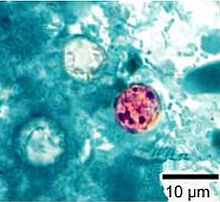
Cyclospora cayetanensis (C. cayetanensis) is a coccidian protozoan parasite, belonging
to the phylum Apicomplexa, order Eucoccidiorida, family Eimeriidae, described between 1993 to 1994 as a newly identified human gastrointestinal pathogen.

Within the genus Cyclospora, only C. cayetanensis is known to infect humans. However, recent advances in genomics separated C. cayetanensis into 3 proposed species, with the two new proposed species also considered parasitic to humans (Cyclospora ashfordi sp. nov. and Cyclospora henanensis sp. nov.).

For the purpose of this document and to reflect the proposed status of the new
nomenclature “C. cayetanensis” refers to all three species of Cyclospora parasitic in humans.
The parasite produces oocysts that are resistant to harsh environmental conditions and many
chemical treatments commonly used to reduce the presence of bacterial pathogens in the
specialty crop production environment and in agricultural inputs (e.g., agricultural water). C.
cayetanensis is the etiologic agent of cyclosporiasis, its host range is limited to humans.
Detected in association with human illness in many parts of the world, C. cayetanensis
previously was considered to be a pathogen acquired during childhood in developing nations.

In the United States, cyclosporiasis was previously associated with international travel or
consumption of contaminated imported foods. In recent years, the U.S. has seen an increase in cases and positive samples associated with domestically grown produce, both as raw
agricultural commodities and fresh cut. Laborers with the history of recent travel to countries
where C. cayetanensis is endemic have not been ruled out as the sources of the pathogen in
these outbreaks. Since 2016, the number of cyclosporiasis cases has increased approximately
3-fold, often linked to the consumption of leafy herbs and ready-to-eat salads. Fecal
contamination from symptomatic or asymptomatic carriers is, ultimately, the only known source of C. cayetanensis. The hypothesis that C. cayetanensis has become endemic in the production regions of the U.S. remains to be robustly supported. The hypothesis that farm workers with a history of recent travel to areas where the parasite is common are the likeliest source of the pathogen has not been ruled out. C. cayetanensis likely spreads via the fecal-environment-oral route when sanitation controls break down. Efforts have been made to develop molecular detection methods for C. cayetanensis in both food and environmental samples.

However, due to the high degree of genome-level conservation between C. cayetanensis and its close relatives that are not pathogenic in humans, results of some environmental surveys that relied solely on the PCR-based detection of ribosomal RNA genes likely overestimated the prevalence of C. cayetanensis. There remain significant knowledge and data gaps that hamper the implementation of effective measures to prevent the contamination of produce with the oocysts of this parasite. Awareness of the factors that can contribute to C. cayetanensis contamination of domestically grown and imported produce is key to developing an effective prevention and management strategy.

What is ACOP L8 & What Does It Say About Controlling Legionella?

Legionella Control

The Health and Safety Executive Approved Code of Practice L8 (ACOP L8) is a key document, offering essential direction and guidance to help business owners and those responsible for workplace safety manage the risks associated with legionella and Legionnaires’ disease.

In this guide the water safety specialists at Legionella Control International help to demystify the ACOP L8 to explain what it is, its special legal status, how to interpret it, and the role of the duty holder and responsible person.

A version of this guide to the HSEs ACOP L8 and how to interpret it first appeared in Legionella Control International’s newsletter. To get it in your inbox, sign up for free here.

RASFF Alert- Cryptosporidium – Goat Milk Cheese

RASFF

Goat milk cheese suspected to be the source of an outbreak of cryptosporidiosis in Sweden product from France

Research -Preliminary investigation of a significant national Cryptosporidium exceedance in the United Kingdom, August 2023 and ongoing

Eurosurveillance

Across the UK, routine surveillance of cryptosporidiosis relies on mandatory laboratory notification. Since the International Organization for Standardization (ISO) week 33 2023 (starting on 14 August), and as at week 39 2023 (ending on 1 October), the combined weekly number of laboratory notifications of  spp. detections in England, Wales and Northern Ireland has exceeded the expected upper threshold (Figure); an exceedance in Scotland has only been present since ISO week 39.

Figure.Laboratory notifications of  species in England, Wales and Northern Ireland, by week of specimen, 2023
Figure

Observed case numbers are compared to an exceedance threshold as derived from the Farrington Flexible algorithm, using published methodology [10]; the model can account for seasonal effects and changing trends. The upper threshold limit reflects the 99.5% percentile of a negative binomial distribution for the expected case frequency.

Given the scale and geographical spread of the exceedance across regions and nations of the UK, a single local exposure is an unlikely cause.

In England, local practice varies in the routine collection of exposure information in cryptosporidiosis cases. To allow for consistent capture of information as part of this investigation, a standardised electronic questionnaire was deployed. This includes questions on foreign travel, food and water exposures and interaction with animals. Data collection through this method has been ongoing since ISO week 38 (and in retrospect), for cases meeting the following definition: any person resident in England, with a clinical specimen dated 14 August 2023 or later, positive for  (any species). In Wales, a standard questionnaire for gastrointestinal disease has been in place since before the exceedance.

Israel – Following abnormal microbial results received as part of a routine sampling, the Ministry of Health informs of the need to boil water in Kibbutz Ginosar

GovIL

Following abnormal microbial results obtained as part of a routine sampling of the drinking water, the Ministry of Health announces the obligation to boil water before drinking, cooking, preparing food, preparing medicine and brushing teeth in Kibbutz Ginosar.

Ireland – Nearly 7,000 Limerick people impacted by boil water notice that has been in place since May

Independant

Nearly 7,000 Limerick residents have been impacted by a boil water notice since last May.

A boil water notice was issued back on May 13 2023 for all Limerick residents supplied by the Foynes/Shannon Estuary Public Water Supply.

Uisce Éireann explained that the notice was issued to protect the health of the public as the water served by Foynes/Shannon Estuary PWS has been described as potentially unsafe to drink due to the detection of cryptosporidium.

The areas impacted are Askeaton, Foynes, Ballyhahill, Loghill, Ballysteen, Pallaskenry, Kildimo and Shanagolden and surrounding areas, for an estimated residential population of 6,986 people.

What actions should be taken: Use water prepared for drinking when preparing foods that will not be cooked (e.g. washing salads); water can be used for personal hygiene, bathing and flushing of toilets but not for brushing teeth or gargling. Boil water by bringing to a vigorous, rolling boil (e.g. with an automatic kettle) and allow to cool. Cover and store in a refrigerator or cold place. Water from the hot tap is not safe to drink. Domestic water filters will not render water safe to drink. Caution should be taken when bathing children to ensure that they do not swallow the bathing water.