Category Archives: Virus

USA – Poke Pop in Fircrest Washington liked to Norovirus Outbreak

Food Poison Journal

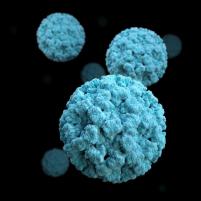
Food Borne Illness - Norovirus -CDC Photo

Image CDC

Update—Nov. 7, 2019

We received new reports from people who said they got sick with norovirus-like illness after they ate at Poke Pop in Fircrest. Since yesterday’s update, we received 9 more illness reports for a total of 26.

The illness reports fall into 2 categories:

  • Primary—22 report they got ill after they ate at Poke Pop.
  • Secondary—4 got ill away from Poke Pop from exposure to customers who reported illness after they ate there.

The exposure dates range from Oct. 30-Nov. 4 for everyone who got sick. People got ill about a day and a half after exposure. Their illness lasted about 2 days.

Reports of illness have decreased so this will be our last regular update on the suspected norovirus outbreak. Read our previous posts in the link above and go to www.tpchd.org/norovirus to learn more.

USA – Employees at the Kissimmee, FL Denny’s Restaurant Diagnosed With Hepatitis A

Food Poisoning Bulletin

Employees at the Denny’s restaurant located at 2051 East Irlo Bronson Memorial Highway in Kissimmee, Florida have been diagnosed with hepatitis A, and may have worked while infectious, according to the Osceola County Health Department. Two people who worked there from October 14, 2019 though November 1, 2019 have been diagnosed with the viral illness.

Anyone who ate or drank at this restaurant between October 24 and November 1, 2019 should get a hepatitis A or immune globulin vaccination. These vaccines are effective if given within two weeks of exposure. Anyone who ate food or drank beverages at that store between October 14 and October 23, 2019 should watch their health for the symptoms of hepatitis A; it’s too late for a vaccination.

RASFF Alerts – Norovirus – Frozen Raspberries – Live Common Cockles

RASFF-Logo

RASFF – norovirus (G II /25g) in frozen raspberries from China in Germany

RASFF – norovirus (I & II /25g) in live common cockles (Cerastoderma edulis) from Portugal in Spain

Iceland – Iceland reports increase in Norovirus

Outbreak News Today

Norwalk_Caspid

Image CDC

Health officials in Iceland are reporting an increase in norovirus infections in recent weeks. Local media report (computer translated) a large number of residents at the retirement home Hrafnista in Hafnarfjörður have been diagnosed with the virus and last week the infant play school Ársól in Grafarvogur was closed due to infection.

In addition, dozens of employees at the accounting firm, KPMG were stricken with the virus and everyone recovered.

USA – Wawona recalls berries from grocery chains because of positive hep A test

Food Safety News

A frozen fruit supplier for the Aldi and Raley’s grocery chains is recalling frozen berries because a government test returned a positive result for hepatitis A.

Wawona Frozen Foods packaged frozen berry mixes containing raspberries, strawberries, blackberries and blueberries under Aldi’s Season’s Choice brand and frozen raspberries under Raley’s label, according to a recall notice released by Wawona officials and posted by the Food and Drug Administration.

The company did not report the states where it distributed the frozen fruit.

“The frozen raspberries and frozen berry mixes containing raspberries were distributed throughout stores in Aldi and Raley’s Family of Fine store chains. The recalled frozen raspberries were imported from Chile,” the Wawona recall notice states.

As of the FDA’s posting of the recall, officials had not received any reports of confirmed infections related to the recalled berries.

USA – Camillus Country Club link in Hepatitis A Scare

Food Poison Journal

According to press reports a Camillus Country Club employee in Camillus, New York has been diagnosed with Hepatitis A, according to the Onondaga County Health Department.

Anyone who ate or drank at Camillus Hills Golf Course or the Camillus Country Club from October 13 through October 24 was possibly exposed to the virus, officials said in a news release Wednesday evening.

The county was notified of the possible exposure on Wednesday, officials said.

County officials did not say how many people may have been exposed to the virus.

Anyone who ate or drank at the country club between October 18 and October 24 should receive a vaccine as soon as possible, officials said.

USA – Red Raspberries recalled over Hepatitis A

Food Poison Journal

The Sacramento Bee reported today that Raley’s has issued an urgent recall notice to customers, warning its 12-ounce packages of Raley’s brand frozen red raspberries were pulled from stores Monday due to potential Hepatitis A contamination.

The items were recalled from Raley’s, Bel Air and Nob Hill grocery stores, Raley’s said in an email to customers and on the Northern California chain’s website.

“We’re contacting you because Raley’s removed Raley’s Red Raspberries 12 oz (Frozen) from our Raley’s, Bel Air, and Nob Hill stores on October 28, 2019, due to potential contamination with Hepatitis A Virus,” the email said.

USA -Another Case of Hepatitis A via a food service worker

Food Poison Journal

A case of Hepatitis A has been confirmed in a food worker at Popeyes Louisiana Kitchen on earl Core Road, according to the Monongalia County Health Department.

“While the risk of contracting Hepatitis A from a food worker is low, people who have not been vaccinated against Hepatitis A who have consumed food from the restaurant within the past two weeks should consider getting a Hepatitis A vaccine to prevent infection,” said Dr. Lee B. Smith, MCHD executive director and county health officer

RASFF Alert – Food Poisoning – Norovirus – Frozen Wedge Clams

RASFF-Logo

RASFF – food poisoning suspected to be caused by norovirus GII in frozen wedge clams (Donax trunculus) from Turkey in Spain

Research – Hepatitis E virus genotype 3 strains and a plethora of other viruses detected in raw and still in tap water

Science Direct

In this study, next generation sequencing was used to explore the virome in 20L up to 10,000L water from different purification steps at two Swedish drinking water treatment plants (DWTPs), and in tap water. One DWTP used ultrafiltration (UF) with 20 nm pores, the other UV light treatment after conventional treatment of the water. Viruses belonging to 26 different families were detected in raw water, in which 6–9 times more sequence reads were found for phages than for known environmental, plant or vertebrate viruses. The total number of viral reads was reduced more than 4-log10 after UF and 3-log10 over UV treatment. However, for some viruses the reduction was 3.5-log10 after UF, as for hepatitis E virus (HEV), which was also detected in tap water, with sequences similar to those in raw water and after treatment. This indicates that HEV had passed through the treatment and entered into the supply network. However, the viability of the viruses is unknown. In tap water 10–130 International Units of HEV RNA/mL were identified, which is a comparable low amount of virus. The risk of getting infected through consumption of tap water is probably negligible, but needs to be investigated. The HEV strains in the waters belonged to subtypes HEV3a and HEV3c/i, which is associated with unknown source of infection in humans infected in Sweden. None of these subtypes are common among pigs or wild boar, the major reservoirs for HEV, indicating that water may play a role in transmitting this virus. The results indicate that monitoring small fecal/oral transmitted viruses in DWTPs may be considered, especially during community outbreaks, to prevent potential transmission by tap water.