Category Archives: Uncategorized

Research – Foodborne Outbreaks Caused by Human Norovirus GII.P17-GII.17–Contaminated Nori, Japan, 2017

CDC Norwalk_Caspid

Abstract

Seven foodborne norovirus outbreaks attributable to the GII.P17-GII.17 strain were reported across Japan in 2017, causing illness in a total of 2,094 persons. Nori (dried shredded seaweed) was implicated in all outbreaks and tested positive for norovirus. Our data highlight the stability of norovirus in dehydrated food products.


Australia – Pomegranates Arils Linked to Australia Hepatitis A Outbreak

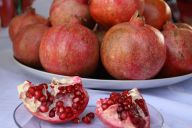
Food Poison Journal Afghan_pomegranates

According to press reports, Western Australia has reported its first case of hepatitis A infection, as part of a national outbreak linked to contaminated frozen pomegranates.The Western Australia case follows five cases in New South Wales, one in Australian Capital Territory and one in Queensland.

The implicated product is Creative Gourmet brand pomegranate arils, sold at Coles Supermarkets.

As a precautionary measure, Entyce Food Ingredients Pty Ltd has issued a voluntary recall of its Creative Gourmet Frozen Pomegranate Aril product.

USA – CDC: E coli outbreak sickens 17 in 7 states

Cidwrap

Though no source has been identified yet, the US Centers for Disease Control and Prevention (CDC) announced yesterday that federal and state health officials are investigating an Escherichia coli O157:H7 outbreak that has sickened 17 people in 7 states.

The outbreak includes infections recently reported by the New Jersey Department of Health (NJDH). The CDC emphasized that so far no specific food item, grocery store, or restaurant chain has been identified as the source of the outbreak, and local public health officials are still interviewing sick people to see what they ate or were otherwise exposed to the week before their symptoms began.

Some media outlets in New Jersey have reported that Panera Bread restaurants are part of a regional investigation into an E coli outbreak and that other chain restaurants could be involved.

Ireland – Woman died due to Salmonella after Communion function, inquest told

RTE

A woman who contracted food poisoning at a First Communion function died due to salmonella, an inquest has heard.

Investigations into the outbreak are continuing, an inquest into the death of 55-year-old mother of one Sandra O’Brien heard.

Ms O’Brien, from Rivervalley, Swords, Co Dublin died on 21 May, 2017 following the consumption of food prepared at O’Dwyer’s Bar and Grill, Strand Road, Portmarnock, Co Dublin.

Ms O’Brien’s husband, Garda Sgt Michael O’Brien, attended a short inquest hearing into her death at Dublin Coroner’s Court.

Investigations by two separate authorities are ongoing into the salmonella outbreak, the inquest heard.

Research – Effects of Bacterial Dose and Fly Sex on Persistence and Excretion of Salmonella enterica serovar Typhimurium From Adult House Flies (Musca domestica L.; Diptera: Muscidae)

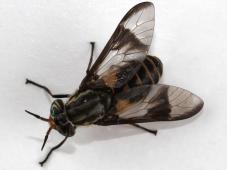
Oxford Academic fly

Abstract

Salmonella Typhimurium (Le Minor and Popoff 1987; Enterobacteriales: Enterobacteriaceae) is a pathogen that causes gastroenteritis in humans and can be harbored by house flies. Factors influencing excretion of S. Typhimurium from infected flies have not been elucidated but are essential for assessing transmission potential. We determined the persistence and excretion of a green fluorescent protein (GFP) expressing strain of S. Typhimurium from house flies. Individual male and female flies were fed either sterile Luria-Bertani (LB) broth (controls) or cultures of “high” (~105 colony forming units [CFU]) or “low” (~104 CFU) doses of bacteria (treatments). Bacterial persistence was determined over 16 h by culturing whole-fly homogenate. Both sex and dose affected persistence between 6 and 12 h postingestion. In a separate experiment, fly excretion events were monitored during this time interval and excreta droplets were individually cultured for bacteria. Female flies had more excretion events than males across treatments. We observed interactions of fly sex and bacterial abundance (dose), both on the proportion of Salmonella-positive droplets and the CFU shed per droplet (CFU/droplet). In the low-dose treatment, males excreted a greater proportion of positive droplets than females. In the high-dose treatment, males excreted more CFU/droplet than females. High-dose male flies excreted more CFU/droplet than low-dose males, but low-dose females excreted more CFU/droplet than high-dose females. Irrespective of sex, low-dose flies excreted a greater dose-adjusted CFU (CFU droplet/CFU fed) than high-dose flies. This study demonstrates that both bacterial abundance and fly sex may influence excretion of bacteria from flies, and should be considered when assessing the risk of house fly transmission of pathogens.

UK – Sweetland Ltd recalls sweet and cake products – produced in unhygienic conditions

FSA

Sweetland Ltd is recalling various sweet and cake products because they have been produced in unhygienic conditions

Product details

Product: Mixed Backlawa
Pack sizes: 180g, 400g, 800g
‘Best before’ dates: 26 June 2018 to 10 July 2018

Product: Mixed Mamoualla
Pack sizes: 180g, 400g
‘Best before’ dates: 26 June 2018 to 10 July 2018

Product: Barizik
Pack sizes: 150g, 180g, 400g
‘Best before’ dates:  26 June 2018 to 10 July 2018

Product: Ghaybeh
Pack sizes: 150g, 180g, 400g
‘Best before’ dates:  26 June 2018 to 10 July 2018

Product: Bamia
Pack sizes: 150g, 180g, 400g
‘Best before’ dates:  26 June 2018 to 10 July 2018

No other Sweetland Ltd products are known to be affected.

Risk

The products were produced in unhygienic conditions and may be unfit for human consumption.

RASFF Alerts – Aflatoxin – Dried Figs – Pistachios – Hazlenuts – Groundnuts – Spice Mix

kswfoodworld food safety poisoning

RASFF-aflatoxins (B1 = 13.5; Tot. = 29.0 µg/kg – ppb) in dried figs from Turkey in Spain

RASFF-aflatoxins (B1 = 10.4 µg/kg – ppb) in pistachios in shell from the United States in Germany

RASFF-aflatoxins (B1 = 17.9; Tot. = 19.5 µg/kg – ppb) in pistachios from the United States in Germany

RASFF-aflatoxins (B1 = 6.5; Tot. = 16 µg/kg – ppb) in roasted hazelnut halves from Turkey in the UK

RASFF-aflatoxins (B1 = 10.2; Tot. = 14.8 µg/kg – ppb) in hazelnut kernels from Turkey in Italy

RASFF-aflatoxins (B1 = 18.2; Tot. = 19.6 µg/kg – ppb) in roasted pistachios from Turkey in Sweden

RASFF-aflatoxins (B1 = 6.4 µg/kg – ppb) in shelled groundnuts from Argentina in the Netherlands

RASFF-aflatoxins (B1 = 2.4; Tot. = 17.8 µg/kg – ppb) in hazelnut kernels from Turkey in France

RASFF-aflatoxins (B1 = 10.4; Tot. = 11.1 µg/kg – ppb) in spice mix from Pakistan in Ireland

RASFF Alerts- Norovirus – Live Oysters

kswfoodworld food safety poisoning

RASFF-norovirus (GII /2g) in live oysters (Crassostrea gigas) from France in Italy

RASFF-norovirus (GI; GII/ 2g) in live oysters (Crassostrea gigas) from France in Italy

RASFF-norovirus (GI; GII/ 2g) in live oysters (Crassostrea gigas) from France in Italy

RASFF-norovirus (Gl/2g) in live oysters (Crassostrea gigas) from France in Italy

RASFF-norovirus (Gl/2g) in live oysters (Crassostrea gigas) from France in Italy

RASFF-norovirus (Gl/2g) in live oysters (Crassostrea gigas) from France in Italy

RASFF Alert – Foodborne Uutbreak Scombroid Syndrome – Histamine- Frozen Sailfish

kswfoodworld food safety poisoning

RASFF-foodborne outbreak suspected (scombroid syndrome) to be caused by frozen salifish (Istiophorus albicans) from Spain in Italy.

Scombroid poisoning is a disease due to the ingestion of contaminated food (mainly fish). In scombroid poisoning, bacteria have grown during improper storage of the dark meat of the fish and the bacteria produce scombroid toxin. Scombroid toxin, or poison, is probably a combination of histamine and histamine-like chemicals. The toxin or poison does not affect everyone who ingests it.

No test is 100% reliable for assessing fish for this toxin or poison. Cooking kills the bacteria, but toxins remain in the tissues and can be absorbed after the food is ingested.

Susceptible fish include albacore, amberjack, anchovy, Australian salmon, bluefish, bonito, kahawai, herring, mackerel, mahi-mahi, needlefish, saury, sardine, skipjack, wahoo, and yellowfin tuna. Other fish and foods probably will be added to the list if testing systems for the poison improve. Affected fish may have a metallic or peppery taste.

RASFF Alert – Sulphite Reducing Clostridia – Mushroonms in Brine

kswfoodworld food safety poisoning

RASFF-Clostridium sulphite reducer (2800 CFU/g) in mushrooms in brine from China in Italy