Category Archives: Uncategorized

Sweden – Yersinia enterocolitica outbreak is being investigated in Sweden

Outbreak News Today

kswfoodworld.com

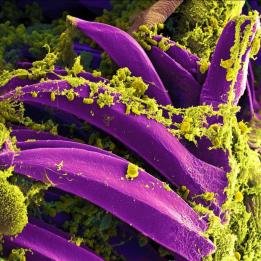
Image CDC

Swedish health officials (Folkhälsomyndigheten) report investigating (computer translated) an outbreak of Yersinia enterocolitica cases throughout the country since March. Cases have been reported in nearly all regions of the country and affected adults the most.

The investigation into a foodborne source is ongoing with collaboration of the Public Health Authority, the National Food Administration, municipalities and the County Administrative Board.To date, 26 cases in ten regions have been confirmed in the outbreak. Another thirty cases are being investigated. Health officials say since the current outbreak strain of Y. enterocolitica type O3 has been found in different parts of the country, it is likely that a food borne infection will occur.

Sweden reports between 200 to 300 cases reported annually.

USA – E.coli O103 Outbreak Updates

FSIS USDA

K2D Foods Recalls Raw Ground Beef Products Due to Possible E. coli O103 Contamination

FSIS USDA

Grant Park Packing Recalls Raw Ground Beef Products Due to Possible E. coli O103 Contamination

Food Poisoning Bulletin

The ground beef E. coli O103 outbreak has now sickened at least 156 people in 10 states. according to the Centers for Disease Control and Prevention (CDC). Twenty people are hospitalized because they are so ill. UPDATE: K2D Foods has recalled more than 100,000 pounds of ground beef for possible E. coli O103 contamination. But the recall notice states that “At this time, there is no definitive link between this positive product and the ongoing E. coli O103 outbreak.”

USA – FDA Investigating a Multistate Outbreak of Salmonella Carrau Linked to Pre-cut Melons

FDA

April 24, 2019

Pre-cut Melons

The United States Food and Drug Administration (FDA), along with the Centers for Disease Control and Prevention (CDC), and state and local partners, is investigating a multistate outbreak of Salmonella Carrau illnesses linked to pre-cut melon products. These products contain cantaloupe, honeydew, or watermelon, or may be mixes of some or all of these melons and other pre-cut fruit.

On April 12, 2019, Caito Foods, LLC, of Indianapolis, Ind., recalled products containing pre-cut melons because they are potentially contaminated with Salmonella.  Additionally, Caito Foods, LLC temporarily suspended producing and distributing these products. Salmonella Carrau is a rare type of Salmonella but has been historically seen in imported melons. Reports from Caito Foods, LLC indicate that imported melons were used in the suspect pre-cut melon products.

FDA and Indiana authorities continue to inspect and investigate the Caito Foods, LLC processing facility where these melons were cut and packed, including collecting samples for laboratory analysis. FDA is also continuing its traceback investigation, examining shipping records to try to identify the specific source of these melons.

Recommendation

Consumers should not eat the recalled pre-cut melon products. The products were packaged in clear, plastic clamshell containers and distributed in Illinois, Indiana, Iowa, Kansas, Kentucky, Michigan, Minnesota, Missouri, Nebraska, New York, North Carolina, Ohio, Pennsylvania, Tennessee, West Virginia, and Wisconsin. Consumers in these states who have purchased pre-cut melon products and cannot determine whether they were produced by Caito Foods, LLC should throw those products out.

These products were sold at the following retailers:

  • Kroger under the Renaissance Food Group label
  • Kroger under Boar’s Head Private Label
  • Target under the Garden Highway Label
  • Trader Joes under the Trader Joes label
  • Walmart under a Freshness Guaranteed label
  • Amazon/Whole Foods under the Whole Foods Market Label

A list of retail establishments that may have sold these products is available on the FDA website.

Retailers and restaurants should also not serve the recalled pre-cut melon products and should throw the product out.

These products were distributed by:

  • Caito Foods Distribution with the label “Distributed by Caito Foods”
  • Gordon Food Service with the label “Distributed by Caito Foods”
  • SpartanNash Distribution with the label “Open Acres”

Canada – Updated Food Recall Warning – GPM brand Pea Shoots recalled due to Listeria monocytogenes

CFIA

Recall details

Ottawa, April 24, 2019 – The food recall warning issued on April 19, 2019 has been updated to include additional distribution information. This additional information was identified during the Canadian Food Inspection Agency’s (CFIA) food safety investigation.

Golden Pearl Mushrooms Ltd. is recalling GPM brand Pea Shoots from the marketplace due to possible Listeria monocytogenes contamination. Consumers should not consume the recalled products described below.

Recalled products

Brand Name Common Name Size Code(s) on Product UPC
GPM Sweet Pea Shoots 230 g 10851 6 84469 00008 7
GPM Pea Shoots 100 g 10851 6 84469 00012 4
GPM Pea Shoots 455 g 10851 6 84469 00018 6

What you should do

If you think you became sick from consuming a recalled product, call your doctor.

Check to see if you have recalled products in your home. Recalled products should be thrown out or returned to the store where they were purchased.

UK – Updated: Asda recalls two of its own-brand Cereal Bars because of the possible presence of salmonella

FSA

Updated: Asda recalls two of its own-brand Cereal Bars because of the possible presence of salmonella

25 April 2019

Asda has taken the precautionary step of recalling its Peanut and Almond Cereal Bars in addition to its Cranberry and Nut Cereal Bars (packs of 4) because the products might contain salmonella.

Product details

Asda Cranberry and Nut Cereal Bars (pack of 4)

Pack size 4x35g
Best before end: September 2019
Asda Peanut and Almond Cereal Bars (pack of 4)

Pack size 4x35g
Best before end: September 2019

No other Asda products are known to be affected.

Risk statement

The products listed above might be contaminated with salmonella. Symptoms caused by salmonella usually include fever, diarrhoea and abdominal cramps.

Action taken by the company

Asda is recalling the above products. Point of sale notices will be displayed in all retail stores that are selling these products. These notices explain to customers why the products have been recalled and tell them what to do if they have bought them. Please see the attached notices.

Research – Prevalence, Levels, and Viability of Salmonella in and on Raw Chicken Livers

Journal of Food Protection

We surveyed chicken livers from various sources for the presence and levels of Salmonella. The pathogen was recovered from 148 (59.4%) of 249 chicken livers purchased at retail stores in Delaware, New Jersey, and Pennsylvania over about a 9-month period. Positive samples harbored Salmonella at levels of 6.4 most probable number (MPN)/g to 2.4 log CFU/g. The percentage of Salmonella-positive livers purchased at retail outlets in New Jersey (72%, 59 of 82 livers) was significantly higher (P < 0.05) than the percentage for livers purchased in Delaware (48%, 36 of 75 livers); however, this percentage was not significantly different (P > 0.05) from that for livers purchased in Pennsylvania (57.6%, 53 of 92 livers). The pathogen was also recovered more often (P = 0.019) from livers that were packaged by retailers (81 of 121 livers, 66.9%) than from livers packaged directly by processors (67 of 128 livers, 52.3%). In related studies, 12 (5.8%) of 207 chicken livers harvested from birds on a research farm tested positive for Salmonella at levels of 0.4 to 2.2 MPN/g. The recovery rate of Salmonella was 4.4% (6 of 135 livers) from livers with the gall bladder attached and 8.3% (6 of 72 livers) from livers when the gall bladder was removed at harvest on the research farm. We also quantified the levels of a nine-strain cocktail (ca. 6.5 log CFU/g) of Salmonella strains inoculated externally onto or internally into livers both before and after extended cold storage. Storage for at least 2 days at 4°C or 15 days at −20°C resulted in a decrease of about 1.0 log CFU/g in pathogen levels. Given the relatively high recovery rate (ca. 6.0 to 60.0%) and high (possibly illness causing) levels (0.4 MPN/g to 2.4 CFU/g) of Salmonella associated with chicken livers in the present study, further interventions for processors are needed to lower the prevalence and levels of this pathogen on poultry liver.

Research – Limitation of microbial spoilage of rainbow trout fillets using characterized thyme oil antibacterial nanoemulsions

Wiley Online

Abstract

Thyme oil nanoemulsions (TONa and TONb), having 219 nm and 163 nm diameters, were successfully prepared by using sonication technique. Zeta potential (ZP) and polydispersity indexes (PDI) of TONa and TONb were defined to be 19.77, 0.24 and −24.80, 0.054, respectively. It was determined that zeta size values of TONs might have played a role on the inhibition of Pseudomonas aeruginosa, Escherichia coli, Salmonella typhimurium. All bacteria tested by agar diffusion method were gram‐negative bacteria that could be mostly found in fish fillets. Within 9 days cold storage period, TMAB growth in fish fillets treated with TONb was successfully reduced from 6.42 to 4.62 log CFU/g (change: 28%). In addition, as compared with control group samples, TPB growth of the same group was limited by 1.51 log CFU/g (from 7.93 to 6.42 log CFU/g). The results suggested that treatment of the fish fillets with the TONs would be a useful and practical nano application to delay microbial growth in fish fillets.

Practical applications

Thyme oil nanoemulsions (TONa and TONb) with a lower diameter than 219 nm have been successfully obtained. Antibacterial effects of TONa and TONb nanoemulsions have been revealed before treatment with fish fillets. The results revealed that TONs could be successfully used for the limitation of microbial spoilage of fish fillets stored at 4°C for 9 days. In this respect, the nano application with rapid and cost‐effective has been presented for the fishery processing industry.

USA – U.S., dozens of countries received cheese that was recalled for Listeria risk

Food Safety News

The United States is one of more than 30 countries that received cheese from France potentially contaminated with Listeria.

Listeria monocytogenes was detected in Coulommiers, a type of cheese, from France. The product was part of a mass recall of raw and pasteurized cheese made by Fromagère de la Brie.

Santé publique France, the public health agency, identified two cases of listeriosisin women who consumed cheese made by Fromagère de la Brie at its site of St Siméon, a village in Île-de-France.

A U.S. Food and Drug Administration spokeswoman confirmed to Food Safety News that the country had received some of the cheese.

“The FDA is aware of the issue and we are investigating with the cooperation of the firm’s U.S. agent. We are not aware of any illnesses at this time. The cheeses exported to the U.S. are “Explorateur” and sold in three different sizes – 1 kilogram, 250 gram and 125 gram.”

USA – Listeria, E. coli and Two Salmonella Outbreaks to be Updated the Week

Food Poison Journal

Deli Meat and Cheese Listeria Outbreak:The CDC and several states are investigating a multistate outbreak of Listeria infections linked to deli-sliced meats and cheeses. The U.S. Department of Agriculture’s Food Safety and Inspection Service (USDA-FSIS) and the U.S. Food and Drug Administration (FDA) are monitoring the outbreak.

As of April 15, 2019, 8 people infected with the outbreak strain of Listeria monocytogenes have been reported from 4 states.

Listeria specimens from ill people were collected from November 13, 2016 to March 4, 2019. Ill people range in age from 40 to 88 years, with a median age of 57. Thirty-eight percent are female. All 8 people (100%) have been hospitalized. One death has been reported from Michigan.

Epidemiologic and laboratory evidence indicates that deli-sliced meats and cheeses might be contaminated with Listeria monocytogenes and could make people sic

Research – More severe salmonella outbreaks ahead

Science Daily Salmonella kswfoodworld

Australia has more salmonella outbreaks than any other country in the world, with the number of cases doubling over the last decade.

Over the past month alone, there have been numerous reports of the salmonella pathogen infecting eggs, leading to vast recalls of products and sparking calls from experts for more stringent hygiene practices.

In a study published in Scientific Reports, University of Sydney researchers developed a model that can predict outbreaks several months in advance.

While this prediction can provide early warning signs for disease surveillance and enable a more timely and precise allocation of health resources, the team discovered future salmonella outbreaks are likely to become more severe.

Led by the Director of Complex Systems Research Group Professor Mikhail Prokopenko, the team used 2008-2016 strain data to demonstrate that genetic networks of salmonella pathogens are linked through just a few degrees of separation, indicating an increasing severity of future epidemics.

“The data on salmonella outbreaks in NSW in the last decade or so highlights a continuing “arms race” between pathogens and their human hosts,” explained Professor Prokopenko.

“In a classical Darwinian evolution scenario, the pathogens spread over time by initially creating many mutated variants, with the more infectious “clones” soon becoming the most dominant within their own population,” he explained.