
RASFF – Listeria monocytogenes (<10 CFU/g) in poultry sausage from Poland in France
RASFF – Listeria monocytogenes (<10 CFU/g) in frozen cooked mussels from Spain in Italy

RASFF – norovirus (GII /25g) in frozen seaweed salad from Taiwan in Italy
RASFF – Salmonella (in 1 out of 5 samples /25g) in sesame seeds from Sudan in Greece
RASFF – Salmonella (presence /25g) in sesame seeds from Sudan in Greece
RASFF – Salmonella (presence /25g) in black pepper from Brazil in the Netherlands
RASFF – Salmonella enterica ser. Kedougou (presence /25g) in frozen salted chicken fillets from Thailand, via the Netherlands in Finland
RASFF – Salmonella (presence /25g) in sesame seeds from India in Poland
RASFF – Salmonella (presence /25g) in sesame seeds from Sudan in Greece
RASFF – Salmonella (presence /25g) in sesame seeds from Sudan in Greece
RASFF – Salmonella (presence /25g) in frozen salted chicken half breasts from Brazil in the Netherlands
RASFF – Salmonella (presence /25g) in chilled smoked bacon from Belgium in France
RASFF – Salmonella enterica ser. Enteritidis (presence /25g) in frozen chicken fillets from Poland in France
RASFF – Salmonella (presence /25g) in ginger from Italy, with raw material from Nigeria, via Poland in Italy
RASFF – Salmonella enterica ser. Gaminara (presence /25g) in pet food from Thailand in the Netherlands
RASFF – aflatoxins (B1 = 77.6 µg/kg – ppb) in wildlife feed from the United States in the UK
RASFF – aflatoxins (B1 = 65.3; Tot. = 92.4 µg/kg – ppb) in groundnut kernels from Argentina in Germany
RASFF – aflatoxins (B1 = 61.6 µg/kg – ppb) in blanched groundnuts for birdfeed from Argentina in Germany
RASFF – aflatoxins (B1 = 49 µg/kg – ppb) in groundnuts from Bolivia in Belgium
Les Spécialités Prodal (1975) Ltée is recalling certain The Deli-Shop Pâtés from the marketplace for possible Listeria monocytogenes contamination. There have been no reported illnesses conducted with the consumption of these recalled products. The Pâtés were sold in Quebec at the retail level.
The recalled products are all The Deli-Shop brand. They are: Country-style Pâté – Cognac packaged in 150 gram sizes, with UPC number 0 59749 95188 3 and code 2019SE26; Country-style Pâté – Pepper in 150 gram packages, with UPC number 0 59749 95189 0 and code 2019SE26; and Country-style Pâté – Old Fashioned, also sold in 150 gram packages, with UPC number 0 59749 95187 6 and code 2019SE26.
Also recalled is Liver Pâté – Fine Herbs, packaged in 150 gram containers, with UPC number 0 59749 95191 3 and code 2019SE26; Liver Pâté – Garlic, sold in 150 gram containers and with UPC number 0 59749 95190 6 and code 2019SE26; and Liver Pâté – Old Fashioned, packaged in 150 gram containers with UPC number 0 59749 95192 0 and code 2019SE26.
The recalled was triggered by Canadian Food Inspection Agency (CFIA) test results. The CFIA is conducting a food safety investigation, which may lead to the recall of more products. If more products are recalled, they will be listed on the web site. You can see pictures of the recalled product labels at the CFIA web site.
Two children – one on the island of Funen and another in the Copenhagen area – died due to a rare complication related to VTEC, a strain of the E. Coli bacteria.
Both children died of kidney failure, but the two tragic cases are not connected. A third child also contracted kidney failure but survived, DPSA said.
A consultant doctor and head of department at Copenhagen infectious disease research institute SSI stressed that the cases were not evidence of an outbreak and that the number of cases was not improbable.
“At this time, we have knowledge of three cases of kidney failure from August to September. That is not more than we would expect at this time of year. Fortunately there is nothing to suggest they are connected,” Tyra Grove Krause said.
Posted in E.coli, STEC, Uncategorized, VTEC
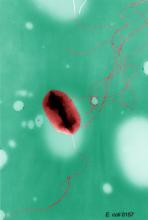
Image CDC
Julie Gilmartin, 39, said her son Matthew Bennett, 10, started to develop symptoms including diarrhea on the plane home from a week-long stay at the Bone Club Sunset Hotel & Spa, Antalya, at the start of July.
Following several tests, his mother was advised Matthew had been diagnosed with E.coli O157, a serious bacterial infection that can cause serious long-term complications and sometimes even death.
| ABSTRACT |
|---|
Contaminated beef is a known vehicle of Escherichia coli O157:H7 infection, although more attention is given to the control of E. coli O157:H7 in ground, rather than whole-cut, beef products. In September 2012, an investigation was initiated at an Alberta, Canada, beef plant after the detection of E. coli O157:H7 in two samples of trim cut from beef originating from this plant. Later in September 2012, Alberta Health Services identified five laboratory-confirmed infections of E. coli O157:H7, and case patients reported eating needle-tenderized beef steaks purchased at a store in Edmonton, Alberta, produced with beef from the Alberta plant. In total, 18 laboratory-confirmed illnesses in Canada in September and October 2012 were linked to beef from the Alberta plant, including the five individuals who ate needle-tenderized steaks purchased at the Edmonton store. A unique strain of E. coli O157:H7, defined by molecular subtyping and whole genome sequencing, was detected in clinical isolates, four samples of leftover beef from case patient homes, and eight samples of Alberta plant beef tested by industry and food safety partners. Investigators identified several deficiencies in the control of E. coli O157:H7 at the plant; in particular, the evaluation of, and response to, the detection of E. coli O157 in beef samples during routine testing were inadequate. To control the outbreak, 4,000 tons of beef products were recalled, making it the largest beef recall in Canadian history. This outbreak, in combination with similar outbreaks in the United States and research demonstrating that mechanical tenderization can transfer foodborne pathogens present on the surface into the interior of beef cuts, prompted amendments to Canada’s Food and Drug Regulations requiring mechanically tenderized beef to be labeled as such and to provide safe cooking instructions to consumers. A detailed review of this event also led to recommendations and action to improve the safety of Canada’s beef supply.
| HIGHLIGHTS |
|---|
Mechanically tenderized beef steaks linked to E. coli O157 illnesses in Canada.
Largest beef recall in Canada underscores importance of plant-level E. coli controls.
Outbreak of E. coli O157 infections prompts food safety improvements in Canada.
| ABSTRACT |
|---|
White asparagus is a high-value commodity of large economic importance in Germany. Its harvest period lasts only a limited part of the year, during which daily yield and also market demand are highly variable. Harvested asparagus is perishable; thus, quality control and shelf life must be ensured by proper handling, e.g., avoiding fresh weight losses and, at the same time, limiting microbial growth. The aim of this study was to determine the effect of moist asparagus packaging on unpeeled white asparagus (cv. Gijnlim). Water was added to some of the packages to reduce fresh weight losses and to study the consequences for microbial growth. Polythene bag packaging, lined inside with cellulose fleece, was used to hold 500-g bunches of spears, covered partly (open bag) or totally (closed bag). Storage duration was 7 days, at temperatures of 2°C, 8°C, and a combination of 2 and 22°C, simulating retail conditions. Using a standardized cultivation method for food assessment, CFU counts (5.20 to 7.95 log CFU), number of pseudomonads (4.79 to 7.90 log CFU), lactic acid bacteria (<3.00 to 3.94 log CFU), Enterobacteriaceae (4.26 to 7.15 log CFU, including Escherichia coli <1.00 log CFU), yeasts (<2.30 to 3.15 to 3.53 log CFU), and molds (<2.30 log CFU), as well as sulfite-reducing clostridia (<1 log CFU) were determined. Temperature was the most important factor for microbial growth. Additional water had no effect in most cases; it inhibited most of the fresh weight losses compared to dry treatments in this study but led to 2% weight increase in closed bags. Our results point to the conclusion that moist packaging would be a feasible alternative to dry wrapping with regard to weight retention, and it did not increase growth of the analyzed microbial groups to an unacceptable value.
| HIGHLIGHTS |
|---|
Moist packaging of white asparagus does not necessarily increase microbial load after storage.
Microbial counts were lower after 1 week of storage in a closed versus open package.
Microbial growth did not exceed tolerable values.


