Category Archives: Uncategorized

St Kitts and Nevis – Customer catches food poisoning after eating burger which had cockroaches?

WIC News

A woman fell very sick immediately after she consumed a burger from a restaurant in Port Zante, St Kitts and Nevis. St Kitts and Nevis Times reported that an ambulance had to be called as the condition of the woman got extremely bad.

The hospital staff reported she had caught some sort of food poisoning. The victim confirmed the burger contained “red cockroaches.”

Canada – Notice not to consume smoked salmon of various brands sold refrigerated by Bagel Beaubien

MAPAQ

WARNING TO THE POPULATION

QUEBEC CITY, Jan. 27, 2022 /CNW Telbec/ – The Ministry of Agriculture, Fisheries and Food (MAPAQ), in collaboration with the Food Inspection Division of the City of Montreal and the company Bagel Beaubien, located at 828, rue Beaubien, in Montreal, advises the public not to consume the products indicated in the table below, because they have not been packaged in such a way as to ensure their safety. Indeed, these products should be kept frozen until use.

Product name

Format

Product brand

Affected lot

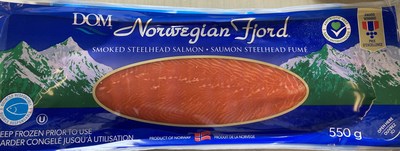
“SMOKED STEELHEAD SALMON”

550g

“Dom Norwegian Fjord”

Units sold until January 27, 2022

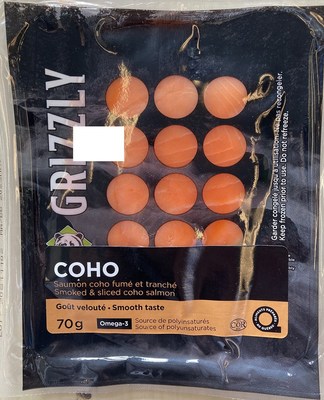
“SMOKED AND SLICED COHO SALMON”

70g

“Grizzly Smokehouse”

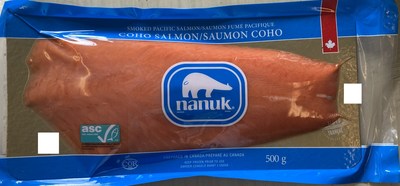
“PACIFIC SMOKED SALMON”

500g

“Nanuk”

The products that are the subject of this warning were offered for sale until January 27, 2022 inclusively, and only at the establishment designated above. They were presented in the manufacturers’ original packaging (a golden cardboard covered with a vacuum bag) and were sold in a thawed state. The retailer only added a price tag on the original packaging of the products.

The operator is voluntarily recalling the products in question. It has agreed with MAPAQ and the Food Inspection Division of the City of Montreal to issue this warning as a precautionary measure. Also, people who have any of these products in their possession are advised not to consume it. They must either return it to the establishment where they bought it or throw it away. Even if the affected products show no signs of tampering or suspicious odors, consuming them may pose a health risk. It should be noted that no case of illness associated with the consumption of these foods has been reported to MAPAQ to date.

Norwegian Fjord Smoked Steelhead Salmon (CNW Group/Ministry of Agriculture, Fisheries and Food) 

Grizzly Sliced ​​Smoked Coho Salmon (CNW Group/Ministry of Agriculture, Fisheries and Food) 

Nanuk Coho Smoked Salmon (CNW Group/Ministry of Agriculture, Fisheries and Food) 

Hazard Classification:  Class 1
Reference Number:  4479

Source:
Media relations
Direction des communications
Ministry of Agriculture, Fisheries
and Food
Tel. : 418 380-2100, extension 3512
www.mapaq.gouv.qc.ca

RASFF Alerts – Animal Feed – Salmonella – Pet Food – Chicken Meat Cat3

RASFF

Salmonella infantis in frozen chicken meat cat 3 from Netherlands in Italy

RASFF

Salmonella brandenburg in petfood from France in Belgium

USA – Interagency Food Safety Analytics Collaboration (IFSAC)2022–2023 Interim Strategic Plan

CDC

Bacteria And Germs On Food

In 2011, three federal agencies—the Centers for Disease Control and Prevention (CDC), the U.S. Food and Drug Administration (FDA), and the Food Safety and Inspection Service (FSIS)—created the Interagency Food Safety Analytics Collaboration (IFSAC). Its purpose is to improve coordination of federal food safety analytic efforts and address cross-cutting priorities for food safety data collection, analysis, and use. Since its inception, IFSAC’s focus has been foodborne illness source attribution: identifying which foods are the most important sources of selected major foodborne illnesses. As part of this effort, IFSAC now produces annual estimates for four priority pathogens: Salmonella, Escherichia coli O157, Listeria monocytogenes, and Campylobacter.
Federal agencies and food safety experts rely on these attribution analyses to inform strategic planning and risk-based decision-making; estimate benefits of interventions; and evaluate the impact of interventions, such as new or revised regulations, policies, and performance standards. By bringing together data from a variety of sources, broadly exploring an array of methods and disciplines, and developing sound analytical methods, IFSAC scientists can improve estimates of the sources of foodborne illness.
Purpose
During the five years covered by IFSAC’s first strategic plan (2012–2016), IFSAC aimed to improve methods to categorize foods implicated in outbreaks; estimate the percentage of certain foodborne illnesses attributable to each food source; identify data needs; take steps to determine how to better acquire, improve, and organize data available for source attribution; validate current methods and modeling approaches; develop improved methods; and create a plan for communicating results to the public.
During the five years covered by IFSAC’s second strategic plan (2017–2021), IFSAC continued to work toward accomplishing three goals:
1) improve the use and quality of new and existing data sources to conduct analyses and develop estimates,
2) improve analytic methods and models, and
3) enhance the use of and communications about IFSAC products. IFSAC activities have been substantially affected by the COVID-19 global pandemic.
During 2020 and 2021, many staff from CDC, FDA, and FSIS who lead and participate in IFSAC projects and their oversight have been deployed to COVID-19 response efforts, have had to focus on pandemic-related activities, or have covered agency program activities while others were deployed. IFSAC continues to publish annual estimates of foodborne illness source attribution, but resource limitations have delayed some projects.
The ongoing pandemic response will require prioritization of future efforts. As a result of these resource constraints, IFSAC developed this interim strategic plan, which describes IFSAC’s accomplishments during 2017–2021 and identifies key activities for 2022–2023.
Near the end of this interim period, we intend to share information about our direction, goals, and approaches to our future work. Activities Major accomplishments during 2017–2021:
•Developed a recency-weighted statistical modeling approach to estimate the sources of foodborne illness caused by specific pathogens and published the method in a peer-reviewed journal.
•Updated IFSAC’s scheme for categorizing foods implicated in foodborne disease outbreaks, anddescribed it in a peer-reviewed published article.
•Produced annual estimates of the sources of foodborne illness for Salmonella, EscherichiacoliO157, Listeria monocytogenes, and Campylobacter for 2015–2019.
•Analyzed outbreak data on Salmonella illnesses acquired from consumption of pork products to support draft USDA performance standards for the minimum acceptable Salmonella contamination of pork cuts and ground pork products.
•Continued to explore new methods and models for foodborne illness source attribution, including random forest and other machine learning algorithms.
•Hosted a public webinar on our strategic plan and future directions in May 2017.
•Presented progress on several projects at scientific conferences.
Short-term Goals
During the years 2022–2023, we will continue to publish annual reports on foodborne illness source attribution for priority pathogens. We will continue to improve methods for estimating foodborne illness source attribution using outbreak and sporadic (non-outbreak-associated) disease data, pursuing external collaborations as needed to maximize capabilities and access to data sources. Specifically, we intend to prioritize the following activities:
•Analyzing trends in foodborne disease outbreak-associated illnesses over the past 20 years and submitting a manuscript to a peer-reviewed journal describing our methods and results.
•Continuing to develop and refine machine-learning approaches to predict the food sources of human illnesses with unknown sources by using whole-genome sequencing (WGS) to compare Salmonella isolates of known source with those from ill persons whose source is unknown.
•Adapting the WGS-based methods developed for Salmonella to attribute sporadic Campylobacter illnesses to food sources.
•Assessing the frequency of multi-year outbreaks and their impact on source attribution analyses and deciding whether to improve the methods for using them in outbreak-based source attribution models.
•Collaborating with FoodNet staff to estimate population attributable fractions for key food sources of sporadic Salmonella Enteritidis and Campylobacter illnesses by developing case- control studies using FoodNet case exposure ascertainment data and FoodNet Population Survey data.
•Continue to develop a method to incorporate into attribution estimates those outbreaks associated with complex foods (i.e., multi-ingredient foods) for which the contaminated ingredient is unknown.
Future Direction
IFSAC’s primary focus continues to be improving estimates of the food sources of illness caused by major pathogens. Whereas IFSAC has always focused on estimating the sources of all (not just outbreak-associated) illnesses, the methods have thus far only used data from outbreaks. In recent years, we developed methods to use data from sporadic illnesses to make these estimates.
In this interim period, we will continue to evaluate our approach to attributing Campylobacter illnesses to specific food categories. Our recent reports have highlighted the challenges associated with attributing Campylobacter illnesses to foods based on outbreak data, due to the outsized influence of outbreaks from foods not widely consumed but with high risk of illness, such as unpasteurized milk and chicken livers.
As we continue our work during this interim period, we will develop IFSAC’s strategic vision for the future, including goals, strategic objectives, and projects. We will continue to re-evaluate project priorities as needs arise. For more information, visit the IFSAC website or email IFSAC.

France- Ravioli with Saint Marcellin – Salmonella

Gov france

Identification information of the recalled product

  • Product category Food
  • Product subcategory Cereals and baked goods
  • Product brand name Reflections of France
  • Model names or references Ravioli with Saint Marcellin
  • Identification of products
    GTIN Lot Dated
    3560070430109 20060175 Use-by date 31/01/2022
  • Packaging240G tray
  • Marketing start/end date From 07/01/2022 to 14/01/2022
  • Storage temperature Product to be stored in the refrigerator
  • Health mark FR 26 281 031 CE
  • Geographic area of ​​sale Whole France
  • Distributors crossroads

Practical information regarding the recall

  • Reason for recall Salmonella detection
  • Risks incurred by the consumer Salmonella spp (causative agent of salmonellosis)

Canada – Aoun brand Tahineh recalled due to Salmonella – Update

CFIA

Product
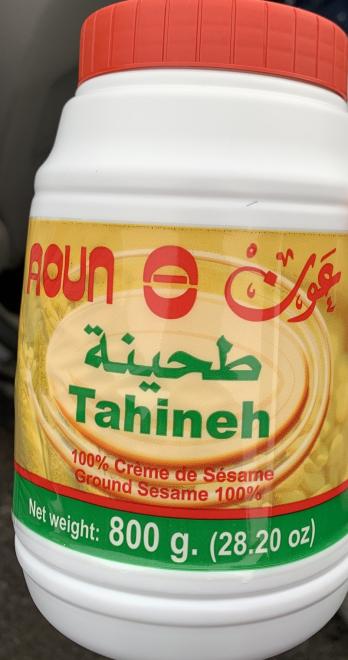
Tahineh – Ground Sesame 100%
Issue
Food » Microbial Contamination » Salmonella
What to do

Do not consume the recalled product

Aoun – Tahineh - Ground Sesame 100% - 800 g (front)

Issue

Phoenicia Group Inc. is recalling Aoun brand Tahineh from the marketplace due to possible Salmonella contamination.

The recalled product has been sold in Alberta, Ontario, and Quebec and may have been distributed in other provinces and territories.

Research – Why the Pork Industry Needs to Think Twice About Salmonella

Pork Business

120px-Sow_with_piglet

For as long as there have been animals, there has been Salmonella. It’s ubiquitous. It’s everywhere. It’s not going to go away.

“The harder you look for it, the more you can find it,” says Paul Sundberg, executive director of the Swine Health Information Center (SHIC).

Salmonella is an opportunistic bacterium that loves to “get into something at risk,” he explains. If it can find an immune system that is not quite up to speed in pigs, cows or humans, Salmonella will go for it.

That’s why leaders in the U.S. pork industry tuned in when USDA’s Food Safety and Inspection Service (FSIS) announced last October that it is mobilizing a stronger and more comprehensive effort to reduce Salmonella illnesses associated with poultry products.

Why is this of such great interest to the pork industry? Salmonella I 4, [5],12:i:-, an emerging serotype in swine, has become one of the most identified serotypes in pigs, pork and humans worldwide.

“There are multiple types of Salmonella. We are seeing a lot of interest in this particular strain of Salmonella typhimurium because of its ability to infect both animals and humans,” Sundberg says.

Belgium – QUESO IBERICO – Cheese – Listeria monocytogenes

AFSCA

01/05/2022
Recall of Delhaize
Product: QUESO IBERICO.
Problem: the presence of Listeria monocytogenes.
In collaboration with the AFSCA, Delhaize has decided to withdraw this product from the market and to recall it to consumers due to the presence of Listeria monocytogenes.

Product info:
Name: QUESO IBERICO
Brand: Delhaize
EAN code: 2205613000000 Best before
dates ( Best before):
05/01/2022 – 07/01/2022 – 09/01/2022
Marketing period: from 23 / 12/2021 to 04/01/2022 included

Every day, Delhaize performs hundreds of in-house quality controls to ensure the quality and food safety of its products at all times.

In the meantime, Delhaize has already withdrawn all affected products from the shelves and tightened controls on the product and the supplier. Customers who have purchased this product are asked not to consume it. Customers have the option of returning the product in question to the point of sale where they purchased it. The reimbursement of each affected item is guaranteed.

Other products in the same assortment are not affected and can therefore be consumed safely. Delhaize apologizes for the inconvenience caused.

Advice and information for consumers:

What if you have already purchased the product?

Do not consume the product and return it to your Delhaize store. The product will be refunded to you.

For further information , customers can contact our customer service on the free number 0800/95 713.

Image

Happy New Year 2022 from Food Microbiology World

New Year

Luxembourg – QUESO DE CABRA FROM THE DELHAIZE BRAND – Listeria monocytogenes

SAP

Last name Queso de cabra
Brand Delhaize
Bar code 2205473000000
Date of Minimum Durability (DDM) 01/03/2022
Sale period from 23/12/2021 to 24/12/2021 included

Danger  : Presence of Listeria monocytogenes

Listeria monocytogenes can cause fever, headache, and gastroenteritis. Vulnerable people such as the immunocompromised and the elderly and young children may experience neurological symptoms due to meningitis. Pregnant women should also pay special attention to these symptoms. Gastroenteritis can appear between a few hours and 3 days after consumption, while neurological symptoms may not appear until after 3 months. People who have consumed these products and who have these symptoms are advised to consult a doctor, notifying him of this consumption.

Click to access 2021-12-27-QUESO-DE-CABRA-Delhaize-Lux.pdf