Category Archives: Staphylococcus aureus

Hong Kong – Test results of targeted surveillance on coagulase-positive staphylococci organisms in ready-to-eat food all satisfactory

CFS

Staph

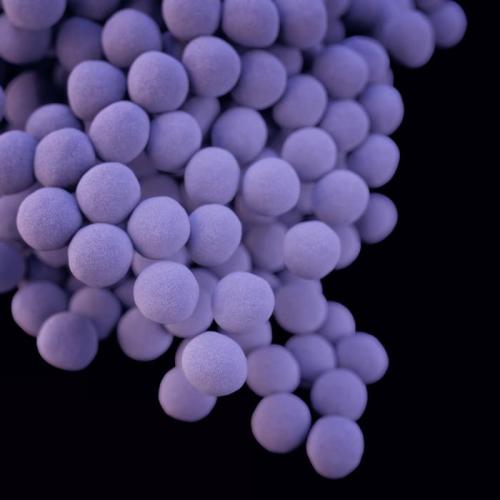
Image CDC

The Centre for Food Safety (CFS) of the Food and Environmental Hygiene Department today (July 8) announced the results of a recently completed targeted food surveillance project on coagulase-positive staphylococci organisms (including Staphylococcus aureus) in ready-to-eat food. All samples passed the test.

A spokesman for the CFS said that a total of 300 ready-to-eat food samples were collected from different retail outlets (including online retailers) and food factories for testing of coagulase-positive staphylococci organisms this year. The samples included meat, poultry and their products (for example shredded chicken, siu mei and lo mei), salad, sashimi and sushi, dessert, Chinese cold dishes, sandwiches and steamed rice rolls.

The spokesman pointed out that Staphylococcus aureus is a common bacterium that can cause food poisoning. It exists widely in the environment and is commonly found in the nasal cavity, throat, hair and skin of healthy individuals. It is also present in large numbers in wounds and infected regions. If food handlers do not observe good personal hygiene, Staphylococcus aureus can pass to foods from them. Foods stored at ambient temperature for a prolonged period will allow the toxin-producing Staphylococcus aureus to multiply and form elaborate enterotoxins which can cause food poisoning. Although most cases of infection are caused by Staphylococcus aureus, other coagulase-positive staphylococci species can also produce enterotoxins which can lead to food poisoning.

Food poisoning caused by coagulase-positive staphylococci organisms is usually associated with foods that require considerable manual handling during preparation and no subsequent cooking is required before consumption. The poisoning risk cannot be eliminated by reheating as enterotoxins produced by coagulase-positive staphylococci organisms cannot be destroyed under normal cooking temperatures. Common symptoms of food poisoning caused by coagulase-positive staphylococci organisms include nausea, vomiting and abdominal pain, often accompanied by diarrhoea.

“Despite the fact that test results of the samples were all satisfactory, the trade and the public should not take the risk lightly. They should always maintain good personal, environmental and food hygiene to ensure food safety. To prevent food poisoning caused by coagulase-positive staphylococci organisms, members of the public are reminded to keep perishable foods or leftovers at or below 4 degrees Celsius or above 60 degrees C. The trade should adhere to the Good Manufacturing Practice that cooked food should be cooled from 60 degrees C to 20 degrees C as quickly as possible (within two hours), and from 20 degrees C to 4 degrees C within four hours or less,” the spokesman said.
 

Information – Keeping Your Backyard Barbeque Safe

USDA Staph

Millions of Americans celebrate the Fourth of July with favorite foods grilled in secret barbecue sauces and side dishes made from traditional family recipes. But nothing puts a damper on a celebration like foodborne illness.

Even when food safety rules are followed, foodborne bacteria can sometimes sneak into dishes made by hand that require no additional cooking such as potato and egg salads, cream pies, and sandwiches as well as meats. Food poisoning can cause nausea, vomiting, diarrhea, severe abdominal cramps, and mild fever.

One of the most common causes of food poisoning is the bacterium Staphylococcus aureus, which produces a wide range of toxins, including staphylococcal enterotoxin type E—associated with outbreaks in the United States and other countries.

According to the Centers for Disease Control and Prevention, an estimated 1 in 6 Americans—48 million—get sick, 128,000 are hospitalized and 3,000 die of foodborne diseases each year. Of that group, staphylococcal food poisoning causes an estimated 240,000 illnesses, 1,000 hospitalizations, and 6 deaths annually.

A USDA scientist developed a test that specifically detects Staphylococcus aureus in foods. The new test is faster, more sensitive and less expensive than standard tests.

“The current test detects active toxin only 50 percent of the time compared to the test, which detects it 99 percent of the time,” says Reuven Rasooly, a chemist with the USDA’s Agricultural Research Service (ARS). “The new test also detects toxins within 5 hours compared to 48 to 72 hours for other tests.”

In addition, Rasooly said the new test can distinguish between active toxin, which poses a threat to public health, and inactive toxin, which does not. It can be used by food makers to help keep products safer before they’re sold and by public health officials to trace the source of foodborne outbreaks.

The test, which specifically targets Staphylococcus aureus, is not commercially available. ARS has applied for a patent for this technology and plans to use it to develop additional tests that detect other foodborne toxins that make people sick.

For food consumer resources on keeping your Fourth of July celebrations safe, visit USDA’s Food Safety and Inspection Service for a variety of tips.

Research – Survival and growth of Listeria monocytogenes and Staphylococcus aureus on conventional and low‐sodium bacon—A short communication

Wiley Online

Abstract

This study was focused on determining survival and growth characteristics of Listeria monocytogenes and Staphylococcus aureus on conventional (16.7 mg of sodium/g) and low‐sodium (10.7 mg of sodium/g) bacon. The two types of bacon were inoculated with the either L. monocytogenes or S. aureus stored at 4, 12, or 25°C for up to 7 days. Populations of L. monocytogenes and S. aureus did not change significantly on bacon stored at 4 and 12°C, regardless of sodium content. L. monocytogenes remained at 1.0–1.5 log cfu/g of conventional bacon stored at 25°C for 7 days but increased to 3.5 log cfu/g on low‐sodium bacon stored for 4 days. Within 1 and 3 days at 25°C, S. aureus increased, respectively, to 4.5 log cfu/g and 7.3 log cfu/g of low‐sodium bacon. Within 7 days at 25°C, populations increased to 8.1 log cfu/g of low‐sodium bacon and 3.7 log cfu/g of conventional bacon. This study shows that L. monocytogenes can grow on low‐sodium bacon stored at 25°C. S. aureus can grow on bacon stored at 25°C, regardless of sodium content, but the presence of 16.7 mg of sodium/g, compared to 10.7 mg/g, retards the rate of growth.

Practical applications

At 25°C, L. monocytogenes and S. aureus grew more rapidly on low‐sodium bacon than on conventional bacon. Low‐sodium bacons increase concern for microbiological safety.

  • Storage of conventional and low‐sodium bacon at 25°C enables growth of both pathogens.
  • Appropriate temperature for storage is more critical to enhance the microbiological safety of bacons rather than amount of sodium added.

USA – Occurrence of Foodborne Agents at Food Service Facilities in the Czech Republic

Journal of Food Protection

ABSTRACT

The aim of this study was to investigate the occurrence of foodborne agents at food service facilities in the Czech Republic. The sampling, performed from April 2016 to November 2017, focused on the microbiological monitoring of the environment at the establishment (EFS; n = 298) and the hands of staff (HFS; n = 159). The analysis targeted the presence of the following bacteria: Escherichia coli (focusing on the presence of Shiga toxigenic E. coli), Bacillus cereus, Staphylococcus aureus, Listeria monocytogenes, Salmonella spp., and Campylobacter spp. A swab method using sterile abrasive sponges was used to detect bacteria in EFS; a glove-juice method was used to monitor microbial contamination on HFS. The presence of E. coliwas confirmed in 11.8% of samples (12.4%, EFS; 10.7%, HFS; P = 0.650). The presence of Shiga toxigenic E. coli was not confirmed in the samples. B. cereus was detected most frequently, in 39.6% of all samples taken (44.6%, EFS; 30.2%, HFS; P= 0.003). S. aureus was detected in 17.9% of samples (17.4%, EFS; 18.9%, HFS; P = 0.703). Of S. aureus isolates, 58.5% were found to be positive for the presence of genes producing staphylococcal enterotoxins (70%, HFS; 52.0%, EFS). L. monocytogenes was detected in only one sample (0.2%; EFS). The presence of Salmonella spp. and Campylobacter spp. was not confirmed. The occurrence of B. cereus, S. aureus, and E. coli was dependent on the season of the year. B. cereus and S. aureus occurred less frequently in the summer months, although E. coli was recorded more frequently. B. cereus, S. aureus,and E. coli were detected in almost half of the tested samples. The relatively high percentage of B. cereus and S. aureusisolates from EFS corresponded with the model in the final European Food Safety Authority reports on the occurrence of foodborne disease outbreaks in the European Union. Managers of food service facilities should focus on reducing the occurrence of B. cereus and S. aureus.

HIGHLIGHTS
  • Contamination of food service facilities in the Czech Republic by foodborne agents was determined.

  • Bacillus cereus, Staphylococcus aureus, and Escherichia coli were detected in almost 50% of samples.

  • The occurrence of B. cereus, S. aureus, and E. coli depended on the season of the year.

  • Regular monitoring of food service facilities for agents of foodborne disease is necessary.

Research – Staph aureus found on 40 percent of cell phones at one university: Study

Outbreak News Today Staph

New research has demonstrated the presence of S. aureus in 40% of the cell phones of students sampled at a university. S. aureus is a common cause of hospital and community-based infections and is currently considered an important pathogen because of its level of antibiotic resistance. The research, conducted at the Western University of São Paulo, Brazil, is presented at ASM Microbe, the annual meeting of the American Society for Microbiology.

Of the bacteria isolated, 85% were resistant to the antibiotic penicillin and 50% had the ability to adhere to surfaces. In addition, the presence of genes related to adhesion, antimicrobial resistance and toxins were present a high level. Samples were collected from 100 cell phones of students from the Biomedicine (20), Pharmacy (20), Dentistry (20), Nutrition (20), and Nursing (20) courses. The vast majority of the bacteria isolated belonged to students of the nursing course.

Nursing students are very likely to become carriers of S. aureus since clinical practice in hospital settings is part of their coursework and exposure to occupational hazards is inherent to this setting, which could favor the colonization and contamination of the surface of cell devices. Cell phones used in healthcare environments allow for the transmission of bacteria that harbor genes of virulence and resistance, contributing to increasing the infection rates as well as an increase in the morbidity/mortality from these infections.

Research -Study finds pathogen issues with ready-to-eat salad and sprouts

Food Safety News

A study by German researchers has raised concerns on the microbiological quality of ready-to-eat salad mixes and fresh sprouts.

The three-year research project by the Max Rubner Institute also found the microbiological quality of cucumbers, carrots and mushrooms was good. Mixed lettuce received a good to medium result and herbs were rated as medium.

The focus was on Listeria, Salmonella, E. coli, Staphylococcus aureus and Bacillus cereus.

Researchers said the microbiological quality of ready-to-eat (RTE) mixed salads was “inadequate” as 7 of 116 samples, or 6 percent, were contaminated with human pathogenic bacteria. This figure was 2.5 percent for lettuce, 1.3 percent for carrots, 1.2 percent for mushrooms, 1.1 percent for sprouts and zero for herbs and cucumbers.

The team sampled a total of 600 products sold in northern and southern Germany including 115 samples of herbs, 40 cucumbers, 79 carrots, 80 types of lettuce, 116 RTE salads, 81 edible mushrooms, and 89 samples of sprouts in the project from 2015 to 2018.

Research – The effect of silver nanocomposite packaging based on melt mixing and sol–gel methods on shelf life extension of fresh chicken stored at 4 °C

Wiley Online

Abstract

In the present study, seven types of films were produced using different proportions of polyethylene containing silver, clay, and titanium dioxide nanoparticles. Following the determination of the minimum inhibitory concentration of the films in the eradication of Staphylococcus aureus and Escherichia coli, the film containing 5% silver nanoparticles and 5% titanium dioxide nanoparticles was found to have the highest antimicrobial property and was determined to be an ideal cover for food products. The antibacterial effect of the films on the shelf life extension and quality of the chicken stored at 4 °C in the Days 1, 3, and 5 of the experiment was checked. The structure and morphology of the nanoparticles and the selected films were evaluated using a field emission scanning electron microscope, scanning electron microscope, transmission electron microscope, Fourier‐transform infrared spectroscopy, and dynamic light scattering. The analysis of the results indicated that the most appropriate inhibition growth was observed with S. aureus and E. coli in nutrient agar and the largest diameter of the radial inhibition zone occurred with S. aureus. Moreover, the analysis of variance showed that the effect of different concentrations of silver and titanium dioxide nanoparticles was significant (p < .05). The results of this study showed that the produced nanocomposite was used to preserve chicken meat for 5 days at 4 °C inhibited the growth of both types of bacteria.

Practical applications

Nowadays production of active packaging is increasing worldwide as they were proved to have numerous effects on inhibiting of microbial growth and even bactericidal effects. Therefore, a wide variety of food producers in different sections namely agriculture, dairy, and meat industries have applied nanopackaging using different nanoparticles. Thus, more research on different physicochemical and antimicrobial effects are needed.

Research – Nisin penetration and efficacy against Staphylococcus aureus biofilms under continuous-flow conditions

Microbiology Research

Biofilms may enhance the tolerance of bacterial pathogens to disinfectants, biocides and other stressors by restricting the penetration of antimicrobials into the matrix-enclosed cell aggregates, which contributes to the recalcitrance of biofilm-associated infections. In this work, we performed real-time monitoring of the penetration of nisin into the interior of Staphylococcus aureus biofilms under continuous flow and compared the efficacy of this lantibiotic against planktonic and sessile cells of S. aureus . Biofilms were grown in Center for Disease Control (CDC) reactors and the spatial and temporal effects of nisin action on S. aureus cells were monitored by real-time confocal microscopy. Under continuous flow, nisin caused loss of membrane integrity of sessile cells and reached the bottom of the biofilms within ~20 min of exposure. Viability analysis using propidium iodide staining indicated that nisin was bactericidal against S. aureus biofilm cells. Time-kill assays showed that S. aureus viability reduced 6.71 and 1.64 log c.f.u. ml for homogenized planktonic cells in exponential and stationary phase, respectively. For the homogenized and intact S. aureus CDC biofilms, mean viability decreased 1.25 and 0.50 log c.f.u. ml, respectively. Our results demonstrate the kinetics of biofilm killing by nisin under continuous-flow conditions, and shows that alterations in the physiology of S. aureus cells contribute to variations in sensitivity to the lantibiotic. The approach developed here could be useful to evaluate the antibiofilm efficacy of other bacteriocins either independently or in combination with other antimicrobials.

Research – Antibacterial Effects of Phytic Acid against Foodborne Pathogens and Investigation of Its Mode of Action

Journal of Food Protection

ABSTRACT

This study investigated the antimicrobial mechanism of phytic acid (PA) and its antibacterial effects in combination with ethanol. The MIC of PA on Escherichia coli ATCC 11229, Staphylococcus aureus ATCC 6538P, Bacillus subtilis ATCC 6633, and Salmonella Typhimurium CICC 27483 were 0.24, 0.20, 0.26, and 0.28% (w/w), respectively. E. coli ATCC 11229 and S. aureus ATCC 6538P were selected to investigate the mechanism of PA by analyzing its effects at 1/2MIC and at MIC on the cell morphology, intracellular ATP, and cell membrane integrity. Environmental scanning electron microscope images revealed that PA was able to change the cell morphology and disrupt the intercellular adhesion. PA retarded bacterial growth and caused cell membrane dysfunction, which was accompanied by decreased intracellular ATP concentrations. Flow cytometry analysis further revealed that almost all the bacterial cells were damaged after treatment with PA at its MIC for 2 h. Moreover, PA has a synergistic antimicrobial ability when used in combination with ethanol. These results suggested that PA is effective in inhibiting growth of foodborne pathogens mainly by the mechanism of cell membrane damage and to provide a theoretical basis for the development of natural antimicrobial agents in the food industry.

Research – Antibacterial Effects of Phytic Acid against Foodborne Pathogens and Investigation of Its Mode of Action

Journal of Food Protection

This study investigated the antimicrobial mechanism of phytic acid (PA) and its antibacterial effects in combination with ethanol. The MIC of PA on Escherichia coli ATCC 11229, Staphylococcus aureus ATCC 6538P, Bacillus subtilis ATCC 6633, and Salmonella Typhimurium CICC 27483 were 0.24, 0.20, 0.26, and 0.28% (w/w), respectively. E. coli ATCC 11229 and S. aureus ATCC 6538P were selected to investigate the mechanism of PA by analyzing its effects at 1/2MIC and at MIC on the cell morphology, intracellular ATP, and cell membrane integrity. Environmental scanning electron microscope images revealed that PA was able to change the cell morphology and disrupt the intercellular adhesion. PA retarded bacterial growth and caused cell membrane dysfunction, which was accompanied by decreased intracellular ATP concentrations. Flow cytometry analysis further revealed that almost all the bacterial cells were damaged after treatment with PA at its MIC for 2 h. Moreover, PA has a synergistic antimicrobial ability when used in combination with ethanol. These results suggested that PA is effective in inhibiting growth of foodborne pathogens mainly by the mechanism of cell membrane damage and to provide a theoretical basis for the development of natural antimicrobial agents in the food industry.