Category Archives: Salmonella

USA – Flax seed pills test positive for Salmonella

Food Poison Journal

Salud Natural Entrepreneur, Inc. of Waukegan, IL is voluntarily recalling Nopalina Flax Seed Fiber (powder) and Nopalina Flax Seed Fiber (capsule) products due to possible Salmonella contamination in one of the ingredients used on the formula of Nopalina Flax Seed Fiber.

This recall is being made with the knowledge of the Food and Drug Administration.

The recall is the result of an FDA sampling of senna leaves powder, an ingredient used to manufacture the Nopalina Flax Seed Fiber (powder) and Nopalina Flax Seed Fiber (capsules), that tested positive for three types of Salmonella including Salmonella Gaminara, Salmonella Kentucky, and Salmonella Oranienburg. The company has ceased the use of the suspect ingredient.

Research – Occurrence and characterisation of biofilms in drinking water systems of broiler houses

NCBI

Abstract

Background

Water quality in the drinking water system (DWS) plays an important role in the general health and performance of broiler chickens. Conditions in the DWS of broilers are ideal for microbial biofilm formation. Since pathogens might reside within these biofilms, they serve as potential source of waterborne transmission of pathogens to livestock and humans. Knowledge about the presence, importance and composition of biofilms in the DWS of broilers is largely missing. In this study, we therefore aim to monitor the occurrence, and chemically and microbiologically characterise biofilms in the DWS of five broiler farms.

Results

The bacterial load after disinfection in DWSs was assessed by sampling with a flocked swab followed by enumerations of total aerobic flora (TAC) and Pseudomonas spp. The dominant flora was identified and their biofilm-forming capacity was evaluated. Also, proteins, carbohydrates and uronic acids were quantified to analyse the presence of extracellular polymeric substances of biofilms. Despite disinfection of the water and the DWS, average TAC was 6.03 ± 1.53 log CFU/20cm2. Enumerations for Pseudomonas spp. were on average 0.88 log CFU/20cm2 lower. The most identified dominant species from TAC were Stenotrophomonas maltophiliaPseudomonas geniculata and Pseudomonas aeruginosa. However at species level, most of the identified microorganisms were farm specific. Almost all the isolates belonging to the three most abundant species were strong biofilm producers. Overall, 92% of all tested microorganisms were able to form biofilm under lab conditions. Furthermore, 63% of the DWS surfaces appeared to be contaminated with microorganisms combined with at least one of the analysed chemical components, which is indicative for the presence of biofilm.

Conclusions

Stenotrophomonas maltophiliaPseudomonas geniculata and Pseudomonas aeruginosa are considered as opportunistic pathogens and could consequently be a potential risk for animal health. Additionally, the biofilm-forming capacity of these organisms could promote attachment of other pathogens such as Campylobacter spp. and Salmonella spp.

Electronic supplementary material

The online version of this article (10.1186/s12866-019-1451-5) contains supplementary material, which is available to authorized users.

Research – Detection of multiple naturally occurring Salmonella serotypes from commercial broiler carcasses with conventional methods

Wiley Online

Many laboratories sampling foods for Salmonella are interested only in presence or absence of Salmonella, so only one colony may be selected. The objectives of this study were to use two selective enrichment broths and two selective agar plating media for Salmonella recovery from naturally contaminated broiler carcass rinsates and evaluate these media combinations on Salmonella serotypes recovered from each carcass. Broiler carcasses (n = 52) from a commercial processing plant prior to chilling were rinsed with buffered peptone water and after incubation subcultured to gram‐negative and tetrathionate, and after inoculation to Rappaport Vassiliadis broth which was incubated and then streaked onto plates of Brilliant Green Sulfa and Xylose‐Lysine‐Tergitol‐4 agar. On 11/49 positive carcasses, both plating media yielded the same serotypes; for the other 38 positive samples different serotypes were found on the different plating media. Enrichment and plating media combinations influence the serotypes recovered and demonstrates bias even in a limited study such as this.

USA – Salud Natural Entrepreneur Inc. Recalls Nopalina Flax Seed Fiber Powder and Nopalina Flax Seed Fiber Capsules Because of Possible Health Risk – Salmonella

FDA

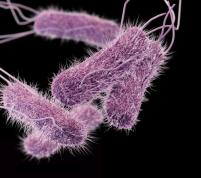
Salmonellaa

Image CDC

Salud Natural Entrepreneur, Inc. of Waukegan, IL is voluntarily recalling Nopalina Flax Seed Fiber (powder) and Nopalina Flax Seed Fiber (capsule) products due to possible Salmonella contamination in one of the ingredients used on the formula of Nopalina Flax Seed Fiber. Salmonella is an organism which can cause serious and sometimes fatal infections in young children, frail or elderly people, and others with weakened immune systems. Healthy persons infected with Salmonella often experience fever, diarrhea (which may be bloody), nausea, vomiting and abdominal pain. In rare circumstances, infection with Salmonella can result in the organism getting into the bloodstream and producing more severe illnesses such as arterial infections (i.e., infected aneurysms), endocarditis and arthritis. Consumers of these products who are experiencing symptoms of Salmonella should contact their health care provider. To date, there are no reports of illnesses associated with the products.

Nopalina Flax Seed products are distributed throughout the United States and Puerto Rico via retail stores and the company’s web site https://www.nopalinaonline.com/External Link Disclaimer

The following lot numbers are affected by this recall (the lot numbers can be found on the bottom back of the product label):

Nopalina Flax Seed Fiber (powder, 1 lb. bags) UPC 890523000720

  • Lot # 62.19 / 9 # 52.1 Best if used by 10/7/21
  • Lot # 62.19 / 2 # 52.1 Best if used by 10/7/21

Nopalina Flax Seed Fiber (powder, 1 lb. bags) UPC 890523000720

  • Lot # 64.19 / 3 # 52.1 Best if used by 10/21/21

Nopalina Flax Seed Fiber (powder, 1 lb. bags) UPC 890523000720

  • Lot # 65.19 / 1 # 52.1 Best if used by 10/24/21
  • Lot # 65.19 / 2 # 52.1 Best if used by 10/24/21

Nopalina Flax Seed Fiber (powder, 2 lb. bags) UPC:890523000843

  • Lot # 64.19 / 2 # 52.1 Best if used by 10/21/21
  • Lot # 64.19 / 2 * 2Lb # 52.1 Best if used by 10/21/21

Nopalina Flax Seed Fiber (capsules, 120 count) UPC 890523000867

  • Lot # 23.19 1C120 # 07 Best if used by 10/7/21
  • Lot # 23.192C120 # 02 Best if used by 10/7/21
  • Lot # 23.19 / 2C120 # 02 Best if used by 10/7/21
  • Lot # 23.19.2C120 # 02 Best if used by 10/7/21
  • Lot # 23.19.3C120 # 02 Best if used by 10/7/21

This recall is being made with the knowledge of the Food and Drug Administration.

The recall is the result of an FDA sampling of senna leaves powder, an ingredient used to manufacture the Nopalina Flax Seed Fiber (powder) and Nopalina Flax Seed Fiber (capsules), that tested positive for three types of Salmonella including Salmonella Gaminara, Salmonella Kentucky, and Salmonella Oranienburg. The company has ceased the use of the suspect ingredient.

We care deeply about the health of all of our consumers and are committed to providing with safe and high quality products. Salud Natural Entrepreneur, Inc. has identified and isolated the ingredient to prevent this from happening again.

Consumers who have purchased Nopalina Flax Seed Powder and Nopalina Flax Seed Capsules having the lot numbers listed above should not consume them and are urged to return it to the place of purchase for a full refund.

Consumers with questions may contact the company at 877-296-6845 (Monday to Friday 9am-5pm) or can go to our site: https://www.nopalinaonline.com/certificate/External Link Disclaimer

Symptoms of salmonellosis

Salmonella are a group of bacteria that can cause gastrointestinal illness and fever called salmonellosis. Most people infected with Salmonella begin developing symptoms 12 to 72 hours after infection. The illness usually lasts four to seven days and most people recover without treatment.

Most people with salmonellosis develop diarrhea, fever, and abdominal cramps. More severe cases of salmonellosis may include a high fever, aches, headaches, lethargy, a rash, blood in the urine or stool, and in some cases may become fatal.

Children younger than five, the elderly, and people with weakened immune systems are more likely to have severe salmonellosis infections.

RASFF Alerts – Salmonella – Sesame Seeds – Chicken Chip Nuggets – Beef and Turkey Kebab – Hazlenuts – Live Oysters – Pistachios – Chicken Meat – Almonds – Chicken Livers – Chicken Cuts

RASFF-Logo

RASFF – Salmonella (1 out of 5 samples /25g) in sesame seeds from Nigeria in Poland

RASFF – Salmonella enterica ser. Infantis (prsence /25g) in frozen chicken chips nuggets from Germany in Italy

RASFF – Salmonella (presence /25g) in frozen beef and turkey kebab from Slovenia in Italy

RASFF – Salmonella (presence /25g) in sesame seeds from India in Greece

RASFF – Salmonella (presence /25g) in hazelnuts from Georgia in Germany

RASFF – Salmonella enterica ser. Napoli (presence /25g) in live oysters from France in Italy

RASFF – Salmonella (O:3,10,19 /25g) in halva with pistachios from Syria, via the Netherlands in Germany

RASFF – Salmonella enterica ser. Infantis (presence /25g) and Campylobacter jejuni (presence /25g) in frozen chicken meat from Poland in Finland

RASFF – Salmonella (present /250g) in almond kernels from the United States in Germany

RASFF – Salmonella (presence /25g) in almonds from Spain in Germany

RASFF – Salmonella (presence /25g) in hazelnuts from Georgia in Germany

RASFF – Salmonella enterica ser. Kisil (presence in 1 out of 5 samples /25g) in hulled sesame seeds from India in Greece

RASFF – Salmonella enterica ser. Typhimurium monophasic (1 ,4, [5], 12:i:-) (presence /25g) in chilled chicken livers from France in France

RASFF – Salmonella enterica ser. Infantis (presence /25g) in chilled chicken cuts from Poland in Bulgaria

RASFF Alerts – Animal Feed – Salmonella – Fish Meal – Organic Rape Cake

RASFF-Logo

RASFF – Salmonella enterica ser. Oranienburg (in 5 out 5 samples) in fish meal from the United States in Greece

RASFF – Salmonella enterica ser. Oranienburg (presence /25g) in fishmeal from the United States in Greece

RASFF – Salmonella enterica ser. Oranienburg (present /25g) in fish meal from the United States in Greece

RASFF – Salmonella enterica ser. Senftenberg (presence /25g) in organic rape cake expeller from France in Finland

RASFF – Salmonella enterica ser. Oranienburg (presence /25g) in fishmeal from the United States in Greece

Europe -Salmonellosis – Annual Epidemiological Report for 2017

ECDC

Salmonellosis is the second most commonly reported gastrointestinal infection and an important cause of foodborne outbreaks in the EU/EEA. In 2017, 92 649 laboratory-confirmed cases were reported of which 156 were fatal. The EU/EEA notification rate was 19.6 cases per 100 000 population. Salmonellosis notification rates have stabilised in the last five years after a long period marked by a declining trend. The notification rate was highest in young children 0−4 years with 94.1 cases per 100 000 population, eight times higher than in adults 25–64 years.

Download

Italy – Salmonella-contaminated eggs

Poultry Med


The fear for salmonella contaminated eggs in Italy is rising while the number of recalls in the sector is increasing. Some suspected cases of Salmonella enterica ser. Enteritids that have registered in France have been linked to organic eggs from Italy. Analysis of other cases in Norway is still ongoing, but the source may be expected to be the same. According to RASFF, the multi-nation outbreak could be traced back to an egg packing center in Italy. The Rapid Community Alert System (RASFF) reported that two countries have reported cases of Salmonella Enteritidis on 09-01-2020, but until now it has not been possible to link individual cases to possible sources. The French authorities and those of other EU Member States have now blocked the distribution of eggs from that Italian center.

USA – Public Health Alert Concerning Nopalina Flax Seed Powder and Nopalina Flax Seed Capsules and Salmonella Contamination

FDA

Audience

Consumers who have purchased Nopalina Flax Seed Fiber (powder) and Nopalina Flax Seed Fiber (capsules) manufactured by Salud Natural Entrepreneur, Inc. with the specific lot numbers listed below.

Products

Nopalina Flax Seed Fiber (powder) and Nopalina Flax Seed Fiber (capsules) with lot numbers (Product Image):

Nopalina Flax Seed Fiber (powder, 1 lb. bags)

  • Lot # 62.19/9#52.1 Best if used by 10/7/21
  • Lot # 62.19/2#52.1 Best if used by 10/7/21

Nopalina Flax Seed Fiber (powder, 1 lb. bags)

  • Lot # 64.19/3#52.1 Best if used by 10/21/21

Nopalina Flax Seed Fiber (powder, 2 lb. bags)

  • Lot # 64.19/2#52.1 Best if used by 10/21/21
  • Lot # 64.19/2*2Lb#52.1  Best if used by 10/21/21

Nopalina Flax Seed Fiber (powder, 1 lb. bags)

  • Lot # 65.19/1#52.1 Best if used by 10/24/21
  • Lot # 65.19/2#52.1 Best if used by 10/24/21

Nopalina Flax Seed Fiber (capsules, 120 count)

  • Lot # 23.19 1C120#07 Best if used by 10/7/21
  • Lot # 23.192C120#02 Best if used by 10/7/21
  • Lot # 23.19/2C120#02 Best if used by 10/7/21
  • Lot # 23.19.2C120#02 Best if used by 10/7/21
  • Lot # 23.19.3C120#02 Best if used by 10/7/21

The lot numbers can be found on the bottom back of the product label.

Purpose

The FDA is advising consumers to stop using Nopalina Flax Seed Fiber (powder) and Nopalina Flax Seed Fiber (capsules) identified by the lot numbers above due to possible Salmonella contamination. Consumers of these products who are experiencing symptoms of salmonellosis should contact their health care provider. To date, there are no reports of illnesses associated with the products.

Symptoms of salmonellosis

Salmonella are a group of bacteria that can cause gastrointestinal illness and fever called salmonellosis. Most people infected with Salmonella begin developing symptoms 12 to 72 hours after infection. The illness usually lasts four to seven days and most people recover without treatment.

Most people with salmonellosis develop diarrhea, fever, and abdominal cramps. More severe cases of salmonellosis may include a high fever, aches, headaches, lethargy, a rash, blood in the urine or stool, and in some cases may become fatal.
Children younger than five, the elderly, and people with weakened immune systems are more likely to have severe salmonellosis infections.
Summary of Problem and Scope

The FDA collected a product sample of senna leaves powder, an ingredient used to manufacture the Nopalina Flax Seed Fiber (powder) and Nopalina Flax Seed Fiber (capsules), that tested positive for three types of Salmonella including Salmonella Gaminara, Salmonella Kentucky, and Salmonella Oranienburg. The FDA notified the firm of the results. To date, we are not aware of illnesses linked to these products.

FDA Actions

The FDA intends to use all available tools to remove contaminated product from the market.

Recommendations for Consumers

Consumers who have these products should no longer use them. Consumers who have symptoms of salmonellosis should contact their health care provider to report their symptoms and receive care.

To report a complaint or adverse event (illness or serious allergic reaction), you can:

Visit www.fda.gov/fcic for additional consumer and industry assistance.

Additional Information


Nopalina Flax Seed Label Image
Nopalina Flax Seed Label and Ingredients Image

RASFF Alerts – Salmonella – Chicken Leg – Whole Chicken – Chicken Cuts – Chicken Breast – Black Pepper – Grilled Chicken – Cumin Seeds – Poultry Meat – Basil – Chicken Liver

RASFF-Logo

RASFF – Salmonella enterica ser. Enteritidis (phagetype 6D /25g) in frozen chicken leg meat from Poland in Croatia

RASFF – Salmonella enterica ser. Enteritidis (presence /25g) and Salmonella enterica ser. Infantis (presence /25g) in chilled whole chicken and chilled chicken cuts from Poland in Bulgaria

RASFF – Salmonella enterica ser. Enteritidis (presence /25g) in frozen chicken breast fillets from Germany in Italy

RASFF – Salmonella enterica ser. Kiambu (present /25g) and Salmonella enterica ser. Newport (present /25g) in black pepper from Brazil in Germany

RASFF – Salmonella enterica ser. Infantis (presence /25g) in chilled whole chicken from Poland in Bulgaria

RASFF – Salmonella enterica ser. Infantis (present /25g) in chilled grilled chicken from Poland in Bulgaria

RASFF – Salmonella (presence /25g) in cumin seeds from Syria in Spain

RASFF – Salmonella enterica ser. Infantis (presence /25g) and Salmonella enterica ser. Kottbus (presence /25g) in chilled poultry meat from Poland in Bulgaria

RASFF – Salmonella (1 out of 5 samples /25g) in basil from Egypt in Poland

RASFF – Salmonella enterica ser. Infantis (presence /25g) in chicken livers from Romania in Italy