Category Archives: Salmonella

Australia – Salmonella -Salad Products

FSANZ

Supreme Salads mesculin salad mixes 


​Date published: 20 March 2020

Product information

Supreme Salads is conducting a recall of Garden Salad 150g; Garden Salad 250g; Supreme Salad 150g; Supreme Salad 250g; Greek Salad 150g; Greek Salad 250g.

The products have been available for sale at Independent grocers, including IGAs, and cafes in WA.

Date markings

All best before dates of: 18/03/2020; 19/03/2020; 20/03/2020; 23/03/2020; 24/03/2020; 25/03/2020; 26/03/2020.

Supreme salad mixes

Problem

The recall is due to microbial (Salmonella) contamination.

Food safety hazard

Food products contaminated with Salmonella may cause illness if consumed.

Country of origin

Australia.

What to do​

Any consumers concerned about their health should seek medical advice and should return the products to the place of purchase for a full refund.

For further information please contact:

Supreme Salads
info@supremesalads.com.au
0407 441427

Australia – Salmonella – Asian Salad Mix Recall

FSANZ

The Loose Leaf Lettuce Company 

Date published: 20 March 2020

Product information

The Loose Leaf Lettuce Company is conducting a recall of the their Asian Salad Mix and Special Salad Mix (200g) due to a microbial (Salmonella) contamination.

The products have been available for sale at various independent retailers and IGA stores in Western Australia.

Date markings

All best before dates from 21/03/20 to 28/03/20 inclusive.

Loose Leaf Lettuce Packs

Problem

The recall is due to microbial (Salmonella) contamination.

Food safety hazard

Food products contaminated with Salmonella may cause illness if consumed.

What to do​

Consumers should not eat this product and should return the products to the place of purchase for a full refund.

For further information please contact:

The Loose Leaf Lettuce Company
08 9575 2086
www.looseleaf.com.au

RASFF Alert- Salmonella – Foodborne Outbreak – Frozen Chicken Meat

RASFF-Logo

RASFF – foodborne outbreak caused by and Salmonella enterica ser. Virchow (presence /25g) in frozen chicken meat from Brazil, via Austria in the Netherlands


RASFF Alerts – Salmonella – Frozen Poultry meat – Frozen Chicken Inner Fillet – Chilled Turkey Meat – Skewer of Chicken and Turkey Slices – Chicken Leg Quarters – Ground Ginger – Black Pepper

RASFF-Logo

RASFF – Salmonella (presence /25g) in frozen poultry meat preparation from Poland in Poland

RASFF – Salmonella (5 out of 5 samples /25g) in frozen chicken innerfillet from Brazil in the UK

RASFF – Salmonella (present /25g) in chilled turkey meat from Poland in Poland

RASFF – Salmonella (presence /25g) in frozen skewer of chicken and turkey slices from Germany in Germany

RASFF – Salmonella enterica ser. Infantis (presence /25g) in frozen chicken leg quarters from Poland in Italy

RASFF – Salmonella (presence /25g) in ground ginger from the Netherlands in the Netherlands

RASFF – Salmonella (presence /25g) in black pepper from Brazil in the Netherlands

RASFF – Salmonella (presence /25g) in frozen chicken fillets from Brazil in Finland

RASFF – Salmonella enterica ser. Infantis (presence /25g) in chilled chicken legs with skin from Poland in the Czech Republic

USA – Mountain Rose Herbs Recalls Organic Kudzu Root Herbal Supplement Due to Possible Health Risk

FDA

Mountain Rose Herbs (MRH) of Eugene, Oregon is recalling all sizes of its Organic Kudzu Root Herbal Supplement from Lot #24247-X and #24247 because they have the potential to be contaminated with Salmonella, an organism which can cause serious and sometimes fatal infections in young children, frail or elderly people, and others with weakened immune systems. Healthy persons infected with Salmonella often experience fever, diarrhea (which may be bloody), nausea, vomiting and abdominal pain. In rare circumstances, infection with Salmonella can result in the organism getting into the bloodstream and producing more severe illnesses such as arterial infections (i.e., infected aneurysms), endocarditis and arthritis.

The product comes in a clear plastic or poly-woven bag, net weight ranges from 4 oz. to 50 lbs., marked with lot #24247-XExternal Link Disclaimer and #24247External Link Disclaimer. The lot number is located on the principal display panel on the lower left of the label (see linked label examples).

The recalled Organic Kudzu Root Herbal Supplement was distributed to customers who ordered from mountainroseherbs.com, purchased at the company’s retail shop in Eugene, Oregon, or placed mail orders by phone or fax between the dates of 6/17/2019 to 3/2/2020. It is possible MRH customers also resold the Kudzu Root to their own clientele.

Mountain Rose Herbs also distributed product directly to customers in AL, AR, AZ, CA, CO, CT, FL, GA, HI, IA, ID, IL, IN, KS, KY, MA, MD, ME, MI, MN, MO, MT, NC, ND, NE, NH, NJ, NM, NV, NY, OH, OR, PA, SD, TN, TX, UT, VA, VT, WA, WI, WV, WY, British of Columbia, Nova Scotia, Ontario, and Quebec of Canada.

No illnesses have been reported to date. We are initiating this recall as a precautionary measure. The potential for contamination was noted after testing by the company revealed the presence of Salmonella in a portion of its ingredients in inventory. Production of the product has been suspended while we continue our investigation.

We conduct this recall with the knowledge of the U.S. Food and Drug Administration.

Consumers who have purchased the affected Kudzu Root are urged not to consume and should return product to the place of purchase for a full refund. Consumers with questions may contact Mountain Rose Herbs at 1-800-879-3337 X.109, Mon-Fri, 8 am-4:30 pm PT, or at claims@mountainroseherbs.com.

Research – Compatibility of commercially produced protective cultures with common cheesemaking cultures and their antagonistic effect on foodborne pathogens

JFP

The documented survival of pathogenic bacteria including Listeria monocytogenes (LM), shiga toxin-producing Escherichia coli (STEC), and Salmonella during the manufacture and aging of some cheeses highlights the need for additional interventions to enhance food safety. Unfortunately, few interventions are compliant with the Standards of Identity for cheese. Protective bacterial cultures (PC) represent actionable, natural interventions. However, supportive data for commercially produced PCs regarding their efficacy against pathogens and potential antagonism with each other and cheesemaking cultures are scant, thereby impeding their potential use by the cheese industry. The overall objective of this study was to identify commercially produced PCs that exert antimicrobial activity towards pathogens with minimal impact on beneficial cheese microbes. Direct antagonism and agar well diffusion assays were used to determine the impact of 10 commercially produced PCs on the growth of starter cultures and cultures of ripening bacteria and fungi. Deferred antagonism was used to evaluate the potential for antimicrobial effects against LM, STEC, and Salmonella. PCs and starter cultures were co-cultured in UHT milk to determine the effects of co-culture on starter acidification profiles when incubated according to a simulated cheese-making temperature profile (4 h at 35°C followed by 20 h at 20°C). Compatibility assays suggest that PC antagonism is microbe and strain specific. Only one PC negatively impacted the acidification of the starters tested. PC antagonism of ripening bacteria and fungi growth varied but was consistent within species. All PCs displayed deferred inhibition of LM, STEC, and Salmonella growth but to varying degrees. These data identify commercial PCs with potential for the control of pathogens and characterize their compatibility with cheesemaking cultures for future use by cheesemakers and investigations of their efficacy in the production of cheese.

Research – Combination of ultraviolet light‐C and clove essential oil to inactivate Salmonella Typhimurium biofilms on stainless steel

Wiley Online

Abstract

Salmonella typhimurium is able to form biofilms as a resistance mechanism against antimicrobials; therefore, it represents a problem for assuring food safety and highlights the importance of research on anti‐biofilm technologies. In this study, S. typhimurium biofilms were inactivated with the combination of clove essential oil (CEO) and ultraviolet light (UV‐C). The volatile composition of the CEO determined by gas chromatography showed eugenol as the major constituent (82%). A combination of CEO with UV‐C achieved a complete bacterial reduction (6.8 log/cm2) on biofilms with doses of 1.2 mg/ml and 76.41 mJ/cm2, respectively. Individually, the CEO at 1.2 mg/ml caused a reduction of 1.8 log CFU/cm2 of attached bacteria cells on stainless steel, while UV‐C individually used at 620.4 mJ/cm2 caused a 2.9 log CFU/cm2 reduction compared to control biofilms. In conclusion, this study demonstrated a synergistic effect of combining CEO and UV‐C irradiation to inactivate biofilms of S. typhimurium.


Research – Pooling of laying hen environmental swabs and efficacy of Salmonella spp. detection

JFP imagesCAJOQ0KC

Environmental testing for  Salmonella  Enteritidis is required for U.S. shell egg producers with > 3,000 hens on a farm. The egg producer assumes all costs for the mandatory testing. According to the FDA Egg Rule, either manure scraper or drag swabs can be collected according to published guidelines and requirements. The current study was undertaken to determine the efficacy of  Salmonella  detection in single, two, and four swab pools of either manure scraper or drag swabs. Resistant isolates of  Salmonella  Enteritidis (1000 ppm streptomycin; SE), Heidelberg (200 ppm nalidixic acid (NA); SH), Typhimurium (200 ppm NA; ST), and Kentucky (200 ppm NA; SK) were utilized. Low (approximately 8.4 CFU) and high (approximately 84 CFU) dose inocula were introduced onto a single swab within a pool. A single flock of each conventional cage (manure scraper swabs) and cage-free barn (drag swabs) were monitored throughout the study at the ages required under the FDA Egg Rule. The greatest and most consistent recovery of inoculum was found in single swab samples. For low dose inocula, it was difficult to recover isolates from single manure scraper swabs (57.9 – 29.2 %) and decreased as more swabs were added to the pool. Recovery of isolates in manure scraper swabs was greater for high dose inoculum, though SH exhibited difficulty competing with naturally occurring flora. One and two swab pools of drag swabs had similar rates of recovery at both low and high dose SE, SH, and ST. When SE and SK were combined in an inoculum, SE was recovered at a much higher rate than SK for all types of swabs and doses of inocula. Pooling of two drag swabs allowed for similar detection of low and high dose  Salmonella  tested in the current study, but the pooling of manure scraper swabs decreased detection of low dose  Salmonella .

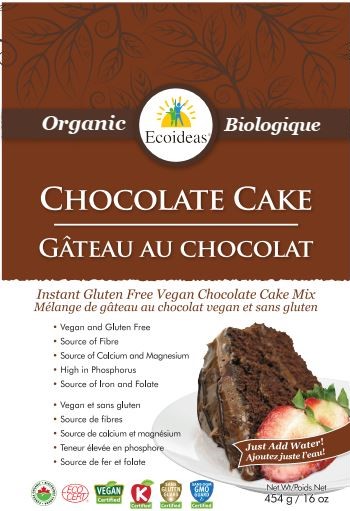
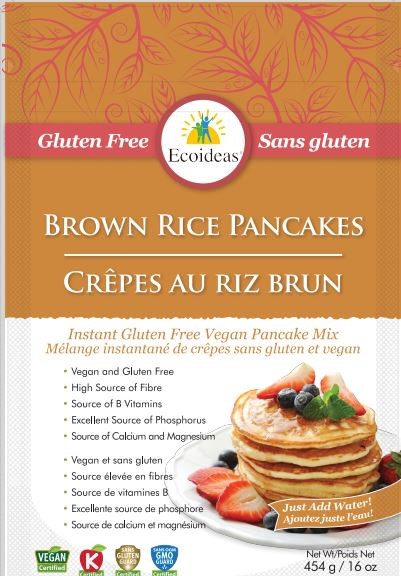
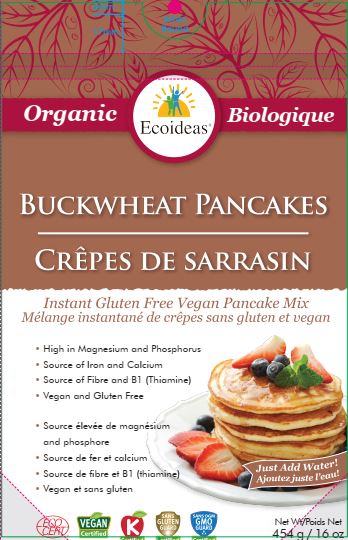
Canada – Ecoideas brand Chocolate Cake Mix and Pancakes Mixes recalled due to Salmonella

Canada Gov

Recall details

Ottawa, March 14, 2020 – Ecoideas Innovation Inc. is recalling Ecoideas brand Chocolate Cake Mix, Brown Rice Pancakes Mix and Buckwheat Pancakes Mix from the marketplace due to possible Salmonella contamination. Consumers should not consume the recalled products described below.

Recalled product

Brand Product Size UPC Codes
Ecoideas Chocolate Cake Mix 454 g 8 75405 00243 6 Lot # 43619305
BB: 10/31/2021

and

Lot #: 43620050
BB: 02/28/2022

Ecoideas Brown Rice Pancakes Mix 454 g 8 75405 00242 9 Lot #: 42920034
BB: 01/31/2022
Ecoideas Buckwheat Pancakes Mix 454 g 8 75405 00241 2 Lot #: 41219304
BB: 10/31/2021

and

Lot #: 41220030
BB: 01/30/2022

What you should do

If you think you became sick from consuming a recalled product, call your doctor.

Check to see if you have the recalled products in your home. Recalled products should be thrown out or returned to the store where they were purchased.

Food contaminated with Salmonella may not look or smell spoiled but can still make you sick. Young children, pregnant women, the elderly and people with weakened immune systems may contract serious and sometimes deadly infections. Healthy people may experience short-term symptoms such as fever, headache, vomiting, nausea, abdominal cramps and diarrhea. Long-term complications may include severe arthritis.

Background

This recall was triggered by the company. The Canadian Food Inspection Agency (CFIA) is conducting a food safety investigation, which may lead to the recall of other products. If other high-risk products are recalled, the CFIA will notify the public through updated Food Recall Warnings.

The CFIA is verifying that industry is removing the recalled products from the marketplace.

Illnesses

There have been no reported illnesses associated with the consumption of these products.

Product photos

Printer ready version of photos

  • Ecoideas – Chocolate Cake Mix – 454 grams
  • Ecoideas – Brown Rice Pancakes Mix – 454 grams
  • Ecoideas – Buckwheat Pancakes Mix – 454 grams

RASFF Alerts – Salmonella – Raw Chicken – Chicken Legs – Pork Diaphragm – Camel Burger – Sesame Seeds – Chicken Cordon Bleu – Chicken Thighs – Minced Veal – Minced Beef – Frozen Kebab- Frozen Pork – Black Chia Seeds – Chicken Breast – Chicken Fillet – Turkey Meat

RASFF-Logo

RASFF – Salmonella enterica ser. Typhimurium (presence /25g) in chilled raw chicken from France in Norway

RASFF – Salmonella enterica ser. Kottbus (presence /25g) in frozen chicken leg quarters from Poland in Bulgaria

RASFF – Salmonella (in 1 out 5 samples /25g) in frozen pork diaphragm from the United Kingdom in the Czech Republic

RASFF – Salmonella (presence /10g) in frozen camel burger from Belgium in Belgium

RASFF – Salmonella enterica ser. Herston (presence /25g) in sesame seeds from Sudan, dispatched from the United Arab Emirates in Greece

RASFF – Salmonella enterica ser. Nessa (presence /25g), Salmonella enterica ser. salamae (presence /25g) and Salmonella enterica ser. Salford (presence /25g) in sesame seeds from Sudan in Greece

RASFF – Salmonella (in 1 out of 3 samples /25g) in chilled chicken cordon bleu from the Netherlands in the Netherlands

RASFF – Salmonella enterica ser. Enteritidis (presence /25g) in frozen chicken thighs from Poland, via Lithuania in Estonia

RASFF – Salmonella enterica ser. Enteritidis (in 2 out of 5 samples /25g) in chilled chicken broiler thigh meat from Poland in Lithuania

RASFF – Salmonella (presence /25g) in frozen minced veal from the Netherlands in the Netherlands

RASFF – Salmonella (presence /25g) in minced beef from Denmark, via Germany in Sweden

RASFF – Salmonella enterica ser. Typhimurium (presence /25g) in frozen chicken broiler thighs from Poland in Lithuania

RASFF – Salmonella enterica ser. Infantis (in 1 out of 5 samples /25g) in chicken broiler quarters from Lithuania, with raw material from Poland in Lithuania

RASFF – Salmonella enterica ser. Bredeney (presence /25g) and Salmonella enterica ser. Infantis (presence /25g) in frozen kebab from Slovenia in Italy

RASFF -Salmonella (presence /25g) in frozen pork from Germany in Sweden

RASFF – Salmonella enterica ser. Bredeney (presence /25g) in black chia seeds from Bolivia in Romania

RASFF – Salmonella enterica ser. Aberdeen (presence /25g) in sesame seeds from Sudan, via the United Arab Emirates in Greece

RASFF – Salmonella enterica ser. Enteritidis (in 3 out of 5 samples /25g) in chilled chicken breast fillets from Poland in the Czech Republic

RASFF – Salmonella (presence /25g) in frozen chicken breast fillets from Poland in Italy

RASFF – Salmonella enterica ser. Infantis (presence /25g) in frozen chicken fillet from Hungary in Lithuania

RASFF – Salmonella enterica ser. Typhimurium monophasic (1 ,4, [5], 12:i:-) (present /25g) in various chilled turkey meat from France in France