Category Archives: Research

Research – Biofilm Formation of Listeria monocytogenes and Pseudomonas aeruginosa in a Simulated Chicken Processing Environment

MDPI

This study aims to investigate the mono- and dual-species biofilm formation of Listeria monocytogenes and Pseudomonas aeruginosa incubated in different culture mediums, inoculum ratios, and incubation time. The planktonic cell population and motility were examined to understand the correlation with biofilm formation. The results showed that chicken juice significantly inhibited the biofilm formation of L. monocytogenes (p < 0.05). Pseudomonas aeruginosa was the dominant bacteria in the dual-species biofilm formation in the trypticase soy broth medium. The dynamic changes in biofilm formation were not consistent with the different culture conditions. The growth of planktonic L. monocytogenes and P. aeruginosa in the suspension was inconsistent with their growth in the biofilms. There was no significant correlation between motility and biofilm formation of L. monocytogenes and P. aeruginosa. Moreover, scanning electron microscopy (SEM) results revealed that the biofilm structure of L. monocytogenes was loose. At the same time, P. aeruginosa formed a relatively dense network in mono-species biofilms in an initial adhesion stage (24 h). SEM results also showed that P. aeruginosa was dominant in the dual-species biofilms. Overall, these results could provide a theoretical reference for preventing and controlling the biofilm formation of L. monocytogenes and P. aeruginosa in the food processing environment in the future. View Full-Text

Research – Impact of Industrial Practices on the Microbial and Quality Attributes of Fresh Vacuum-Packed Lamb Joints

MDPI

The impact of different industrial practices at lamb export abattoirs in Ireland on the microbial and quality attributes of fresh vacuum-packed (VP) lamb leg joints, including Clean Livestock Policy (CLP), fleece clipping, carcass chilling times and vacuum pack storage, at typical chill and retail display temperatures was investigated. Five separate slaughter batches of lamb (ranging in size from 38 to 60 lambs) were followed at two lamb export plants over a two-year period, accounting for seasonal variation. In general, fleece clipping resulted in significantly lower microbial contamination on the fleece than the use of CLP alone. Lamb from carcasses chilled for 24 h had significantly lower psychrophilic total viable counts and Brochothrix thermosphacta and pseudomonad counts than carcasses chilled for 72 h. Following vacuum-packed (VP) storage of meat from these carcasses at 1.7 ± 1.6 °C for 23 days in the meat plant followed by retail display at 3.9 ± 1.7 °C (up to day 50), the dominant microorganisms were lactic acid bacteria, Br. thermosphacta, Enterobacteriaceae and pseudomonads, and all had reached maximum population density by storage day 34. Aligned with this, after day 34, the quality of the raw meat samples also continued to deteriorate, with off-odours and colour changes developing. While the mean values for cooked meat eating quality attributes did not change significantly over the VP storage period, high variability in many attributes, including off-flavours and off-odours, were noted for lamb meat from all storage times, highlighting inconsistences in lamb quality within and between slaughter batches. View Full-Text

Research – Listeria monocytogenes in Irrigation Water: An Assessment of Outbreaks, Sources, Prevalence, and Persistence

MDPI

As more fresh fruits and vegetables are needed to meet the demands of a growing population, growers may need to start depending on more varied sources of water, including environmental, recycled, and reclaimed waters. Some of these sources might be susceptible to contamination with microbial pathogens, such as Listeria monocytogenes. Surveys have found this pathogen in water, soil, vegetation, and farm animal faeces around the world. The frequency at which this pathogen is present in water sources is dependent on multiple factors, including the season, surrounding land use, presence of animals, and physicochemical water parameters. Understanding the survival duration of L. monocytogenes in specific water sources is important, but studies are limited concerning this environment and the impact of these highly variable factors. Understanding the pathogen’s ability to remain infectious is key to understanding how L. monocytogenes impacts produce outbreaks and, ultimately, consumers’ health. View Full-Text

Research – Growth inhibition of Listeria monocytogenes in fresh white cheese by mustard oil microemulsion

Journal of Food Protection

Although essential oils (EOs) exhibit antimicrobial properties, its application is limited owing to their strong volatility and poor water solubility. Emulsification is a valid strategy for improving chemical stability. In this study, we prepared a mustard essential oil (MO) emulsion with egg yolk lecithin and evaluated its antimicrobial activity against Listeria monocytogenes in vitro and in cheese curd. The particle size of the MO emulsion was approximately 0.19 µmand remained stable for 30 days of storage. The MO emulsion showed strong antimicrobial activity against L. monocytogenes in vitro. Moreover, 40 ppm of MO was sufficient to inhibit the growth of L. monocytogenes in culture, and the addition of 160 ppm MO decreased the population of L. monocytogenes. Meanwhile, when 50 ppm of emulsified MO was added to milk during cheese curd production and it was stored at 10°C for 10 days, the growth of L. monocytogenes was suppressed. When the cheese curd with MO emulsion was stored at 4 °C, the bacterial count was significantly decreased (p<0.05), and no bacterial growth was observed after 14 days of storage. Furthermore, the sensory characteristics of cheese curd with the MO emulsion were acceptable. These results indicate that MO emulsions may be a possible way of controlling the growth of L. monocytogenes in fresh cheese.

USA – Salmonella By the Numbers

FSIS USDA

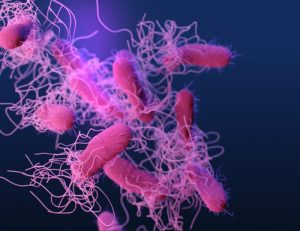
kswfoodworld salmonella

The Centers for Disease Control and Prevention estimates that Salmonella is responsible for 1.35 million infections, 26,500 hospitalizations, and 420 deaths in the United States every year. Food is the source of most of these illnesses, and the Interagency Food Safety Analytics Collaboration estimates that over 23% of foodborne Salmonella illnesses are due to eating chicken and turkey.

FSIS testing data show that Salmonella contamination on poultry has been going down, but this has not translated into a reduction in human illnesses. Rates of human illness have remained stagnant over the last two decades, and we have not moved any closer to the national goal of a 25% reduction in Salmonella illnesses.

All of this data points toward the need for a new approach to controlling Salmonella in poultry in a way that reduces human Salmonella illnesses. These are just a few of the references and research articles we are considering as we look to develop a revised framework for Salmonella control in poultry.

USA – July Fourth is for Fireworks, not Foodborne Illness

USDA

America celebrates Independence Day

Pull out the grill and your red, white, and blue because the Fourth of July is here. This means gatherings, outdoor festivities, and good times with family and friends. As the meat sizzles on the grill, don’t let food safety fizzle out of your memory.

“Wherever you go this summer, don’t forget to bring your safe food handling practices along for the adventure,” said U.S. Department of Agriculture (USDA) Deputy Under Secretary for Food Safety Sandra Eskin. “As temperatures rise, the risk for foodborne illness does too. Always remember that whether you’re grilling for the Fourth of July, camping, or boating, you should wash your hands before and during food prep.”

Whether you’re eating at home or outdoors at a park this Fourth of July, sanitation is key to combat foodborne illness. Be sure to wash your hands and sanitize your cooking area before preparing food. Safe food handling practices also help to avoid cross-contamination. Summertime brings additional unique challenges to food safety because of the warmer temperatures. Be sure to keep hot foods hot and cold foods cold this Fourth of July, and don’t forget your food thermometer.

Clean and Sanitize

Always wash your hands with soap and warm water for at least 20 seconds before and after handling raw meat and poultry. A recent USDA study (PDF, 1.3 MB) showed that 56% of participants didn’t attempt to wash their hands during meal preparation. When preparing your Fourth of July meal, don’t skip this step. Remember, hand sanitizer is not as effective as handwashing, but it’s better than nothing. If you’re out camping and have no access to running water, use hand sanitizer as a backup.

Wash surfaces and utensils with soap and warm water before cooking and after contact with raw meat and poultry. After cleaning surfaces that raw meat and poultry have touched, apply a commercial or homemade sanitizing solution (1 tablespoon of liquid chlorine bleach per gallon of water). Use hand sanitizer that contains at least 60 percent alcohol.

Avoid Cross-Contamination

Cross-contamination is another risk to your summertime fun. Don’t let it spoil your plans or your food. Cross-contamination can happen even when grilling or getting food prepared to grill. In USDA’s recent observational study, 32% of participants contaminated plates and cutting boards and 12% contaminated spice containers while preparing food.

Be sure to wash hands thoroughly after handling raw meat. Any utensils that contacted raw meat must also be cleaned. Use separate plates for taking raw meat to the grill and then pulling cooked meat off the grill. USDA recommends using separate cutting boards; one for meat, and another for fruits and vegetables.

Keep Hot Foods Hot and Cold Foods Cold

Whether you’re transporting food to go hiking, camping, to a barbeque, or a picnic, the rule stays the same: keep hot foods hot and cold foods cold. Food is in the “Danger Zone” when it is in the temperature range of 40 F and 140 F. If in the “Danger Zone” for too long, bacteria can multiply to dangerous levels. Perishable foods (such as hamburgers, hotdogs, and chicken wings) should be discarded if left out longer than two hours, or one hour if outdoor or indoor temperatures in the area are above 90 F.

  • Keep cold foods at a temperature of 40 F or below by keeping food nestled in ice, in a cooler with a cold source, or refrigerated until ready to serve.
  • Keep hot foods at a temperature of 140 F or above by placing food on a grill, in a preheated oven, warming trays, chafing dishes or slow cookers.

The warmer the temperature, the sooner food needs to be refrigerated. Be sure to bring a cooler with ice to the next cookout to preserve any perishable foods.

Use a Food Thermometer

Many people use cues like grill marks, color, taste, and firmness to see if their food is fully cooked, but these tests come with great risk of getting food poisoning. Measuring the internal temperature of meat with a food thermometer is the safest way to see if your food is fully cooked. Be sure that the thermometer reaches the thickest part of the meat, through the side, for the most accurate temperature reading. USDA research showed that an alarmingly low number of participants in the control group, just 55%, relied on a food thermometer to determine if their food was safe to eat. This is a stark decline from the previous study where 77% used a food thermometer.

Whatever you’re cooking this summer, be sure to use a food thermometer. The following foods are safe to eat once they’ve reached these internal temperatures:

  • Cook beef, pork, lamb and veal steaks, chops and roasts to 145 F. For safety and quality, allow meat to rest for at least three minutes before carving or consuming.
  • Cook fish to 145 F.
  • Cook ground meats (beef, pork, lamb and veal) to 160 F.
  • Cook ground beef, pork, lamb and veal to 160 F.
  • Cook egg dishes to 160 F.
  • Cook poultry (whole or ground) to 165 F.

New Zealand – Animal Products Notice: National Microbiological Database Programme

MPI

Introduction

This introduction is not part of the Animal Products Notice, but is intended to indicate its general effect.

Purpose

This notice supplements the requirements of the Animal Product Regulations 2021 and sets requirements for microbiological sampling and testing of animal material and animal products intended for human consumption.

Background

The National Microbiological Database (NMD) Programme is a standardised microbiological sampling and testing programme to provide ongoing monitoring of microbiological process control across all industry participants.

Who should read this Animal Products Notice?

You should read this notice if you are: an operator who processes red meat or poultry intended for human consumption; or a recognised laboratory that tests red meat or poultry intended for human consumption

Why is this important?

A failure to comply with this notice may be an offence under section 135(1)(c) of the Animal Products Act 1999 and may result in further action by an animal products officer.

Research – Sink survey to investigate multidrug resistance pattern of common foodborne bacteria from wholesale chicken markets in Dhaka city of Bangladesh

Nature.com

Antimicrobial resistance (AMR) among foodborne bacteria is a well-known public health problem. A sink survey was conducted to determine the AMR pattern of common foodborne bacteria in cloacal swab of broiler chickens and sewage samples from five wholesale chicken markets of Dhaka city in Bangladesh. Bacteria were identified by culture-based and molecular methods, and subjected to antimicrobial susceptibility testing. Resistance genes were identified by multiplex PCR and sequencing. Multidrug resistance (MDR) was observed in 93.2% of E. coli, 100% of Salmonella spp., and 97.2% of S. aureus from cloacal swab samples. For sewage samples, 80% of E. coli, and 100% of Salmonella and S. aureus showed MDR. Noteworthy, 8.3% of S. aureus from cloacal swab samples showed possible extensively drug resistance. Antimicrobial resistance genes (beta-lactamase—blaTEM, blaSHV; quinolone resistance gene—qnrS) were detected in a number of E. coli and Salmonella isolates from cloacal swab and sewage samples. The methicillin resistance gene (mecA) was detected in 47.2% and 25% S. aureus from cloacal swab and sewage samples, respectively. The findings envisage the potential public health risk and environmental health hazard through spillover of common foodborne MDR bacteria.

Research – Peanut Butter Food Safety Concerns—Prevalence, Mitigation and Control of Salmonella spp., and Aflatoxins in Peanut Butter

MDPI

Peanut butter has a very large and continuously increasing global market. The food safety risks associated with its consumption are also likely to have impacts on a correspondingly large global population. In terms of prevalence and potential magnitude of impact, contamination by Salmonella spp., and aflatoxins, are the major food safety risks associated with peanut butter consumption. The inherent nature of the Salmonella spp., coupled with the unique chemical composition and structure of peanut butter, present serious technical challenges when inactivating Salmonella spp. in contaminated peanut butter. Thermal treatment, microwave, radiofrequency, irradiation, and high-pressure processing all are of limited efficacy in inactivating Salmonella spp. in contaminated peanut butter. The removal of aflatoxins in contaminated peanut butter is equally problematic and for all practical purposes almost impossible at the moment. Adopting good manufacturing hygiene practices from farm to table and avoiding the processing of contaminated peanuts are probably some of the few practically viable strategies for minimising these peanut butter food safety risks. The purpose of this review is to highlight the nature of food safety risks associated with peanut butter and to discuss the effectiveness of the initiatives that are aimed at minimising these risks.

Research – Temporal changes in the proportion of Salmonella outbreaks associated with twelve food commodity groups in the United States

Cambridge Org

kswfoodworld Salmonella

Abstract

Using data from twenty years of Salmonella foodborne outbreaks, this study investigates significant trends in the proportion of outbreaks associated with twelve broad commodity groups. Outbreak counts are demonstrated to have a stronger trend signal than outbreak illness counts.

The number of outbreaks with an identified food vehicle increased significantly between 1998 and 2000. This was followed by a 10-year period when the number of outbreaks decreased. The number of outbreaks increased significantly between 2010 and 2014 and then remained unchanged for the remainder of the study period.

During the period of 1998 through 2017, the proportion of outbreaks for three commodities groups, consisting of eggs, pork, and seeded vegetables, changed significantly. No significant changes were observed in the remaining nine commodity groups. Simple approximations are derived to highlight the effect of dependencies between outbreak proportions and a consumption analysis for meat and poultry is used to enhance the limited interpretability of the changes in these proportions.

Given commodity-specific approaches to verifying food safety and promoting pathogen reduction, regulatory agencies benefit from analyses that elucidate illness trends attributable to the products under their jurisdiction. Results from this trend analysis can be used to inform the development and assessment of new pathogen reduction programs in the United States.