Category Archives: Research

World Winter Norovirus Cases Spike 2012

Food Safety NewsNorovirus

Winter months consistently produce the highest numbers of Norovirus outbreaks; however early reports suggest that the bug may be striking a particularly large number of victims this season.

In the United Kingdom, the number of confirmed Norovirus cases has risen to 72 percent higher than this time last year. In total, 3,877 citizens have been confirmed with infections, up from 2,255 a year ago.

But for every confirmed case of Norovirus, experts estimate that another 288 cases go unreported. That means that more than 1.1 million UK citizens may have already suffered bouts with the bug, which can include vomiting, diarrhea, nausea and abdominal pain.

The Canadian province of British Columbia has also seen its greatest number of November and December Norovirus cases since 2006. Some healthcare facilities in the region have closed off portions of their premises for disinfection in attempts to prevent further spread of the virus.

According to the U.S. Centers for Disease Control and Prevention, Norovirus sickens an estimated 21 million Americans each year, contributing to 70,000 hospitalizations and 800 deaths. While most cases result from human contact, Norovirus also remains the most common source of foodborne illness in the U.S. and is regularly associated with leafy greens, fresh fruits and shellfish.

Research Papers – Pathogens – Celery – Irradiation – Spinach – Boiling Shrimp – Low Water Activity and Pathogens

Science Direct

Illnesses from Escherichia coli O157:H7, Listeria monocytogenes, and Salmonella have been associated with the consumption of numerous produce items. Little is known about the effect of consumer handling practices on the fate of these pathogens on celery. The objective of this study was to determine pathogen behavior at different temperatures under different storage conditions. Commercial fresh-cut celery was inoculated at ca. 3 log CFU/g onto either freshly cut or outer uncut surfaces and stored in either sealed polyethylene bags or closed containers. Samples were enumerated following storage for 0, 1, 3, 5, and 7 days when held at 4 °C or 12 °C, and after 0, 8, and 17 h, and 1, and 2 days when held at 22 °C. At 4 °C, all populations declined by 0.5–1.0 log CFU/g over 7 days. At 12 °C, E. coli O157:H7 and Salmonella populations did not change, while L. monocytogenes populations increased by ca. 0.5 log CFU/g over 7 days. At 22 °C, E. coli O157:H7, Salmonella, and L. monocytogenes populations increased by ca. 1, 2, or 0.3 log CFU/g, respectively, with the majority of growth occurring during the first 17 h. On occasion, populations on cut surfaces were significantly higher than those on uncut surfaces. Results indicate that populations are reduced under refrigeration, but survive and may grow at elevated temperatures.

The Packer

Researchers say common packinghouse practices for fresh spinach are not sufficient to avoid outbreaks of salmonella-related illnesses and recently showed that irradiation eliminated almost all cross contamination from field and packing operations.

Scientists at Texas A&M University and Pusan National University in South Korea set out to develop a quantitative risk assessment model to evaluate microbial hazards during the processing of baby spinach leaves, according to their abstract recently published with their results in the journal “ScienceDirect.”

IngentaConnect

The purpose of this study was to determine whether the current consumer method of boiling shrimp until floating and pink in color is adequate for destroying Listeria and Salmonella. Shrimp samples were submerged in bacterial suspensions of Listeria and Salmonella for 30 min and allowed to air dry for 1 h under a biosafety cabinet. Color parameters were then measured with a spectrophotometer programmed with the CIELAB system. Twenty-four shrimp samples were divided into groups (days 0, 1, or 2) and stored at 4°C. The samples were treated by placing them in boiling water (100°C) on days 0, 1, and 2. The shrimp were immediately removed from the boiling water once they floated to the surface, and color parameters were measured. Bacterial counts were determined, and the log CFU per gram was calculated. The effect of sodium tripolyphosphate on the color change of cooked shrimp also was determined. Initial bacterial counts on shrimp after air drying were 5.31 ± 0.14 log CFU/g for Salmonella Enteritidis, 5.24 ± 0.31 log CFU/g for Salmonella Infantis, 5.40 ± 0.16 log CFU/g for Salmonella Typhimurium, 3.91z 0.11 log CFU/g for Listeria innocua, 4.45 ± 0.11 log CFU/g for Listeria monocytogenes (1/2a), and 3.70 ± 0.22 log CFU/g for Listeria welshimeri. On days 0, 1, and 2, all bacterial counts were reduced to nondetectable levels for shrimp samples that floated. The average time for shrimp to float was 96 ± 8 s. The bacterial counts remained at nondetectable levels (<10 log CFU/g) during refrigerated (4°C) storage of cooked shrimp for 2 days. The redness, yellowness, and lightness were significantly higher (P < 0.0001) for the cooked shrimp than for the uncooked shrimp on all days tested. The standard deviation for redness in the cooked shrimp was large, indicating a wide range of pink coloration on all days tested. The results suggest that boiling shrimp until they float will significantly reduce Listeria and Salmonella contamination, but color change is not a good indication of reduction of these pathogens because of the wide natural color variation.

IngentaConnect

Foods and food ingredients with low water activity (aw) have been implicated with increased frequency in recent years as vehicles for pathogens that have caused outbreaks of illnesses. Some of these foodborne pathogens can survive for several months, even years, in low-aw foods and in dry food processing and preparation environments. Foodborne pathogens in low-aw foods often exhibit an increased tolerance to heat and other treatments that are lethal to cells in high-aw environments. It is virtually impossible to eliminate these pathogens in many dry foods or dry food ingredients without impairing organoleptic quality. Control measures should therefore focus on preventing contamination, which is often a much greater challenge than designing efficient control measures for high-aw foods. The most efficient approaches to prevent contamination are based on hygienic design, zoning, and implementation of efficient cleaning and sanitation procedures in the food processing environment. Methodologies to improve the sensitivity and speed of assays to resuscitate desiccated cells of foodborne pathogens and to detect them when present in dry foods in very low numbers should be developed. The goal should be to advance our knowledge of the behavior of foodborne pathogens in low-aw foods and food ingredients, with the ultimate aim of developing and implementing interventions that will reduce foodborne illness associated with this food category. Presented here are some observations on survival and persistence of foodborne pathogens in low-aw foods, selected outbreaks of illnesses associated with consumption of these foods, and approaches to minimize safety risks.

Research : Inhibitory Effect of Cinnamon Powder on Pathogen Growth in Laboratory Media

ingentaconnect

Abstract:

There has been an increasing interest in the use of natural plant materials as alternative food preservatives. We examined the antimicrobial effects of natural plant materials used as additives against foodborne pathogens in laboratory media and Sulgidduk, oriental-style rice cakes. Cinnamon, mugwort, and garlic powder solutions (3%) were tested for their antimicrobial activities against pathogens in laboratory media. Sulgidduk prepared with different amounts of cinnamon powder (1, 3, and 6%) was inoculated with a Staphylococcus aureus or Bacillus cereus cocktail. The samples were air or vacuum packaged and stored at 22 ± 1°C for 72 h, and microbial growth was determined. Cinnamon powder showed more inhibitory properties against pathogens such as Salmonella enterica serovar Typhimurium, Escherichia coli O157:H7, Listeria monocytogenes, S. aureus, and B. cereus than did mugwort or garlic powder. The populations of S. aureus and B. cereus in Sulgidduk containing cinnamon powder were significantly lower than in the control during storage time. Different packaging methods did not result in a significant difference in pathogen growth. In a sensory evaluation, Sulgidduk containing 1 and 3% cinnamon powder did not significantly differ from the control sample in any of the attributes tested other than flavor. These results indicate that natural plant materials such as cinnamon powder could be used as food additives to improve the microbiological stability of rice cakes.

UK Research – MRSA in British Cattle

Global Meat News

Food and farming charity The Soil Association has called on the British government to investigate the bacteria MRSA in UK farm animals, as well as the claimed overuse of antibiotics in farming.


USA – 10 Largest Food Poisoning Outbreaks 2012

Food Poisoning BulletinEcoli Istock

The 10 largest multi-state food poisoning outbreaks of 2012 poisoned 1,071 people in 45 states. Various strains of just three pathogens- Salmonella, E.coli and  Listeria were the cause of the 10 largest multi-state foodborne illness outbreaks, based on the total number of people sickened.  Six of them were caused by Salmonella, three by E.coli and one by Listeria. These dangerous bacteria  made their way into unsuspecting consumers through a variety of food sources including  meat, cheese, fish, peanut butter, fruit and vegetables.

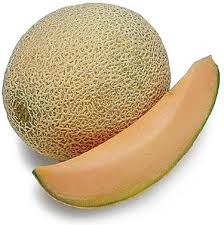
Research- New Listeria Strains Discovered from the US Canteloupe Outrbreak 2011

Food Safety Newscatalopue

After analyzing four of the five types of Listeria implicated in last year’s deadly cantaloupe outbreak, scientists have discovered that a new outbreak strain was among those that contributed to the nearly 150 illnesses and 33 deaths caused by contaminated melons.

The researchers, an international team of government and university scientists, also compared the strains involved in the 2011 outbreak to those that had caused other outbreaks or been collected from other food facilities. By doing this, they identified two new sets of “epidemic clones” –  strains isolated in different times and places that appear to have common ancestors.

Only five epidemic clones, or ECs, of Listeria had been identified prior to this study, which raises that number to seven.

Research – Staphylococcus Nasal Colonisation

HACCPEUROPAStaphylococcus

Staphylococcus aureus (S. aureus) is one of the five most common causes of infections after injury or surgery and can be a food contaminant. Around one third of healthy individuals carry this bacteria in their noses, pharynx and on their skin. In normal healthy and immunocompentent person, S. aureus colonization of the skin, intestinal tract, or nasopharynx does not lead to any symptoms or disease.

Nasal colonisation by Staphylococcus aureus depends upon clumping factor B binding to the squamous epithelial cell envelope protein loricrin.

USA – Leftover Food Storage Tips Chart

Food Safety.gov

These short but safe time limits for home-refrigerated foods will keep them from
spoiling or becoming dangerous to eat. The guidelines for freezer storage are
for quality only. Frozen foods remain safe indefinitely.

Food Safety.gov Egg Products

Egg Safety Information

USDA Tips on Thawing and Re-Heating

Culture Better Than Rapid?

The Packer

Tests for foodborne pathogens in which a culture is not grown in a lab may be necessary for produce companies, but they can’t replace traditional culture tests, industry leaders and government officials say.

Nonculture diagnostic tests have been around since the early 1980s, said David Gombas, senior vice president of food safety and technology for the Washington D.C.-based United Fresh Produce Association.

But there has been a recent push, Gombas said, to use them to replace culture tests that the Centers for Disease Control and Prevention, the Food and Drug Administration and other agencies and organizations rely on to accurately diagnose cases of salmonella, E. coli and other foodborne illnesses.

That trend was highlighted in a recent article in Scientific America magazine, which found that many clinics and state-run labs are turning to nonculture tests, which are faster than culture tests.

They’re faster, but are they better?

“Right now, the answer is no,” Gombas said. “CDC, FDA, and those in the produce industry I talk to — they want a live bug.”

Research Articles – Pulsed Electronic Field Milk – PCR Method Vibrio – Listeria Detection Culture Methods

Science Direct

Abstract

Lethal and sublethal injury of two Gram-positive (Staphylococcus aureus and Listeria monocytogenes) and one Gram-negative (Escherichia coli) bacteria in milk by pulsed electric fields (PEF) were determined using non-selective and selective media. PEF inactivation kinetics including lethal and sublethal injury fractions was also studied. The proportion of the sublethally injured microbial cells depended on the microorganisms, electric field strength and treatment time. The proportion of sublethally injured microbial cells reached maximum after a specific PEF treatment, and it kept constant or progressively decreased at greater electric field strengths and with longer PEF treatments. For the strain of L. monocytogenes, the proportion of sublethally injured cells increased from 18.98% to 43.64% with the increasing electric field strength from15 to 30 kV/cm. While for the strains of E. coli and S. aureus, the proportion of sublethally injured cells achieved the maximum (40.74% and 36.51%, respectively) at 25 kV/cm and then decreased. The proportion of the sublethally injured microbial cells reached maximum at 400 μs (S. aureus and L. monocytogenes) or 500 μs (E. coli), and decreased at longer treatments at 30 kV/cm. The PEF inactivation kinetics including lethal and sublethally injured fractions was analyzed by the Hülsheger model, and the model parameters (EC, tC, kE, bt) for lethal and sublethal injury were also calculated.

Science Direct

Abstract

A previously developed multiplex PCR targeting gyrB of Vibrios at genus level and pntA genes for specific detection of Vibrio cholerae, Vibrio parahaemolyticus and Vibrio vulnificus was evaluated. The sensitivity of the multiplex PCR on spiked seafood was 1.5 × 10³ CFU g−1. One hundred and fifty seafood samples were collected from retail stores and hypermarkets in different locations in Kuala Lumpur, Petaling Jaya and Seri Kembangan. The prevalence of V. parahaemolyticus was 29% (43/150). The pntA primers for V. parahaemolyticus detection were 100% specific and comparable to the toxR gene-based PCR. Six (12%) and 2 (4%) isolates contained trh and tdh genes, respectively. Repetitive Extragenic Palindromic PCR (REP-PCR) was used to genetically characterize the V. parahaemolyticus isolates in which 41 REP profiles were observed and all the isolates were categorized into 11 distinct clusters at the similarity of 80%. tdh-positive isolates shared a low level of similarity with trh-positive isolates. The prevalence of V. parahaemolyticus and particularly the presence of virulent gene such as trh and tdh among the isolates reiterate a high risk of contamination for seafood consumers in Malaysia. DNA fingerprinting of V. parahaemolyticus in this study indicates a high genetic diversity among the isolates and REP-PCR was able to distinguish the isolates with different virulotypes.

Science Direct

Abstract

The objectives of this study were to determine the prevalence of Listeria spp., specifically Listeria monocytogenes in ready-to-eat (RTE) foods and ascertain the efficiency of detecting L. monocytogenes with different selective culture media. A total of 396 RTE food samples were purchased from hypermarkets and streetside hawker stalls to examine the presence of Listeria spp. and L. monocytogenes. The presumptive isolates were characterized biochemically and were further confirmed by Polymerase Chain Reaction (PCR). Out of 396 samples, Listeria spp. was detected in 71 (17.9%) samples in which 45 (11.4%) were positive for L. monocytogenes. Among the studied RTE foods, salads and vegetables had the highest prevalence (14.7%) of L. monocytogenes, followed by chicken and chicken products (13.2%), beverages (10%), eggs and egg products (9.5%), beef and beef products (6.7%), lunch boxes (6.7%) and seafood and seafood products (6.7%). Both Listeria selective agar and PALCAM agar displayed a low sensitivity and specificity in L. monocytogenes detection compared to CHROMagar™ Listeria which demonstrated 96.9% of sensitivity and 99.1% of specificity in L. monocytogenes detection in naturally-contaminated foods. In conclusion, this work revealed consumption of RTE foods as a potential risk of listeriosis in this region. The high contamination rate of L. monocytogenes in salads and vegetables from hypermarkets and streetside hawker stalls was of great concern due to emerging fresh produce-borne L.monocytogenes globally. The scenario warrants further surveillance and action by the local authority to control the incidence of L. monocytogenes contamination in RTE foods.