Category Archives: Research

Research – Scientists find single letter of genetic code that makes African Salmonella so dangerous

Outbreak News Today

Scientists at the University of Liverpool have identified a single genetic change in Salmonella that is playing a key role in the devastating epidemic of bloodstream infections currently killing around 400,000 people each year in sub-Saharan Africa.

Invasive non-typhoidal Salmonellosis (iNTS) occurs when Salmonella bacteria, which normally cause gastrointestinal illness, enter the bloodstream and spread through the human body. The African iNTS epidemic is caused by a variant of Salmonella Typhimurium (ST313) that is resistant to antibiotics and generally affects individuals with immune systems weakened by malaria or HIV.

In a new study published in PNAS, a team of researchers led by Professor Jay Hinton at the University of Liverpool have identified a specific genetic change, or single-nucleotide polymorphism (SNP), that helps the African Salmonella to survive in the human bloodstream.

Professor Hinton explained: “Pinpointing this single letter of DNA is an exciting breakthrough in our understanding of why African Salmonella causes such a devastating disease, and helps to explain how this dangerous type of Salmonella evolved.”

SNPs represent a change of just one letter in the DNA sequence and there are thousands of SNP differences between different types of Salmonella. Until now, it has been hard to link an individual SNP to the ability of bacteria to cause disease.
Research – Water troughs are key to toxic E. coli spread in cattle

Cornell Chronicle 19243

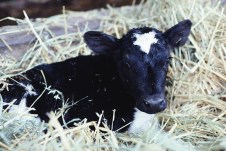
A major study led by Cornell researchers reveals for the first time that water troughs on farms are a conduit for the spread of toxic E. coli in cattle, which can then spread the pathogen to people through bacteria in feces. The study was published Feb. 7 in the journal PLOS ONE.

“Water troughs appeared in our mathematical model as a place where water can get contaminated and a potential place where we could break the cycle,” said Renata Ivanek, associate professor of epidemiology in the College of Veterinary Medicine and the paper’s senior author. The hypothesis was then tested in the field – with surprising results.

People commonly acquire infections from shiga toxin-producing E. coli through cow feces-contaminated beef and salad greens. The main shiga toxin-producing strain, E. coli 0157:H7, causes more than 63,000 illnesses per year and about 20 deaths, according to the Centers for Disease Control. Though cows carry and spread E. coli 0157:H7 when they defecate, the bacteria do not make them sick.


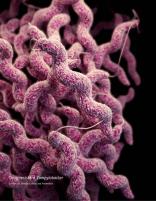
Research – Outbreak of Fluoroquinolone-Resistant Campylobacter jejuni Infections Associated with Raw Milk Consumption from a Herdshare Dairy — Colorado, 2016

CDC 


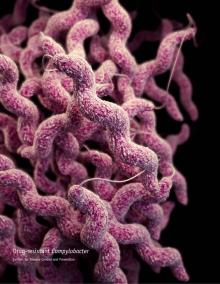
In August 2016, a local public health agency (LPHA) notified the Colorado Department of Public Health and Environment (CDPHE) of two culture-confirmed cases of Campylobacter infection among persons who consumed raw (unpasteurized) milk from the same herdshare dairy. In Colorado, the sale of raw milk is illegal; however, herdshare programs, in which a member can purchase a share of a herd of cows or goats, are legal and are not regulated by state or local authorities. In coordination with LPHAs, CDPHE conducted an outbreak investigation that identified 12 confirmed and five probable cases of Campylobacter jejuni infection. Pulsed-field gel electrophoresis (PFGE) patterns for the 10 cases with available isolates were identical using the enzyme Sma. In addition, two milk samples (one from the dairy and one obtained from an ill shareholder) also tested positive for the outbreak strain. Five C. jejuni isolates sent to CDC for antimicrobial susceptibility testing were resistant to ciprofloxacin, tetracycline, and nalidixic acid (1). Although shareholders were notified of the outbreak and cautioned against drinking the milk on multiple occasions, milk distribution was not discontinued. Although its distribution is legal through herdshare programs, drinking raw milk is inherently risky (2). The role of public health in implementing control measures associated with a product that is known to be unsafe remains undefined.

UK – Scotland – Understanding the sources of human Campylobacter infection in Scotland

Food Standards Scotland 


Research published today shows that chicken remains the biggest source of campylobacter infection in Scotland.

We commissioned the University of Aberdeen to compare clinical strains of campylobacter from the Grampian area with strains isolated from chickens, cattle, sheep, pigs and wild birds. This was used to determine the proportion of infections in Scotland from these potential sources.

While campylobacter remains the most common source of foodborne illness there has been a reduction in those contracting campylobacter from chicken. The proportion of cases attributed to chicken decreased from 55-75% to 52-68% when compared to data collected between 2012-2015.

Research – Foodborne illness source attribution estimates for 2013 for Salmonella, Escherichia coli O157, Listeria monocytogenes, and Campylobacter using multi-year outbreak surveillance data, United States

CDC

Executive Summary

Each year in the United States an estimated 9 million people get sick, 56,000 are hospitalized, and 1,300 die of foodborne disease caused by known pathogens. These estimates help us understand the scope of this public health problem. However, to develop effective prevention measures, we need to understand the types of foods contributing to the problem.

The Interagency Food Safety Analytics Collaboration (IFSAC) is a tri-agency group created by the Centers for Disease Control and Prevention (CDC), the U.S. Food and Drug Administration (FDA), and the U.S. Department of Agriculture’s Food Safety and Inspection Service (USDA-FSIS). Based on a new method, IFSAC developed foodborne illness source attribution estimates for 2012 using outbreak data from 1998 through 2012 for four priority pathogens, Salmonella, Escherichia coli O157, Listeria monocytogenes, and Campylobacter. IFSAC described this method and the estimates for 2012 in a report and at a public meeting.

IFSAC derived the estimates for 2013 using the same method used for the 2012 estimates, with some modifications. The data came from 1,043 foodborne disease outbreaks that occurred from 1998 through 2013 and for which each confirmed or suspected implicated food fell into a single food category. The method relies most heavily on the most recent five years of outbreak data (2009–2013). Foods are categorized using a scheme IFSAC created to classify foods into 17 categories that closely align with the U.S. food regulatory agencies’ classification needs.


Australia/New Zealand – Proposal P1017 – Criteria for Listeria monocytogenes – Microbiological Limits for Foods

FSANZ FSANZ3

This Proposal seeks to update Standard 1.6.1 with regards to criteria for Listeria monocytogenes limits in ready-to-eat foods; aligning with international (Codex) standards, Food Safety and Primary Production and Processing Standards and associated FSANZ guidance material.

Full information and documents from the link above.

Research – Radio Waves Killing Salmonella in Raw Eggs

Food Safet News EGGS

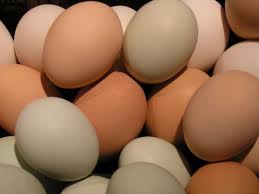
Raw chicken eggs are in many commonly consumed foods – eggnog, hollandaise sauce and mayonnaise, to name a few – and since about one of every 20,000 chicken eggs in the U.S. runs a high risk of containing Salmonella bacteria, the only way to be sure these bacteria are killed is to hard-boil the eggs or pasteurize them via hot-water immersion.

However, doing either of those things changes the taste, texture and color of the eggs, qualities that some consumers find objectionable. Now, prototype research studies by scientists at the Agricultural Research Service (ARS) and Princeton University have found that raw eggs artificially infected with Salmonella bacteria can be zapped almost completely free of it by using radio waves, and that these waves, combined with a subsequent hot-water bath, can more quickly pasteurize eggs without objectionable after-effects.

UK – FSA Calls for Tender – Campylobacter in Scotland

FSA food_standards_agency_logo

Proposals are sought for research that investigates the factors affecting variations in Campylobacter disease rates in Scotland. Specifically the FSA is looking to commission research that will significantly improve our understanding whether deprivation continues to have a protective effect on the levels of Campylobacter infection and if so what factors are likely to be contributing to this effect. The FSA would like to know what factors are most likely to influence rates of Campylobacter infection in different socioeconomic groups in Scotland.

Research – Another Five Listeria – Five new species of Listeria (L. floridensis sp. nov, L. aquatica sp. nov., L. cornellensis sp. nov. L. riparia sp. nov., and L. grandensis sp. nov.)

IJSEM Eurofins Food Testing UK

Sampling of agricultural and natural environments in two US states (Colorado and Florida) yielded 18 Listeria-like isolates that could not be identified as previously described species using traditional methods. Using whole genome sequencing and traditional phenotypic methods we identified five new species, each with a genome wide average blast nucleotide identity (ANIb) of less than 85% to currently described species. Phylogenetic analysis based on 16S rDNA sequences and amino acid sequences of 31 conserved loci showed the existence of four well-supported monophyletic clades within the genus Listeria; (i) a clade representing L. monocytogenes, L. marthii, L. innocua, L. welshimeri, L. seeligeri and L. ivanovii, which we refer to as Listeria sensu stricto, (ii), a clade consisting of L. fleischmannii and two newly described species, L. aquatica sp. nov. (type strain FSL S10-1188T =DSM 26686T =BEI NR-42633T) and L. floridensis sp. nov. (type strain FSL S10-1187T =DSM 26687T =BEI NR-42632T), (iii) a clade consisting of L. rocourtiae, L. weihenstephanensis, and three new species, L. cornellensis sp. nov. (type strain TTU A1-0210T = FSL F6-0969T =DSM 26689T =BEI NR-42630T), L. grandensis sp. nov. (type strain TTU A1-0212T =FSL F6-0971T =DSM 26688T =BEI NR-42631T) and L. riparia sp. nov. (type strains FSL 10-1204T =DSM 26685T = BEI NR- 42634T), and a clade containing L. grayi. Genomic and phenotypic data suggest the novel species are nonpathogenic.

UK – FSA – Consultation on Virus

FSA Virusds

The Advisory Committee on the Microbiological Safety of Food (ACMSF) is a scientific advisory committee that provides the FSA with independent expert advice. This helps the FSA ensure that policy development and consumer advice in relation to the microbiological safety of food are based upon sound science and relevant practical experience and expertise. The Committee’s terms of reference are to assess the risk to humans from microorganisms that are used or occur in or on food and to advise the FSA on any matters relating to the microbiological safety of food.

Since the publication of the 1998 ACMSF report on foodborne viral infections, with the exception of minor risk assessment work carried out on hepatitis E and avian influenza, no formal review has been carried out on foodborne viruses.

At the March 2010 ACMSF meeting the FSA asked the Committee to consider whether it was timely to carry out a review of foodborne viral infections, assessing the risk to consumers and highlighting any research and surveillance gaps.

The Committee agreed that an ad hoc group should be set up to revisit the issue of foodborne viruses in light of the significant developments in this area, so that an updated risk profile could be produced based on the findings.

The group met 13 times from November 2010 to July 2013 to assess the extent of viral foodborne infection in the UK.

The group considered information on all foodborne viruses including new and emerging viral pathogens and identified that the most important viruses associated with foodborne infection were norovirus, hepatitis A virus, and hepatitis E virus. These viruses are the focus of the group’s report, which concentrates mainly on viral foodborne infection in the UK. The report also gives consideration of two recent comprehensive reviews of viruses in food that have been published by WHO (2008) and EFSA (2011). The report provides key information that will be used to inform Risk Assessments and Risk Management on foodborne viruses across government.

The group’s draft report has now been approved by the full Committee and is attached for comment.