Category Archives: Research

Research – Campylobacter chicken liver outbreak adds to evidence of risk

Food Safety News

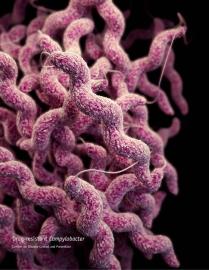
campy2

Image CDC

Researchers have called for increased awareness to reduce the risk of Campylobacter outbreaks linked to incorrectly cooked chicken liver dishes.

Communication from food safety and public health authorities may be required. Any strategy should ensure the risk profile of poultry liver-containing dishes is raised and availability of evidence-based preventative strategies for food preparation promoted, according to the study published in the journal Epidemiology and Infection.

There were 19 people who got campylobacteriosis linked to an outbreak in England 2016; seven confirmed and 12 probable cases. Chicken liver pâté was most strongly associated with illness. Three cases reported an incubation period of less than 24 hours, consistent with other outbreaks of campylobacteriosis associated with poultry liver.

Diversorium Ltd., the company which owned and operated the Downe Arms, a hotel in Wykeham near Scarborough, was fined £8,000 ($10,300) in November 2017 for two food hygiene related offences related to the outbreak.

Research -Foodborne Illness Pathogens And Fecal Contaminants Found On New Disposable Gloves

Yahoo Finance

New results of microbial testing of the surfaces of unused disposable gloves, in association with Eagle Protect PBC, have found bacterial genera and species specific to foodborne illnesses (FBI), food spoilage and skin infections. Strains of these microorganisms of concern were present on new and unused disposable gloves currently being used in the US food industry, and in some cases as medical exam gloves. Twenty-five (25) different brands of gloves were analyzed, providing specific profiles in respect to their manufacturing standards, or lack thereof. Food, dermal and respiratory pathogens as well as spoilage species were linked to the use of polluted water sources; sewage (fecal pollution); and human and animal gut bacteria introduced into glove production environments.


Research -Salmonella phage study underway on Kenyan poultry farms

Wattagenet

The use of bacteriophages to kill Salmonella in poultry flocks is currently being investigated in Kenya. The work, driven by concerns about antibiotic overuse and antibiotic resistance, should result in a commercially available product aligned to local needs and offering an alternative to antibiotics.

Full Article


Research – Eliminating viruses in our food with cranberries and citrus fruit

Science Daily

Fresh produce is a major vehicle for noroviruses, a group of viruses that are the most common cause of gastroenteritis in developed countries. However, the viruses are quite resistant to cold pasteurization treatments such as irradiation, which are used to destroy bacteria, moulds, parasites, and insects. The irradiation process uses gamma rays or X-rays to destroy these viruses but at the dose needed to eliminate them, it can affect the physicochemical properties of fresh produce.

Professor Monique Lacroix, a researcher at Institut National de la Recherche Scientifique (INRS), has developed an edible coating based on cranberry juice and citrus extract that makes noroviruses more sensitive to gamma irradiation, making it possible to eliminate them while preserving the quality of food, all without risk to consumers.

Research – Predictive model for growth of Salmonella Newport on Romaine lettuce

Wiley Online


Cross‐contamination of ready‐to‐eat (RTE) salad vegetables with Salmonella from raw chicken followed by growth during meal preparation are important risk factors for human salmonellosis. To better predict and manage this risk, a model (general regression neural network) for growth of a chicken isolate of Salmonella Newport (0.91 log) on Romaine lettuce (0.18 g) at times (0–8 hr) and temperatures (16–40°C) observed during meal preparation was developed with Excel, NeuralTools, and @Risk. Model performance was evaluated using the acceptable prediction zones (APZ) method. The proportion of residuals in the APZ (pAPZ) was 0.93 for dependent data (n = 210) and 0.93 for independent data (n = 72) for interpolation. A pAPZ ≥0.70 indicates acceptable model performance. Thus, the model was successfully validated for interpolation and can be used with confidence to predict and manage this important risk to public health.

Research – Carbon dioxide as a novel indicator for bacterial growth in milk

Wiley Online

Human milk spoils due to bacterial, yeast, or mold contamination. Current domestic methods of assessing milk spoilage are subjective or rely on time and temperature‐based guidelines. A key unmet food safety need remains the objective assessment of human milk spoilage. Experiments were conducted using a simplified human milk spoilage model based on goat’s milk as a human milk surrogate, spiked with a single bacterial strain (Staphylococcus epidermidis), in which pH and carbon dioxide (CO2) concentration were measured along with bacteria count over 160 hr. Bacteria count correlated highly with CO2 but not with pH. A 0.21% CO2 concentration threshold could be defined for milk spoilage (correlating to a bacteria count threshold of 105 CFU/ml), with sensitivity and specificity above 84%. These findings suggest that CO2 measurement is a promising method to detect S. epidermidis growth in milk which merits further investigation for the objective and quantitative assessment of milk spoilage.

Research – Norovirus Attribution Study

FSA

Assessing the contribution made by the food chain to the burden of UK-acquired norovirus infection.

The five-year Norovirus Attribution Study (NoVAS) launched in 2014 and was funded by the FSA at the cost of £2.5 million, in an effort to improve our understanding of the contribution food makes to the transmission of norovirus in the UK – as opposed to person-to-person – and how that might impact on overall rates of illness related to food.

A team of researchers from across the UK, led by Professor Sarah O’Brien, conducted for the first time a series of retail surveys in oysters, lettuce and raspberries (selected based on existing evidence which identified them as the most significant risk), as well as samples from catering and takeaway preparation areas.

These tests were combined with existing data on outbreaks to feed a new predictive model for the prevalence of foodborne norovirus.

Research -Technical Report: Review of Quantitative Risk Assessment of foodborne norovirus transmission

FSA

Food Borne Illness - Norovirus -CDC Photo

Image CDC

In line with government-wide recommendations on the quality assurance of models used to inform government decision-making, an internal review was conducted by the FSA following NoVAS.

This resulted in a technical report, which confirmed that the model structure was fit for purpose, and made use of the latest data (that had become available after the NoVAS modelling work had been completed).

Consequently, findings were updated on the relative contribution of five pathways (oysters, lettuce, raspberries, meals eaten out and takeaways) to the total number of symptomatic foodborne norovirus infections in the UK.

UK – FSA research suggests new higher estimates for the role of food in UK illness

FSA

A scientific review by the Food Standards Agency (FSA) estimating that around 2.4 million cases of foodborne illness occur every year in the UK has been published. This is up from the 2009 estimate of approximately one million.

The FSA is also publishing a ground-breaking five-year study into the extent of norovirus in food carried out by a consortium of UK scientists, and a further FSA paper which reviews and updates the assessment developed during that project.

These new figures do not indicate an increase in total illness, or any new risk to public health, but rather provide a better estimation of the proportion of infectious intestinal disease that is due to food. The overall estimate for this type of illness, from all sources, remains the same, at around 18 million cases each year in the UK.

These new studies and their accompanying models reveal:

  • an estimated 380,000 cases of norovirus linked to food occur in the UK per year
  • a breakdown of the roles of the main transmission pathways in food suggest eating out accounts for an estimated 37% of all foodborne norovirus cases, takeaways at 26%, open-headed lettuce on retail sale at 30%, raspberries on retail sale at 4%, and oysters on retail sale at 3%
  • the revised foodborne norovirus estimate, combined with better analysis of how many illnesses of unknown cause are also likely to be caused by food, suggest around 2.4 million estimated UK cases of foodborne illness occur each year

Professor Guy Poppy, Chief Scientific Adviser to the Food Standards Agency, said:

‘This work gives us a much better idea of the role of food in the spread of all infectious intestinal disease in the UK. However, this does not mean more people are getting unwell, only that we estimate food is responsible for more existing cases than previously thought.

‘Most of this increase is due to innovative new research into foodborne norovirus. As part of this, sampling surveys focused on the five most common food-related transmission routes. Although the percentages may appear striking, the risk to consumers remains very low for most of these pathways. For example, on average, an individual would only end up with norovirus once in every 15,000 portions of open-headed lettuce – that would take around 40 years. Oysters pose the highest risk per serving, with illness likely on average once in around 160 servings.

‘We are not changing our advice to consumers and businesses. Instead this research reinforces the need for the highest standards of good personal and food hygiene practices in catering establishments and at home to avoid infection.’

Professor Sarah J. O’Brien, lead NoVAS researcher, added:

‘Estimating the contribution of norovirus to the burden of UK foodborne disease has been particularly difficult up until now. This is largely due to people not attending doctors’ surgeries when they are unwell with symptoms of the winter vomiting bug. And whilst helpful in preventing the spread of the virus and alleviating the strain on healthcare settings, it does mean that crucial information about the virus cannot be collected. This is why the development of the first risk assessment of this type for the UK is particularly significant.’

The FSA can now use this new and improved understanding of the significance of foodborne disease to inform future efforts to control and reduce the risk of infection posed to the public from food by all pathogens.

Find out more about the importance of good food hygiene to reduce the risk of spreading norovirus.

Food business operators can find more guidance on personal hygiene when handling food.

Information – Patient Stories: Was It Something I Ate?

CDC

These people got sick with infections that came from food or animal contact. Watch or read their stories to learn how they got sick and what they’re doing now to stay safe.

CDC’s Division of Foodborne, Waterborne, and Environmental Diseases has produced a new video series, “Was It Something I Ate?,” which presents stories of people who developed serious enteric (intestinal) infections from food or animal contact.

The stories are from families with children who developed Salmonella infection from eating contaminated chicken or contact with backyard poultry, and from a CDC veterinarian who investigated an outbreak linked to working with farm animals.

We hope these stories will highlight the importance of preventing infections from food or animal contact through efforts by industry, government, and the public.