Category Archives: Raw Milk

New Zealand – Campylobacter in raw milk prompts recall in New Zealand

Food Safety News 


Longhill Farms is recalling raw, unpasteurized milk in New Zealand because it has been found to be contaminated with Campylobacter bacteria.

The product is sold in 1 liter or 2 liter glass bottles or in customer supplied containers. Affected products have batch numbers: D-0608 to D-1508 inclusive and use-by dates of Aug. 10 to Aug. 19, inclusive.

It was sold from a vending machine at Longhill Farms in Kawakawa, Northland, and is not exported. There have been no reports of illness. Customers are advised to return the products to Longhill Farms for a full refund.

Research- Researchers warn against raw milk, cheese after testing dairies

Food Safety News 

Research recently published by scientists in The Netherlands shows that E. coli and Campylobacter bacteria are so common on goat and sheep dairy farms that pasteurization is necessary to prevent contamination of raw milk and products made with it.The Dutch National Institute for Public Health and the Environment and the Dutch Food and Consumer Product Safety Authority joined forces for the project. The government agencies annually investigate how common pathogens of zoonoses are on different types farms. Cattle, meat pig and laying hen operations have already been examined.

For the recent report, scientists looked at 181 dairy goat farms and 24 dairy sheep farms. Shiga-toxin-producing E. coli (STEC) and Campylobacter bacteria was found on most of the animals. The pathogens were also found among farmers and their family members.

“STEC appeared on virtually all the farms studied,” according to the research report.

“Campylobacter has been demonstrated in one out of three goat farms (33 percent) and almost all sheep farms (96 percent).”

Listeria was less common. It was found on about 9 percent of the goat farms and 17 percent of the sheep farms. It was not found in farmers and their families. The percentage of farms with Listeria is relevant, the researchers wrote, because “unpasteurized soft cheese is the most important source of Listeria infection in humans.”

Information – Parents urged to check their homes for raw milk – E.coli O157

Food Safety News 

Health officials in Tennessee have repeated their public warning against drinking unpasteurized milk from French Broad Farm, confirming Thursday that more than 10 children are sick with infections from E. coli. The majority of the children were given raw milk from the farm before becoming sick.

The dairy has stopped distributing milk, according to a statement from the Knox County Health Department (KCHD). The health department did not report when French Broad stopped distribution. The department began receiving reports “last week” about children with infections from E. coli O157:H7.

In their public warning, county health officials urged people to check their homes for French Broad unpasteurized, raw dairy products.

USA – Pennsylvania officials urge consumers to discard raw milk – Listeria monocytogenes

Food Safety News

Consumers who have unpasteurized, raw milk from Pool Forge Dairy should immediately throw it out and monitor themselves and their children for symptoms of Listeria infection for the next 70 days.

Pennsylvania’s Department of Agriculture posted the warning Monday because routine tests by the department showed the milk to be contaminated with Listeria monocytogenes. 

“Consumers who purchased raw, whole milk from Pool Forge Dairy between April 25 and May 7 should immediately discard it. The milk was sold in a plastic quart, half-gallon, and gallon containers with the Pool Forge label,” according to the notice from the agriculture department.

The dairy, which is Lancaster County, sold the implicated unpasteurized milk at the farm at 201 Bridgeville Road; Shady Maple Market at 1324 Main Street; and Hoover’s Farm Market at 1719 Main Street. All three locations are in East Earl Township in northeastern Lancaster County.

New Zealand – Go Farming milk could contain Campylobacter

Stuff.co

Some batches of Go 2 Raw Milk brand raw drinking milk (1L) which were sold in the Lower South Island have been recalled.

Raw milk from Otautau supplier Go Farming has been recalled following concerns it may contain Campylobacter.

Go Farming sells the brand Go 2 Raw Milk and is recalling batches 104,105,106,107,108 and 108b, which were labelled with the use-by dates of March 19 and March 21.

The Ministry for Primary Industries has released a recall notice on the batches and says no other batches of the brand are affected. The affected product should not be consumed.

The ministry says there had been no reports of illness but if anyone had consumed the product and had any concerns about their health, they should seek medical advice.


RASFF Alerts – E.coli – Live Mussels – Raw Milk Cheeses

kswfoodworld food safety poisoning

RASFF-high count of Escherichia coli (1400000 CFU/g) in raw milk cheeses from France in France

RASFF-too high count of Escherichia coli (350; 540; 920; 1600 MPN/100g) in live mussels from Spain in Italy

RASFF-too high count of Escherichia coli (1300 MPN/g) in live mussels (Mytilus galloprovincialis) from Spain in Italy

RASFF Alert- E.coli – Raw Milk Cheese

kswfoodworld food safety poisoning

RASFF-high count of Escherichia coli (>1500000 CFU/g) in raw milk cheese from France in France

USA – Raw Milk from Fertile Valley Farm in Honesdale, PA Recalled for Listeria Monocytogenes

Food Poisoning Bulletin 


Raw whole milk from Fertile Valley Farm in Honesdale, Wayne County, Pennsylvania is being recalled because it tested positive for Listeria monocytogenes bacteria, according to a notice positive by the Pennsylvania Department of Agriculture. Tests completed after a routine inspection and sampling were positive for the pathogen.

USA – Raw milk test in Pennsylvania prompts Campylobacter warning

Food Safety News 


Pennsylvania officials warned consumers earlier this month that they should immediately discard all raw milk from Conoco View Dairy because it was contaminated with Campylobacter, which can cause serious infections and is killed by pasteurization.

As of Monday, the Pennsylvania Department of Agriculture, which issued the warning Feb. 15, had not received any reports of confirmed Campylobacter infections in connection with the unpasteurized, raw milk from the Perry County dairy, said a department spokeswoman.

All of the implicated milk was labelled with a sell-by date of Feb. 16.

Research – Outbreak of Fluoroquinolone-Resistant Campylobacter jejuni Infections Associated with Raw Milk Consumption from a Herdshare Dairy — Colorado, 2016

CDC 


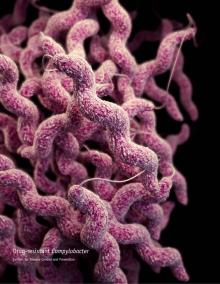
In August 2016, a local public health agency (LPHA) notified the Colorado Department of Public Health and Environment (CDPHE) of two culture-confirmed cases of Campylobacter infection among persons who consumed raw (unpasteurized) milk from the same herdshare dairy. In Colorado, the sale of raw milk is illegal; however, herdshare programs, in which a member can purchase a share of a herd of cows or goats, are legal and are not regulated by state or local authorities. In coordination with LPHAs, CDPHE conducted an outbreak investigation that identified 12 confirmed and five probable cases of Campylobacter jejuni infection. Pulsed-field gel electrophoresis (PFGE) patterns for the 10 cases with available isolates were identical using the enzyme Sma. In addition, two milk samples (one from the dairy and one obtained from an ill shareholder) also tested positive for the outbreak strain. Five C. jejuni isolates sent to CDC for antimicrobial susceptibility testing were resistant to ciprofloxacin, tetracycline, and nalidixic acid (1). Although shareholders were notified of the outbreak and cautioned against drinking the milk on multiple occasions, milk distribution was not discontinued. Although its distribution is legal through herdshare programs, drinking raw milk is inherently risky (2). The role of public health in implementing control measures associated with a product that is known to be unsafe remains undefined.