Category Archives: Microbiology

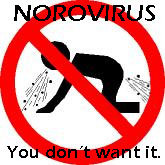
USA – Norovirus outbreak on Crystal Cruises’ Crystal Symphony voyage

Outbreak News Today norovirus-2(1)

Federal health officials are reporting an investigation into a norovirus outbreak o a recent Crystal Cruises voyage.

At least 47 passengers and crew onboard the Crystal Symphony were was sickened with vomiting and diarrhea due to norovirus. The voyage date were Nov. 8-Dec. 2.

Specimens were collected and tested onboard using a norovirus rapid test; results were positive for norovirus. The specimens have been sent to CDC for laboratory testing.

Crystal Cruises and the crew aboard the ship reported the following actions:

  • Increased cleaning and disinfection procedures according to their outbreak prevention and response plan.
  • Collected stool specimens from passenger and crew gastrointestinal illness cases and sent them to the CDC Calicivirus laboratory for testing.
  • Sent multiple daily reports of gastrointestinal illness cases to the Vessel Sanitation Program (VSP).
  • Consulted with VSP about sanitation cleaning procedures and reporting ill cases.

RASFF Alerts – Animal Feed – Salmonella and Enterobacteriaceae – Organic Soybean and Sunflower Cake – Fish Meal

RASFF-Logo

RASFF-Salmonella enterica ser. Jerusalem (present /25g) in organic soybean and sunflower cakes from Italy in Austria

RASFF-too high count of Enterobacteriaceae (<40 CFU/g) in fish meal from Latvia in Spain

Research – Behavior of foodborne pathogens, Listeria monocytogenes and Staphylococcus aureus, in mixed-species biofilm exposed to biocides

Orbit

In nature and man-made environments, microorganisms reside in mixed-species biofilm where behavior is modified compared to the single-species biofilms. Pathogenic microorganisms may be protected against adverse treatments in mixed-species biofilms leading to health risk for humans. Here, we developed two mixed-five-species biofilms that included the foodborne pathogens Listeria monocytogenes or Staphylococcus aureus, respectively. The five species, including the pathogen, were isolated from a single food-processing environmental sample thus mimicking the environmental community. In mature mixed five-species biofilms on stainless steel, the two pathogens remained at a constant level of ∼105 CFU/cm2 The mixed-five-species biofilms as well as the pathogens in mono-species biofilms were exposed to biocides to determine any pathogen-protective effect of the mixed biofilm. Both pathogens and their associate microbial communities were reduced by peracetic acid treatments. S. aureus decreased 4.6 log cycles in mono-species biofilm, but the pathogen was protected in the five-species biofilm and decreased only 1.1 log cycles. Sessile cells of L. monocytogenes were affected equally as a mono-biofilm or as a member in the mixed-species biofilm; decreasing by three log cycles when exposed to 0.0375 % peracetic acid. When the pathogen was exchanged in each associate microbial community, S. aureus was eradicated while there was no significant effect of the biocide on L. monocytogenes or the mixed community. This indicates that particular members or associations in the community offered the protective effect. Further studies are needed to clarify the mechanisms of biocide protection, and the species playing the protective role in microbial communities of biofilms. Importance: This study demonstrates that foodborne pathogens can be established in mixed species biofilms and that this can protect them from biocide action. The protection is not due to specific characteristics of the pathogen, here S. aureus and L. monocytogenes, but likely caused by specific members or associations in the mixed species biofilm. Biocide treatment and resistance is a challenge for many industries and biocide efficacy should be tested on microorganisms growing in biofilms, preferably mixed systems, mimicking the application environment.

USA – Recalled: Columbia River Natural Pet Foods Cow Pie – Listeria monocytogenes

Petful

This frozen raw pet food product, made for both dogs and cats, has the potential to be contaminated with listeria.

Maker: Columbia River Natural Pet Foods Inc.
Cause: Potential for listeria
Announcement: FDA announcement dated Dec. 5, 2018 (archived here)
What was recalled: 2 lb. packages of Cow Pie with Lot #81917 (processed on Aug. 19, 2017)

“Cow Pie is a fresh frozen meats product intended to feed raw to dogs and cats,” according to the recall announcement, which added that the products were distributed in Alaska, Oregon and Washington through retail stores and direct delivery.

The packages are purple and white and tube-shaped (“chubs”), and the lot code is printed on an orange sticker on the back.

USA – FSIS Releases Annual Plans on Microbiological and Chemical Residue Sampling Programs

FSIS

The U.S. Department of Agriculture’s Food Safety and Inspection Service (FSIS) released today the Annual Sampling Program Plan and Residue Sampling Plans for fiscal year 2019 and its first 2018 Annual Catalog of FSIS Sampling Projects.

“The agency’s modernization and customer service efforts extend to all facets of our work, including an easy-to-use online catalog of sampling projects,” said Carmen Rottenberg, Acting Deputy Under Secretary for Food Safety. “FSIS is continuing to post an unprecedented amount of food safety data and related plans, which are important for our customer experience.”

The Annual Sampling Program Plan identifies changes planned for FY 2019 to FSIS’ various sampling programs and describes the agency’s overall strategy for directing its sampling resources. FSIS also published the FY 2019 Residue Sampling Plans, which provide information on the process of sampling meat, poultry and egg products for chemical compounds of public concern and data collection.

FSIS first released its “Food Safety and Inspection Service Microbiological and Residue Sampling Programs” report in December 2011, which identified all of FSIS’ sampling programs and discussed the statistical and policy basis for the programs. FSIS has released a new sampling plan for each subsequent fiscal year.

FSIS is also launching a new online Annual Catalog of FSIS Sampling Projects — a searchable list of sampling projects for meat, poultry and egg products. The catalog, which will include project names and codes, will inform the public of what type of sampling data are available through the Freedom of Information Act (FOIA). With this catalog, FSIS seeks to enhance the customer experience by strengthening the FOIA process related to these data.

The catalog, which will be updated annually, and the FY 2019 Annual Sampling Program Plan are available at https://www.fsis.usda.gov/wps/portal/fsis/topics/data-collection-and-reports/fsis-data-analysis-and-reporting/data-reporting/fsis-data-analysis-and-reporting#samplingprograms and the 2019 Residue Sampling Plans at https://www.fsis.usda.gov/wps/portal/fsis/topics/data-collection-and-reports/chemistry/blue-books/ct_index.

USA – Campylobacter in puppies: Petland store faces 3rd lawsuit this year alleging it knowingly sold sick puppies

BarfBlog


A Petland store in Michigan is facing its third lawsuit this year after a man said he was hospitalized after buying a puppy later found to be sick from the store.

Doug Rose said he became infected with Campylobacter — a multi-drug resistant infection — after he and his wife Dawn purchased Thor, a beagle-pug mix puppy that the couple said was infected with parasites, suffered from coccidia and giardia, and had an upper respiratory infection, The Oakland Press reported.

Information – Lactalis says no Salmonella in baby milk at second production line

Channel News Asia

PARIS: Lactalis, the world’s largest dairy group, on Friday (Nov 30) rejected media reports that salmonella had been detected in baby milk from a second production line at a French factory where contaminated milk led to dozens of babies falling ill last year.

The salmonella outbreak at the Craon plant in northwest France led Lactalis to recall millions of tins of baby milk in France and around the world, and drew criticism from politicians and consumer groups about a lack of transparency at the company, which is privately held by the Besnier family.

Research – Legionella & Fire Sprinkler Systems – Is there a Risk?

Legionella Control Legionella A

Legionella is a bacterium that is commonly found in natural water sources such as lakes, reservoirs and rivers, usually in small concentrations that pose no threat to public health. However, once this water enters man-made water systems such as fire sprinkler systems, under certain environmental conditions there is a risk that any Legionella bacteria that are present in the water may proliferate, increasing the risks associated with Legionnaires’ disease.

Fire sprinkler systems do present a legionella risk and so sprinkler maintenance routines should be amended and incorporated in to the legionella monitoring and control programmes that you currently have in place.

Research – Study could explain higher rates of human E. coli infection in Scotland

The Roslin Institute ecoli

A subtype of E. coli O157 found in cattle may be responsible for higher rates of severe human infection in Scotland, report suggests.

E. coli O157 is a bacterium carried by cattle, which can cause life-threatening human infections when it enters the food chain. Scientists found that cattle in Scotland have a higher level of a subtype of E. coli O157 – PT21/28, which is known to cause more severe human infection.

It may be that local exposure to this particular subtype is a potential factor for the rates of people infected by E. coli O157 in Scotland being around three times higher than in England and Wales.

Causes of E. coli outbreaks

Researchers used Whole Genome Sequencing (WGS) to define which specific subtypes of E. coli caused an outbreak. For example, data obtained from WGS helped to understand whether a human infection is likely to have arisen from local farm animals or by a strain present in imported food or as a consequence of travel abroad.

The team have also combined WGS data with machine learning to predict which subtypes of  E. coli O157 pose the greatest threat to human health.

RASFF Alert – Microbial Contamination – UHT Milk

RASFF-Logo

RASFF-microbiological contamination ( 1,2 x10E7; 1,8 x10E7; >3 x10E7 CFU/ml) of UHT milk from Slovakia in Hungary