Category Archives: Microbiology

UK – Deep clean under way after E.coli scare at Perthshire nursery

The Courier UK

A Perthshire nursery school is at the centre of a three-day deep clean after a suspected case of E-coli was detected.

Health bosses say suspected symptoms were detected in a child with links to Errol nursery and stressed the risks to the wider public were very low.

NHS Tayside and Perth and Kinross Council are investigating how the infection may have come about.

The school remained open while the nursery area was cleaned thoroughly overnight on the advice of public health experts. Council chiefs insisted the operation by Tayside Contracts was being carried out as a precaution.

The health board wrote to parents last week to say experts were investigating a single case of suspected Escherichia coli, more commonly known as E. coli.

The germs are commonly found in farm animals and can cause sickness, diarrhoea and a fever in humans.

An NHS Tayside spokeswoman confirmed yesterday the infection was in a nursery pupil and that investigations are ongoing.


Information – The disgusting reason why you shouldn’t pepper your food at restaurants – E.coli

The Metro US

Surprisingly, the dirtiest items in a restaurant are not in the bathroom, It’s right on the table in front of you: Pepper shakers are the dirtiest item at restaurants and are ontaminated with E. coli bacteria.

According to a study by ABC News, pepper shakers at 12 different restaurants in New York, Arizona and Ohio had an average bacteria count of 11,600. An even more disgusting finding was that the restaurant’s menus carried an average bacteria count of 185,000.

RASFF Alerts – Animal Feed – Enterobacteriaceae – Frozen Raw Petfood Duck – Chew Sticks – Dried Dogfeed – Petfood

RASFF-Logo

RASFF-Salmonella enterica ser. Typhimurium (presence /25g) and too high count of Enterobacteriaceae (2500 to 7800 CFU/g) in frozen raw petfood (duck) from the Netherlands in Belgium

RASFF-high count of Enterobacteriaceae (6 x 10; 9 x 10; <10; <1,3 x 10^2; 3 x 10^2 CFU/g) in chew sticks from China in Greece

RASFF – too high count of Enterobacteriaceae (230 CFU/g) in dried dogfeed from China in Germany

RASFF-too high count of Enterobacteriaceae (400, 1820, 35500 CFU/g) in petfood from China in Sweden


RASFF Alerts – Animal Feed – Salmonella – Frozen Raw Petfood (Duck) – Feed Compliments for Dairy Cows

RASFF-Logo

RASFF-Salmonella enterica ser. Typhimurium (presence /25g) and too high count of Enterobacteriaceae (2500 to 7800 CFU/g) in frozen raw petfood (duck) from the Netherlands

RASFF-Salmonella enterica ser. Mbandaka (present /25g) in feed complements for dairy cows from Germany

Europe – The European Union summary report on trends and sources of zoonoses, zoonotic agents and food-borne outbreaks in 2017

ECDC

This report of the European Food Safety Authority and the European Centre for Disease Prevention and Control presents the results of zoonoses monitoring activities carried out in 2017 in 37 European countries (28 Member States (MS) and nine non-MS). Campylobacteriosis was the commonest reported zoonosis and its EU trend for confirmed human cases increasing since 2008 stabilised during 2013–2017. The decreasing EU trend for confirmed human salmonellosis cases since 2008 ended during 2013–2017, and the proportion of human Salmonella Enteritidis cases increased, mostly due to one MS starting to report serotype data. Sixteen MS met all Salmonella reduction targets for poultry, whereas 12 MS failed meeting at least one. The EU flock prevalence of target Salmonella serovars in breeding hens, laying hens, broilers and fattening turkeys decreased or remained stable compared to 2016, and slightly increased in breeding turkeys. Salmonella results on pig carcases and target Salmonella serovar results for poultry from competent authorities tended to be generally higher compared to those from food business operators. The notification rate of human listeriosis further increased in 2017, despite Listeria seldom exceeding the EU food safety limit in ready-to-eat food. The decreasing EU trend for confirmed yersiniosis cases since 2008 stabilised during 2013–2017. The number of confirmed shiga toxin-producing Escherichia coli (STEC) infections in humans was stable. A total of 5,079 food-borne (including waterborne) outbreaks were reported. Salmonella was the commonest detected agent with S. Enteritidis causing one out of seven outbreaks, followed by other bacteria, bacterial toxins and viruses. The agent was unknown in 37.6% of all outbreaks. Salmonella in eggs and Salmonella in meat and meat products were the highest risk agent/food pairs. The report further summarises trends and sources for bovine tuberculosis, Brucella, Trichinella, Echinococcus, Toxoplasma, rabies, Coxiella burnetii (Q fever), West Nile virus and tularaemia.


Research – University of Otago researchers study burden of Listeria in pregnant women in New Zealand

Outbreak News Today

The first study of the burden of listeria in pregnant New Zealanders and their babies has found reassuringly low rates of the infection – indicating food safety warnings are working to prevent unnecessary cases of miscarriage, still birth, and meningitis in babies infected in the womb. However in those who contract the infection, the consequences are devastating, with the lives of 12 unborn babies claimed over two decades, and more than 100 people hospitalised.

The University of Otago, Christchurch, study found disproportionately high levels of the infection in mothers and babies identified as Pacific Islanders.

Listeria is most commonly transmitted by the consumption of contaminated food. Pregnant women are about 18 times more likely to get the infection than the general population. It most commonly presents in the third trimester of pregnancy (from 28 weeks) and is rarely fatal in the mother, but can seriously affect infants and children.

UK – E.coli scare at nursery sparks NHS probe

The World News

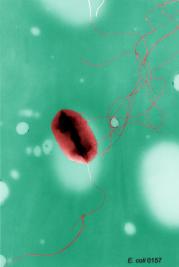
kswfoodworld E.coli O157

Image CDC


Perthshire school was involved in an E.coli scare last week, the PA can reveal.NHS Tayside launched an investigation after a suspected case of the bacteria in a child at Errol Primary School’s nursery.

The nursery will undergo three days of deep cleaning as a “precautionary measure”.

Parents at the school were issued with letters from the health board with information on the infection.

The child was being tested for the non O157 strain of the infection.

Speaking on Friday a spokesperson at NHS Tayside confirmed: “NHS Tayside’s health protection team is aware of and currently investigating a single suspected case of E.coli non O157 infection in a child who attends a nursery in Perthshire.

“As a precaution, a letter has been issued to parents of children at the nursery for information and reassurance.

“The risk to the wider public is very low.”

Research – Advancing Retail Food Policy Debates: Estimating the Risk of Contaminated Servings of Food Attributed to Employee Food Handling Practices in Retail Food Establishments

Journal of Food Protection

Food employee contamination of ready-to-eat foods through improper food handling practices is an important contributing factor for foodborne illness in retail and food service establishments. Decreasing the incidence of improper food handling practices is a frequent topic of retail food policy deliberations that often involves estimating the degree to which a proposed policy might affect a specific food handling practice. However, the potential reduction in contaminated servings of food, and therefore foodborne illnesses avoided, associated with a given proposed policy change, is all too often uncertain. This article discusses the components, assumptions, and applications of the food handling practices model, a quantitative model that estimates the impact of food handling practices on servings of food moving along three consecutive stages: the contamination stage, the pathogen control stage, and the foodborne illness stage. To our knowledge, this article is the first time the model has been presented in an academic platform, and we also explore unique and interesting aspects of the model not addressed in publicly available documents. Risk-based estimates for contaminated servings of food attributed to changes in one or multiple food handling practices are derived that provide an important link between increased compliance with proper food handling practices and public health. Model estimates show that decreases in the incidence of inappropriate food handling practices lead to varying levels of contaminated food servings avoided, depending on the food handling practice. The ability to derive such estimates provides stakeholders and the general public with a means of understanding the relative impact of proposals to reduce improper food handling and to help inform regulatory food safety policy discussions and decision making.

Research -Microbacteria can build up in your reusable water bottle

The Jakarta Post

Both oral and environmental bacteria and viruses could be building up on reusable water bottles that are not cleaned on a regular basis, according to a scientist from the Center for Ecology and Hydrology.

Senior scientist Andrew Singer was recently interviewed by the Huffington Post UK, where he explained that even E. coli could find its way into an unclean reusable water bottle.

“When you flush the toilet, the toilet water will get aerosolized and a fraction of the water droplets can land on and in your water bottle,” Singer explained.

Singer said that poor personal hygiene habits, such as rarely or not washing your hands after using the toilet, or taking your water bottle to the toilet with you, could increase the chances of getting serious infections.


Research – Innate antimicrobial immunity in the skin: A protective barrier against bacteria, viruses, and fungi

PLOS One

Innate immunity is an essential defense against pathogens

The epidermis, the outermost layer of the skin, is a physical barrier against pathogens. However, breach of the skin barrier through wounding introduces a myriad of microbes to the site of injury. Upon disturbance of the epidermal barrier, the innate immune system and its effectors play a key role in protecting humans against cutaneous and systemic infection [1]. Major constituents of the innate immune system include phagocytic cells, such as macrophages, neutrophils, and dendritic cells, as well as innate leukocytes, such as natural killer (NK) cells, mast cells, basophils, and eosinophils. In addition, epidermal keratinocytes act as active innate immune cells. In response to sensing pathogen-associated molecular patterns (PAMPs) expressed by microbes and host danger molecules, innate immune receptors present on keratinocytes become activated, causing release of inflammatory cytokines and host antimicrobial molecules [2, 3].