Category Archives: Microbiology

USA – A+ Answers Straight Beef Formula For Dogs Recalled For Salmonella

Food Poisoning Bulletin


The FDA has issued a press release, warning pet owners to not feed their dogs one lot of A+ Answers Straight Beef Formula for Dogs because it has tested positive for Salmonella bacteria. The lot number is 2018 20/08 20. Federal law requires all pet food be free from pathogens.

Salmonella can make pets and people sick. Symptoms of a Salmonella infection in both species include vomiting, diarrhea that may be bloody, and nausea. Pets can carry the bacteria but show no symptoms, and can pass it on to people. The bacteria is shed in their feces, which can get onto their coats and paws. Petting a pet can then transfer the pathogen to humans. And people can get sick if they handle the pet food and then eat or touch their mouths without washing their hands first.

Research – University of Cincinnati professor studies hamburger E. coli (O157) with NIAID grant

Eurekalert

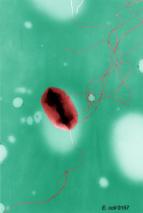
kswfoodworld E.coli O157

Image CDC


Alison Weiss, PhD, professor in the Department of Molecular Genetics, Biochemistry and Microbiology in UC College of Medicine, has been awarded a four-year grant of $1.6 million from the National Institute of Allergy and Infectious Diseases (NIAID) to study Shiga toxin producing Escherichia coli 0157:H7, also sometimes referred to as Hamburger E. coli.

Hamburger E. coli is the cause of foodborne illness and is an infection that often leads to bloody diarrhea and can result in kidney failure. It is mostly associated with eating undercooked, contaminated ground beef, and can be spread by person-to-person contact. In severe cases it can be fatal.

The infection was first discovered in hamburger meat, but it is carried asymptotically by many creatures so anything that has fecal matter from cattle can contaminate food, says Weiss. Vegetables and fruits can also carry E. coli if contaminated with animal fecal matter during field irrigation or as a result of harvesting or preparation of produce. Human hygiene practices can also spread E. coli.

Shiga toxin producing E. coli (STEC), including 0157:H7, are an important cause of diarrheal disease, causing about 265,000 illnesses in the United States annually.

USA – Marijuana failed E. coli, Salmonella and Chemical tests

Food Poison Journal

The Dept. of Licensing and Regulatory Affairs (LARA) issued a health and safety advisory due to the sale of marijuana which failed laboratory testing. The products were sold between 12/27/2018 and 12/30/2018 at HG Lansing. This recall affects the product batches listed in the link above of flower sold from HG Lansing – License PC-000159 located at 1116 E. Oakland Ave., Lansing MI 48906:

RASFF Alert – Animal Feed – Rye Ergot – Mycotoxin – Rye

RASFF-Logo

RASFF-rye ergot (Claviceps purpurea) (1115 mg/kg – ppm) in rye from Germany in Belgium

RASFF Alerts – Animal Feed – Salmonella – Dog Chews – Sunflower Cakes – Soybean Meal -Rapeseed Meal – Dried Pigs Ears -Organic Soy Expeller –

RASFF-Logo

RASFF-Salmonella enterica ser. Newport (present /25g) in dog chews from China in Germany

RASFF-Salmonella (presence /25g) in organic sunflower cakes from Austria in Germany

RASFF-Salmonella in dog chews from Germany in Germany

RASFF-Salmonella enterica ser. Senftenberg (presence /25g) in soybean meal from Italy in Austria

RASFF-Salmonella enterica ser. Tennessee (presence /250g) in rapeseed meal from Germany in Finland

RASFF-Salmonella enterica ser. Derby (presence /25g) and Salmonella enterica ser. Livingstone (presence /25g) in dried pig ears from Germany in Austria

RASFF-Salmonella enterica ser. Münster (presence /25g) in rapeseed meal from Russia in Finland

RASFF-Salmonella enterica ser. Hessarek (in 1 out of 5 samples /25g) in dog chews from Germany in Austria

RASFF-Salmonella enterica ser. Münster (presence /25g) in rapeseed meal from Russia in Finland

RASFF-Salmonella enterica ser. Typhimurium (presence /25g) in organic soy expeller from Kazakhstan, via Russia in Finland

RASFF-Salmonella enterica ser. Derby (present /25g) and Salmonella enterica ser. Typhimurium monophasic (1 ,4, [5], 12:i:-) (present /25g) in dog chews from Belgium, via Germany in Austria

Northern Ireland – Dog food urgently recalled because it contains traces of Salmonella

Belfast Live

Just Natural is recalling packets of its chicken and tripe dog food because they contain salmonella.

A statement was posted on the Trading Standards website, it reads: “After APHA sample laboratory secondary testing we have now been notified that the previously recalled product noted below has been confirmed positive for salmonella”.

The brand has contacted affected stockists and is urging customers to return unused packets to the shop they have bought it from for a possible refund.

New Zealand – Shellfish biotoxin alert – between Granville Point and Cape Karikari

MPI

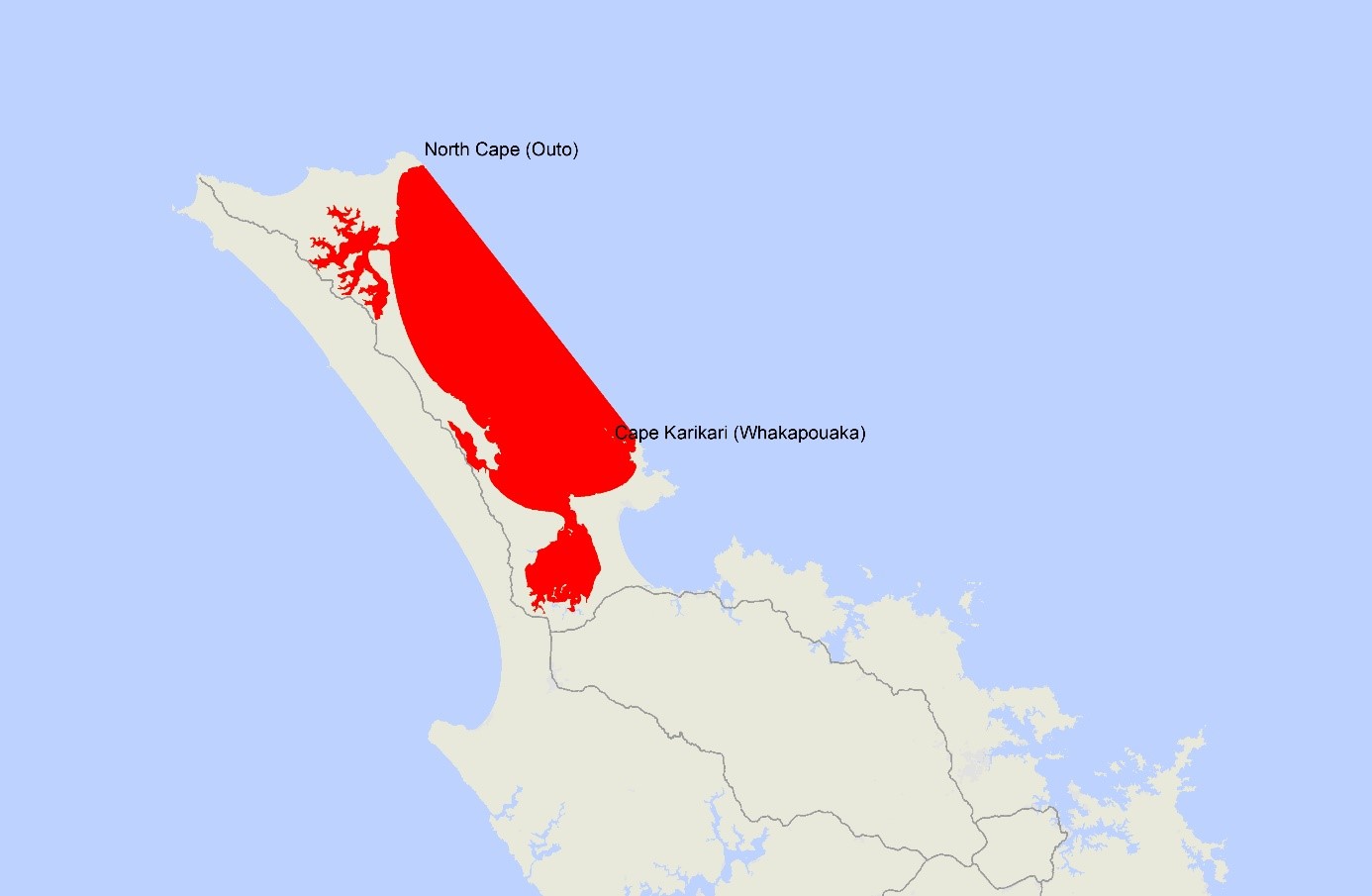
Map highlighting in red the areas affected.

The Ministry for Primary Industries (MPI) today issued a public health warning advising the public not to collect or consume shellfish harvested from the Northland area between Granville Point and Cape Karikari (Whakapouaka). This warning includes Houhora and Rangaunu Harbours.

Routine tests on shellfish samples taken from this region have shown levels of Paralytic Shellfish Poisoning (PSP) toxins above the safe limit of 0.8 mg/kg set by MPI. Anyone eating shellfish from this area is potentially at risk of illness.

Mussels, oysters, tuatua, pipi, toheroa, cockles, scallops, catseyes, kina (sea urchin) and all other bivalve shellfish should not be eaten.

Note: cooking shellfish does not remove the toxin.

Pāua, crab and crayfish may still be eaten if the gut has been completely removed prior to cooking, as toxins accumulate in the gut. If the gut is not removed its contents could contaminate the meat during the cooking process.

New Zealand -Shellfish biotoxin alert – Northland East Coast

MPI

Map highlighting in red the areas affected.

The Ministry for Primary Industries today extended the public health warning against collecting shellfish in the Northland east coast region. The affected area now extends from North Cape (Outo) south to Cape Karikari (Whakapouaka). The warning includes Parengarenga, Houhoura and Rangaunu Harbours.

This warning has been extended due to a reported illness from someone consuming shellfish collected from Rarawa Beach.

MPI is undertaking sampling and testing of shellfish from this region. Test results have shown levels of Paralytic Shellfish Poisoning (PSP) toxins above the safe limit of 0.8 mg/kg set by MPI.

Anyone eating shellfish from this area is potentially at risk of illness.

Mussels, oysters, tuatua, pipi, toheroa, cockles, scallops, catseyes, kina (sea urchin) and all other bivalve shellfish should not be eaten.

Note: cooking shellfish does not remove the toxin.

Pāua, crab and crayfish may still be eaten if the gut has been completely removed prior to cooking, as toxins accumulate in the gut. If the gut is not removed its contents could contaminate the meat during the cooking process.


Research – Biofilms and Meat Safety: A Mini-Review

Journal of Food Protection

Biofilms are surface-attached microbial communities with distinct properties, which have a tremendous impact on public health and food safety. In the meat industry, biofilms remain a serious concern because many foodborne pathogens can form biofilms in areas at meat plants that are difficult to sanitize properly, and biofilm cells are more tolerant to sanitization than their planktonic counterparts. Furthermore, nearly all biofilms in commercial environments consist of multiple species of microorganisms, and the complex interactions within the community significantly influence the architecture, activity, and sanitizer tolerance of the biofilm society. This review focuses on the effect of microbial coexistence on mixed biofilm formation with foodborne pathogens of major concern in the fresh meat industry and their resultant sanitizer tolerance. The factors that would affect biofilm cell transfer from contact surfaces to meat products, one of the most common transmission routes that could lead to product contamination, are discussed as well. Available results from recent studies relevant to the meat industry, implying the potential role of bacterial persistence and biofilm formation in meat contamination, are reviewed in response to the pressing need to understand the mechanisms that cause “high event period” contamination at commercial meat processing plants. A better understanding of these events would help the industry to enhance strategies to prevent contamination and improve meat safety.

RASFF Alert – Animal Feed – Salmonella – Enterobacteriaceae – Cows Ears – Fish Meal

RASFF-Logo

RASFF-too high count of Enterobacteriaceae (3700, 8800 CFU/g) in cow ears from Mexico in Germany

RASFF-Salmonella enterica ser. Istanbul (in 1 out of 5 samples <10 CFU/g) in fish meal from Mauritania in Greece