Archives
-
Join 341 other subscribers
KSWFoodWorld
Blog Stats
- 427,529 Views
Category Archives: Microbiology Investigations
Research – Changes in the Quality and Microbial Communities of Precooked Seasoned Crayfish Tail Treated with Microwave and Biological Preservatives during Room Temperature Storage
The qualities of precooked foods can be significantly changed by the microorganisms produced during room temperature storage. This work assessed the effects of different antibacterial treatments (CK, without any treatment; microwave treatment, MS; microwave treatment and biological preservatives, MSBP) on the physicochemical properties and microbial communities of precooked crayfish tails during room temperature storage. Only the combination of microwave sterilization and biological preservatives significantly inhibited spoilage, as evidenced by the total viable count (4.15 log CFU/g) after 3 days of room temperature storage, which satisfied the transit time of most logistics companies in China. Changes in pH and TVB-N were also significantly inhibited in the MSBP group compared with those in the CK and MS groups. More than 30 new volatile compounds were produced in the CK groups during room temperature storage. However, in the MSBP groups, the volatile compounds were almost unchanged. The correlations between the microbial composition and volatile compounds suggested that specific bacterial species with metabolic activities related to amino acid, energy, cofactor, and vitamin metabolism, as well as xenobiotics biodegradation and metabolism, were responsible for the changes in volatile compounds. These bacteria included Psychrobacter, Arthrobacter, Facklamia, Leucobacter, Corynebacterium, Erysipelothrix, Devosia, Dietzia, and Acidovorax. Overall, our findings provide a foundation for the development of strategies to inhibit spoilage in precooked crayfish tails stored at room temperature.
Denmark Update – Outbreak of invasive Listeria infection sequence type 1607
The Statens Serum Institut is currently investigating a protracted disease outbreak with Listeria monocytogenes in collaboration with the Danish Veterinary and Food Administration and the Norwegian Food Institute DTU
A total of 17 people have been infected with the same type of listeria since the summer of 2019 (figure 1). The patients are 13 women and 4 men with a median age of 73 years, with one patient in their 20s and four in their 80s. The patients live throughout the country (table 1). All have been hospitalized. Two people have died within 30 days of detection of the infection.
The outbreaks are handled by the Central Outbreak Group, which consists of SSI, the Danish Veterinary and Food Administration and the DTU Food Institute. SSI stands for whole-genome sequencing of patients’ listeria isolates and interviews with patients or relatives with a view to identifying a possible source of infection. Since there are also people abroad who have become ill with listeria sequence type 1607, the international authorities are working on an international overview.
Posted in food bourne outbreak, Food Illness, Food Micro Blog, Food Microbiology, Food Microbiology Blog, Food Microbiology Research, Food Microbiology Testing, Foodborne Illness, Foodborne Illness Death, foodborne outbreak, foodbourne outbreak, Illness, microbial contamination, Microbial growth, Microbiological Risk Assessment, Microbiology Investigations, Microbiology Risk, outbreak
New Zealand – Public health warning: shellfish biotoxin warning for Marlborough – PSP
New Zealand Food Safety is advising the public not to collect or consume shellfish gathered from the inner Queen Charlotte Sound, as well as near Collingwood in Golden Bay, due to the presence of high levels of paralytic shellfish toxins.
Routine tests on mussels from near Waikawa have shown levels of paralytic shellfish toxins 3 times higher than the safe limit. The warning extends from Anakiwa, out to West Head and Dieffenbach Point.
In addition to the Queen Charlotte Sound warning, the levels of paralytic shellfish toxins in mussels farmed near Collingwood have risen in recent weeks and are nearly at the safe limit. Commercial harvesting from the mussel farms have stopped and the public are warned that shellfish gathered from the shore could also have elevated levels of toxins.
Research – Effect of food environment on the ability of microorganisms to form biofilms
Abstract
The aim of this study is to understand the effect of the food product’s, even in trace amounts, in the biofilm formation potential of Escherichia coli and Staphylococcus aureus. Bacterial adhesion was tested using three different food media, in which bacterial cells were adapted before determining how this would affect their adhesion score and biofilm formation potential: sterilized milk, mineral water, and pasteurized commercial orange juice. After characterization of the bacteria and the adhesion support by the contact angle, the adhesion score obtained by the theoretical mathematical model XDLVO developed by van Oss was compared to that obtained by the experimental approach, in order to examine the role of non-specific (thermodynamic) and specific (biological) interactions in adhesion. Changes in the membrane composition of bacteria, as a function of acclimation conditions, were evaluated by infrared spectroscopy. Results reveal variability in the spectral region between 900 and 1200 cm−1 specific to capsular polysaccharides (CPS) or lipopolysaccharides (LPS), and also in the range between 2800 and 3000 cm−1 characteristic of membrane lipids and phospholipids. Biofilm formation by S. aureus and E. coli was affected by commercial UHT milk. This led to increased hydrophobicity and total adhesion energy within the environment of these strains. However, no correlation was observed between the adhesion scores obtained through experimental and theoretical approaches. This underscores the necessity of considering the specific characteristics of individual food products in understanding the phenomenon of biofilm formation. Understanding, the mechanism, the variations in bacterial surface characteristics, and the conditions that favor or disadvantage the formation of biofilms, may have important implications, in the development of preventive and curative strategies, to control of food-borne infections.
EU proposes change to Listeria in RTE food rules
The European Commission has published long-awaited plans to update the rules around Listeria monocytogenes in ready-to-eat (RTE) foods.
The draft regulation removes a section about the absence of Listeria in 25-grams before food has left the immediate control of the food business operator who has produced it.
It now states that Listeria monocytogenes not detected in 25-grams should apply to all situations where foods are placed on the market during their shelf-life and for which the producing food business has not been able to demonstrate, to the satisfaction of the relevant authority, that the level of Listeria will not exceed the limit of 100 colony forming units per gram (CFU/g) throughout their shelf-life.
Comment period
To allow food businesses time to adapt their practices and procedures to the new requirement, the earliest the regulation will become applicable is January 2026. Comments on the proposals are open until May 8, 2024.
Posted in EU2073, Food Micro Blog, Food Microbiology, Food Microbiology Blog, Food Microbiology Research, Food Microbiology Testing, Listeria, Listeria monocytogenes, microbial contamination, Microbial growth, Microbiological Risk Assessment, Microbiology, Microbiology Investigations, Microbiology Risk
Taiwan – Rare toxin suspected in 14 severe cases of food poisoning – Bongkrek acid is a toxin produced by the bacterium Burkholderia gladioli
14 severe cases of suspected food poisoning have been reported so far, including two deaths and five people currently hospitalized in critical condition. In a Legislature interview on Thursday, Health Minister Hsueh Jui-yuan (薛瑞元) stated that, after discussions with experts, the incident was highly likely caused by Bongkrek acid contamination and testing is currently underway.
Bongkrek acid is a toxin produced by the bacterium Burkholderia gladioli pathovar cocovenenans occasionally found in fermented coconut or corn. When consumed, symptoms can include vomiting, diarrhea, urinary retention, abdominal pain, and excessive sweating as the toxin mainly targets the liver, brain, and kidneys.
Posted in Bongkrek acid, Burkholderia gladioli, Food Micro Blog, Food Microbiology, Food Microbiology Blog, Food Microbiology Research, Food Microbiology Testing, microbial contamination, Microbial growth, Microbial Spoilage, Microbiological Risk Assessment, Microbiology, Microbiology Investigations, Microbiology Risk
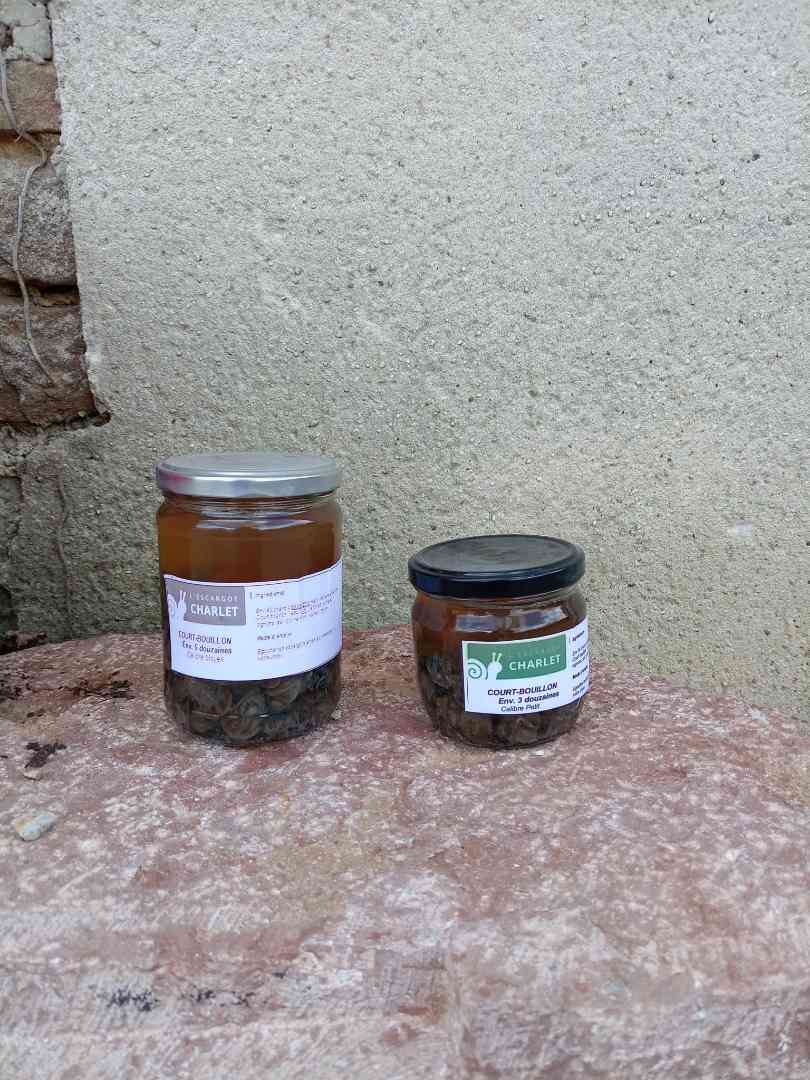
France – Court-bouillon snails – Possible Micro Issues – Manufacturing Defects

Product category
Food
Product subcategory
Others
Product brand name
charlet snail
Model names or references
short broth verrine
Product identification
Batch Date
LOT 1529 Use-by date 11/30/2025
Packaging
verrine 580TO82 / verrine 370TO82
Start/end date of marketing
From 01/12/2023 to 15/12/2023
Storage temperature
Product to be stored at room temperature
Health mark
FR 25056058CE
Geographical sales area
Regions: Burgundy-Franche-Comté
Distributors
charlet snail
Finland – Meat products linked to the majority of Hepatitis E cases in Finland

A hepatitis E-positive meat product appears to be behind most of the infections that occurred earlier this year in Finland.
The hepatitis E virus previously detected in sausages from a domestic manufacturer is similar to samples from most people affected by the outbreak at the start of 2024.
This was found during a strain comparison of viruses by the Finnish Food Authority (Ruokavirasto) and the National Institute of Health and Welfare (THL).
More than 120 people from different parts of Finland have fallen ill in the outbreak between January and March.
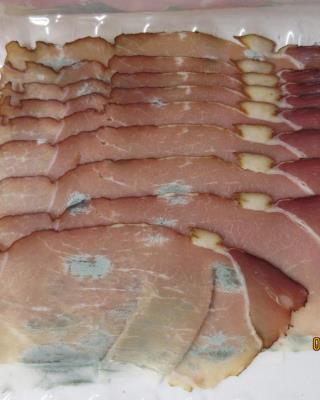
Czech Republic – BILLA Schwarzwälder Schinken – Microbial Activity

Food group: Meat and meat products / Durable fermented products
BILLA Schwarzwälder Schinken
Category: Dangerous foods
Invalid parameter:
changes caused by microbial activity
Some of the packaging was found to contain mold visible to the naked eye. Food is not considered safe if it shows signs of spoilage.
Unsuitable storage temperatures of this product were not detected during the inspection. The food did not have an expiration date.
| Expiration date: | 28/02/2024 |
| Packaging: | 5 PP |
| Quantity of the product in the package: | 0.1 kg |
| Manufacturer: | MADE FOR: BILLA, spol. sro, Modletice 67, 251 01 Říčany u Prahy, Czech Republic |
| Date of sample collection: | 2/5/2024 |
| Reference number: | 24-000152-SZPI-CZ |
The sample was detected by the official control of the State Agricultural and Food Inspection.
Posted in food contamination, Food Hazard, Food Inspections, Food Micro Blog, Food Microbiology, Food Microbiology Blog, Food Microbiology Testing, Food Quality, food recall, Food Spoilage, Food Testing, microbial contamination, Microbial growth, Microbial Spoilage, Microbiological Risk Assessment, Microbiology, Microbiology Investigations, Microbiology Risk
Research – Leveraging Plasma-Activated Seawater for the Control of Human Norovirus and Bacterial Pathogens in Shellfish Depuration
Abstract
Cold plasma is a promising alternative for water treatment owing to pathogen control and a plethora of issues in the agriculture and food sectors. Shellfish pose a serious risk to public health and are linked to large viral and bacterial outbreaks. Hence, current European regulations mandate a depuration step for shellfish on the basis of their geographical growth area. This study investigated the inactivation of relevant viral and bacterial pathogens of three plasma-activated seawaters (PASWs), and their reactive oxygen and nitrogen species (RONS) composition, as being primarily responsible for microbial inactivation. Specifically, F-specific (MS2) and somatic (φ174) bacteriophage, cultivable surrogate (murine norovirus, MNV, and Tulane virus, TV), and human norovirus (HuNoV GII.4) inactivation was determined using plaque counts and infectivity assays, including the novel human intestinal enteroid (HIE) model for HuNoV. Moreover, the kinetic decay of Escherichia coli, Salmonella spp., and Vibrio parahaemolyticus was characterized. The results showed the complete inactivation of phages (6–8 log), surrogates (5–6 log), HuNoV (6 log), and bacterial (6–7 log) pathogens within 24 h while preventing cytotoxicity effects and preserving mussel viability. Nitrites (NO2−) were found to be mostly correlated with microbial decay. This research shows that PASWs are a suitable option to depurate bivalve mollusks and control the biohazard risk linked to their microbiological contamination, either viral or bacterial.
Posted in Cold Atmospheric Plasma, Cold Plasma, Decontamination Microbial, Food Micro Blog, Food Microbiology, Food Microbiology Blog, Food Microbiology Research, Food Microbiology Testing, microbial contamination, Microbial growth, Microbial Spoilage, Microbiological Risk Assessment, Microbiology, Microbiology Investigations, Microbiology Risk