Category Archives: microbial contamination

Research – Salmonella Survival in Soil and Transfer onto Produce via Splash Events

Journal of Food Protection

ABSTRACT

Nearly one-half of foodborne illnesses in the United States can be attributed to fresh produce consumption. The preharvest stage of production presents a critical opportunity to prevent produce contamination in the field from contaminating postharvest operations and exposing consumers to foodborne pathogens. One produce-contamination route that is not often explored is the transfer of pathogens in the soil to edible portions of crops via splash water. We report here on the results from multiple field and microcosm experiments examining the potential for Salmonella contamination of produce crops via splash water, and the effect of soil moisture content on Salmonella survival in soil and concentration in splash water. In field and microcosm experiments, we detected Salmonella for up to 8 to 10 days after inoculation in soil and on produce. Salmonella and suspended solids were detected in splash water at heights of up to 80 cm from the soil surface. Soil-moisture conditions before the splash event influenced the detection of Salmonella on crops after the splash events—Salmonella concentrations on produce after rainfall were significantly higher in wet plots than in dry plots (geometric mean difference = 0.43 CFU/g; P = 0.03). Similarly, concentrations of Salmonella in splash water in wet plots trended higher than concentrations from dry plots (geometric mean difference = 0.67 CFU/100 mL; P = 0.04). These results indicate that splash transfer of Salmonella from soil onto crops can occur and that antecedent soil-moisture content may mediate the efficiency of microbial transfer. Splash transfer of Salmonella may, therefore, pose a hazard to produce safety. The potential for the risk of splash should be further explored in agricultural regions in which Salmonella and other pathogens are present in soil. These results will help inform the assessment of produce safety risk and the development of management practices for the mitigation of produce contamination.

HIGHLIGHTS
  • Salmonella was detected for 8 to 10 days after inoculation in soil and on produce.

  • Salmonella in soil can be detected in splash water from rainfall/irrigation events.

  • Salmonella was detected in splash water at heights of up to 80 cm.

  • Soil moisture conditions may affect the transfer potential of Salmonella.
Sweden – Sweden -Cryptosporidium outbreak tops 300 cases since October

Outbreak News Today crypt

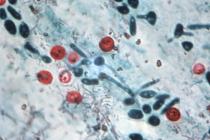
In a follow-up on a previous report on the Cryptosporidium outbreak in Sweden, the Public Health Authority, or Folkhalsomyndigheten, report more than 300 cases of cryptosporidiosis in October and November.

The good news is while the number of cases are still unusually high, the number of reported cases has decreased.


Research – Overview of Listeriosis in the Southern African Hemisphere—Review

Wiley Online

Listeriosis is rarely reported in the Southern African Hemispheres in spite of the increasing rate of Listeria in several foodborne outbreaks reported in advanced countries. This paper reviews the emerging trends in the spread, distribution, and epidemiology of Listeria species in foods, water, human, animals, and different environments in Southern Africa based on the appraisal of scholarly articles. In this regard, information obtained from literatures from various online databases revealed that Listeria species are commonly recovered from food, water, and human samples. Fewer articles provided information on Listeria recovered from animals (ruminants) and soil samples. Generally, reports of studies were more focused on Listeria monocytogenes among other Listeria species. To this end, reports obtained from literature on the method of identification of Listeria were mostly based on serological, classical biochemical methods and the principle of aesculin hydrolysis, usually characterized by black coloration on selective media for Listeria. These methods may not be reliable, as they could sometimes give a false positive report. Therefore, molecular methods are more reliable, accurate, could show the genetic relationship between isolates, and at the same time capable of enabling tracking the source of this pathogen should be embraced as a better substitute for the identification of Listeria in Southern African sub‐region.

Research – Bacterial contamination and prevalence of antimicrobial resistance phenotypes in raw fruits and vegetables sold in Delhi, India

Wiley Online

Fresh fruits and vegetables contaminated with microbial pathogens can cause outbreaks of food poisoning and other enteric diseases if consumed raw. The objective of the present study was to determine the bacterial contamination and antibiotic resistance in fresh produce sold in Delhi, India. One hundred fifty samples of fruits and vegetables generally consumed raw were collected from retail and wholesale vendors of Delhi‐NCR, India. Microbial contamination was studied by culturing 25 g of each sample. Antimicrobial resistance testing was performed for isolated pathogens and resistance phenotypes determined. Overall, 97.3% of fruit and vegetables sampled were contaminated with pathogens. In over 75% of samples, coliforms were detected with Escherichia coli in 17.4%. Majority of vegetables were contaminated with coliforms particularly ginger (100%), cabbage (80%), cucumber (75%), and tomato (75%). Extended spectrum beta‐lactamases (ESBL) was detected in eight (5.7%) isolates, carbapenem resistance in four with three metallo‐β‐lactamases producers. E. coli was isolated at a significantly higher rate from retail shops viz‐a‐viz wholesale markets (p value = .04). As high level of contamination with potential human pathogens is present in fruits and vegetables sold in wholesale markets and retail shops in Delhi‐NCR, the study underlines the need for stricter regulations and implementation of standards.

Research -Shiga toxin-producing Escherichia coli survives storage in wheat flour for two years

Science Direct

Abstract

Wheat flour has recently been recognised as an exposure vehicle for the foodborne pathogen Shiga toxin-producing Escherichia coli (STEC). Wheat flour milled on two sequential production days in October 2016, and implicated in a Canada wide outbreak of STEC O121:H19, was analysed for the presence of STEC in November 2018. Stored in sealed containers at ambient temperature, the water activity of individual flour samples was below 0.5 at 6 months post-milling and remained static or decreased slightly in individual samples during 18 months of additional storage. STEC O121 was isolated, with the same genotype (stx2a, eae, hlyA) and core genome multilocus sequence type as previous flour and clinical isolates associated with the outbreak. The result of this analysis demonstrates the potential for STEC to persist in wheat flour at levels associated with outbreak infections for periods of up to two years. This has implications for the potential for STEC to survive in other foods with low water activity.

RASFF – Animal Feed – Enterobacteriaceae – Pet Food

RASFF-Logo

RASFF – high count of Enterobacteriaceae ( 4730 CFU/g) in pet food from China in Sweden

RASFF Alert – Animal Feed – Aflatoxin – Groundnut Kernels

RASFF-Logo

RASFF – aflatoxins (B1 = 1100 µg/kg – ppb) in groundnut kernels from Sudan, via the Netherlands, packaged in Denmark in Denmark


RASFF Alerts – Animal Feed – Salmonella Fish Meal

RASFF-Logo

RASFF – Salmonella enterica ser. Senftenberg (presence /25g) in fish meal from Morocco in Greece

RASFF – Salmonella (presence /25g) in fish meal from the United States in Greece


USA -Shigella Hits Brazoria County

Shigella - kswfoodworld

The Brazoria County Department of Health announced today that there has been an increase in Shigella illnesses in the Texas county over the last two months.

The majority of those sick are children and most cases appear to be linked to schools and daycares. The number of confirmed cases or the daycares linked in this Brazoria County Shigella Outbreak have not yet been disclosed.

USA -Cruise outbreak: 133 sickened on Norwegian Cruises’, Norwegian Joy

Outbreak New Today

Federal health officials are reported a gastrointestinal outbreak of yet unknown etiology onboard a recent voyage of the Norwegian Cruise Lines vessel, Norwegian Joy.

According to officials, 127 passengers and six crew members have been stricken with symptoms of diarrhea on a recent November 8–24, 2019 voyage.