
Salmonella (presence /25g) in dogchews from Poland in Germany
Salmonella (presence /25g) in rapeseed meal from Poland in Germany
Salmonella enterica ser. Agona in rapeseed meal from Belgium in Belgium

Salmonella (presence /25g) in dogchews from Poland in Germany
Salmonella (presence /25g) in rapeseed meal from Poland in Germany
Salmonella enterica ser. Agona in rapeseed meal from Belgium in Belgium
Salmonella enterica subspecies I (ssp 1) is the leading cause of hospitalizations and deaths due to known bacterial foodborne pathogens in the United States and is frequently implicated in foodborne disease outbreaks associated with spices and nuts. However, the underlying mechanisms of this association have not been fully elucidated. In this study, we evaluated the influence of storage temperature (4 or 25°C), relative humidity (20 or 60%), and food surface characteristics on the attachment and survival of five individual strains representing S. enterica ssp 1 serovars Typhimurium, Montevideo, Braenderup, Mbandaka, and Enteritidis on raw in-shell black peppercorns, almonds, and hazelnuts. We observed a direct correlation between the food surface roughness and S. enterica ssp 1 attachment, and detected significant inter-strain difference in survival on the shell surface under various storage conditions. A combination of low relative humidity (20%) and ambient storage temperature (25°C) resulted in the most significant reduction of S. enterica on shell surfaces (p < 0.05). To identify genes potentially associated with S. enterica attachment and survival on shell surfaces, we inoculated a library of 120,000 random transposon insertion mutants of an S. Enteritidis strain on almond shells, and screened for mutant survival after 1, 3, 7, and 14 days of storage at 20% relative humidity and 25°C. Mutants in 155 S. Enteritidis genes which are involved in carbohydrate metabolic pathways, aerobic and anaerobic respiration, inner membrane transport, and glutamine synthesis displayed significant selection on almond shells (p < 0.05). Findings of this study suggest that various food attributes, environmental factors, and an unexpectedly complex metabolic and regulatory network in S. enterica ssp 1 collectively contribute to the bacterial attachment and survival on low moisture shell surface, providing new data for the future development of knowledge-based intervention strategies.
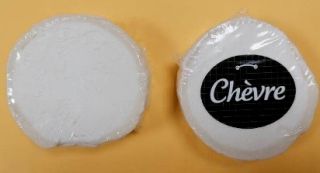
| Last name | Goat cheese log (sold in the self-service cheese stand section) |
| Mark | BETTINE |
| Unit | 150 g |
| Bar code | 3060921463206 |
| Use by date (DLC) | from 28/10/2020 to 22/11/2020 |
| Lot | all |
| Last name | Goat cheese 25% |
| Mark | Centurion |
| Unit | 150/200 g |
| Use by date (DLC) | 11/15/2020 |
| Lot | EG020EGE |
Danger : Potential presence of Listeria monocytogenes
Listeria monocytogenes can cause fever, headache, and gastroenteritis. Vulnerable people such as the immunocompromised and the elderly and young children may experience neurological symptoms due to meningitis. Pregnant women should also pay special attention to these symptoms. Gastroenteritis can appear between a few hours and 3 days after consumption, while neurological symptoms can only appear after 3 months. People who have consumed these products and who present these symptoms are advised to consult a doctor, notifying him of this consumption.
Sale in Luxembourg by: Auchan et Match
A sale by other operators cannot be excluded.
Baden-Württemberg:poststelle@mlr.bwl.de
Bavaria:poststelle@lgl.bayern.de
Following a notification via the RASFF system (European Food and Feed Rapid Alert System), the presence of Listeria monocytogenes was detected in goat cheeses of the Bettine, Delhaize and Centurion brands.
The AFSCA has therefore decided to withdraw these products from sale and to recall them to consumers.
The AFSCA also asks not to consume these products and to bring them back to the point of sale where they were purchased.
Product description
Ripened goat cheese from the Bettine brand
– Product name: geitenkaas gerijpt 200g
– Brand: Bettine
– Use by date (DLC): from 10/28/2020 to 12/30/2020
– Item number: 5020060
– EAN code: 8712023011292
– Weight: 200g

The product was sold via Sligro (Ottergemsesteenweg Zuid 720, 9000 Gent)
White goat cheese from the Bettine brand
– Product name: geitenkaas wit 450g
– Brand: Bettine
– Use by date (BBD): from 28 /
10/2020 to 12/30/2020 – Article number: 5010434
– EAN code: 8712023020089
– Weight: 450g

The product was sold via Sligro (Ottergemsesteenweg Zuid 720, 9000 Gent) and via Ramhoreca (Zoning du Brûlé 79, 7390 Quaregnon)
Bûche Sainte Maure (200g) from the brand Delhaize
– Product name: Bûche Sainte Maure 200g
– Brand: Delhaize
– Use by date (DLC): 6/11/2020, 10/11/2020, 11/11/2020, 17/11/2020, 19/11/2020, 24/11/2020, 26/11/2020 , 1/12/2020, 8/12/2020, 15/12/2020 and 23/12/2020
– Weight: 200g

The product was sold through Delhaize stores.
Centurion brand goat log
– Product name: 25% goat cheese log
– Brand: Centurion
– Lots and use-by dates (DLC):
o Product sold at Match:
– DLC = 15/11/2020 with lot number = EG020EGE
– DLC = 04/11/202 with lot number = E305E34
– DLC = 08/11/2020 with lot number = E8008E8A
– DLC = 11/11/2020 with lot number = EG009EGE
o Product sold at Cora:
– Lot = E7017E7A with DLC = 7/11/2020
– Lot = E9009EAA with DLC = 10/11/2020
– Lot = EG009EGE with DLC = 14/11/2020
– Lot = F0007F0A with DLC = 17/11/2020
– Lot = F0007F24 with DLC = 17/11/2020
– Weight: 150 g and 200 g

The product was sold through the Match and Cora stores .
About Listeria monocytogenes (identity sheet, recommendations for consumers): http://www.afsca.be/consommateurs/viepratique/intoxicationsalimentaires/listeriainfo/
For any further information, you can contact the AFSCA contact point for consumers: 0800 / 13.550 or pointdecontact@afsca.be .

Presence of Listeria Monocytogenes
People who hold this product are asked not to consume it and to return it to the point of sale where it was purchased for refund or exchange.
People who have consumed this product and who have a fever, isolated or accompanied by headaches, are invited to consult their doctor, notifying him of this consumption.
Pregnant women should pay special attention to these symptoms, as well as immunocompromised people and the elderly. These symptoms may suggest listeriosis, a disease that can be serious and can take up to eight weeks to incubate.
▸ Barcode
3.060.921.457.021
▸ DLC
From 10/30/2020 to 11/22/2020
▸ Sanitary stamp
FR 62 907 030 C
▸ Consumer service contact
For further information: Tel. 06 32 65 88 19 or on http://www.bettine.nl
▸ Source
https://www.cora.fr/
Posted in Bacteria, bacterial contamination, food contamination, Food Hygiene, Food Inspections, Food Micro Blog, Food Microbiology, Food Microbiology Blog, Food Microbiology Testing, Food Pathogen, food recall, Food Safety, Food Safety Alert, Food Testing, Listeria, Listeria monocytogenes, microbial contamination, Microbiology, Oulah

Presence of Listeria
Those in possession of this product are asked not to consume it and to return it to the point of sale where it was purchased.
People who have consumed this product and who have a fever, isolated or accompanied by headaches, are invited to consult their doctor, notifying him of this consumption.
Pregnant women should pay special attention to these symptoms, as well as immunocompromised people and the elderly. These symptoms may suggest listeriosis, a disease that can be serious and can take up to eight weeks to incubate.
▸ Barcode
3060921463206
▸ DLUO
Between 28/10/2020 and 22/11/2020
▸ Health stamp
FR 62 907 030 CE
▸ Contact
customer service Bettinehoeve deeply regrets the inconvenience caused by this incident. Customers and consumers can
find further information on http://www.bettine.nl or through tel. 00 31 76 50 222 47 or on 06 32 65 88 19 (France).
▸ Source
https://www.auchan.fr/
Posted in Bacteria, bacterial contamination, food contamination, Food Hygiene, Food Inspections, Food Micro Blog, Food Microbiology, Food Microbiology Blog, Food Microbiology Testing, Food Pathogen, food recall, Food Safety, Food Safety Alert, Food Testing, Listeria, Listeria monocytogenes, microbial contamination, Microbiology

The Catalan Public Health Agency was informed, on 16 October 2020, by the Spanish Agency for Food Safety and Nutrition (AESAN) through the Coordinated System for the Rapid Exchange of Information (SCIRI) of the presence of the bacterium Listeria monocytogenes in the product Goat’s Roll Cheese , made in the Netherlands and marketed from Germany.
The German company JERMI, which packages and markets the product, has detected Listeria monocytogenes in the course of its self-checks on the goat cheese product, which has been sold exclusively to Lidl.
This alert is extended to all batches and all expiration dates.
With the information available, no case associated with this alert has been confirmed in Spain.
People who have products affected by this alert at home are advised to refrain from consuming it and return it to the point of purchase.
Posted in Bacteria, bacterial contamination, food contamination, Food Hygiene, Food Inspections, Food Micro Blog, Food Microbiology, Food Microbiology Blog, Food Microbiology Testing, Food Pathogen, food recall, Food Safety, Food Safety Alert, Food Testing, Listeria, Listeria monocytogenes, microbial contamination, Microbiology, Uncategorized
The Food Administration has published new guidelines for the analysis of Listeria monocytogenes (listeria) in ready-to-eat foods .
Companies that produce “ready-to-eat food” need to submit a sampling plan based on the manufacturer’s risk assessment for listeria. The risk assessment is an assessment of how likely listeria is to enter the food and then what the growth conditions of the bacterium are during the shelf life of the product. The information should be used by companies to classify the food they produce under the correct food safety criteria in terms of listeria. They are roughly divided into three main risk categories and several sub-categories.
The guidelines are intended to assist food companies in classifying their products according to the correct food safety criteria, estimating the frequency and number of samples and how to react if listeria is detected in products or processing environments.

 FoodWorld