Category Archives: Food Testing

Research – Antifungal Effect of Camellia Seed Cake Extract on Aspergillus flavus

Journal of Food Protection

Aspergillus flavus is a well-known, widespread fungus that contaminates a great number of crops used for human and animal consumption, but previous study showed that camellia seed cake was not susceptible to A. flavus. This study was designed to evaluate the antifungal effect of the active substance in camellia seed cake on the growth and production of aflatoxins of A. flavus. Eighty percent methanol extracts of camellia seed cake showed greater activity than that of 80% ethanol, ethyl acetate, and pure water against A. flavus. The filtrate from the 80% methanol extract was extracted with ethyl acetate and saturated n-butanol; among the extracts, the n-butanol phase exhibited strong inhibitory activity against A. flavus. The inhibitory zone diameter increased from 15.25 mm at 25 mg/mL concentration up to 22.00 mm at 100 mg/mL concentration. The mycelial dry weight was reduced significantly from 0.16 g at 25 mg/mL to 0.11 g at 100 mg/mL, whereas the aqueous and ethyl acetate phases exhibited weak antifungal activity and no activity, respectively. In addition, the n-Butanol phase inhibited the production of aflatoxin B1 effectively, caused mycelia deformity, and reduced the production of conidia. n-Butanol extract of camellia seed cake exhibited apparent antagonistic effect on the growth and aflatoxin production of A. flavus. The concentration of 100 mg/mL worked best. This study provides a scientific basis for further study of its inhibiting mechanism.

USA – Southern Specialties Voluntarily Recalls Bagged Green Beans and Butternut Squash Distributed in Southeast because of Possible Health Risk – Listeria monocytogenes

FDA

Southern Specialties Inc. of Pompano Beach, Florida is voluntarily recalling select bags of Marketside brand green beans and butternut squash because they have the potential to be contaminated with Listeria monocytogenes, an organism which can cause serious and sometimes fatal infections in young children, frail or elderly people, and others with weakened immune systems. Although healthy individuals may suffer only short-term symptoms such as high fever, severe headache, stiffness, nausea, abdominal pain and diarrhea, Listeria infection can cause miscarriages and stillbirths among pregnant women.

The company shipped the recalled product to one retail distribution center. Although most of the product was retrieved before distribution to retail stores, some product shipped on February 17th may have reached select stores in Alabama, Florida, Georgia, Kentucky, Mississippi, North Carolina, South Carolina, Tennessee and Virginia. So, in an abundance of caution, we are issuing this public announcement.

To date, Southern Specialties has not been informed of any illnesses associated with this recall.

This recall was voluntarily issued after a raw material supplier notified the company that it was issuing a recall after a routine test of a food contact surface tested positive for the bacterium. As a precautionary measure, Southern Specialties is recalling all products that were repacked at its facility on the same repacking line as the supplier’s product. None of the products have tested positive.

The company is carrying out this recall with the knowledge of the U.S. Food & Drug Administration.

Research -How a certain bacterium communicates and makes us sick

Science Daily

Researchers at Binghamton University, State University of New York have uncovered the unique way in which a type of Gram-negative bacterium delivers the toxins that make us sick. Understanding this mechanism may help design better ways to block and eventually control those toxins.

Assistant Professor Xin Yong and graduate student Ao Li from the Department of Mechanical Engineering, along with Associate Professor Jeffrey W. Schertzer from the Department of Biological Sciences, published their findings in the Journal of Biological Chemistry.

The study looked at how bacteria communicate via the transportation of small molecules. Yong and Schertzer explained that communication molecules stimulate the production of outer membrane vesicles. These small packages then bud off from the surface of the bacterium and contain highly concentrated toxins.

Originally, it was hypothesized that the communication molecule induced vesicle production by controlling gene expression, but that’s not what’s going on.

Yong and Schertzer decided to work together on a model to understand more about how the communication molecule inserts itself into the membrane of bacteria in order to physically stimulate the production of these toxin delivery vehicles.

“It’s hard to see the molecular detail at that level,” explained Schertzer. “But with Dr. Yong’s expertise, we were able to build a computational model that helped us understand what actually goes on between individual molecules.”

Yong’s model allowed them to look at the details of the molecule and understand more about how it interacted with the membrane on a very short timescale.

“Our most important finding is that the communication molecule needs to enter the membrane in a very specific way,” said Schertzer. “It folds itself like a book, then will expand once it has entered the membrane.”

Schertzer and Yong explained that the communication molecule has both a head and a tail that are known to be flexible, but they did not expect this type of change. In the future, they hope to test what would change in the interaction when the tail is removed or the head is modified.

While the study may sound fairly specific, it has some wider implications for all Gram-negative bacteria.

“Gram-negative bacteria likely all have similar types of communication molecules. We focused on the PQS [Pseudomonas Quinolone Signal] molecule of Pseudomonas aeruginosa because it was the first discovered and is the best studied,” said Yong. “Other Gram-negative species, such as E. coli, may be transferring their own communication molecules in a similar way.”

Learning more about how Gram-negative bacteria communicate with each other can help researchers build a stronger understanding of multispecies interactions and how to eventually control these types of high-risk infections.

“This study was a testament to how beneficial interdisciplinary work can be,” said Schertzer. “We had reached a limit with what could be done experimentally and needed Dr. Yong’s model to develop a rationale for how the molecule was interacting with the membrane. Most importantly, this work has generated a wealth of new questions that we are now continuing to investigate.”

Story Source:

Materials provided by Binghamton University. Note: Content may be edited for style and length.


Journal Reference:

  1. Ao Li, Jeffrey W. Schertzer, Xin Yong. Molecular conformation affects the interaction of the Pseudomonas quinolone signal with the bacterial outer membrane. Journal of Biological Chemistry, 2019; 294 (4): 1089 DOI: 10.1074/jbc.AC118.006844

Scotland -Legionnaires’ disease in travellers returning from Goa, India

HPS

Public Health England (PHE) have reported seven cases of Legionnaires’ disease in UK travellers who visited Goa since November 2018, a small increase in cases compared to previous years.

Legionnaires’ disease is more dangerous to people with underlying medical conditions and travellers staying in poorly maintained hotels or apartments. Although the risk to travellers to Goa is considered to be low, anyone who develops an influenza-like illness with fever, cough or shortness of breath during their stay or up to two weeks after returning home, are advised to seek prompt medical advice. They should ask the healthcare professional about Legionnaire’s disease and say where they have been.

Further information and advice on travel to Goa is available to view on the Travax (for health professionals) and fitfortravel (for the general public) websites.

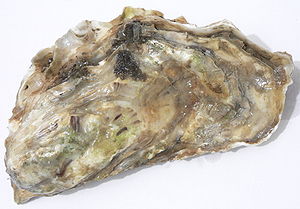
Hong Kong – Suspension of import and sale of raw oysters harvested in zone 56.09.3, Morbihan Department, France – Norovirus

CFS Vibrio

Issue Date 23.2.2019
Source of Information Centre for Food Safety
Food Product Raw oysters
Product Name and Description Raw oysters harvested in zone 56.09.3, Morbihan Department, France
Reason For Issuing Alert
  • The CFS received a notification from the Rapid Alert System for Food and Feed (RASFF) of the European Commission that raw oysters harvested in abovementioned area in France which were suspected to be contaminated with norovirus was under recall. According to the information provided by RASFF, a local importer, Tasty Seafood and Fine Food Limited, had imported the raw oysters concerned.
  • The CFS immediately contacted the importer concerned for follow-up and the importer confirmed that it had imported the affected oysters.
  • Preliminary investigation by CFS found that 135 kilograms of the affected oysters were imported by the importer and some were distributed.
Action Taken by the Centre for Food Safety
  • For the sake of prudence, the CFS has immediately suspended the import into and sale within Hong Kong of raw oysters harvested in the area concerned.
  • The CFS has instructed the importer to stop sale and remove from shelves the affected product, and initiate a recall.
  • The CFS will inform the French authorities of the import suspension and notify the local trade.
  • The CFS will continue to follow up on the incident and take appropriate action to safeguard food safety and public health.
Advice to the Trade
  • Stop selling the affected product.
Advice to Consumers
  • Regardless of the season or the region in which the oysters are harvested, consuming oysters, particularly raw or partially cooked ones, carries an inherent food safety risk.
  • Susceptible groups, such as pregnant women, young children, the elderly and people with weakened immune systems or liver diseases, should avoid eating raw oysters.
  • Members of the public may call the importer’s hotline at 3590 4849 during office hours to enquire about the recall.
Further Information The CFS press release

Hong Kong – Not to consume a batch of bottled salted egg paste suspected to contain excessive Staphylococcus aureus

CFS Staph

Issue Date 21.2.2019
Source of Information Food Safety Centre, Macau
Food Product Bottled salted egg paste
Product Name and Description Product name: Salted Egg Paste

Brand: English name not available

Place of origin: China

Distributor: Un Chi Enterprise Development Company

Net weight: 180 g per bottle

Best-before date: October 25, 2019

Reason For Issuing Alert
  • The Centre for Food Safety (CFS) received a notification from the Food Safety Centre, Macau, that a sample collected from the abovementioned salted egg paste imported from Hong Kong was detected with Staphylococcus aureus at a level of 150 000 organisms per gram, exceeding the standard of Macau. Under Hong Kong’s Microbiological Guidelines for Food, if ready-to-eat food contains Staphylococcus aureus and other coagulase-positive staphylococci at a level of more than 10 000 organisms per gram, it is also considered unsatisfactory.
  • The CFS immediately contacted the local distributor concerned for follow-up. According to the information provided by the distributor, the affected batch of product was available for sale in Hong Kong and had been sold out.
Action Taken by the Centre for Food Safety
  • The distributor concerned has initiated a recall according to CFS’ instructions.
  •  The CFS is also tracing the distribution of the product concerned.
  •  The CFS will alert the trade, continue to follow up on the incident and take appropriate action.
Advice to the Trade
  • Stop using or selling the product concerned immediately should they possess it.
Advice to Consumers
  • Not to consume the affected batch of product if they have bought it.
Further Information The CFS press release

Members of the public may call the distributor’s hotline at 2650 3802 during office hours for enquiries about the recall.

Ireland – Recall of Old Irish Creamery Cheese Irish Cheddar with Chilli Due to Presence of Listeria monocytogenes

FSAI

Chilli_Cheddar

Message:

JOD Food Products is recalling the above batch of its Old Irish Creamery Cheese Irish Cheddar with Chilli following detection of Listeria monocytogenes in the batch. This batch of cheese was sold at Cork City Craft Fair on 24th-26th November 2018. Samples were also available at the craft fair.

Nature Of Danger:

Symptoms of Listeria monocytogenes infection can include vomiting, nausea, persistent fever, muscle aches, severe headache and neck stiffness.  In rare cases, the infection can be more severe, causing serious complications, such as meningitis. Some people are more vulnerable to Listeria monocytogenes infections, including pregnant women, newborns, and people with weakened immune systems, including the elderly.

Action Required:

Consumers:

Consumers are advised not to eat the implicated batch of cheese. Consumers who may have already consumed it and are feeling unwell should seek medical advice.

Norway – Nine sick in Norway from Salmonella; source unknown

Food Safety News 

Authorities in Norway are investigating a Salmonella outbreak that has affected nine people.

The Norwegian Institute of Public Health (Folkehelseinstituttet) said the patients became ill in January and early February. They are aged from 2 to 91 years old. The agency is investigating with local authorities, the Veterinary Institute (Veterinærinstituttet) and the Norwegian Food Safety Authority (Mattilsynet).

Five men and four women have been confirmed infected with Salmonella Agbeni. They live in Oslo, Akershus, Buskerud, Rogaland and Vest-Agder. Bacteria with a similar DNA profile has been detected in all nine people, which strongly suggests a common source. Officials are interviewing patients and sampling food leftovers to find the infection vehicle.

Officials from the Norwegian Institute of Public Health said such investigations can be complicated and take time with no guarantee the source of infection will be found. They added it was too early to say whether it is a limited outbreak or whether additional patients will be identified.

Slovenia – Slovenia withdraws batch of Polish kebab meat over Salmonella and Listeria

Reuters


LJUBLJANA (Reuters) – Salmonella and listeria bacteria have been found in another batch of kebab meat imported from Poland, Slovenia’s food safety authorities said on Friday, adding the meat in question will be removed from the Slovenian market.

The frozen meat was produced by Polish company Efes-pol Fedai Simsek Sp. z o.o. and distributed to Slovenia and Croatia by Slovenian distributor Alebon d.o.o., the Food Safety Administration said in a statement.

Australia – Source of Salmonella outbreak identified

9 News EGGS

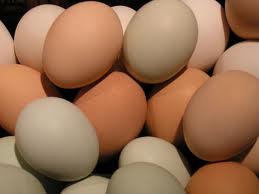
SA Health says a raw egg butter product is to blame for more than fifty people being struck down by the illness.