Category Archives: Food Technology

Research – Growth Potential of Listeria monocytogenes in Chef-Crafted Ready-to-Eat Fresh Cheese-Filled Pasta Meal Stored in Modified Atmosphere Packaging

Journal of Food Protection

ABSTRACT

This study evaluated the growth of lactic acid bacteria (LAB) in a fresh, filled-pasta meal, stored in modified atmosphere packaging and the influence of lactic acid (LA) and pH on the growth of Listeria monocytogenes (Lm). Samples were taken from three lots manufactured by a local catering company and stored at both 6 and 14°C. LAB numbers, LA concentration, pH, and the presence of Lm were evaluated at 1, 4, 6, 8, 10, 12, and 14 days of shelf life and the undissociated LA concentration ([LA]) was calculated. The LAB maximum cell density was greater in the products stored at 14°C than those stored at 6°C (10.1 ± 1.1 versus 5.6 ± 1.5 log CFU/g) and [LA] at 14 days was 9 to 21 ppm at 6°C and 509 to 1,887 ppm at 14°C. Challenge tests were made to evaluate the interference of LAB and [LA] on Lm growth. Aliquots of the samples (25 g) were inoculated at 1 to 10 days of shelf life and incubated at 9°C for 7 days, and the difference between Lm numbers at the end and at the beginning of the test (δ) was calculated. Logistic regression was used to model the probability of growth of Lm as a function of LAB and [LA]. The products inoculated at 1 day of shelf life had δ values between 4.2 and 5.6 log CFU/g, but the growth potential was progressively reduced during the shelf life. Lm growth was never observed in the products stored at 14°C. In those stored at 6°C, it grew only in the samples with LAB <5.7 log CFU/g. LAB interaction might thus inhibit the growth of Lmin temperature-abused products and limit its growth in refrigerated products. Logistic regression estimated that the probability of Lm growth was <10% if LAB was >6.6 log CFU/g or log[LA] was >2.2 ppm. The growth or inactivation kinetic of Lm was investigated with a homogenate of three samples with LAB numbers close to the maximum population density. After an initial growth, a subsequent reduction in the number of Lm was observed. This means that the maximum numbers of Lm might not be detected at the end of the product shelf life.

HIGHLIGHTS
  • MAP and refrigeration were found to be a fruitful hurdle in filled-pasta meals.

  • Higher growth of LAB at 14°C negatively affected the growth potential of Listeria sp.

  • Listeria sp. numbers might decline after an initial growth during the shelf life.

  • The maximum number of Listeria sp. is not always at the end of the product shelf life.

Research – Thermal Inactivation Kinetics of Three Heat-Resistant Salmonella Strains in Whole Liquid Egg

Journal of Food Protection

ABSTRACT

The heat resistance of three heat-resistant strains of Salmonella was determined in whole liquid egg (WLE). Inoculated samples in glass capillary tubes were completely immersed in a circulating water bath and held at 56, 58, 60, 62, and 64°C for predetermined lengths of time. The recovery medium was tryptic soy agar with 0.1% sodium pyruvate and 50 ppm of nalidixic acid. Survival data were fitted using log-linear, log-linear with shoulder, and Weibull models using GInaFiT version 1.7. Based on the R2 and mean square error, the log-linear with shoulder and Weibull models consistently produced a better fit to Salmonella survival curves obtained at these temperatures. Contaminated WLE must be heated at 56, 60, and 64°C for at least 33.2, 2.7, and 0.31 min, respectively, to achieve a 4-log reduction of Salmonella; 39.0, 3.1, and 0.34 min, respectively, for a 5-log reduction; and 45.0, 3.5, and 0.39 min, respectively, for a 6-log reduction. The z-values calculated from the D-values were 3.67 and 4.18°C for the log-linear with shoulder and Weibull models, respectively. Thermal death times presented in this study will be beneficial for WLE distributors and regulatory agencies when designing pasteurization processes to effectively eliminate Salmonella in WLE, thereby ensuring the microbiological safety of the product.

HIGHLIGHTS
  • The thermal resistance of Salmonella strains in WLE was determined at 56 to 64°C.

  • A 5-log reduction at 60 and 64°C required 3.1 and 0.34 min, respectively.

  • The calculated z-value was 3.67°C for the log-linear model and 4.18°C for the Weibull model.

  • These results will assist WLE processors when determining pasteurization regimens.

Research – Outbreak of Escherichia coli O157:H7 Infections Linked to Mechanically Tenderized Beef and the Largest Beef Recall in Canada, 2012

Journal of Food Protection

ABSTRACT

Contaminated beef is a known vehicle of Escherichia coli O157:H7 infection, although more attention is given to the control of E. coli O157:H7 in ground, rather than whole-cut, beef products. In September 2012, an investigation was initiated at an Alberta, Canada, beef plant after the detection of E. coli O157:H7 in two samples of trim cut from beef originating from this plant. Later in September 2012, Alberta Health Services identified five laboratory-confirmed infections of E. coli O157:H7, and case patients reported eating needle-tenderized beef steaks purchased at a store in Edmonton, Alberta, produced with beef from the Alberta plant. In total, 18 laboratory-confirmed illnesses in Canada in September and October 2012 were linked to beef from the Alberta plant, including the five individuals who ate needle-tenderized steaks purchased at the Edmonton store. A unique strain of E. coli O157:H7, defined by molecular subtyping and whole genome sequencing, was detected in clinical isolates, four samples of leftover beef from case patient homes, and eight samples of Alberta plant beef tested by industry and food safety partners. Investigators identified several deficiencies in the control of E. coli O157:H7 at the plant; in particular, the evaluation of, and response to, the detection of E. coli O157 in beef samples during routine testing were inadequate. To control the outbreak, 4,000 tons of beef products were recalled, making it the largest beef recall in Canadian history. This outbreak, in combination with similar outbreaks in the United States and research demonstrating that mechanical tenderization can transfer foodborne pathogens present on the surface into the interior of beef cuts, prompted amendments to Canada’s Food and Drug Regulations requiring mechanically tenderized beef to be labeled as such and to provide safe cooking instructions to consumers. A detailed review of this event also led to recommendations and action to improve the safety of Canada’s beef supply.

HIGHLIGHTS
  • Mechanically tenderized beef steaks linked to E. coli O157 illnesses in Canada.

  • Largest beef recall in Canada underscores importance of plant-level E. coli controls.

  • Outbreak of E. coli O157 infections prompts food safety improvements in Canada.

Research – Microbial Status of White Asparagus Spears during Storage in Moist Packages

Journal Food Protection

ABSTRACT

White asparagus is a high-value commodity of large economic importance in Germany. Its harvest period lasts only a limited part of the year, during which daily yield and also market demand are highly variable. Harvested asparagus is perishable; thus, quality control and shelf life must be ensured by proper handling, e.g., avoiding fresh weight losses and, at the same time, limiting microbial growth. The aim of this study was to determine the effect of moist asparagus packaging on unpeeled white asparagus (cv. Gijnlim). Water was added to some of the packages to reduce fresh weight losses and to study the consequences for microbial growth. Polythene bag packaging, lined inside with cellulose fleece, was used to hold 500-g bunches of spears, covered partly (open bag) or totally (closed bag). Storage duration was 7 days, at temperatures of 2°C, 8°C, and a combination of 2 and 22°C, simulating retail conditions. Using a standardized cultivation method for food assessment, CFU counts (5.20 to 7.95 log CFU), number of pseudomonads (4.79 to 7.90 log CFU), lactic acid bacteria (<3.00 to 3.94 log CFU), Enterobacteriaceae (4.26 to 7.15 log CFU, including Escherichia coli <1.00 log CFU), yeasts (<2.30 to 3.15 to 3.53 log CFU), and molds (<2.30 log CFU), as well as sulfite-reducing clostridia (<1 log CFU) were determined. Temperature was the most important factor for microbial growth. Additional water had no effect in most cases; it inhibited most of the fresh weight losses compared to dry treatments in this study but led to 2% weight increase in closed bags. Our results point to the conclusion that moist packaging would be a feasible alternative to dry wrapping with regard to weight retention, and it did not increase growth of the analyzed microbial groups to an unacceptable value.

HIGHLIGHTS
  • Moist packaging of white asparagus does not necessarily increase microbial load after storage.

  • Microbial counts were lower after 1 week of storage in a closed versus open package.

  • Microbial growth did not exceed tolerable values.

Research – Inactivation of Staphylococcus aureus Biofilms on Food Contact Surfaces by Superheated Steam Treatment

Journal of Food Protection Staph

ABSTRACT

The objective of this study was to compare the inactivation efficacy of saturated steam (SS) and superheated steam (SHS) on Staphylococcus aureus biofilms on food contact surfaces, including type 304 stainless steel coupons with No. 4 finish (STS No. 4), type 304 stainless steel coupons with 2B finish (STS 2B), high-density polyethylene (HDPE), and polypropylene (PP). In addition, the effects of the surface characteristics on the inactivation efficacy were evaluated. Biofilms were formed on each food contact coupon surface using a three-strain cocktail of S. aureus. Five-day-old biofilms on STS No. 4, STS 2B, HDPE, and PP coupons were treated with SS at 100°C and SHS at 125 and 150°C for 2, 4, 7, 10, 15, and 20 s. Among all coupon types, SHS was more effective than SS in inactivating the S. aureus biofilms. S. aureus biofilms on steel coupons were more susceptible to most SS and SHS treatments than the biofilms on plastic coupons. S. aureus biofilms on HDPE and PP coupons were reduced by 4.00 and 5.22 log CFU per coupon, respectively, after SS treatment (100°C) for 20 s. SS treatment for 20 s reduced the amount of S. aureus biofilm on STS No. 4 and STS 2B coupons to below the detection limit. With SHS treatment (150°C), S. aureus biofilms on HDPE and PP needed 15 s to be inactivated to below the detection limit, while steel coupons only needed 10 s. The results of this study suggest that SHS treatment has potential as a biofilm control intervention for the food industry.

HIGHLIGHTS
  • SHS was more effective than SS for inactivating biofilm cells of S. aureus.

  • Biofilms on steel coupons were more susceptible than those on plastic coupons.

  • The thermal conductivity of the coupon was an important factor in SHS treatment.

  • Biofilm; Saturated steam; Staphylococcus aureus; Superheated steam

Research -The combined effect of high pressure processing and dimethyl dicarbonate to inactivate foodborne pathogens in apple juice

Research Gate

Novel processing technologies can be used to improve both the microbiological safety and quality of food products. The application of high pressure processing (HPP) in combination with dimethyl dicarbonate (DMDC) represents a promising alternative to classical thermal technologies. This research work was undertaken to investigate the combined effect of HPP and DMDC, which was aimed at reaching over 5-log reduction in the reference pathogens Escherichia coli O157:H7, Salmonella enterica, and Listeria monocytogenes inoculated in apple juice. Different strains of each species were tested. The pressure (ranging from 100 to 600 MPa), dwell time (from 26 to 194 s), and DMDC (from 116 to 250 mg/L) were tested based on a central composite rotatable design. The dwell time, in the studied range, did not have a significant effect (p > 0.1) on the pathogens´ reduction. All treatments achieved a greater than 5-log reduction for E. coli O157:H7 and L. monocytogenes. The reductions for S. enterica were also greater than 5-log for almost all tested combinations. The results for S. enterica suggested that it is more resistant to HPP and DMDC compared with E. coli O157:H7 and L. monocytogenes. The findings of this study showed that DMDC at low concentrations can be added to apple juice to reduce the parameters conventionally applied in HPP. The combined use of HPP and DMDC was highly effective under the conditions of this study.

Research – Assessment of the bioprotective potential of lactic acid bacteria against Listeria monocytogenes on vacuum-packed cold-smoked salmon stored at 8 °C.

Science Direct

Abstract

Smoked salmon is a highly appreciated delicatessen product. Nevertheless, this ready-to-eat (RTE) product is considered at risk for Listeria monocytogenes, due to both the prevalence and growth potential of this bacteria on the product. Biopreservation may be considered a mild and natural effective strategy for minimizing this risk. In this study, we evaluated the following three potential bioprotective lactic acid bacterial strains against L. monocytogenes in three smoked salmon types with different physicochemical characteristics, primarily fat, moisture, phenol and acid acetic content: two bacteriocin-like producers that were isolated from smoked salmon and identified as Lactobacillus curvatus and Carnobacterium maltaromaticum and a recognized bioprotective bacteriocin producer from meat origin, Lactobacillus sakei CTC494. L. sakei CTC494 inhibited the growth of L. monocytogenes after 21 days of storage at 8 °C in all the products tested, whereas L. curvatus CTC1742 only limited the growth of the pathogen (<2 log increase). The effectiveness of C. maltaromaticum CTC1741 was dependent on the product type; this strain limited the growth of the pathogen in only one smoked salmon type.

These results suggest that the meat-borne starter culture, L. sakei CTC494, may potentially be used as a bioprotective culture to improve the food safety of cold-smoked salmon.

Research – Foodborne pathogen sheltered by harmless bacteria that support biofilm formation

Science Daily

Pathogenic bacteria that stubbornly lurk in some apple-packing facilities may be sheltered and protected by harmless bacteria that are known for their ability to form biofilms, according to Penn State researchers, who suggest the discovery could lead to development of alternative foodborne-pathogen-control strategies.

That was the key finding that emerged from a study of three tree-fruit-packing facilities in the Northeast where contamination with Listeria monocytogenes was a concern. The research, done in collaboration with the apple industry, was an effort to better understand the microbial ecology of food-processing facilities. The ultimate goal is to identify ways to improve pathogen control in the apple supply chain to avoid foodborne disease outbreaks and recalls of apples and apple products.

“This work is part of Penn State’s efforts to help producers comply with standards set forth in the federal Food Safety Modernization Act, often referred to as FSMA,” said researcher Jasna Kovac, assistant professor of food science, College of Agricultural Sciences. “The Department of Food Science at Penn State, through research and extension activities, has an ongoing collaboration with the apple industry, led by Luke LaBorde, professor of food science.”

In the study, researchers sought to understand the composition of microbiota in apple-packing environments and its association with the occurrence of the foodborne pathogen Listeria monocytogenes. Their testing revealed that a packing plant with a significantly higher Listeria monocytogenes occurrence was uniquely dominated by the bacterial family Pseudomonadaceae and the fungal family Dipodascaceae.

“As we investigated the properties of these microorganisms, we learned that they are known to be very good biofilm formers,” said lead researcher Xiaoqing Tan, a recently graduated master’s degree student in food science and a member of the Penn State Microbiome Center, housed in the Huck Institutes of the Life Sciences. “Based on our findings, we hypothesize that these harmless microorganisms are supporting the persistence of Listeria monocytogenes because they protect the harmful bacteria by enclosing them in biofilms. We are testing this hypothesis in a follow-up study.”

Biofilms are a collection of microorganisms that attach to a surface and then secrete a slimy material that slows down the penetration of cleaners and sanitizers, Kovac explained. “If a pathogenic bacterium is enclosed in a biofilm formed by microbiota, it is more likely that cleaning and sanitizing procedures will be less effective,” she said. “This is a novel perspective, and it may well explain how Listeria monocytogenes has persisted in food-processing plants despite repeated efforts to kill and remove it.”

The findings of the research, published today (Aug. 21) in Microbiome, provide insight into the Listeria contamination problem and may lead to researchers and the apple industry getting closer to solving it, Kovac believes. Equipment in fruit-processing plants — such as brush conveyors — have a poor sanitary design that makes them difficult to clean and sanitize, she pointed out. She and LaBorde plan to work with the apple industry to devise more effective cleaning and sanitizing strategies.

“Following up on these findings, we are experimenting with some of the nonpathogenic strains of bacteria that are not harmful to humans to see whether they can be used as biocontrols,” she said. “Once applied on the surfaces of the equipment in these environments, they may be able to outcompete and suppress Listeria, thus reducing food-safety risks and potential regulatory action. We are still exploring that approach in a controlled laboratory environment. If it proves to be feasible, we would like to test it in apple-packing and processing facilities.”

The challenge presented by microbiota possibly sheltering Listeria monocytogenes is not limited to fruit-processing facilities or produce, Penn State researchers suspect. They will soon begin analyzing microbial communities in dairy-processing facilities to determine the microbial composition and ecology of these environments.

Also involved in the research at Penn State were Taejung Chung, a doctoral degree student in food science, affiliated with the Microbiome Center, Huck Institutes of the Life Sciences; and Yi Chen and Dumitru Macarisin, researchers at the U.S. Food and Drug Administration Center for Food Safety and Applied Nutrition.

The U.S. Department of Agriculture’s National Institute of Food and Agriculture, and the Center for Food Safety and Applied Nutrition, U.S. Food and Drug Administration, supported this research.

Research – Ozone-based treatments for inactivation of Salmonella enterica in tree nuts: Inoculation protocol and surrogate suitability considerations

Science Direct

Abstract

The feasibility of using gaseous ozone, alone or in combination with other treatments, to decontaminate in-shell almonds and pistachios, prepared under different pathogen-inoculation conditions, was explored. Nuts were inoculated with either Salmonella enterica serovar Enteritidis or a potential Salmonella surrogate, Enterococcus faecium OSY 31284. The effect of inoculation method (with or without vacuum application), and of drying inoculated nuts (up to three days) on treatment efficacy was investigated. Inoculated nuts were subjected to gaseous ozone alone (almonds, pistachios) or ozone in combination with heating in brine solution (pistachios). Ozone treatment included application of vacuum (10 in Hg), followed by vessel pressurization to 12.5 psig with ozone‑oxygen mixture (160 g ozone/m3 gas mixture) and holding for 30 min. Heating was conducted in a brine solution (5% NaCl) at 70 °C, for 10 min. Ozone-based treatments were significantly more effective (P < 0.05) on almonds than pistachios, with maximum S. Enteritidis reduction of 2.9 vs. 0.8 log CFU/g, regardless of inoculation method or the drying time. Treatment of inoculated pistachios with heated brine and gaseous ozone reduced S. Enteritidis population by 5.0 to 7.0 log CFU/g and was not significantly more effective than treatment with heated brine alone (reduction of 4.8 to 7.1 log CFU/g). Application of vacuum during inoculation increased bacterial population on nut kernels by approximately 1.2 log CFU/g, but the increase in inoculum population had no effect on inactivation of either species of inoculated bacteria. Decontamination treatments were less effective against both bacteria by up to 2 log CFU/g when drying time of inoculated nuts increased. Efaecium was significantly more resistant to heat and ozone treatment (P < 0.05) than was S. Enteritidis on pistachios, but not on almonds. Results of this study show that laboratory methodology affects observed treatment effectiveness. Considering its high resistance to the heat-ozone combination, Efaecium may not be a suitable surrogate for S. Enteritidis during processing of pistachios by this treatment. Efficacy of ozone gas to decontaminate S. Enteritidisinoculated nuts depends heavily on the type of nut. Although reductions of S. Enteritidis populations on in-shell pistachios are low, treatment of in-shell almonds resulted in greater reductions, indicating the promise of this technology to enhance the safety of specific nut products.

USA – Papaya importer fires back at FDA; says it isn’t linked to outbreaks – FDA Statement Letter

Food Safety News kswfoodworld

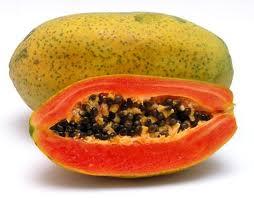
A firm that the government says has been importing contaminated papayas since at least 2011 is vehemently denying statements made in an FDA warning, despite evidence that Cavi brand papayas have been linked to several Salmonella outbreaks, including a current one.

The warning letter, sent yesterday by the Food and Drug Administration and posted for the public today, cites numerous times from 2011 through this year when papayas imported by Agroson’s LLC in the Bronx, NY, were linked to outbreaks that sickened hundreds of people.

FDA

Statement calling on all sectors of the papaya industry to improve practices to better protect consumers.

Every day Americans enjoy an abundant food supply that is among the safest in the world. The U.S. Food and Drug Administration works tirelessly to ensure that foods available to consumers, whether they are produced domestically or abroad, meet the FDA’s food safety requirements and that we are using all available tools to ensure compliance.

As demand and tastes continue to drive change in the market, consumers’ desire for a variety of products available year-round have increased the number of imported foods offered for sale in the U.S. To keep up with this trend, we have doubled down on our efforts to ensure the safety of imported food. This includes issuing a new Strategy for the Safety of Imported Food and requesting new funding from Congress to support our efforts.

While we continue to focus on shifting our work upholding food safety from response to prevention, we know that there are times where we will still need to respond to problems when they arise, including outbreaks of foodborne illness. This is especially important when we see recurrent patterns of illness associated with particular commodities. For example, fresh papayas. This commodity is most often eaten raw, without cooking or processing to eliminate microbial hazards; and therefore, the way they are grown, harvested, packed, held, processed and distributed is crucial to minimizing the risk of contamination with human pathogens.

Unfortunately, since 2011, American consumers have been exposed to eight outbreaks caused by Salmonella serotypes linked to imported, fresh papaya. And, just this June we started an investigation into an outbreak of Salmonella Uganda illnesses tied to the consumption of whole, fresh papaya imported from Mexico. While the 2019 outbreak is ongoing, the first seven outbreaks accounted for almost 500 reported cases of illness, more than 100 hospitalizations, and two deaths.

This trend has to stop. The pattern of recurrent outbreaks we have observed since 2011, including the 2019 illnesses, have involved Salmonella infections traced back to, or are suspected of being associated with, papaya grown in Mexico. The recurring nature of these outbreaks is a clear indication that more must be done within all sectors of the papaya industry to protect its customers and to meet its legal obligations. This includes growers, importers and even retailers that can and must do more.

This is why today we have issued a letter calling on all sectors of the papaya industry to take actions to prevent these outbreaks in the future. We are urging growers, packers, shippers and retailers in the papaya industry to review their operations and make all necessary changes to strengthen public health safeguards.

Our letter calls on the papaya industry to assess the factors that make their crops vulnerable to contamination. If a foodborne pathogen is identified in the crop or growing environment, a root cause analysis should be performed to determine the likely source of contamination. Procedures and practices that minimize that contamination must be implemented.

We are strongly encouraging the papaya industry to examine the use and monitoring of water used to grow, spray (pesticides, fungicides), move, rinse or wax crops to identify and minimize risks from potential hazards. All sectors of the industry should adopt tools and practices needed to enhance traceability since papayas are a perishable commodity, to more rapidly facilitate the tracking of involved product to expedite its removal from commerce, prevent additional consumer exposures, and properly focus any recall actions.

And finally, they should fund and actively engage in food safety research to identify the potential sources and routes of contamination by microbial pathogens and develop data-driven and risk-based preventive controls.

In response to this most recent Salmonella Uganda outbreak, the FDA deployed an inspection team to the packing house and farm that was linked to the contaminated papayas via traceback and epidemiological evidence. The findings of those visits will be made public when their investigation is complete. We have also increased sampling and screening of papayas at the border. In addition, the FDA is actively collaborating with our counterparts in the Mexican government regarding this current outbreak through the agency’s Latin America Office to determine ways to further our collaborative prevention efforts.

The U.S. Federal Food, Drug, and Cosmetic Act prohibits food producers from introducing, or delivering for introduction, into interstate commerce adulterated foods (meaning foods that are potentially harmful to consumers). Additionally, there are new requirements under the FDA Food Safety Modernization Act (FSMA). The Produce Safety Rule under FSMA sets science- and risk-based minimum standards for domestic and foreign farms for the safe growing, harvesting, packing and holding of covered produce, which includes papayas. Another FSMA rule, the Foreign Supplier Verification Program(FSVP) makes importers responsible for verifying that the foods they bring into the U.S., including papayas, have been produced in a manner that meets applicable U.S. safety standards.

We take our responsibility to protect public health very seriously and will continue to use all of our regulatory authorities and enforcement tools available to do so. So, today we issued a warning letter to a papaya importer, Agroson’s LLC, following an FDA investigation at the facility in conjunction with the current outbreak. This investigation uncovered significant violations of the Federal Food, Drug, and Cosmetic Act. Rest assured that the FDA will continue to strengthen safeguards and prevent contaminated papayas from being imported into the U.S. Our efforts also include education, outreach, training and research activities designed to support farmers’ efforts to keep their crops safe for consumers.

Although today’s actions focus on the papaya industry, recurring outbreaks taking place with any commodity are unacceptable from a public health perspective. We know that more must be done by industry as repeated illness outbreaks are a threat to public health. In such situations, it is incumbent upon all sectors of the industry to work together to investigate the cause, review food safety procedures and practices, and take action to prevent further outbreaks.

We must take collective steps to eliminate the threat that recurring outbreaks pose to consumers and look forward to working with the papaya industry as well as all food producers to ensure that America’s food supply remains among the safest in the world.

The FDA, an agency within the U.S. Department of Health and Human Services, protects the public health by assuring the safety, effectiveness, and security of human and veterinary drugs, vaccines and other biological products for human use, and medical devices. The agency also is responsible for the safety and security of our nation’s food supply, cosmetics, dietary supplements, products that give off electronic radiation, and for regulating tobacco products.